
A Hidden Gem in Southern Spain
Holidays in Spain don't have to be beach, booze, and paella. If you want a different holiday, you will love Extremadura. Whether it’s birdwatching, hiking, paragliding or visiting archaeological sites, this sparsely-populated region in southwest Spain has a lot to offer.
Largely undiscovered by mass tourism, Extremadura is a land of contrasts, a land that always has something new to discover.
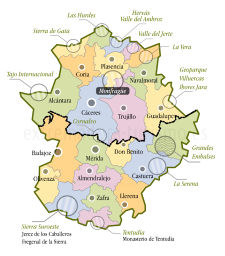
The mountainous north is a jewel of great natural beauty: the mountain range that reaches from Sierra de Gata in the west to Guadalupe in the east is riddled with small rivers, waterfalls and natural pools. If you’d like to go hiking in Las Hurdes, La Vera, or the Jerte Valley, bring a swimsuit -the crystalline pools right beside the tracks may be cold, but they are refreshing. Don’t miss out on beauty spots such as the Trabuquete falls and pools, or the impressive Garganta de los Infiernos. If you’d rather travel in spring, make your visit coincide with the cherry blossom season -see the Jerte Valley draped in delicate white, one of nature’s most beautiful spectacles. Later in the year, don’t forget to try the cherries!
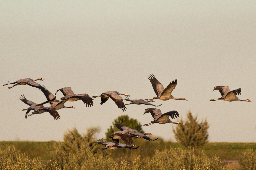
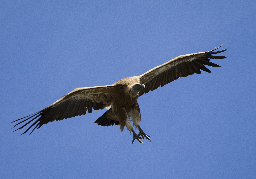
Just south of the historic town of Plasencia, there is a veritable bird watcher’s paradise -the National Park of Monfragüe. Put on your hiking boots, grab your binoculars, and enjoy the sight of one of Europe’s biggest colonies of vultures, of black and white storks, eagles, and bustards. An equally impressive but less-known National Park lies south of Cáceres: Cornalvo.
If culture interests you more than nature, or if after all that hiking you’d like to give your boots some rest, the towns and cities of our region provide just what you’re looking for. Cáceres and Trujillo, both of Game of Thrones fame, and the ancient monastery of Guadalupe are surely worth a visit, and the Roman towns of Mérida and Medellín will take your breath away. Follow the steps of the Knights Templar in Jerez de los Caballeros, breathe the air of the long-ago in the dolmens scattered around the distinctive and unique dehesa extremeña. The words of the ancient poets come alive in late summer in the region’s capital, Mérida, during the annual theatre festival, celebrated in one of the best-preserved Roman theatres there are.
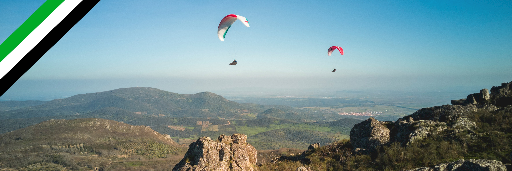
Are you into more adrenaline-intensive sports? Well, Montánchez is a popular spot to go paragliding, and the tiny village of Toril, between Navalmoral and Monfragüe, celebrates an annual cross-country horse race, to name but two.

Come and visit this hidden gem in southern Spain -explore this land untouched by mass tourism, beloved by connoisseurs.
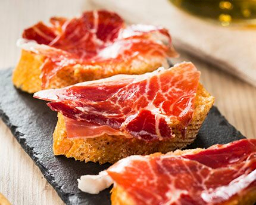
Hungry after all that exploring? Extremadura is also famous for its cuisine and its many splendid traditional restaurants. Try migas, a dish made from breadcrumbs, the famous black pudding (“morcilla”) of Guadalupe, and the inimitable cured ham of Montánchez. As for liquid accompaniment, wines from Extremadura, while rarely exported, are of national renown.
Alcántara
History of Alcántara
Alcántara is a beautiful town situated in the province of Cáceres, on the left bank of Tajo river. It is best known for the nearby Puente de Alcántara, a Roman bridge that, via its Arabic name (Al Qantarat), gave the town its name.
Monuments and festivals
If you visit Alcántara you will find a lot of ancient churches and some of my recommendations are: Santa María de Almocóvar Church, San Pedro de Alcántara Church or Iglesia de la Encarnación. They are all extraordinary and ideal places for a walk around the town.
The best time of the year to visit the town is in summer because there is a fantastic Classical Theatre Festival and there is a lot to see and the atmosphere is great. The plays are also amazing and people have a lot of fun. I’d definitely recommend them!
Gastronomy
If you want to try some of the best local dishes, Alcántara is also one of the best places to do it. The traditional dishes are las migas extremeñas, la chanfaina, tomato soup, patatas a lo pobre, just to give you some examples. My recommendation is to try migas extremeñas because they are delicious.
Weather
Now, be very careful with the weather. You should check the weather forecast before you come to Alcántara because summers are very hot and dry so you might consider coming in September, or perhaps in spring because the weather is warm but sometimes rainy.
I hope you enjoy your visit and have a great time in Alcántara!
Plasencia
Plasencia is a Spanish city and municipality in the province of Cáceres, located in the north of the autonomous community of Extremadura. The municipality, which does not form a community with the surrounding towns.
Plasencia is a beautiful town best known for its beautiful and large cathedral and for its proximity to Monfragüe national park.
-It is a Spanish national park famous for its bird life. It is located in the centre of the triangle formed by Plasencia, Trujillo and the cities of Cáceres in the province of Cáceres. Monfragüe is also Comarca (county without administrative positions) in Extremadura, western Spain. The name of the area and the park comes from the Roman "Monsfragorum", vía Monte Fragoso (Spanish), which means "lush mountain".
There are many caves built in the mountains of Monfragüe with Bronze Age, Bronze Age and Iron Age prehistoric paintings, such as the "Cueva del Castillo" located on the south side of the Sierra de las Corchuelas Mountains (Sierra de las Corchuelas).
The park is surrounded by relics from the pre-Roman period. In Miravete, there are the remains of an old castle, and in Malpartida de Plasencia, there is a manor called "El Calamoco". A warrior stele found in the warehouses of Torrejónel Rubio and Serradilla attests to the high level of agricultural society in the area.
-The old cathedral of Plasencia is a Roman Catholic house of worship in Plasencia, province of Cáceres. It is built in a transitional Romanesque style and one of the most notable buildings in the city and its surroundings.
-New cathedral of Plasencia: a Roman catholic cathedral in Plasencia, province of Cáceres. Dating from the15th century, it was built in Gothic architectural style with high ceilings. The old church now houses the Cathedral museum.
The gastronomy in Plasencia is also one of the best: in Plasencia there are many restaurants, but there are none whose food is not incredible. Plasencia is famous for its ham, but you can also get very good paellas and fish dishes. Don't forget to try the chorizo and black pudding.
My tourist trip to Plasencia has already finished I hope you liked it and I hope that one day you will visit it.
Bye!
Badajoz
Badajoz is the capital of the Extremadura province that bears its name. It is located in the west of said province, and it borders Portugal. It has close to 151.000 inhabitants.
The city has a Muslim origin, as it was founded by Ibn Marwan “El Gallego” in 875. Badajoz soon became an important city, it was capital of an independent kingdom twice, in 868 with Valí Ibn Marwan and when the Cordovan Caliphate fell in the ninth century.
The city was regained for the Christians in 1230 by Alfonso IX de León; they continued living inside the Alcazaba’s enclosure, but gradually the city grew outside the walls.
If you like sightseeing, you will love the monuments of Badajoz. There are many monuments like the historic Alcazaba, a walled enclosure with a defensive structure of great artistic value. Originally, the city was completely contained in its imposing walls. It is considered one of the most important buildings of its type in Spain. All counted, the Alcazaba of Badajoz measures 6.5 km, which makes it the biggest historic fortification in Spain.
Monuments
There also is the Torre de Espantaperros, the city’s symbol. If I were you, I wouldn't waste the opportunity to go to the Plaza Alta, it is in the top 10 of the most beautiful squares in Spain. You should also visit the Ermita de la Soledad, a hermitage built in the mid-17th century. Then there is the Giraldilla of Badajoz, and finally it would be a good idea to visit the Cathedral of Badajoz, which is in the Plaza de España. It was built from the mid-13th until the late 19th centuries. While its exterior is very simple, its interior is full of stunning works of art.
Activities
However, if you are looking for a place to be in contact with nature but at the same time near to Badajoz, take a trip to nearby Guadajira, where you can walk in the countryside, go birdwatching and enjoy the fresh air of one of Europe’s most beautiful landscapes.
But if you are looking for activities to do in the city you can go to the shopping center “El Faro”, have a picnic in the Alcazaba or take a tour around the city.
Badajoz celebrates one of the best Spanish carnivals, where people dress up and there are parades of the various comparsas, (Carnival fellowships or krewes).
The city is also famous for its Semana Santa, the Easter celebrations. At that time there are a lot of processions. The local festival is the Feria de San Juan, the big day is on 24th of June. Another festival is the Almossassa Batalyaws from 21st to 27th of September, a festival to celebrate the city’s foundation. There are also two romerias, the San Isidro’s romeria on 15th of May and the Botoa’s romeria, that is the first Sunday in May. And, of course, there is Christmas.
Celebrations and Events
As for food and drink, the gastronomy of Badajoz is at the top, like all of Extremadura. Badajoz has very tasty cold meats and cheeses, but apart from that, Badajoz’ gazpacho is a treat you just can’t miss. It is made from tomatoes, some water and some bread. Another specialty is the almond soup -a mix of some bread, many almonds, some olive oil, a good dose of garlic, some water and a pinch of salt. And let’s not forget the lamb stew. As for dessert, you must try the perrunillas and the crackling bun. I would recommend the restaurant GLADYS, known for its traditional dishes with a modern touch.
Enjoy Badajoz!
Gastronomy
Lucía D
Mérida
Mérida is the capital of Extremadura. It is a small city of about 60,000 inhabitants.
There’s a lot to see in this city. I’d especially recommend the Roman theatre and the Temple of Diana as these historical monuments are very beautiful and of great historical interest. The theatre has been partially restored; since 1933 it has hosted the annual festival of classical theatre. Right next to it, there are the remains of the amphitheatre,
where once the gladiators fought -then one of the most popular entertainments for the people.
Zafra is a town situated in the Province of Badajoz , and the capital of the comarca of Zafra - Río Bodión. It has a population of 16.677, according to the 2011 census.
Zafra is the hometown of Fray Ruy Lopez, author of one of the first European treatises on chess, and the humanist and arbitrist Pedro de Valencia.
Zafra
The History of Zafra
Zafra was originally a Roman settlement. It was under Arab rule from the 11th century until its final reconquest by Fernando III el Santo in 1241. Its history has been linked to the Dukes of Feria, who established their residence in this town.
Alcázar de Zafra
Lorenzo II Suárez de Figueroa, II Lord and 1st Count of Feria, was the one who, in 1437, ordered the construction of the fortress that today is the palace of the Dukes of Feria and the "Duques de Feria" Tourism Parador. The idea of the then II Señor de Feria was both to have a new residence according to his rank and to complete the urban defences of the town of Zafra at its weakest defensive point.
The Fair of Zafra
The Zafra International Livestock Fair is one of the most relevant national and international livestock fairs that has been in the municipality of Zafra since the 15th century.
Trujillo
Trujillo is a town in the west of the province of Cáceres. Trujillo has a long history: settled since prehistoric times, it received the name Turgalium from the Romans; later it was called Turaca, Turacia, Torgiela, Troxiello, Trugillo and finally Trujillo.
Trujillo is the birthplace of Francisco Pizarro, conqueror of Peru, and Francisco de Orellana, who discovered the Amazon River.
History
Places to Visit
- In the square there is a statue of Francisco Pizarro on his horse.
- The fountain is very beautiful, people throw coins into it and make wishes.
- Trujillo Castle is a fortress built between the 9th and 12th centuries. It is located in the highest part of the town and offers great vistas of the town and its surroundings.
- The Church of Santa María la Mayor de Trujillo is a Catholic religious temple. It is built in the Romanesque style. The church’s construction began in the 13th century, it was rebuilt and expanded in the 15th and 16th centuries.
- The Church of San Martín is a Catholic temple, which is located in one of the corners of the square.
Gastronomy
As for food and drink, I'd recommend El Mesón la Troya. This restaurant is highly valued since it serves very good food and has a great view on the square.
Final Words
Trujillo is a great place to visit because it is so beautiful and very interesting to visit.
Cáceres
If you travel in Extremadura you must visit Caceres. Located in the center of the autonomous community, is one of the most popular cities of Extremadura.
It was founded by ancient Romans and, after some conquests, the Christians got Cáceres. The Old Town is a good example of the history of the city. We can enjoy walking through its narrow streets and old squares. The Plaza Mayor is the most popular square in the Old Town; it stands out for the Bucajo Tower or the Púlpito Tower, both pulled up to the city walls.
You can also enjoy the restaurants, terraces and cafes located in the Plaza Mayor. In it is the Arco de la Estrella, that if you are a little observant, you will notice that it is crooked. This is because the carriage of the nobles of the time could access to their palaces without having to do manoeuvres. You can also visit the Plaza of Santa María, famous for having been bombed by Soviet planes in 1973 and so we can differentiate two different grounds. Finally, I will tell you the story of a statue located in the Plaza de San Juan in honor of Leoncia Gómez Galán for being the last spokeswoman of the Periódico Extremadura and even find the love of his life and marry at 74.
In spite of being a city, in Cáceres you can enjoy nature. For example in Príncipe Park . If you go in summer, you should wear a swimsuit, sunscreen and sunglasses because it has a swimming pool. You can also enjoy walking among its statues. The Paseo de Cánovas is another well-known, next to it is the Book Fair . Or you can stroll around the Rodeo Park pond.
You can also visit its museums, for example the Museum of Computer History, in which in about an hour you will go down the history of modern computing; the Museum of Cáceres, where you will discover the history of this city; the Museum of Contemporary Art of Helga de Alvear or the Maltravieso Cave, a prehistoric cave full of cave paintings. If you want to go shopping, you can go to Pintores Street, Ruta de la Plata r or Cánovas Shopping Center. You can also do other entertainment activities like going to the cinema in Multicines Cáceres or the Gran Teatro de Cáceres.
If you travel to the city, you have to go to the statue of San Pedro de Alcántara. Legend tells if you kiss or touch her feet you will find a couple or, if you already have one, you will marry her; for that reason they are completely worn.
The city has some parties and festivals that may interest you when planning your trip. For example, the Cáceres Spanish Film Festival, where you can enjoy national films, is celebrated in February.
There are also music festivals like the Womad, in May or the Extremeúsika, in October. If you want something different, you should go to the Horteralia festival; a festival that reclaims another way of being and dressing.
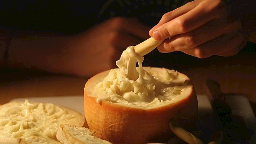
You can’t leave Cáceres without trying its famous gastronomy. Some of the most typical dishes are, for example, migas, his main ingredient are breadcrumbs; la Torta del Casar, one of the most important cheeses in the community; the Iberian ham or chocolate figs, a sweet artisan made with dried figs and chocolate.
If you are a fan of Game of Thrones you will like Cáceres because in it were filmed some scenes of the famous series .
If you want to know more about this wonderful city I encourage you to come yourself and discover all secrets.
The Jerte Valley
History
Tree-based agriculture in the Jerte Valley began with chestnut trees, and then, the cherry trees started to appear there. Some say that growing cherries here was established by a Russian czar. He planted these trees in the Jerte Valley for his wife, because she missed the white snow of Russia. This way, once a year, the Jerte Valley would turn white, like Russian landscapes, thanks to the cherry blossom. Stories apart, the big plantation of cherry trees of the Jerte valley is there thanks to the hard work of local farmers over lots of years.
Nature
The Jerte Valley is located between two mountains separated by the Jerte River in the Gredos massif. There is a lot of granite there, and it's a perfect destination to go hiking. The Jerte Valley has a variety of indigenous trees such as oak trees, (although this tree doesn't occupies a big area of the Jerte valley in comparison with the rest of Extrem adura) chestnuts trees, and, obviously, cherry trees, among lots of others.
As for fauna, there are lots of indigenous species, like trouts, newts, lots of different birds, hedgehogs, wildcats, mountain goats, and many more. Without a doubt, the Jerte Valley is a perfect family destination to discover new animals and see new plants.
Activities
If you want to travel to the Jerte Valley, you can't leave it without visit the following places:
- Memory lookout (El Torno). This little village appears like a balcony in the mountain, and it's got five lookouts to contemplate a wonderfuls views, especially in the afternoon. The most famous lookout is the Memory lookout.
- The cherry museum (Cabezuela del Valle). If you want to know the true identity and the lifestyle of the Jerte Valley habitants, you can’t miss visiting the cherry museum.This museum shows the cultivation style, transformation,
commercialization, distribution, and
storage of the best cherries of Spain.
- Natural pools in the Jerte river. The Jerte river bathes all the Jerte Valley along 70 km. Most of the villages of the valley have natural pools with associated infrastructure, and you can enjoy a fresh bath in crystalline water in nature. Dotted around the amazing landscape, there are also less-accessible pools dug out by waterfalls where you may get wet. These, however, do not have lifeguards, facilities, or nearby cafés.
- Plasencia, the jerte valley pearl. Plasencia, without any doubt, deserves a visit. It has a spectacular and very well preserved old town, where you can still breathe a medieval ambience. Plasencia has been presented as a candidate to World Heritage status, but, for the moment, it shall conform with the artistic historic complex title. A walk through the centre of this city will permit us to contemplate an important amount of castles, great houses, convents and churches, to visit the two cathedrals, the medieval aqueduct, and much more.
Events
The best-known and the most important event in the Jerte valley is the cherry fair. This fair is celebrated at the start of June, and each year in a different one of the 11 villages in the Jerte Valley. At the cherry fair, you can enjoy a great variety of activities related to the red fruit, such as cherry tasting, cherry markets, the "cooking with cherries" workshop, and a lot of games, storytellers, street animations, etc.
Gastronomy
To enjoy a good visit, a place to eat is very important. In the Jerte Valley, there are many restaurants where you can eat very well and that aren’t too expensive. Examples include the grill "Las Nogaledas". It is a very comfortable restaurant that serves delicious food. Its specialty is braised meat.
Among its star dishes, you must try the cheek pads, the beef or the barbecue. It's my favourite restaurant in the Jerte Valley.
Other interesting facts
Normally, the cherry blossom season is between the end of March and the beginning of April, but it depends a lot on the weather conditions of each year. I recommend you check the weather forecast before visiting the Jerte Valley, and that you be farsighted and make sure that the cherry tree is in flower.
Montánchez
History
Montánchez is a small village in the south of the province of Cáceres, specifically in the Sierra of Montánchez, to which it gives its name. This village is famous for its history, gastronomy, and landscape.
To start talking about this village, we’ll see something of history. People first settled in what is now Montánchez in the Bronze Age -some remains are still visible.
During the 5th century, the village was taken by the Visigoths, until in 713, Muslims took it, who fought for many years with the Christians for possession of the territory.
The Castle, of Roman Origin, served as a fortress to the Almohads to hold off the Christians. They had to modify the Castle to protect themselves from the threats.
The oldest historical references to Montánchez are from 1095; Montánchez appears as one of the Muslim fortresses of the Aftásida Kingdom of Badajoz.
In 1166, Montánchez was taken by the Christians, but some years later, in 1196, Muslims recovered the village under the authority of Al Mansur.
In 1228 the Battle of Mérida took place. In that battle, Alfonso IX defeated Aben-Hud, and conquered Badajoz, Montánchez and Mérida before continuing the Christian advance towards the south.
Later, the Order of Santiago emerged to protect and guide the pilgrims who came from Europe and went to Compostela, which greatly improved the economy of the village.
The castle served for a long time as a retreat for kings who were persecuted.
From the 13th century, Montánchez formed a community of Villa y Tierra composed of fourteen villages. The 560 Austrian reforms changed it into a Judicial Party with Governors. Finally, with the fall of the Old Regime, Montánchez became a constitutional village in the region of Extremadura.
Gastronomy
As for other factors, we must talk about the town’s gastronomy. Montánchez is known for its delicious Iberian ham which, without a doubt, is the best in all of Spain. You should also try the famous migas, a dish made from breadcrumbs, chorizo and peppers from Extremadura.
Culture
In terms of culture, the village’s main sights are the Castle and the cemetery, which is the most beautiful in Spain and features spectacular to Arabic art. There are also other religious monuments, for example: the Parish Church of San Mateo, the different Hermitages and some Crosses. There is also “El cancho que se menea”, a huge rock balanced on a much smaller one. Until Francoist soldiers threw it down, you could move it pushing it with your hand.
Festivities
Regarding local parties, the pilgrimage is on the second Sunday of each year. The Carnival is also of special interest. There are also the gastronomic days of the Iberian pig in December, specifically on December 6th. The patron saint festivities of the Virgen del Castillo are in the last days of August and the first days of September. The festivities of “Las Candelas” and “San Blas”are in February and festivities of San Cristóbal in summer.
Finally, Montánchez is extremely popular with paragliders. So, if you like more adrenaline-intensive pastimes this is one place in Extremadura you shouldn’t miss.
Without a doubt, Montánchez is a charming village that stands out for its history, culture and monuments, although it’s also known for many other things, for example the excellent ham, highly appreciated in all of Spain. It’s a great plan to go to Montánchez if you come on holiday to Extremadura. You will be in contact with nature, you can go walking to the mountains, but above all, you will learn and enjoy this village.
Montánchez - you'll love it!
See you in Extremadura
- < BEGINNING
- END >
-
LIKE
-
COMMENT