"Show Me My Country". Teachers and students from Georgia, Jordan, Romania, Italy and Armenia collected all the information they learned and shared during the project.


Romania is a country at the confluence of Central, Eastern and Southeastern Europe. It borders Bulgaria to the south, Ukraine to the north, Hungary to the west, Serbia to the southwest, Moldova to the east and the Black Sea to the southeast. It has an area of 238,397 km (92,046 sq mi), with a population of around 19 million. Romania is the twelfth-largest country in Europe, and the sixth-most populous member state of the European Union. Its capital and the largest city is Bucharest; other major urban areas include Cluj-Napoca, Timișoara, Iași, Constanța, Craiova, Brașov, and Galați.
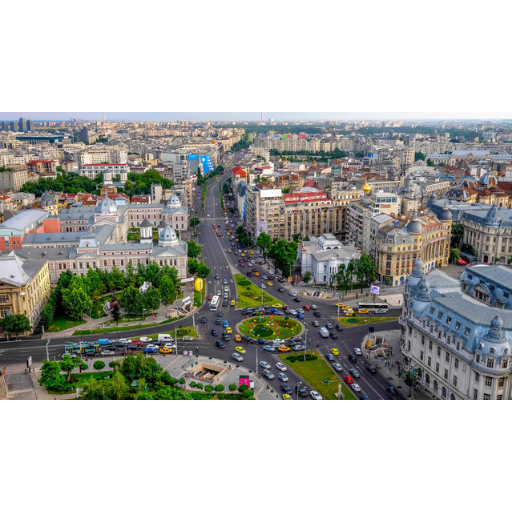
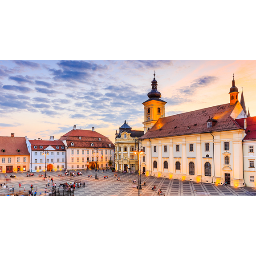
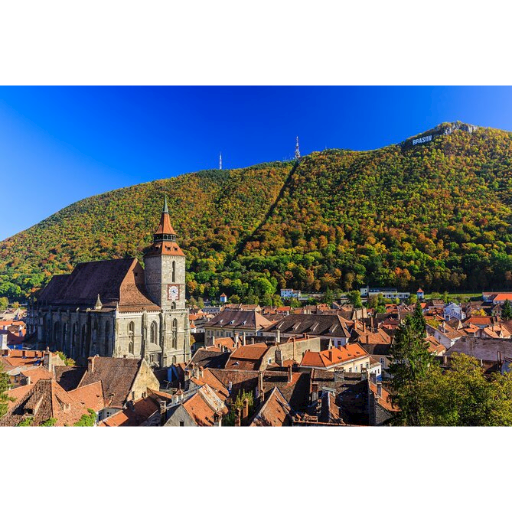
The most visited cities are Bucharest, Constanța, Brașov, Timișoara, Sibiu,
Alba-Iulia, Cluj-Napoca, Sighișoara and Iași. Natural touristic attractions include the Danube, the Carpathian Mountains, and the Black Sea.
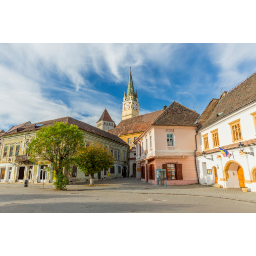
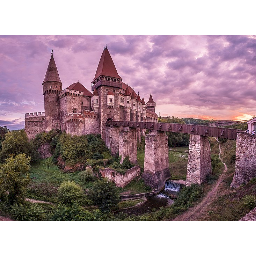
Most popular skiing resorts are along the Valea Prahovei and in Poiana Brașov. Castles, fortifications, or strongholds, as well as preserved medieval Transylvanian cities or towns such as Cluj-Napoca, Sibiu, Brașov, Bistrița, Mediaș, Cisnădie, or Sighișoara, also attract a large number of tourists.
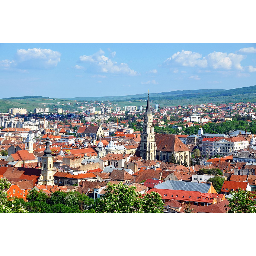
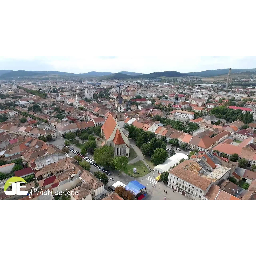
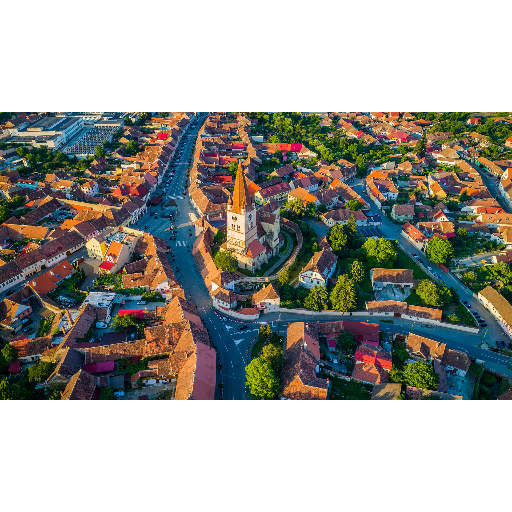
Bran Castle, near Brașov, is one of the most famous attractions in Romania, drawing hundreds of thousands of tourists every year as it is often advertised as being Dracula's Castle.
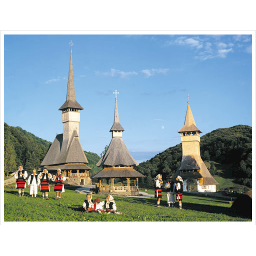
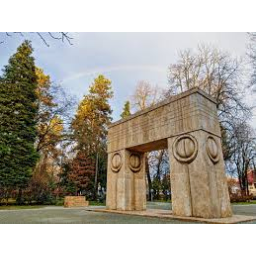
Rural tourism, focusing on folklore and traditions, has become an important alternative, and is targeted to promote such sites as the painted churches of northern Moldavia, and the wooden churches of Maramureș, or the villages with fortified churches in Transylvania. Other attractions include the Danube Delta or the Sculptural Ensemble of Constantin Brâncuși at Târgu Jiu.
Customs and Traditions
Easter
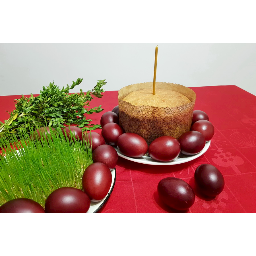
This is one of the most important holidays Romanian people have. The night before Easter people go to church and bring the Sacred Light. They light their candles from the sacred light of the priests. The light symbolizes peace and good luck. Moreover, people paint the eggs in different colors (mostly in red which symbolizes the color of Jesus’ blood). People use leaves of onion in order to create different models on the eggs.
Vanashen Secondary School
Hasmik Charkhchyan
Mucenici
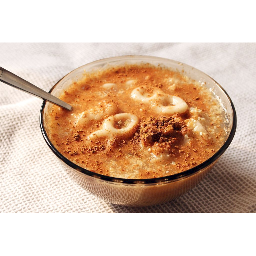
Mucenici are a traditional Romanian dish made only once a year and eaten on March the 9th. Mucenici are made to celebrate the Forty Martyrs of Sebaste, a religious holiday celebrated by the orthodox church.
Mucenici are a very authentic Romanian recipe and as a kid.The beginning of Spring is associated with this delicious dish which basically consists of vegan pastry in a nutty, sugary syrup. Think of it like a sweet pasta soup that tastes fantastic.
Yerevan Basic School named
after Alexander Blok N122
Sirine Kosyan
Naira Zeynalyan
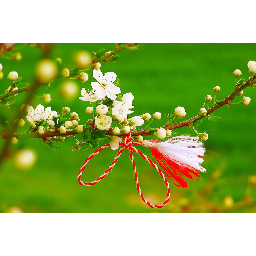
On the 1st of March, to mark the arrival of spring, Romanian women receive, either from men, or from their girlfriends, a small jewel-like ornament tied with a red and white string with hanging tassels. Worn pinned to clothes, on the left, in front of one’s heart, it is usually handmade, but can also be made of out of gold or silver. Central to the age-old custom, is the combination of red and white in the same string, which represents the duality of life and death.
Traditionally at the end of march the martisor get get tied to a tree’s branches, but these days, especially in urban areas, they are simply kept in the jewelry box until next spring.
Dragobete - The Romanian day of love
Dragobete is a traditional Romanian holiday celebrated on February 24, considered to be the Romanian counterpart of Valentine`s Day. It celebrates love, but also nature that is coming back to life.
Around that day, which represents the end of winter, it is believed that birds find their mate and start building nests together. Traditionally, young men and women would pick flowers together in the woods, and upon returning, women would allow the man they fancied to steal a kiss. That would mark the start of their relationship, and bygone times, that of their engagement. Today, a common custom says that women should make sure that, by the day’s end, they’ve touched a man, should they want to be happy in love that year.
Yerevan Basic School named
after Alexander Blok N122 Haykanush Ghevondyan
13th century Romanesque Densuș Church
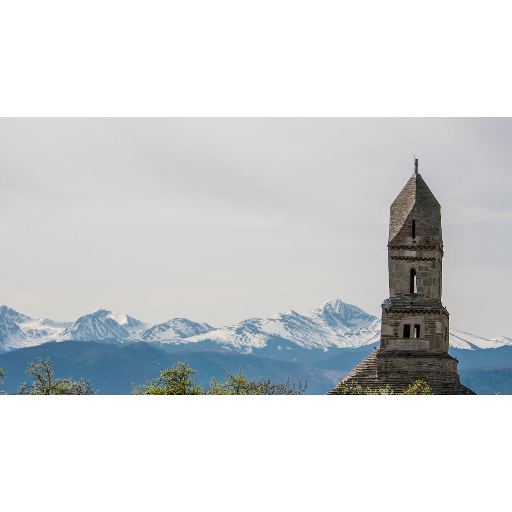
The Densuș Church (also known as St Nicholas' Church) in the village of Densuș, Hunedoara County is the oldest stone church in Romania.
Juleta Vardanyan Yerevan N123 basic school
Tamara Mirzoyan
L. Mirijanjan 155 basic school
Seen as the Romanian version of Valentine’s Day, Dragobete is celebrated on February 24. Dragobete, personified as a young handsome man, is the protector of lovers in Romanian folk culture. Around that day, which represents the end of winter, it is believed that birds find their mate and start building nests together. Traditionally, young men and women would pick flowers together in the woods, and upon returning, women would allow the man they fancied to steal a kiss. That would mark the start of their relationship, and bygone times, that of their engagement.
Anush Hakobyan
Koghb school N 2 ARMENIA
To many, Romania is still a land of myth and legend. And considering the number of traditions that are still present in Romanians’ everyday lives, this may not be such a cliché.
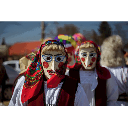
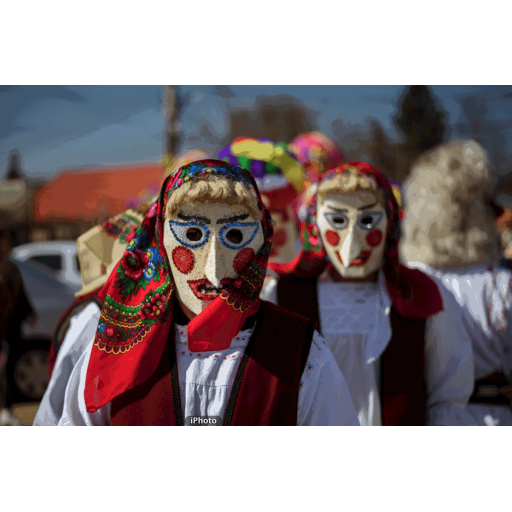
Christmas is one of the two very important religious holidays in Romania, the other one being Easter.
Just like in the majority of the Christmas world, Christmas in Romania is celebrated on December 24-25. Yet the traditions go far beyond exchanging gifts and decorating the Christmas tree.But by far the most popular Romanian Christmas tradition is Christmas Caroling.Romanian Christmas carols are some of the oldest in the world
Romanian Christmas food
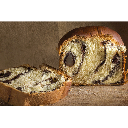
Food preparation is also a very important ceremony. Everything begins at 5 am, with the preparation of the traditional cozonac – a sweet sponge cake with nuts and cocoa filling.
Liana Markosyan Hrazdan N2 Basic School
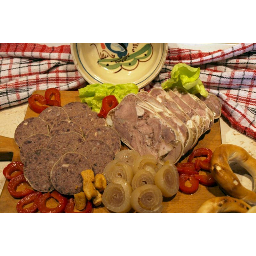
Afterward, the preparation of the traditional pork specialties begins. Smoked ham and sausages, jellied pork, greaves or tripe soup are just some of the winter delicacies that make Romanian Christmas a feast for all your senses. And the best way to enjoy all of these is with a glass of palinka.
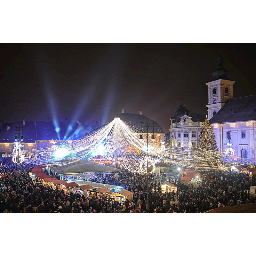
The atmosphere is most spectacular at night when the bright Christmas lights twinkle all over Sibiu’s Old Town. This place is filled with pretty much everything, from roasted almonds and mulled wine to traditional Romanian ornaments and handmade products such as leather hats and gloves, jewelry, furs, and more.
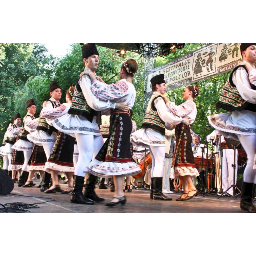
Romanian folk costumes
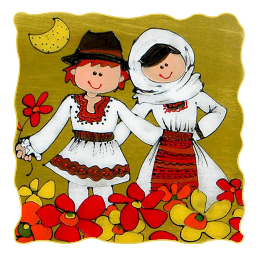
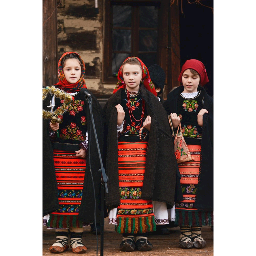
The Romanian boys in this photo are wearing long white pants, white shirts and long black jackets. Their hats are black and slightly cylindrical. The girls wear white shirts with red drawings, black shoes with black jackets and striped red and black skirts. Their hair turns into layers decorated with flowers.
Armine Harutyunyan, Armenia
Romanian Christmas traditions
Romanian Christmas, celebrated on December 25, is closely associated with pagan holidays, some of which continue to be part of the holiday season in Romania. The pagan themes of life and death are embedded in the Christian tradition of Christmas.
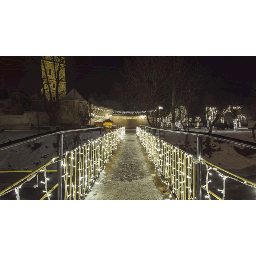
Culture of Romania
Vanashen Secondary School
Hasmik Charkhchyan
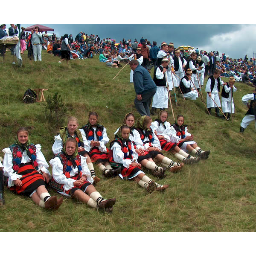
Dance at Prislop (Hora de la Prislop)
Traditional celebration of ties among three of Romania's main regions: Transylvania, Moldova and Maramures; villagers parade in traditional costume to Prislop Pass in the Carpathian Mountains, then participate in traditional dances, singing and feasting.
Calusarii is danced in the Southern part of Romania, North the Danube and in some parts of Moldova. It is exclusively a male dance, played by groups of men who gather specifically for this occasion at Whitsuntide. The young would gather and swear and oath not to reveal the secrets. Two characters lead the ceremony: the master and the mute (a negative character, sort of a buffoon, a caricature meant only to maintain the conflict). Probably the ritual was tied to the cult of the Sun, turned into a Christian ritual in which the Holy Ghost comes down upon the believers.
Naira Zeynalyan
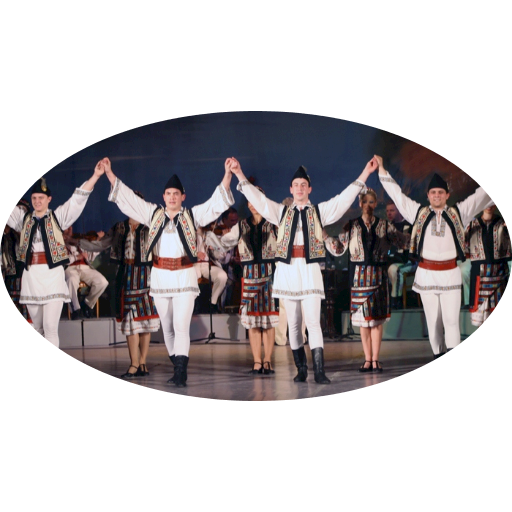
CALUSARII
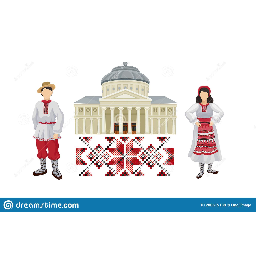
Romanian dress refers to the traditional clothing worn by Romanians, who live primarily in Romania and Moldova, with smaller communities in Ukraine and Serbia. Today, the vast majority of Romanians wear modern style dress on most occasions, and the garments described here largely fell out of use during the 20th century. However, they can still be seen in more remote areas, on special occasions, and at ethnographic and folk events. Each historical region has its own specific variety of costume.
Yerevan Basic School named
after Alexander Blok N122
Sirine Kosyan
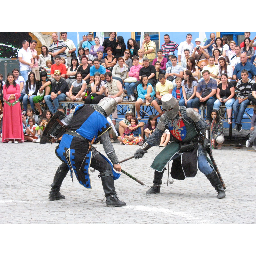
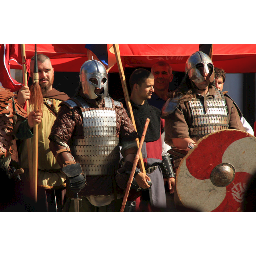
For three days, the narrow streets in the shadows of the old town citadel are packed with troubador music, parades in medieval costumes, street entertainers and craft displays. Add to that open-air concerts and medieval themed events and you begin to get some idea of the atmosphere created. The whole place comes alive with gladitorial contests such as jousting, as well as conferences, dancing and street carnivals. Many Romanians come to experience the medieval atmosphere but, in recent years, more and more people from overseas have started to join them.
Yerevan Basic School named
after Alexander Blok N122 Haykanush Ghevondyan
Greek Catholic Cathedral in Blaj, Transylvania
The Cathedral of the Holy Trinity (Romanian: Catedrala Sfânta Treime) in Blaj, Romania is a Romanian Greek Catholic cathedral commissioned by bishop Inocențiu Micu-Klein in 1738. The church was built by Viennese architects Anton Erhard Martinelli and Johann Baptist Martinelli, being completed in 1749.
The building was extended in 1838, when the two monumental towers were added.
Tamara Mirzoyan
L. Mirijanyan 155 basic school
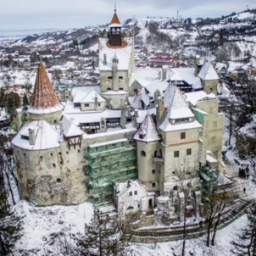
Romanian culture sets itself apart from others in the Eastern European region just as it shares some elements with them. For example, the legend of Dracula and the Dacian history are unique to Romania. Despite popular culture's fantasy images of Dracula, this bloodthirsty leader was a real person. Sights throughout Romania, like Bran Castle, are associated with Vlad the Impaler (also known as Dracula), and tours and events focus on his legacy.
Bran Castle was a favorite residence of Romania’s Queen Marie, and its museum honors the Queen and pays homage to the associations the castle has gained with the Dracula legend.
ANUSH HAKOBYAN KOGHB SCHOOL N 2
Romanian culture is influenced by Hungarian, Turkish, Greek, Slavic, Serbian and Ukrainian cultures. Besides Central and Eastern European influence, Western countries such as France and Germany made a great impact on the culture of Romania.
MUSIC
The traditional Romanian folk music is tarafs. Besides tarafs, the most famous styles of folk music are doina (melancholic music played in slow rhythm), bocet (played in free rhythm and sung by one or more people), cântec batrânesc (traditional form of ballad).
CUISINE
Romanian cuisine is famous for meats such as pork, beef and lamb, fish, vegetables, dairy products, fruit and wine and it is influenced by Hungarian, Slavic and Turkish cuisines.
ARCHITECTURE
Romania is rich in World Heritages such as Saxon villages with fortified churches in Transylvania, the painted churches of northern Moldavia, the Wooden Churches of Maramures, the citadel of Sighişoara and the Dacian Fortresses of the Orăştie Mountains.
The city of Sibiu will be the European Capital of Culture.
Liana Markosyan Hrazdan N2 Basic School
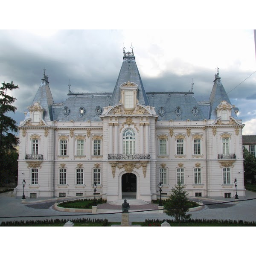
Jean Mihail Palace, erected 1899-1907 in Craiova, Romania, now is an art museum
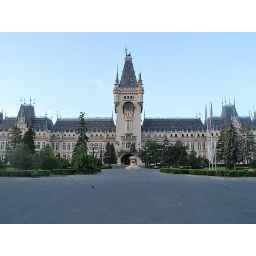
The Palace of Culture in Iasi, built 1906-1925, now is a museum complex.
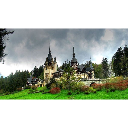
Peles Castle, built 1873-1914 at Sinaia, Romania, as summer home for King Carol I
Peles Castle, built 1873-1914 at Sinaia, Romania, as summer home for King Carol I.
- < BEGINNING
- END >
-
LIKE
-
COMMENT