THIS DICTIONARY IS PREPARED BY THE STUDENTS OF HI-NATURE eTwinning PROJECT

A
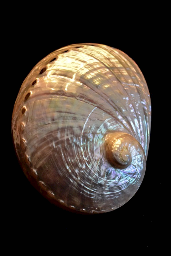
Abalone: A medium-sized to very large sea snail, whose exceptionally strong shell is made of microscopic tiles stacked like bricks. When something bangs against an abalone shell, these tiles slide back and forth rather than shattering, resulting in a material stronger than ceramics made by humans. Even better, the abalone makes this super-tough material out of calcium carbonate – also known as chalk!
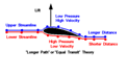
Aerofoil: A device that provides reactive force when in motion relative to the surrounding air; can lift or control a plane in flight
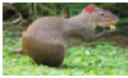
Agouti: A rodent that inhabits Central America,
related to the paca
Airplane: A flying motor vehicle that can rise and move through the air with the help of the pressure exerted by the air under its wings.
A

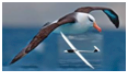
Albatross: Albatross is the name given to the bird species that make up the Diomedeidae family. They can soar for a long time without flapping their wings. Inspires to the glider
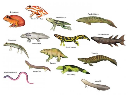
Amphibians: Cold-blooded animals such as frogs, toads, salamanders and newts which start out breathing water and later grow into air-breathing adults. Amphibian populations around the globe are threatened or extinct, and scientists do not agree on the reason.
A
A
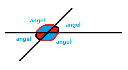
Angle:The space between two lines or planes that intersect
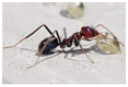
Ant: It is the common name given to insects that make up which are part of the membrane winged group together with wasps and bees, and that show social life.
Architecture: The discipline dealing with the design of fine buildings
B
*Bacteria:Very tiny organisms with just one cell. Bacteria live in every habitat on Earth, including soil, water, radioactive waste, and in your body. The word “bacteria” is plural; the singular form is “bacterium.”
*Barbed wire:It is a wire that runs along the border of a field to make the passage difficult. Inspired by the hedgehog.
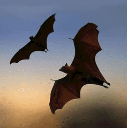
*bat :They are mammals classified in the order Chiroptera, whose forelimbs have adapted as wings and can naturally fly.
Bacteria: Bacteria are microscopic, single-celled organisms that thrive in diverse environments. These organisms can live in soil, the ocean and inside the human gut. Humans' relationship with bacteria is complex
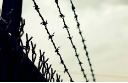
Barbed wire: It is a wire that runs along the border of a field to make the passage difficult. Inspired by the hedgehog.
Bat: They are mammals classified in the order Chiroptera, whose forelimbs have adapted as wings and can naturally fly.
B
Beak: It is an anatomical external structure of birds. In addition to feeding, it is used for grooming, cleaning, skillfully handling objects, killing prey, probing in foraging, courting, and feeding their offspring.
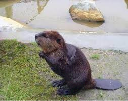
Beaver: It is the common name of rodents that live on water shores and feed by gnawing trees.
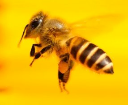
Bee: Insect that makes honey and beeswax and stings with its needle (Apis mellifica)
B
Biological: Pertaining to life and living thing
Biomimicry: From bios, meaning life, and mimesis, meaning to imitate A relatively new science which imitates or take creative inspiration from nature to solve human problems sustainably. Biomimicry is when a person is inspired by nature and makes a building, a vehicle, a thing ...
Butterfly: The common name given to four-winged insects, whose bodies and wings are covered with fine scales and various colors, with about one hundred and seventy thousand species.
C
Catfish:Tey are flat structured freshwater fish. They are inspire to ghost planes
Color: It is the feeling caused by the nucleus structure of the light in the eye or reflection from objects.
Concentration: The transformation of more than one molecule into a single molecule, concentration, concentration.
C
Climate: A description of the temperatures, humidity, rainfall and other weather factors in a certain region over a long period of time (at least 30 years
Cross-pollinate: Fertilize by transfering pollen
D
Device: A thing made or adapted for a particular purpose, especially a piece of mechanical or electronic equipment.
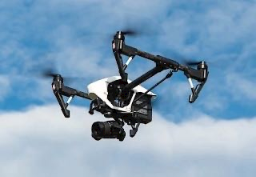
Dron: An aircraft without a pilot and operated by remote control
E
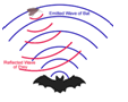
Echolocation: Orientation by radar. *Echolocation is a biological sonar used by several animal species
Ecological: Characterized by the interdependence of living organisms.*Ecology is the study of the relationships between living organisms, including humans, and their physical environment
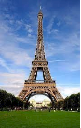
Eiffel tower: It is the iron tower in Paris. The tower has also become the symbol of France all over the world. Inspired by the thighbone

E
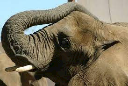
Elephant's trunk: It consists of the combination of elephants' snouts and upper lips; they are very strong and can bend in all directions. Elephants use their Tubes while sniffing or holding objects. Inspires the robot arm
Entegration: Coming together, unification, integration.
Extinct: Lost or especially having died out leaving no living representatives. A species of animal or plant that is extinct no longer has any living members (dead, lost, gone, vanished)

E
Emulate: To copy something achieved by someone else and try to do it as well as they have
Endangered: Animals or plants that may soon not exist because there are very few now alive.An animal that is endangered is close to extinction: there aren't many of that type of animal left in the world.
F
Fast Train: High-speed train is a railway vehicle that provides the opportunity to travel faster than normal trains.inspired by the kingfisher.
Femur: The thigh bone. It is the longest and strongest bone in the human body, longer than any of the other bones in your limbs
F
Fertilizer: Chemicals which help plants grow. Many types of fertilizer come from natural sources, such as decaying plants and animal manure
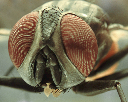
Fly: It is the common name for arthropods from the insect group called bipeds or biplane. Inspired the zipper
Forest: The trees and other plants in a large densely wooded area.
G
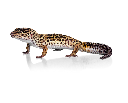
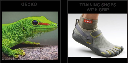
Gecko:A small lizard found in warm climates which chirps when interacting with other geckos. Tiny bristles on the gecko’s foot allow them to climb walls and even walk across ceilings, seem to defy gravity. Scientists are mimicking these bristles to make a glue-free yet sticky tape.
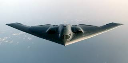
Ghost plane: They are aircraft that cannot be caught by radar systems or are very difficult to catch. Its design was inspired by catfish.
G
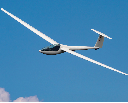
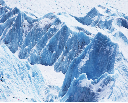
Glacier: A large river of ice, made out of many compressed layers of snow, moving very slowly. Fixed wing aircraft that can fly without any power source on it.
Glider: The increase in the average measured temperature of the Earth’s near-surface air and oceans since the mid-20th century, and its projected continuation.
Global warming: An increase in the average temperature of the earth's atmosphere (especially a sustained increase that causes climatic changes)

G
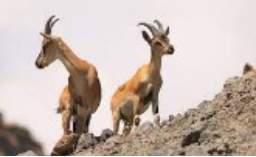
Goat: Mammal from this ruminant, breds all over the world for its meat, milk, skin and hair. It is one of the best and fastest climbing animals in the world.
Golden rule fibonacci: Golden ratio, in mathematics, the irrational number (1 + Square root of √5)/2, often denoted by the Greek letter ϕ or τ, which is approximately equal to 1.618.
H
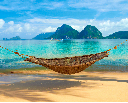
Hammock: Net bed made of netting, cloth, etc., which can be hung between two trees or poles, that can lie on and swing
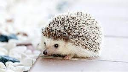
Hedgehog: It is an insect-fed animal, about 30 cm long, covered with sharp spines, taking the shape of a ball for protection in case of danger.
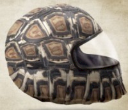
Helmet: worns by motorcycle riders to protect the head from bumps.
H
Hidden: Difficult to find
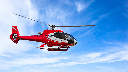
Helicopter: An overhead, overhead propeller aircraft that can also be used in tight spaces because it can take off and land vertically
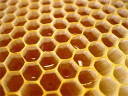
Honeycomb: Beeswax plate filled with honey
I
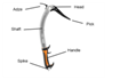
Ice axe: An ax used by mountain climbers for cutting footholds in ice synonyms
Imitation: Something copied or derived from an original
Insects: The most diverse group of animals on Earth, more than half of all known living organisms are insects. The study of insects is called entomology, which means “cut into sections” in Greek.
Inspıratıon: Arousal of the mind to special unusual activity or creativity
J
Jaguar: A large spotted feline of tropical America similar to the leopard; in some classifications considered a member of the genus Felis
Jungle: An impenetrable equatorial forest
K
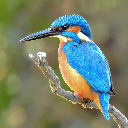
Kingfisher: it is a bird that lives on the shores of water and feeds on fish, about 20 cm in length, with short legs, a long pointed beak, a bright blue back, dark green shoulders, a dark green belly, and a white neck. inspired the fast train.
L
Land: The part of the earth that is not covered by the sea, the ground, the soil.
Lifespan: The typicsm can bal length of time that any particular organe expected to live.
Lotus: Bative to eastern Asia; widely cultivated for its large pink or white flowers.
M
Mystery: Something not understood or beyond understanding
Mammal: A vertebrate animal which has sweat glands (including sweat glands modified for milk production), hair, three middle ear bones used for hearing, and a special region in the brain called a neocortex. There are over 5,000 species of mammals, including dolphins, whales, bats, cats, rats, donkeys, cheetahs, camels, pigs, bears, hyenas and humans.
M
Mimesis: Imitative or realistic representation in art and literature
Mountaineer Anchor: It helps in glacier climbing, waterfall climbing, climbing and descending routes containing ice and rock and is a very important tool that allows you to hold on to life when you slide on the ice and saves you from death.
N
Nautilos fish: It helps in glacier climbing, waterfall climbing, climbing and descending routes containing ice and rock and is a very important tool that allows you to hold on to life when you slide on the ice and saves you from death.
Nutrient: Any substance that can be metabolized to give energy
Ocean:The whole body of salt water that covers nearly three fourths of the earth
O
P
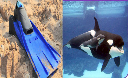
Palet: It is a tool that is put on the feet to swim fast. ıt is inspired by whale
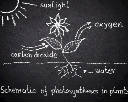
Photosyntheis: The process plants use to turn sunlight into food. Plants use the sun’s rays to “cook” carbon dioxide and water, which produces oxygen and carbohydrates. Oxygen is a key part of the air that animals breathe, and carbohydrates are the sugars and starches that animals eat. So, without photosynthesis in plants, we couldn’t breathe the air and we’d have nothing to eat!
Project: A project is a piece of work which is not a process or an operation. It has a start, an end, and goals.
Pointed beak: Pricking. *Get thinner towards the end.


Quadrangle : Aflat shape with four straight sides
Quarry: A person or animal being hunted or looked for
Q
R
Radar: It is a device that detects distant objects and the speed and distance of these objects with the help of the reflection of radio waves. Inspired by the bat
Recycling: The processing of used materials into new products. In nature, everything is designed to be reused or to decay, but humans create most of their products without thinking about what will happen to them when they are no longer useful. Many scientists and designers are suggesting that humans begin to manufacture products the way nature does.
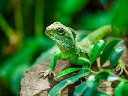
Reptiles: Cold-blooded animals with scales and no hair or feathers. Examples include crocodiles, caimans, alligators, lizards, snakes, turtles and tuataras


R
Research: Systematic investigation to establish facts.
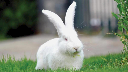
Rabbit: Any of various burrowing animals of the family Leporidae having long ears and short tails; some domesticated and raised for pets or food
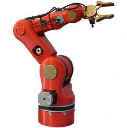
Robot arm: Programmable, the whole of mechanical parts or part of a complex robot. Inspired by the elephant trunk.

S
Sky: The atmosphere and outer space as viewed from the earth
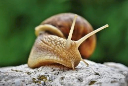
Snail: Freshwater or marine or terrestrial gastropod mollusk usually having an external enclosing spiral shell.
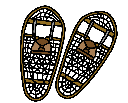
Snowshoe hare: A type of hare which turns white in the winter and reddish brown in the summer. Its big back feet help keep it from sinking into the snow in winter – like snowshoes.

S
Solar panel: It is an energy source that contains many solar cells that are used to absorb solar energy.
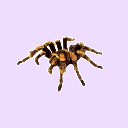
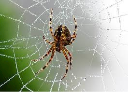
Spider: An articulated animal that weaves its net with the thread it secretes from the glands in its abdomen, and can climb up and down the space by hanging on this thread
Spider web: It is the nest knitted from a special thin thread made by spiders.
Submarine: A submersible warship usually armed with torpedoes

S
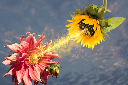
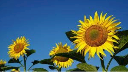
sunflower: It is a yellow flowered agricultural plant grown for its seeds and oil from the daisy family. Inspired the sun panels
Surfing Suit: Resembling a wetsuit, these swimsuits do not restrict your mobility while surfing. It keeps warm according to the season of surfing or just protects it from water. It was inspired by beaver.
Sustainable: Capable of being prolonged.
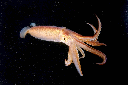
Squid: A marine mollusk that belongs to the cephalopods class, the Ten-armed group.
Swim bladder: Fins are organs that help fish move in water fathoms are organs that help fish move in water


T
Technology: Knowledge about scientific or industrial methods or the use of these methods.
Telescope: A piece of scientific equipment shaped like a tube, used for making distant objects look larger and closer.
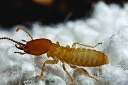
Termite: They are known for building mud towers for shelter. They inspired ventilation systems.
T
Tighbone: It is the longest, voluminous and strongest bone in the body of mammals. It forms part of the hip and knee. It inspired the Eiffel tower.
Training shoes: It was a special type of shoe designed for rock climbing.
Turtle: It is a reptile animal with four legs, toothless beak mouth, walking very slowly, living in a very hard and bony shell. Inspired the helmet.
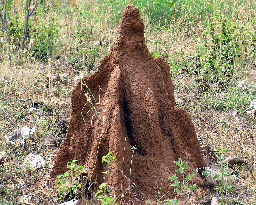
Termite nest: The place of termites is indisputable among architects in nature. Termites, an insect species very similar to ants in appearance, live in magnificent nests they make from the ground. The building material of the nest is a hard and durable mortar made by the workers by mixing their saliva with soil. The peculiarity of the nest is that it provides the colony with regular air, constant temperature and humidity. The thick and hard walls of the skyscrapers made of earth serve to keep the interior of the nest away from the heat outside. For air circulation, they make special corridors that run along the inner walls of the nest. On the other hand, the pores constantly filter the air.
T
U
Ultrasound: Special sound waves used in such processes as examining organs inside of the body an directing the route of submarines .
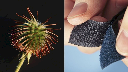
Velcro: It is an assemblyf flexible hooks on one side and numerous tiny and flexible ringlets on the other to hold the dress, shoe edges and many other things together.
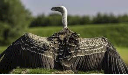
Vulture: It is a mountainous, multi-purpose flying, sharp-eyed, scavenger, large and predatory bird with a bare head and neck. Inspired the plane
V

W
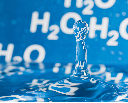
Water: A clear liquid, without color or taste, that falls from the sky as rain and is necessary for animal and plant life
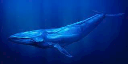
Whale: Any of the larger cetacean mammals having a streamlined body and breathing through a blowhole on the head
Wind : Acurrent of air moving approximately horizontally, especially one strong enough to be felt
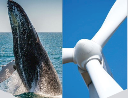
Wind turbine : A wind turbine is a system that converts the kinetic energy in the wind first into mechanical energy and then into electrical energy. inspired by the whale.
W
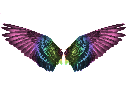
Wing: The flat part of the body that a bird, insect, or bat uses for flying, or one of the flat, horizontal structures that stick out from the side of an aircraft and support it when it is flying
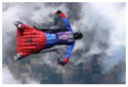
Wingsuit : The sport of flying through the air wearing a wingsuit following a parachute jump.
Woodpecker : Bird with strong claws and a stiff tail adapted for climbing and a hard chisel-like bill for boring into wood for insects.
X
Xenobiology: The branch of science that studies biological rhythms.
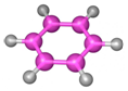
Xenobiotic: Xenobiotic is any chemical that would not normally be found in a living organism or be expected to be produced
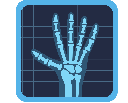
X-rays : Special rays that we use in medicine
y-z
Yacht : An expensive vessel propelled by sail or power and used for cruising or racing
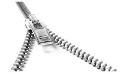
Zipper: A tool in the form of a strip that connects the two parts of the fabric or leather on which the clothes, bags, boots and similar items are sewn and placed in the places where they need to be opened and closed, such as collars, pockets, and when the slider is pulled, the mutual teeth are interlocked and clamped. Inspired by fly.

- < BEGINNING
- END >
-
LIKE
-
COMMENT