
"Show Me My Country". My students collected all the information, they learned and shared their thoughts during the project.

Georgian dance is the traditional dance of Georgia. It has its roots in the military moves, sports games, and dances celebrated during holidays in the Middle Ages. Georgian dance was popularized by Iliko Sukhishvili and his wife, Nino Ramishvili, founders of the Georgian National Ballet.
Georgian dance - Kintouri
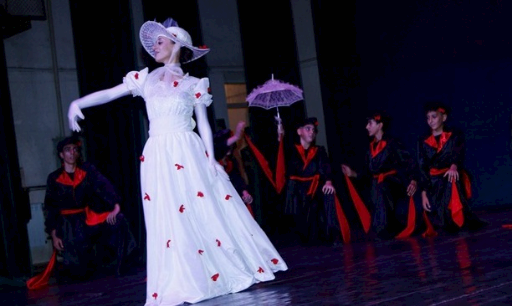
Two folk dances, Perkhuli and Khorumi, are inscribed on the Intangible Cultural Heritage of Georgia list. Kintouri portrays the city life in old Tbilisi. The dance takes its name after "Kintos" who were small merchants in Tbilisi. They wore black outfits with baggy pants and usually carried their goods on their heads around the city. When a customer chose goods, a kinto would take the silk shawl hanging from his silver belt and wrap the fruits and vegetables in them to weigh. Kintos were known to be cunning, swift and informal. Such characteristics of Kinto are well shown in Kintouri. The dance is light natured.
Shushan Sargsyan, 8th grade
Yerevan Basic School № 75, Armenia
Kazbeguri (ყაზბეგური)
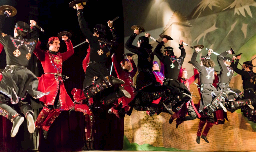
Kazbeguri originated in the Kazbegi Municipality in Caucasus Mountains of Georgia. The dance was created to portray relatively cold and rough atmosphere of the mountains, shown through the vigor and the strictness of the movements and foot stomping. This dance is performed mainly by men. Costumes are a long black coloured shirt, black trousers, a pair of black boots, and black headgear. Musical instruments include bagpipes, a panduri, achangi, and drums.
Zhanna Sargsyan, 8th grade
Yerevan Basic School № 75
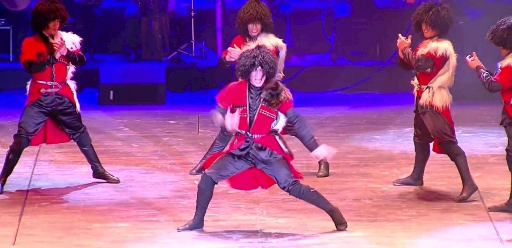
Kartuli
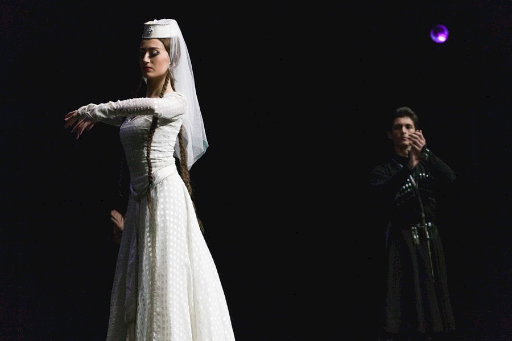
Kartuli is one of the most famous dances of Georgian couples. The musical size of the dance is 6/8. Dance requires great skill and expression, there is an element of competition in it. The dance begins with the young man, who then invites the girl. It is a wedding dance, usually after davlur.
Suren Sargsyan, 7th grade
Yerevan Basic School № 75
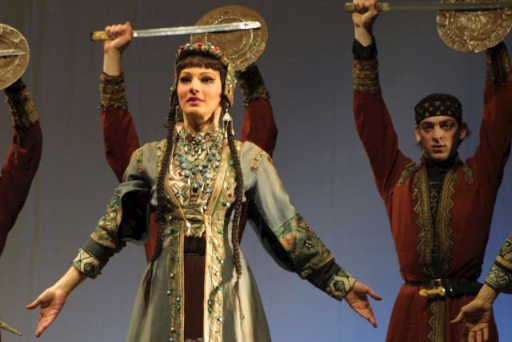
Khevsuruli (ხევსურული)
This mountain dance unites love, courage, respect for women, toughness, competition, skill, beauty, and colorfulness into one performance. The dance starts out with a flirting couple. Unexpectedly, another young man appears, also seeking the hand of the woman. Vigorous fighting between the two men and their supporters ensues. The quarrel is stopped temporarily by the woman's veil. Traditionally, when a woman throws her head veil between two men, all disagreements and fighting halts. However, as soon as the woman leaves the scene, the fighting continues. The young men from both sides attack each other with swords and shields.
Mane Melqonyan, 7th grade
Yerevan Basic School № 75
On some occasions, one man has to fight off 3 attackers. At the end, a woman comes in and stops the fighting with her veil once again. Khevsuruli is very technical and requires intense practice and utmost skill in order to perform the dance without hurting anyone.
Mtiuluri is also a mountain dance. Similar to Khevsuruli, Mtiuluri is also based on competition. However, in this dance, the competition is mainly between two groups of young men and is a celebration of skill and art. At first, groups compe-te in performing complicated movements. Then, the girl's dance, which is follo-wed by an individual dancer's performance of amazing "tricks" on their knees and toes. At the end, everyone dances a beautiful finale. This dance is reminis-cent of a festival in the mountains.
Mtiuluri
Anahit Martirosyan, 7th grade
Yerevan Basic School № 75
Samaia (სამაია)
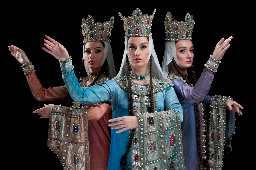
Samaia is performed by 3 women and, originally, was considered to be a Paga-nism dance. However, today's Samaia is a representation of Tamar of Georgia, who reigned in 12th-13th centuries and was the first woman king of Georgia. There are only 4 frescos that keep the much-revered image of King Tamar. Simon Virsaladze based the costumes of Samaia on the King's clothing on those frescos. In addition, the trinity idea in the dance represents Tamar of Georgia as a young princess, a wise mother and the powerful king. All these three images are united in one harmonious picture. The simple but soft and graceful movements create an atmosphere of beauty, glory and power that surrounded the King's reign.
Haykuhi Gevorgyan, 7th grade
Yerevan Basic School № 75
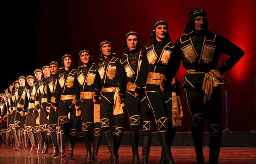
This war dance originated in Guria/Adjara, in southwestern Georgia, based on the numerous invasions of the country. The dance was originally performed by only a few men. However, over time it has grown. In today's version of Khorumi, 30-40 dancers can participate, as long as the number is odd. The dance has four parts: a search for the a campsite, the reconnoiter of the enemy camp, the fight, and the victory and its celebration. It is strong and simple but distinctive movements and the exactness of lines create a sense of awe on stage. The dance incorporates the themes of search war, and the celebration of victory as well as courage and glory of Georgian soldiers. Khorumi is traditionally accompanied by instruments, and is not accompanied by clapping. Drum and the bagpipe are two key instruments to accompany Khorumi.
Elina Avetisyan, 7th grade
Yerevan Basic School № 75
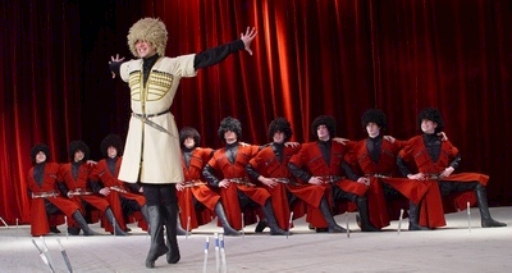
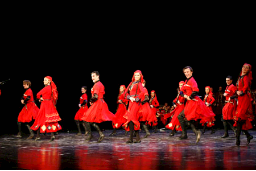
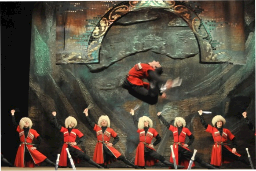
Khanjluri is based on the idea of competition. Khanjluri is one of those dances. In this dance, shepherds, dressed in red chokhas (traditional men's wear) compete with each other in the usage of daggers and in performing complicated movements. One performer replaces another, and the courage and skill overflow on stage. Since Khanjluri involves daggers and knives, it requires tremendous skill and practice on the part of the performers.
Naira Zeynalyan/Teacher of the Armenian Literature and
Language and History of Armenian Church/
Yerevan Basic School № 75
- < BEGINNING
- END >
-
LIKE
-
COMMENT