
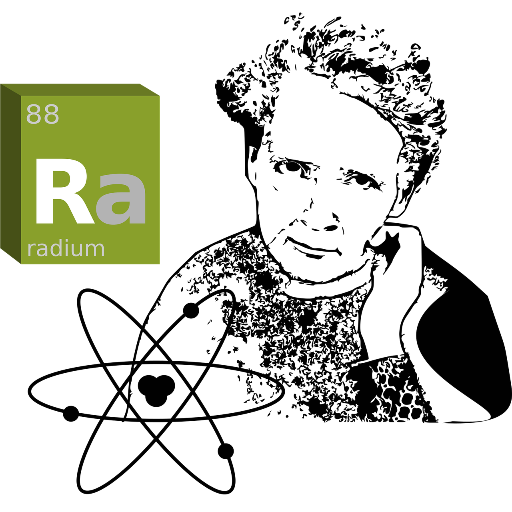
Maria Skłodowska - Curie was born in Warsaw, Poland in 1867. She moved to Paris at the age of 24 and attended Sorbonne University. She was a physicist and chemist. Maria and her husband Pierre Curie worked on radioactivity. They discovered Polonium and Radium. Her work led to the development of nuclear energy and radiotherapy for the treatment of cancer. She got two Nobel Prizes. Maria did not renounce her Polish roots and surname. In 1911, she received a Nobel prize for chemistry as Maria Skłodowska-Curie.
The pioneer researcher who saved millions of women.
George Papanikolaou
George Papanikolaou, the son of the Kymi based doctor Nikolaos Papanikolaou, was the Greek doctor who devised the life saving ‘Pap smear’.
Papanikolaou demonstrated his aptitude for science from an early age, but he seemed more interested in music and the humanities. That is seen from the fact that in his free time, he liked to learn foreign languages and play the violin.
Consequently, although he graduated from the Medicine School of Athens in 1889, he decided to study philosophy and biology, rather than work as a doctor.
In 1907, his father decided to send him to Germany, where George got higher education and went into medicine at the urging of his father. But even then, he never quit philosophy and later moved to the formation of a group of socialists.
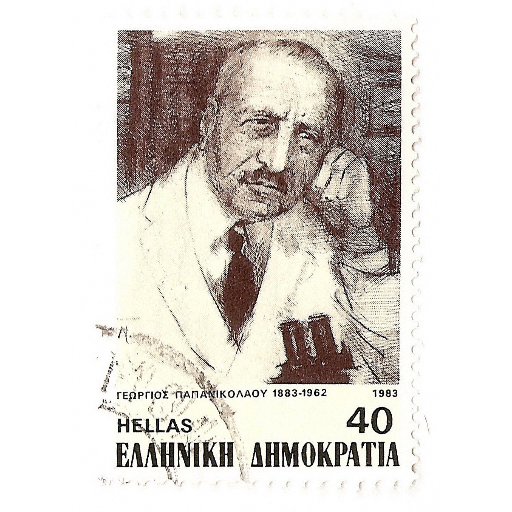
In a turn of events, he decided to devote his life to biological research, telling his family:
“I quit being a dreamer. Science snatched me up from Nietzsche’s arms. I sran on solid ground”.
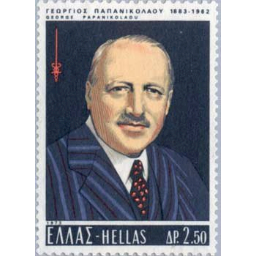
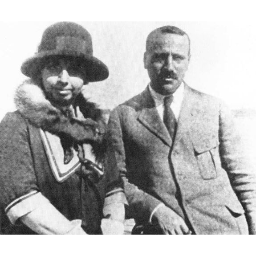
Three years later, in 1910, he married Andromachi Mavroyenis, left for Europe and eventually worked for the Oceanographic Institute of Monaco.
After the Balkan Wars, in which he served as an army physician, he migrated to the United States together with his wife.
After overcoming the first hurdles such as lack of money, he was appointed an assistant position in the Department of Pathology of New York Hospital.
His career started developing rapidly and he later worked with of from 1914 until 1961, receiving all the titles of academic hierarchy without teaching duties, in order to focus on his research.
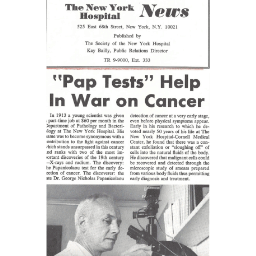
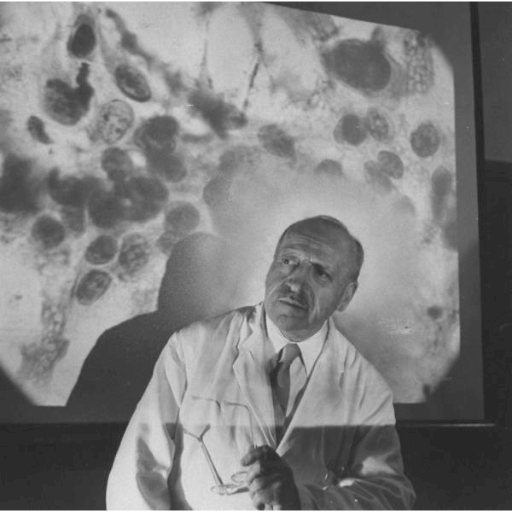
In 1928, Papanikolaou developed the revolutionary “Pap smear”, a technique where by taking cervix samples and examining them, cervix cancer or its symptoms can be detected.
With the invention of the “Pap smear”, Papanikolaou saved thousands of women around the world of all ages and is still doing so.
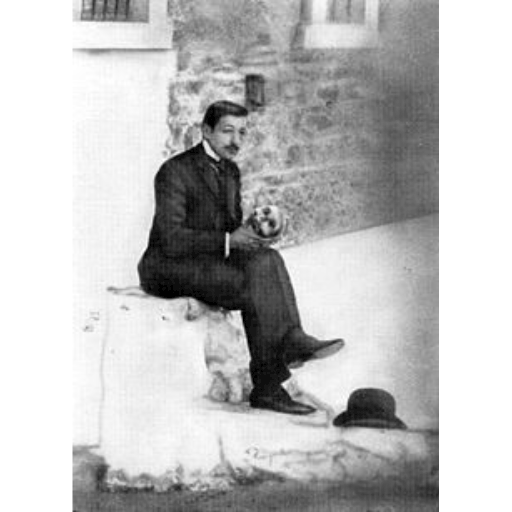
At the age of 78, Papanikolaou relocated to Miami and was appointed Manager of the local, but he unfortunately missed its opening due to his death. In his honor the Institute was renamed to “Papanicolaou Cancer Research Institute" and commemorative plaque, together with a statue, was built in front of the entrance of the Institute.
After his death, the international academic community admitted to the injustice towards Papanikolaou for not having received the Medicine Nobel Prize for his revolutionary discovery, despite being proposed by tens of Greek and foreign researchers.
AZİZ SANCAR
TURKISH SCIENTIST

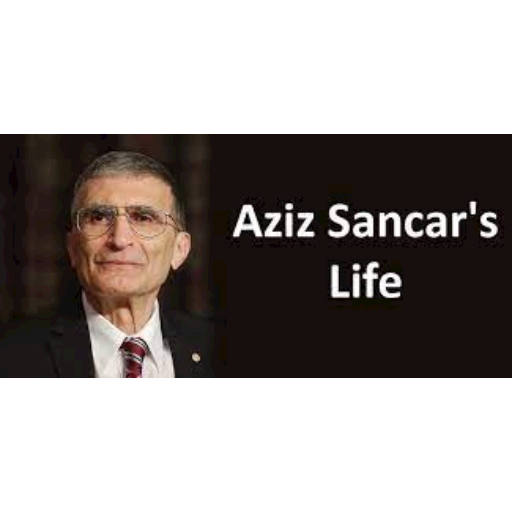
Aziz Sancar was born in Savur in southeast Turkey in a lower middle class family. His parents had no education but considered education important for their children. Sancar studied at Istanbul University and at the University of Texas, Dallas, where his received his doctorate in 1977. He is a professor at the University of North Carolina School of Medicine, Chapel Hill. Aziz Sancar is married to Gwen Boles Sancar who also is a professor in biochemistry and biophysics.
Living cells have DNA molecules that carry an organism's genes. For the organism to live and develop, its DNA cannot change. DNA molecules are not completely stable, and they can be damaged. In 1983, through studies of bacteria, Aziz Sancar showed how certain protein molecules, certain repair enzymes, repair DNA damaged by ultraviolet (UV) light. These discoveries have increased our understanding of how the living cell works, the causes of cancer and aging processes.
NOBEL PRIZE
In 2015, he was awarded the Nobel Prize in Chemistry along with Tomas Lindahl and Paul L. Modrich for their mechanistic studies of DNA repair. He has made contributions on photolyase and nucleotide excision repair in bacteria that have changed his field.
NOW
Sancar is currently the Sarah Graham Kenan Professor of Biochemistry and Biophysics at the University of North Carolina School of Medicine and a member of the UNC Lineberger Comprehensive Cancer Center. He is the co-founder of the Aziz & Gwen Sancar Foundation, which is a non-profit organization to promote Turkish culture and to support Turkish students in the United States.

OKTAY SİNANOĞLU
Prof. Dr. Oktay Sinanoğlu dedicated to science and development of Turkish, has carried out studies significant for history of world science.
Known as the “Turkish Einstein”, Prof. Dr. Oktay Sinanoğlu was born in Bari, Italy in 1935.
After graduating from the Turkish Education Foundation Yenişehir High School as a valedictorian, the institute sent him to USA to study on a scholarship. He studied chemical engineering at the University of California, and graduated with highest honours. After graduating from Massachusetts Institute of Technology again ranking first, he received high chemical engineer title. he also conducted research at the U.S. Atomic Energy Commission.
Contributed to World Science Literature
At the age of 20, he started to teach at Harvard and Yale universities. He received professor title at the age of 26 as well as the title of “the youngest professor in the world”. While he was teaching at Yale, he conducted studies in areas such as “Many-Electron Theory of Atoms and Molecules “, “Solvophobic Theory”, “Network Theory”, “Micro-thermodynamics” and “Valency Interaction Formula Theory”. He presented a research system dubbed “Sinanoğlu Made Simple” based on mathematical theories. He theorised creation of unknown living things through solving DNA codes. Throughout his life of science, he made major contributions to the world science literature by developing hundreds of theorems in the fields of quantum physics and chemistry, molecular biology and mathematics.
Nominated Twice for Nobel Prize
Sinanoğlu, who has been nominated twice for the Nobel Prize, also received many awards in his field. He was deemed worthy of dozens of awards including The Alexander Von Humboldt Science Prize, one of the most important awards of Germany, Japan’s International Sekin Science Award and the TUBITAK Science Award. Sinanoğlu is also the only person with the title of Professor of the Republic of Turkey.
The END of this PROJECT
- < BEGINNING
- END >
-
LIKE
-
COMMENT