
In this book you will find real myths and imaginary myths about the monuments chosen by the students of each country.
We hope that you will enjoy it!!!
The students and teachers of all partner schools

TABLE OF CONTENTS
1."Myths of the White tower", contribution by the students of the 2nd Primary School of Palaiokastro (class E1), Greece
2."The castle of Kyra-Rini and King Aniliagos", contribution by the students of the 2nd Primary School of Messolonghi (class A), Greece
3."The death of Meleagros", contribution by the students of the 2nd Primary School of Messolonghi (class B), Greece
4.Monument to the Duke Kestutis, contribution by the students of the 4b class of Prienai "Azuolo" progimnazija, Lithuania
5.Saint George and the dragon, contribution by the student of the Primary school of via Milelli IC Zumbini Cosenza (Italy)
6. A ghost at school, contribution by students of Primary Education, from Santo Ángel Gijón, Spain
7. Rotonda, contribution by the students of the 2nd Primary School of Palaiokastro (class E2), Greece

Myths of
the White Tower
The White tower of Thessaloniki is the most important monument of the city.Thats why by researching the reports we discovered mythical and historical versions which refers to construction and of course in its name.

1.A mighty dragon
According to the legend, the White Tower was built by a mighty dragon that lived at the bottom of the Thermaic Gulf, supposedly near the current site of the tower. The dragon was threatening the residents of the area, and the residents needed to find a way to stop it.
Then, a hero, named Thessalonikos, decided to face the dragon and save the city. After a long and dangerous struggle, he managed to defeat him. As a symbol of his victory, the White Tower was built on the site of the dragon's formerly inhabited tower.
2. Kanli Koule
The White Tower changed many names over the years. At first it was called the Tower of Saint George, then the tower of the Lions and then, during the years of the Turkish rule, "Kanli-Kule", or Tower of Blood, because the Turks used it as a prison for future deaths and a place of torture, which were often carried out by the Janissaries filling the walls with blood. The torture of the prisoners was horrible and that is why there was blood everywhere.
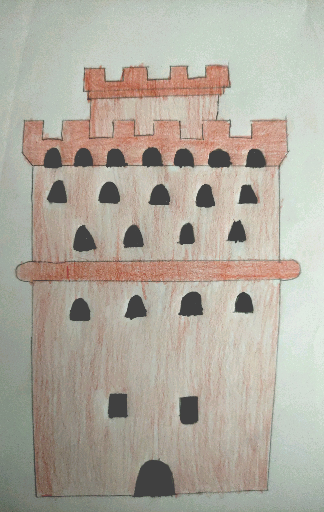
Until a prisoner in the tower, Nathan Gueledi, offered to whitewash him in exchange for his freedom. so it happened and from then on the tower was called White Tower.
3. The truth
White Tower was originally built by the Byzantines, and was known as the Tower of Agios Georgios. It was made of flints, which gave it a red hue, as the stone used in its construction had that color.
However, when the Ottomans occupied Thessaloniki in the 15th century, the tower was renovated and its exterior was whitewashed with limestone, giving it a white coloration. This characteristic color of the tower gave it the name "White Tower", which is known and preserved to this day. Thus, the name "White Tower" is a description of the color of its construction, and not a reference to some myth or historical fact.

"The castle of Kyra-Rini
and King Aniliagos"
The myth is related with Ancient Plevrona that is close to the city of Mesologgi. Plevrona was one of the most important cities and a harbour in the region of Etolia. Plevrona and the nearby city of Kalidona are the two cities in Etolia that Homer says sent forty ships to Troy during the Trojan War. Ruins of the city still exist today.
Once upon a time, in a beautiful and rich place , lived a prince whose name was Giftakis. Giftakis was strong but liked fighting a lot.
He fell in love with the beautiful kira-Rini but she didn’t love him back because she was in love with Aniliagos. Aniliagos could not come out in the sun so they secretly met at night.
The time when kira-Rini had to choose her husband came. In order to choose she made the two participate in a game and whoever won would become her husband. Aniliagos had to bring to the valley the water of an entire lake and Gyftakis had to build a castle on the mountain. The winner would be the first to complete the task.
In order to avoid or postpone the wedding until Aniliagos brought the water, kira-Rini refused to take the keys of the castle and waited patiently for Aniliagos.
Aniliagos stayed up all night and day making plans as to how he would get the water and Giftakis started building. One day Giftakis managed to finish his castle and asked kira-Rini to marry him.
Because her father would not let her postpone the wedding any longer she decided to accept Giftakis, but suddenly...
A big hole appeared on the ground and Aniliagos came out of it. From the hole everyone could see water flowing and filling the dry valley beneath the castle.
What is a kingdom without water? , said Aniliagos.
Kira-Rini’s father agreed that the water was necessary for the people of the kingdom and declared Aniliagos the winner of the race.
Aniliagos married kira-Rini and lived happily ever after. Giftakis on the other hand was very angry and it is said that he built a second castle on a nearby hill and from time to time he fought against Aniliagos' army.
According to Mythology, the king of ancient Kalydona was Oeneas and his wife Althea. The king had three children: Tydeus, Deianeira and Meleager. Tydeus fathered Diomedes, Deianeira married Hercules, and Meleager had a tragic history.
When he was born, the Fates told his mother that the child would be killed when a flame, which was already lit in the fireplace, was completely burned. Then Althea took the wood and hid it from everyone.
Once the king forgot to offer a sacrifice to the goddess Artemis. Then she got angry and brought down the Calydonian boar from the Arakynthos mountain. This terrible boar destroyed crops and killed livestock and shepherds.
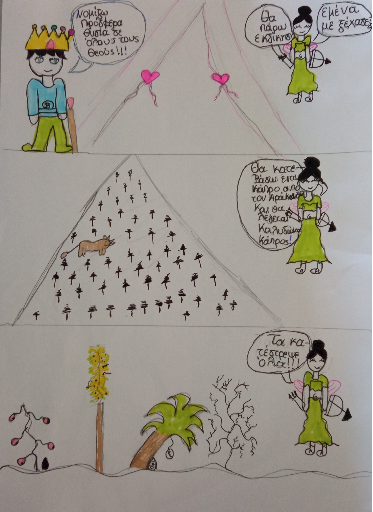
King Oeneas to deal with the situation, announced a competition. Whoever killed him would win the boar's skin or head as a prize. Well-known male heroes of that time participated. Among them is a woman called Atalanti, famous for her beauty and her skill in hunting!
Two men were killed during the hunt. But Atalanti finally wounded the boar first and Meleager constituted him. Then he offered her the boar's skin as a prize.
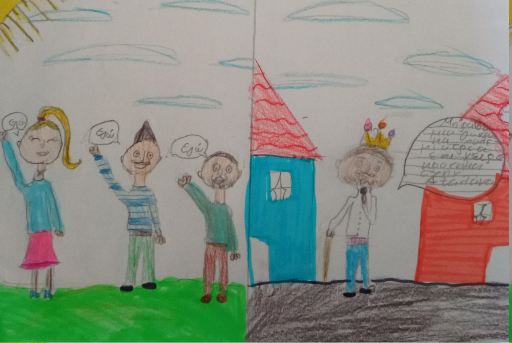
However, a dispute broke out between Meleager and his two uncles, his mother's brothers. In this fight he killed his uncles. Althea then despaired and threw the candle she had saved into the fire. The result of this action was that her son Meleager died.
As soon as Althea realized what happened she committed suicide. Her daughters, grieving mother and brother, were transformed into birds, the Meleagrides, today's guinea hens.
A True Story about Kestutis - the Grand Duke of Lithuania

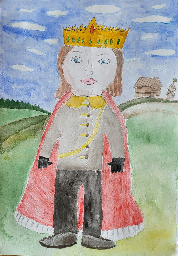
Kestutis was the Grand Duke of Lithuania.He was the Duke of Trakai and governed the Grand Duchy of Lithuania,1342 - 1382
Kestutis was the son of the Grand Duke Gediminas. He organized the defence of western Lithuania and Samogitia against the Teutonic Knights, and organized raids against the German Order. During Kestutis's rule Teutonic raids into Lithuania reached the peak.
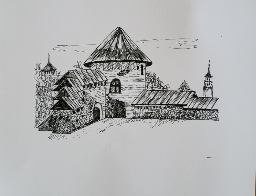
In March 1361, Kestutis along with his brother - Grand Duke of Lithuania Algirdas destroyed and took over 2 Teutonic castles.
Small squad of Teutonic knights which was returning from the failed military campaign against Lithuania, attacked the military camp of Kestutis and Algirdas near the Ublik (Wobel ) lake
Algirdas, Grand Duke of Lithuania - Kestutis's brother
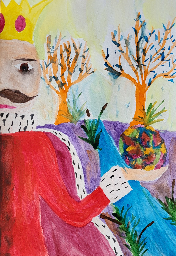
After a skirmish Kestutis was captured by crusaders.
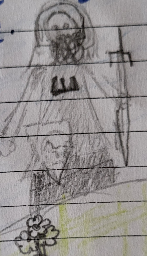
The Grand Duke was detained in Malbork Castle.
Kestutis, being over 60 years old at the time, was only defeated by a third experienced knight who attacked him!
Negotiations regarding Kestutis's liberation were arranged two times but without results. The ransom, which crusaders asked for Kestutis, was most likely too high.
Kestutis managed to escapre from captivity about half a year later.
He, with the help of his servant Alfas, broke a hole in a three meter-thick wall and left the castle by horses dressed up as Teutonic knights.

Kestutis is important for our history as he successfully led the defence of the western borders of the Drand Duchy of Lithuania.
He was an exceptionally honest duke - he always told his enemies when he would attack them.
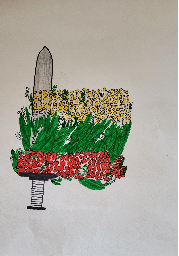
An Invented Story about the monument to the Grand Duke Kestutis
A long time ago there was a small village by the river Nemunas.
The people of the village were very unhappy and miserable as they suffered hunger, disease and bullying.
The elders said that the village was cursed by an evil sorceress.
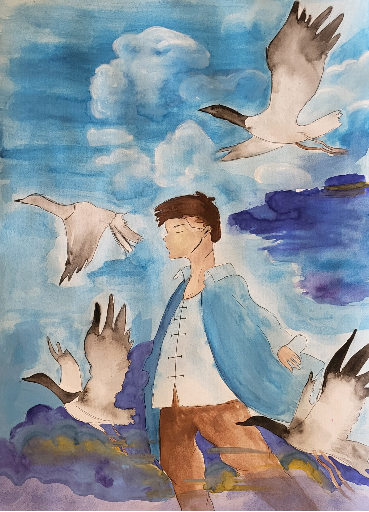
One day a young man came to the village.He was strong and smart.
Seeing how unhappy the villagers were, he wanted to help them.
The young man rode out to find the sorceress.
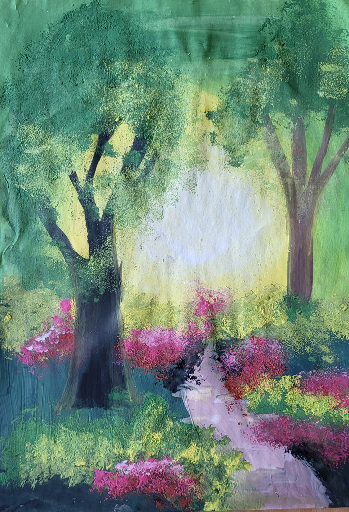
He met her in a beautiful, dense and mysterious forest.
The sorceress was sweet and asked what the young man was looking for so far away in such a mysterious forest.
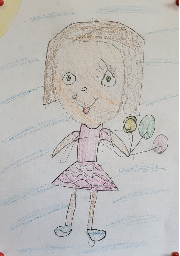
The young man told about the village people and asked her to have mercy on them - to help them to become happier.
For this, the young man promised her his friendship.
The sorceress agreed to help.
Since then, all the villagers and the sorceress became friends, became cheerful and happy.
The young man was named Kestutis (from the word "kesti"- suffer).
Ages passed, generations changed, stories were told about Kestutis.
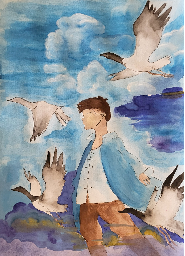
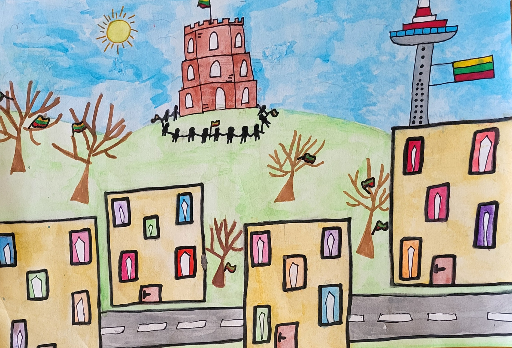
The town was built in the place where the village stood once.
The monument was erected to Kestutis and it still stands on the bank of the river Nemunas.
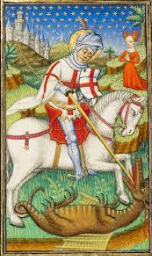
Saint George and the Dragon
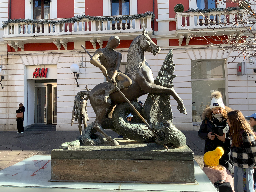
George is a brave knight.
One day he comes to a small village and meets a man who lives in a cave next to the village. The hermit tells the knight about the awful things
that are happening there.
A terrible dragon lives in the lake and attacks the village every day.
The villagers don’t know what to do. First, they give the dragon all their food, but the dragon just takes the food and still attacks the village.
So the villagers give the dragon all the animals
from their farms.
So the villagers give the dragon all the animals
from their farms.
So then they give the dragon all their gold and jewels. The dragon takes all their money, but still is not satisfied. The king sends his army to try and capture the dragon, but the dragon is very strong
and the knights
of the army run away
So the king sends his only daughter, the princess, to the lake to wait for the dragon.
When George hears this he rides to the lake. Just then the dragon jumps out from the lake and wants to eat the princess. George attacks the dragon. He fights very bravely and kills the dragon. George and the princess return to the village and everyone is very happy.
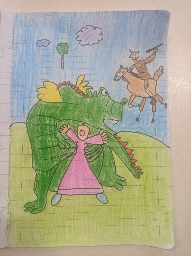
Today, the story of George’s bravery is remembered and George is known as the patron saint of England












ROTONDA THESSALONIKI
- < BEGINNING
- END >
-
LIKE
-
COMMENT