
Neckties Then and Now
A Brief History
This book was created and published on StoryJumper™
©2014 StoryJumper, Inc. All rights reserved.
Publish your own children's book:
www.storyjumper.com


 Neckties
 Today in many parts of the world, men wear what
we call neckties. According to various sources, the
forerunners of the modern necktie appeared in
England and France in the latter part of the 16th
century. Men wore a jacket called a doublet. For
decoration they wore a ruff at the neck. In many
cases the ruff, which could have a thickness of
several inches, was a large platelike disk that
encircled the neck. It was made of white cloth and
was stiffened so that it would hold its shape.

Eventually, the ruff was replaced by what was called the
falling collar. This was a white collar that covered the
entire shoulder and fell down over the top of the arm.
These collars were also called Vandykes. The Puritans,
among others, wore these.
In the 17th century, a long inner coat called a waistcoat
came to be worn under the usual long coat. The neck of
the wearer was wrapped with a scarflike neckcloth, or
cravat. This cloth was wrapped around the neck more
than once. The loose ends hung down the shirtfront.
Paintings from the latter part of the 17th century show
that by then cravats were very popular.
Cravats were made of muslin, lawn, and even lace. The lace ones were
expensive. James II of England is said to have paid 36 pounds and 10
shillings for one for his coronation, quite a sum in that day. Some lace
cravats were large. The effigy of Charles II in Westminster Abbey shows
his to have been 6 inches [15 cm] wide and 34 inches [86 cm] long.
There were many types of knots used to tie the cravats. In some cases a
ribbon of silk was placed over the cravat to hold it in position and was
then tied in a large bow under the chin. This style of neckcloth was called
a solitaire. The bow resembled a modern bow tie. It is said that there
were at least a hundred ways to tie a cravat. Beau Brummell, an
Englishman who influenced men’s clothing styles, is said to have spent a
whole morning tying one cravat to get it just right.

By the 1860’s, the cravat with long ends began to resemble the modern
version of neck wear and to be called the necktie. It was also called a four-
in-hand. This name came from the knot used by drivers of four-horse
teams. Shirts with collars had come into style. The necktie was knotted
under the chin, and its long ends hung down the shirtfront. That is when
the modern necktie appeared. Another type of necktie, the bow tie, came
to be popular during the 1890’s.
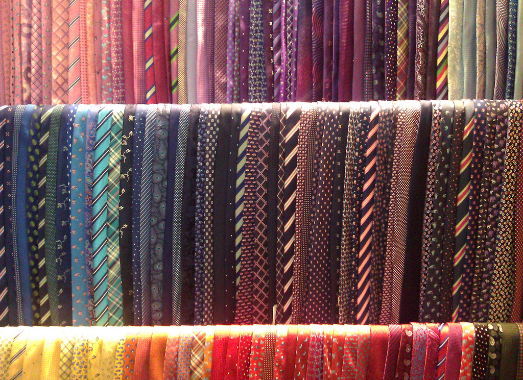
Today the necktie is considered by many to be an important part of a
wearer’s appearance. Some people may even form an opinion about a
stranger based on the type of necktie he wears. Hence, it is wise to wear
neckties that are clean and that have patterns or colors that harmonize
with your shirt, pants, and jacket.

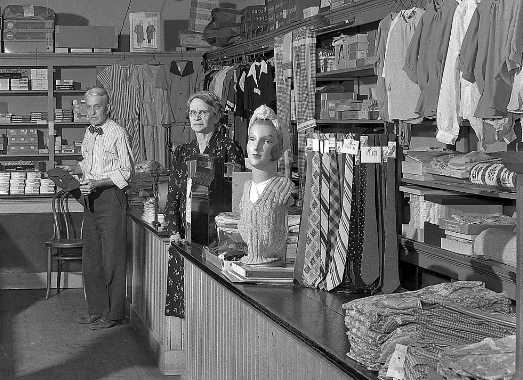
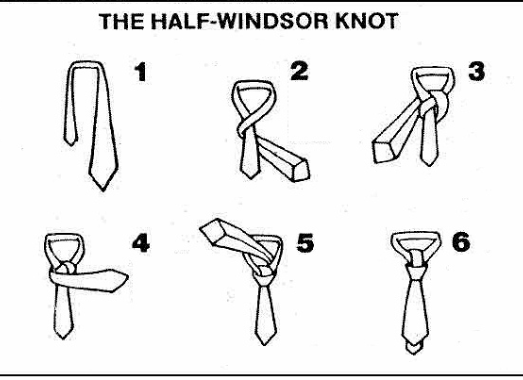
The knot selected should be tied neatly. Perhaps the most
popular knot is the four-in-hand. It is neat and unpretentious and
is widely accepted for dress occasions. Another popular knot is
the Windsor knot, which is somewhat larger. A dimple is usually
made in the tie just below the knot.
Many men feel uncomfortable wearing a necktie. They dislike the
pressure on their throat. Yet, some who have experienced this
problem have discovered that the discomfort has more to do with
the size of the shirt. If this is your problem, make sure that your
shirt collar is not too small. When it is the proper size, you may
not even notice that you are wearing a tie.
In many lands the necktie is considered an
essential part of business or formal dress.
Yes, a piece of cloth around a man’s neck
can add dignity and make him look
respectable.
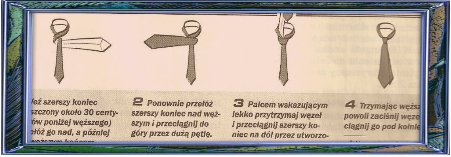
How to tie a four-in-hand knot:
1 Begin with the tie’s wide end approximately one foot [30 cm] below the narrow end, and cross it
over the narrow end, bringing it back underneath.
2 Cross the wide end over again, and bring it up through the loop.
3 Holding the front of the knot loosely with the index finger, pull the wide end through the loop in
front.
4 Tighten the knot slowly, holding the narrow end and sliding the knot to the collar.
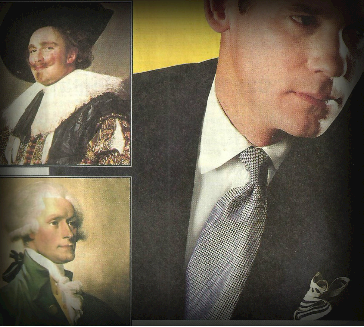
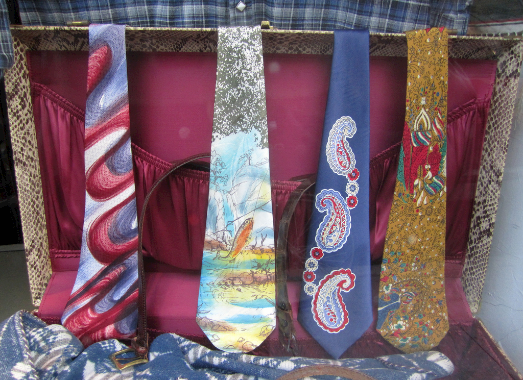
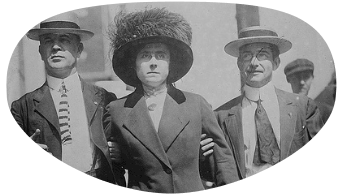
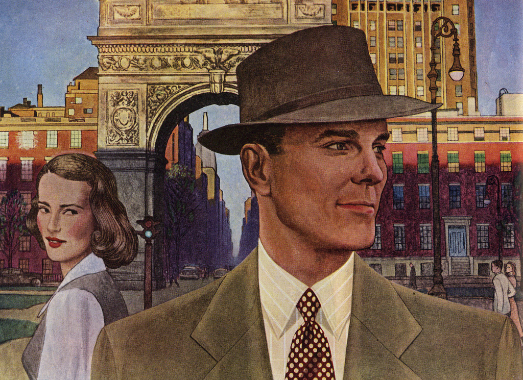
Necktie styles from the 17th century to the present

 Bibliography:
From the book Shirt and Tie
by Michael Solomon



- < BEGINNING
- END >
-
LIKE
-
COMMENT