
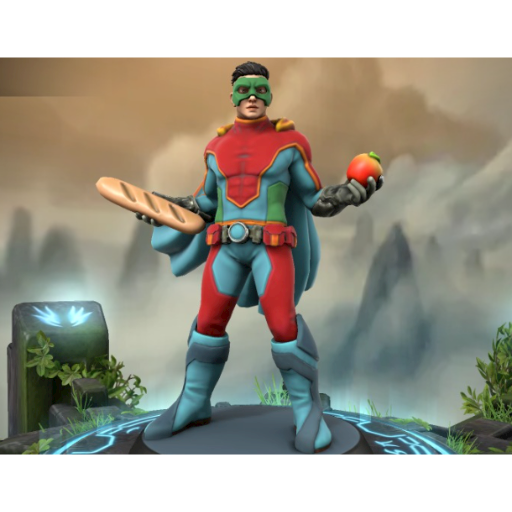
No one knew exactly when he first appeared.
Some said it was during the coldest winter a city
had ever seen, when bread lines stretched for blocks and children learned to ignore the growling in their stomachs.
Others claimed he had always been there, just unnoticed—like the quiet kindness people forget to look for.
They called him The Provider.
He looked determined to help. He wore a cape and a mask which made people think he was just an ordinary man who didn't want to be recognised.

Oh no! I am very hungry now!

I'm hungry, too.Let's look in the dustbins!
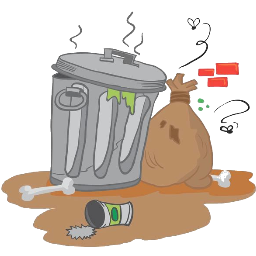


Did you find anything?
No! There is nothing in the dustbins.
The Provider's hands held a power no one could explain.
Wherever he went, food followed.
Not just any food—but exactly what was needed. Warm bread that never went stale. Bowls of soup that never emptied. Fresh fruit in places where nothing had grown for years. It didn’t matter if there was no money, no farms, no supply trucks—if The Provider was there, no one went hungry.


“Nothing is free,” they whispered.
“There must be a catch.”
But there wasn’t.
At first, people were suspicious.




One morning, a little girl named Lila woke up expecting the same hollow ache in her belly. Instead, she found a small loaf of bread on her windowsill, still warm. Her mother cried when she saw it—not out of fear, but relief. By noon, every home on their street had something: rice, vegetables, milk.



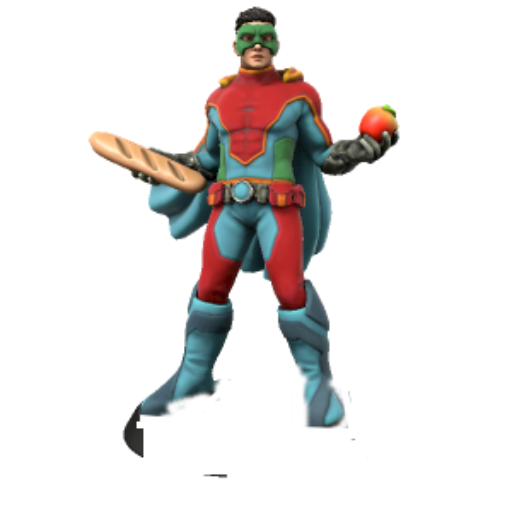
And at the end of the street stood The Provider.
He didn’t announce himself. He didn’t ask for thanks. He simply moved from place to place, leaving nourishment behind like footprints.
Soon, word spread.
People traveled miles just to see if the stories were true. Entire neighborhoods transformed overnight. Markets that once stood empty overflowed with food no one had paid for. Restaurants opened their doors to anyone, knowing somehow they would never run out.
But what truly changed wasn’t just hunger—it was people.
A man who had hoarded his wealth began cooking meals for strangers. A woman who had once fought over scraps started sharing recipes. Children who had grown up in scarcity laughed with full mouths and fuller hearts.
For the first time in memory, no one went to bed hungry.
It became known as The Day Without Hunger.



Leaders and scientists tried to understand his power. They followed him, studied him, even asked him directly:
“How do you do it?”
The Provider only smiled.
“I don’t create food,” he said softly. “I remind the world how to give.”
And then, just as quietly as he had come, he disappeared.
The next morning, people woke up afraid the miracle would be over.
But something strange had happened.
The food was still there.
Not appearing out of thin air anymore—but being
shared. Farmers donated crops. Stores gave away surplus. Neighbors cooked for neighbors. Waste vanished, replaced by purpose.
The Provider was gone.
But his power remained.
Not in his hands—but in everyone else’s.
And so, The Day Without Hunger never truly ended.
- < BEGINNING
- END >
-
LIKE
-
COMMENT