The following organizations or persons has helped us with this documentation and without their help we still would walk uphill in the e-Sport quagmire
- 100k eSports http://100koo.org
- ENCE eSports http://www.ence.fi
- Team Menace http://www.team-menace.com
- Mikko Meriläinen http://mikkomerilainen.com
- SEUL ry http://seul.fi

INTRODUCTION
As we're the first ones trying to bring e-Sports to the schools in Finland we have already some experience of it. It can be described both working uphill and at the same time be out of a quagmire, everyone thinks it's interesting but no one can give us any feedback.
The goal is to bring it, the e-Sport mindset, to every interested educational organization in Finland, no matter if it's a Swedish or Finnish speaken school. Therefor we write this documentation in a common language.
Björn Nylund
Björn is working as sport coordinator at Yrkesinstitutet Prakticum, he's responsible for the school's sport profiling and school sports. He has served as coach of various sports in 25 years and at different levels. Besides his work in school he also school coaches for the Finnish Handball federation.
Björn is not a gamer and has never been
Karl Ögland
Karl is working as a remedial teacher at Yrkesinstitutet Prakticum. He has used games in education since 2012, since 2013 Minecraft and last school year he had a project how to learn Economics through World of Warcraft.
Karl has been a gamer since 1984.
The school news of the year 2015!
Sweden 2015
The Swedish e-Sport federation has been advisors to Swedish schools during a year or so, with the goal to make it possible to have e-sports on the schedule, in school. With other words, how to become an e-Sport professional. Within the Swedish upper secondary school you obviously can make courses to fit the education at national sports schools or sport colleges.
Media covers the news from the very beginning and even during the planning stage.
Finland 2015
We have no chance in the world to add an e-sport course with a Finnish curriculum as you can in Sweden. But, what comes to the vocational program you learn 135 points connected to your work, 35 points guarantee you access to higher education and 10 points courses free of choice.
Within this 10 points field (200 lessons) we have a chance to actually use the power of gaming and e-Sports.
In autumn 2015 no news media believe this would be something newsworthy, to offer e-sports as a freely selectable course package in a school.
How do we connect it to our curriculum?
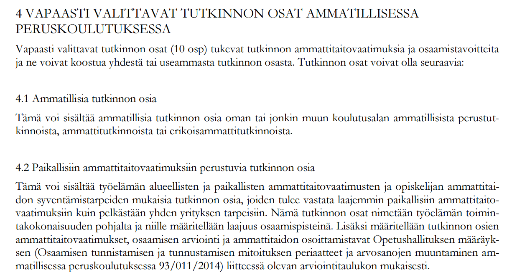
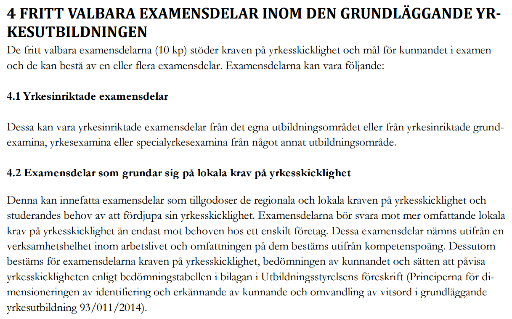
It's hard, especially in a vocational institute as you can't replace any qualification module. But, we have an ace up our sleeve: we have a block of free elective courses that will strengthen the professional role. There in the curriculum and chapter 4 we believe we have the support. It says
“The elective exam part (10 credits) supports the requirements for professional skills and goals for skills in the exam and may consist of one or more modules. Degree parts may be:
4.1 Vocational qualification modules that deepen or expand professional skills
4.2 modules based on local requirements for professional skills, or goals for skills”
It takes a mindset, to be able to see the possibilities. Students of today anyway play computer games; will it be possible to connect their interest with skills that is important in their future work life?
Ammatillisen perustutkinnon perusteet, Tieto- ja viestintätekniikan perustutkinto 2014 p. 158
Grunder för yrkesinriktad examen, Grundexamen i informations- och kommunikations-teknik 2014 p. 155
4.1 Vocational qualification modules that deepen or expand professional skills
What do you learn from computer games?
First we have to solve this question: What do you learn from computer games? And this is the opposite to when you use "games in education" like learn Economics while play World of Warcraft, Math while play Minecraft and so on. While just play computer games you practice and learn the key competences of lifelong learning.
This problem solving is definitely something useful as a professional skill. It's also in the "key competences for lifelong learning" field
- The Finnish ones, Elinikäisen oppimisen avaintaidot, you’ll find here
- http://goo.gl/gztIoH
- The Swedish ones, Nyckelkompetenser för livslångt lärande, you’ll find here
- http://goo.gl/WHL1rC
Two examples
1. World of Warcraft; I run into a mysterious quest with no answer and I have a problem. Already there I’ve defined my problem, I google it, I find lots of answers, I value the information, I test in game (did I found the drop giver?), I put notes (I have more characters that will run into the same problem) and if I found the wanted drop on another coordinate I report it.
2. At Sunday evening, your team will have an important Counter-Strike Global Offensive match and it turns out you will play a new custom made map. How do you solve the problem? You have a problem, a new map. You search every possible forum of any threads or clues until you get the map. If possible you install it on a local server and you gather your team, you play and explore, you evaluate the teams experience. Maybe you even write down your thoughts and game plan.
You learn to
- define and analyze a problem
- search for information of your problem
- plan a solution
- test the solution
- evaluate your solution
- do documentation
- report the solution
Despite to real world or in the classroom, you never give up in a computer game. So, what if we use this formula, confirm it in a safe environment, will our students be able to take this out in real life?
Potential learning and e-sports
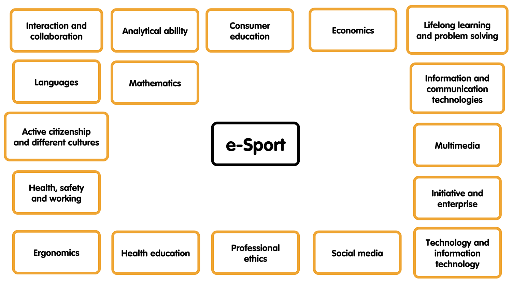
Also, if you use e-sport as an inspiration source you can connect it to a wide area of subjects and competences. To show you how that would be possible, we’ve made up a mind map
http://popplet.com/app/#/2666072
More thoughts of possible learning, see opposite page
For example
After the first in game training our students realized they needed communication and Skype wasn’t enough. Together with the teacher who had a server course they installed a TeamSpeak server which they now are responsible for (to document, problem shot and also maintain). Their teacher hasn’t played any computer games on his lesson, all he did was to use the interest of a game for more and deeper learning.
Health education
To become a professional e-sport gamer you need to understand it takes more than just play a computer game. One other very important thing is gym exercise for better blood/air circulation (to relieve the stress like example) but also for the prevention of occupational injuries (which by the way, is the same kind of injuries they will have in their profession).
It has also emerged that other vitally important skills are structure in everyday life, fixed routines, diet, health and sleep. Skills that young people doesn’t usually see because they usually doesn’t see the connections.
4.2 modules based on local requirements for professional skills, or goals for skills
“This may include modules that cater to local and regional requirements for professional skills and students need to deepen their professional skills.”
What do you learn from e-Sport?
This fall we have been on field trips to various local businesses and where they both sat up and shared demands for the kind of people they want to hire. New employees must be
- Positive
- Team players
- Loyal
- Developable
- Able to take initiative
- Jack of all trades
Also; “people who can take in and do almost anything” and “who are flexible and can be moved to a position where they are needed at the moment”.
This is exactly what happens when you are dealing with e-sports. For example, you play League of Legions and the team's two tanks (striker) turned out so formed, the remaining group (three players) and you end up on a new position. In a computer game you never give up!
It's e-Sport all the way.
So, what happens if we confirm the skills in a safe environment...?
Contract
With every participant in this project we’ve done a contract, a written agreement where they understand our rules and what they obligated to do. Just because we’re using their interest it’s not any free give away study points. You have to earn the points!
Among other stuff they agree to do is
Students commit to a sporting lifestyle. Students taking a healthy diet and adequate sleep. Students try to own timetable provides enough space for training, study and rest. When representing the school at competitions, trainings, social media or visiting it schooldays. The contract also covers such events. Substance abuse and doping is not conducive to a young athlete's development and do not belong to a purposefully-training athlete's lifestyle.
THE E-SPORT CHAIR
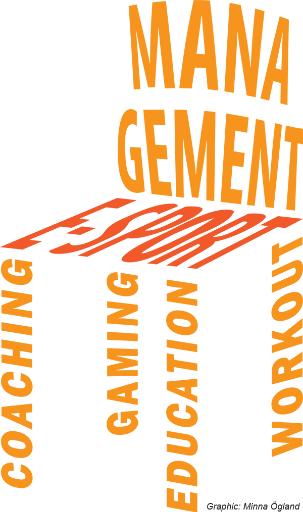
When we talk about e-Sport everyone assume we only talk about gaming and so far in this document we’ve also been doing that. But the deeper we dig into e-Sport the more we understand e-Sport is so much more than just gaming. We had to visualize our thought and came up with this chair. If you look at it from above, all you see is e-Sport. If you look from the side you see more, like four legs
- Coaching
- Gaming
- Education
- Workout
You also have a backrest called “Management”, some organization that will help you; for example SEUL, a game house (Team Menace, ENCE) or a school.
Interesting?
This was just an example how to use Storyjumper but if you want to read all our documentations about e-Sport in education, feel free to download it from here:
https://sites.google.com/a/prakticum.fi/esport/media
Correspondence
Magnus Jonsson, Chairman of the Swedish E-Sport Association http://www.sesf.se/
Erkka Jouste, Chairman of the Finnish eSports Federation http://www.seul.fi
Teijo Sepponen, CEO Team Menace http://www.team-menace.com/
Mikko Meriläinen, PhD student Game education research Helsinki University
- < BEGINNING
- END >
-
LIKE
-
COMMENT