William Turner
Life and creativity
By Vladislav Zaharenko

Joseph Mallord William Turner
Short Name:Turner
Date of Birth:23 Apr 1775
Date of Death:19 Dec 1851
Focus:Paintings
Mediums:Oil, Watercolor, Prints
Subjects:Landscapes, Scenery
Art Movement:Romanticism
Hometown:London, United Kingdom
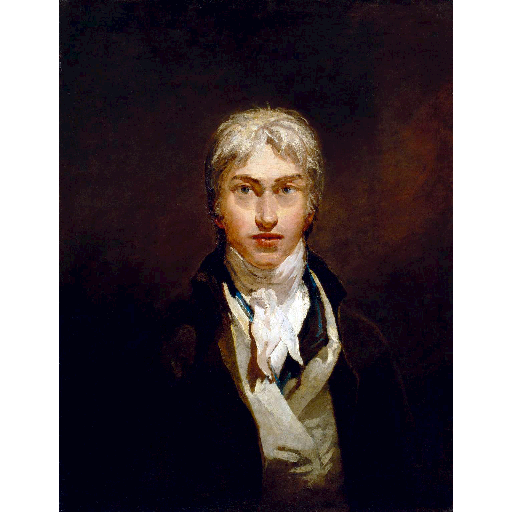
Introduction
Joseph Mallord William Turner is often described as the 19th century's greatest landscape painter. He was fascinated by the powers of nature and transferred this passion onto canvas.
In his later works he focused on the new abilities of the machines of the industrial revolution and he led a long and successful career.
As a leading Romantic painter focusing mainly on color and lighting, Turner's works went on to later influence the Impressionist movement.
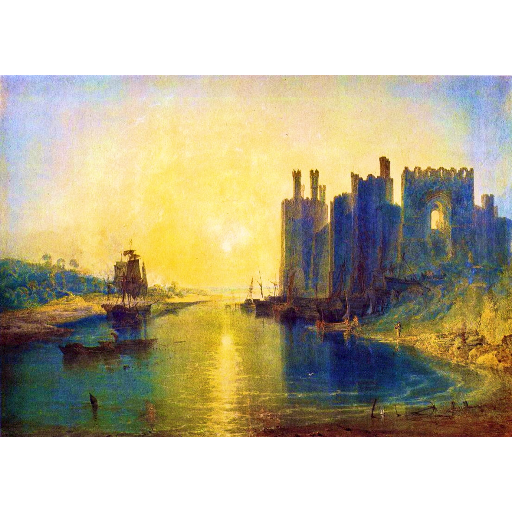
Joseph Mallord William Turner Artistic Context
Romanticism is sometimes viewed as a reaction to its more serious predecessor, the Neoclassical movement. As Neoclassical artists focused on properly accounting history through close attention to detail, Romantic artists flirted with themes of man's self glorification, man's part in nature, divinity found in nature, and emotion.
Though Neoclassicism is generally associated with the history genre, Turner is credited with having embarked on a subject matter so great that it actually rivaled the history genre. His subject matter accounts for recording history, but in a different style than ever seen before. He used color to intensify emotion in portraying the passing of events.
Joseph Mallord William Turner Biography
J. M.W. Turner began his artistic career at a very young age and his success was almost immediate, selling his first painting at just 12 years old. Turner continued to accomplish significant achievements at a remarkably young age, some that people with much more experience would never have the privilege of enjoying.
Throughout his career Turner remained highly sought-after and he acquired a very large fortune from his commissions. He is remembered as an influential painter and is said to be the best landscapist of the 19th century. Turner was also a key inspiration for the Impressionist movement. He is most well-known for his original interpretations of bringing light and color to his paintings.
Joseph Mallord William Turner Style and Technique
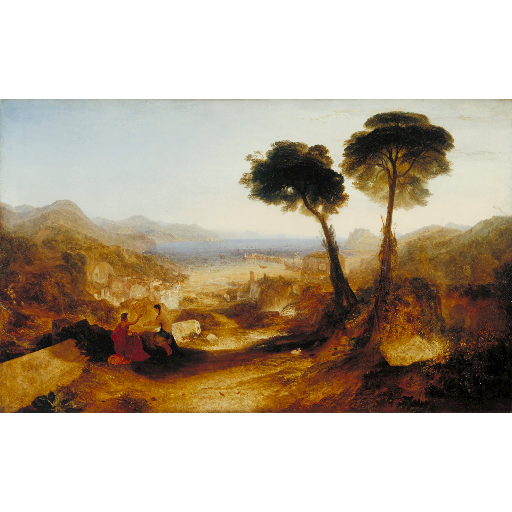
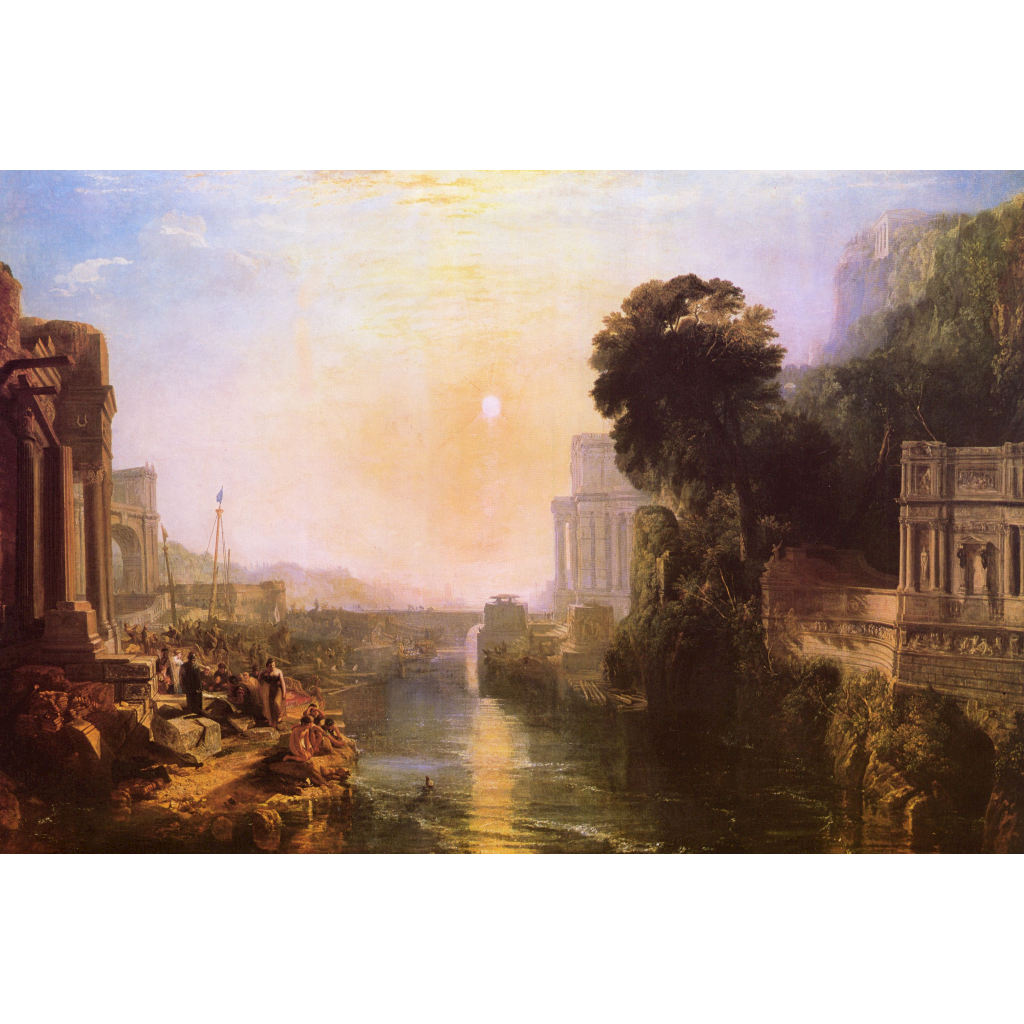
Turner displayed an evident evolution in his painting style throughout his long career. Though he stayed true to the genre of landscape, as his career progressed he began to pay less attention to the details of objects and landscape and more attention to the effects of light and color. He became increasingly fascinated with natural and atmospheric elements.
Style:
Early Years:
In Turner's early paintings he executed dramatic, Romantic subjects by emphasizing luminosity, and atmosphere. One can observe a more precise attention paid to architectural and natural details in his early years, as compared to his later years.
During this time, he played around with all the styles of landscape composition including historical, architectural, mountainous, pastoral and marine. His series of 71 etchings, inspired from his existing paintings and watercolors, show all of these styles (1807-1819).
Middle Years:
Turner's painting style shifted during the 1880s. His painting became more luminous and atmospheric. He began to focus more on color than the details of the actual topography. St. Mawes at the Pilchard Season (1812) is an example.
Frosty Morning (1813) is based solely on the effects of light. As time progressed he paid less attention to specific details and more to atmospheric quality created by the natural elements, such as the sun.
Advanced Years:
Still, less and less attention is given to detail, while his canvas now begin to assume a suggestion of movement. His Norham Castle, Sunrise and With A Boat Between Headlands are both examples of slightly brushed canvases, mere color notations.
Some of his more famous later paintings, he approaches the subject of modern technology. He pays a tribute to the passing age of sail ships that were soon to be replaced by steam-powered vessels. He moves away from marine subject matter, and focuses now on the railway in Rain, Steam, and Speed-the Great Western Railway (1844).
Method:
Turner's watercolor paintings provided a later influence on his technique with oil paint. He started to use oil paint in a translucent manner, similar to the effect of water color, which helped produce his original style.
Before painting a vast majority of his work, as many of his subjects (mainly water) changed so quickly, he had to do preliminary sketches. He later turned his sketches in to watercolor or oil paintings.
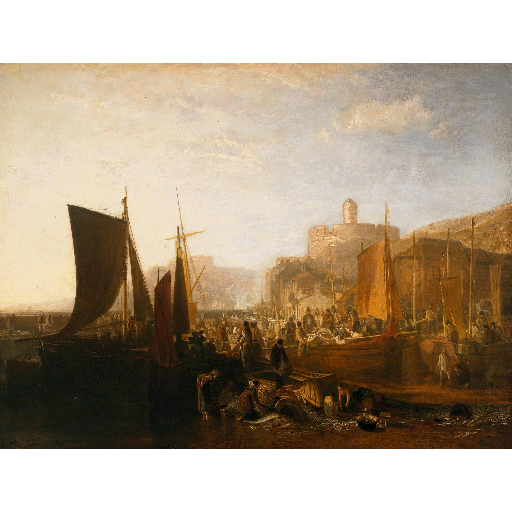
St Mawes at the Pilchard Seasonexhibited 1812
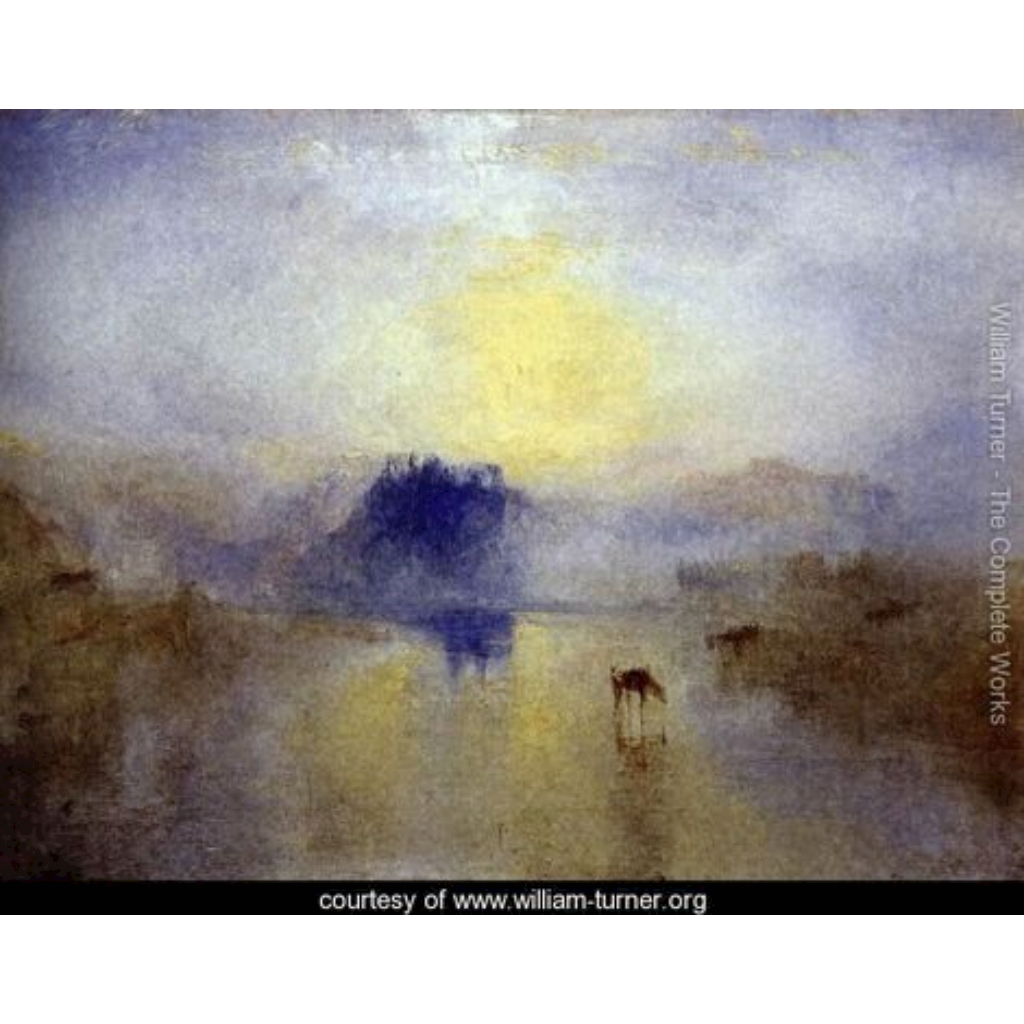
Norham Castle, Sunrise 1845
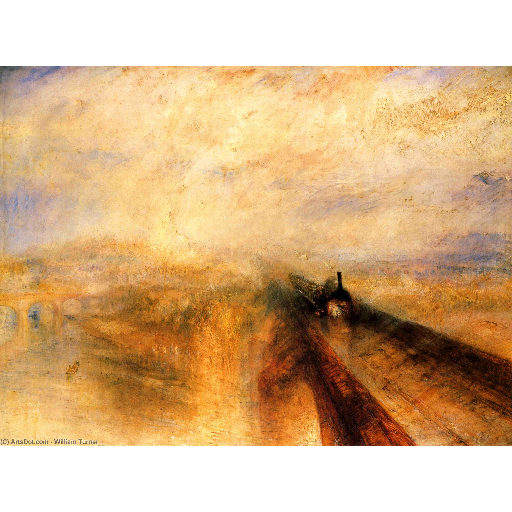
Rain, Steam and Speed – The Great Western Railway 1844
Who or What Influenced Joseph Mallord William Turner
Like most artists, Turner was heavily influenced by the masters that came before him. After closely studying the techniques of fellow Romantic landscape artists, both John Robert Cozens and Richard Wilson, Turner began to develop his own unique style.
He spent time studying at the Louvre, viewing the work of other artists and honing in on his craft. His greatest influence however, came during his travels when he witnessed nature and all its grandeur live and in person.
Chronological Order of Influences:
As a young artist Turner (circa 1797) was employed to make reproductions of the unfinished work of the late landscapists, John Robert Cozens. Cozens, a fellow English romantic painter, had a lasting influence on Turner by his use of watercolors to create his luminous atmospheres. The similarities can be seen in the light treatment between the two artists.
Fellow landscapist, Richard Wilson, is credited as having revealed to Turner a more poetic and imaginative approach to landscape. Wilson was greatly commissioned by the aristocrats and even the royal family. His love for landscapes was said to be the cause of the loss of his fortune, as they were the least commissioned of his work.
Aside from style, his travels were the main inspiration for the content of his work. His travels throughout England, to Wales, Scotland, and through the European continent profoundly affected his work. His tour of Switzerland and France resulted in 400 drawings, which he later drew from to create beautiful painted landscapes.
During his time in France he studied the Old Masters of art at the Louvre.He took a strong liking to the marine activity, a subject often encountered in his work.
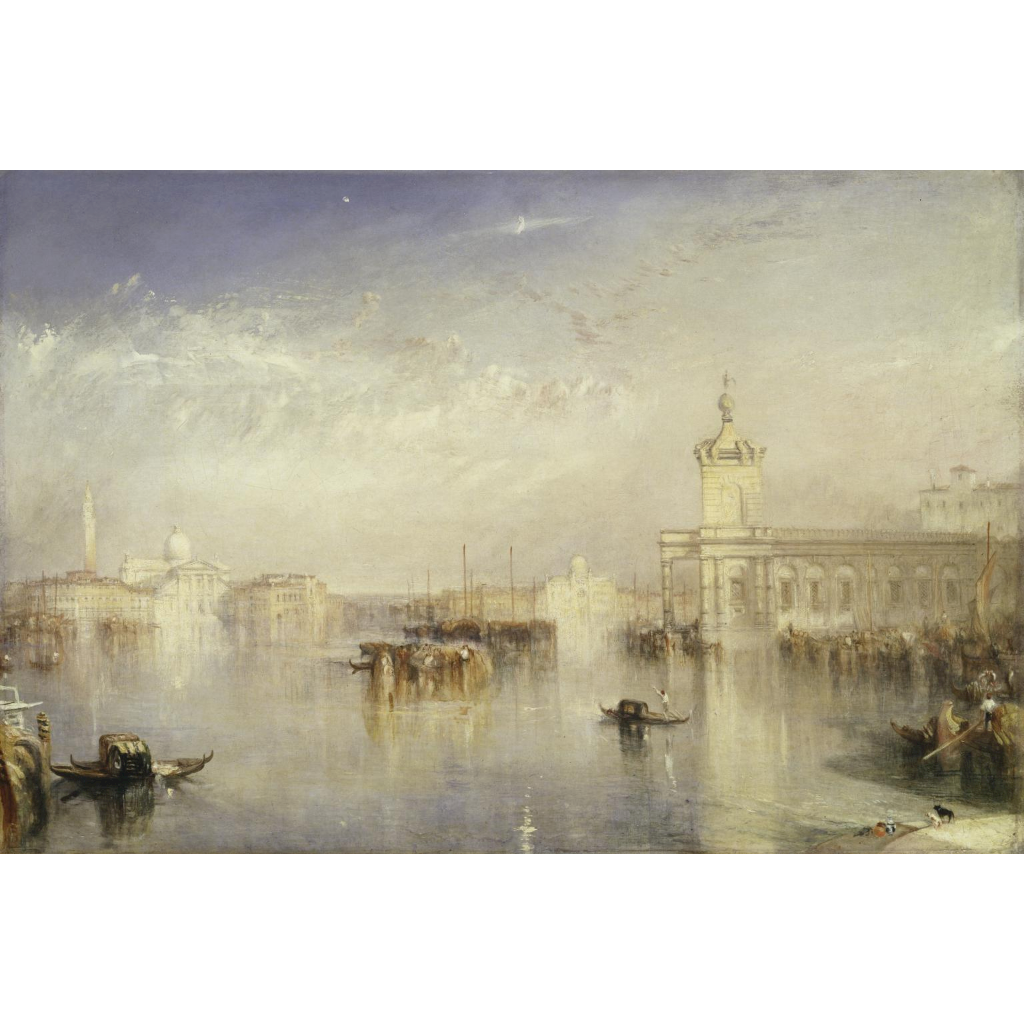
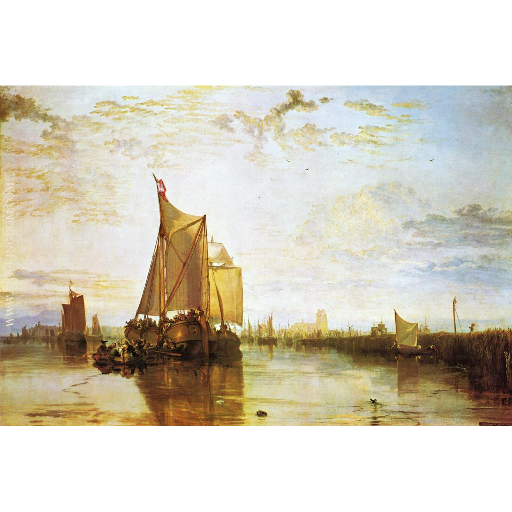
The Dogano, San Giorgio, Citella, from the Steps of the Europa exhibited 1842
- < BEGINNING
- END >
-
LIKE
-
COMMENT