Victoria and Albert Museum
By Anastasia Strelbitskaya

The Victoria and Albert Museum (often abbreviated as the V&A), London, is the world's largest museum of decorative arts and design, housing a permanent collection of over 4.5 million objects. It was founded in 1852 and named after Queen Victoria and Prince Albert.

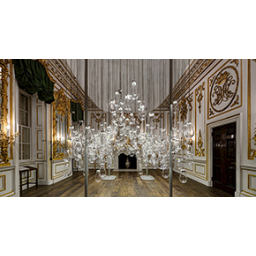
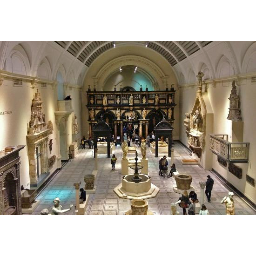
The V&A covers 12.5 acres and 145 galleries. Its collection spans 5,000 years of art, from ancient times to the present day, from the cultures of Europe, North America, Asia and North Africa.
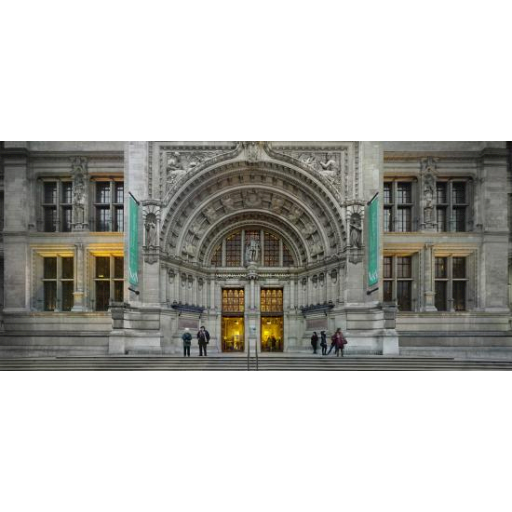
The holdings of ceramics, glass, textiles, costumes, silver, ironwork, jewellery, furniture, medieval objects, sculpture, prints and printmaking, drawings and photographs are among the largest and most comprehensive in the world.
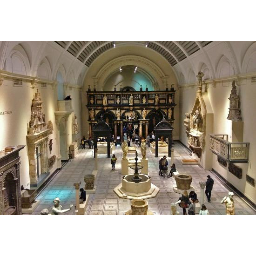
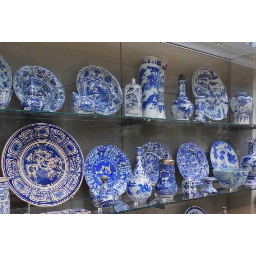
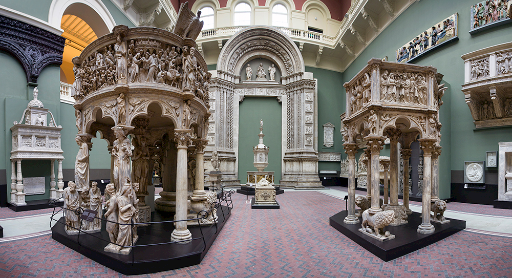
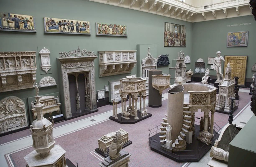
The museum owns the world's largest collection of post-classical sculpture, with the holdings of Italian Renaissance items being the largest outside Italy.
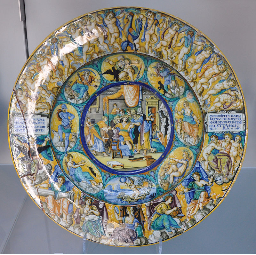
Maiolica dish with a childbirth scene, Urbino
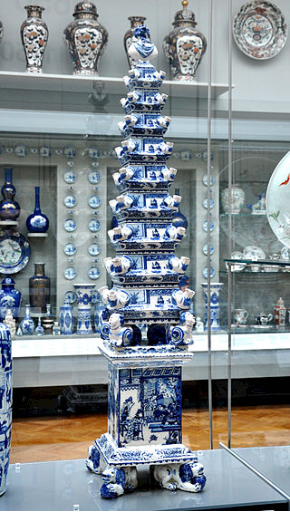
Flower pyramid, Delft
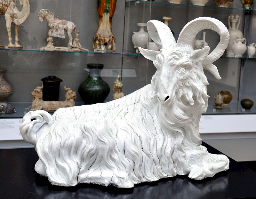
Porcelain figure of a goat, by J. J. Kaendler
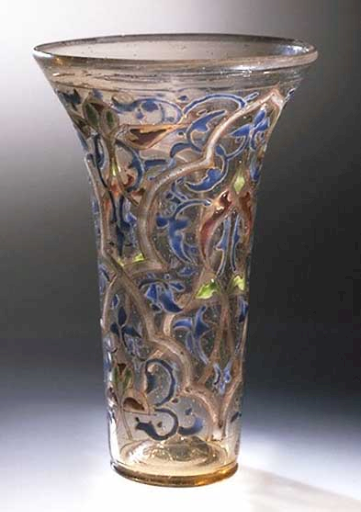
The Luck of Edenhall, glass beaker, Syria, 13th century
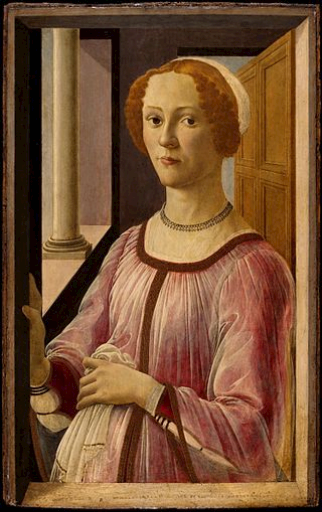
Botticelli—Portrait of a Lady known as Smeralda Brandini, 1470-1475
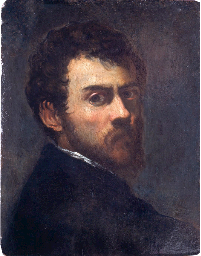
Tintoretto—Self-Portrait as a Young Man
Victoria and Albert Museum

- < BEGINNING
- END >
-
LIKE
-
COMMENT