

On every page of this book you will find a Christmas custom from a different country in Europe.
Made by children of the participant schools in the eTwinnind project :
"When the expression and creativity meet the fantasy
of little children"
2017-2018

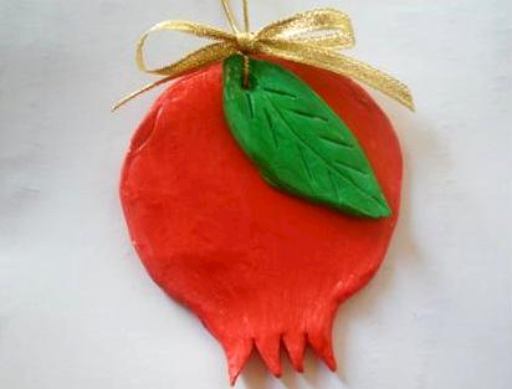
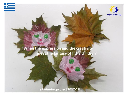
By children of Nipiagogio Rizariou of Greece


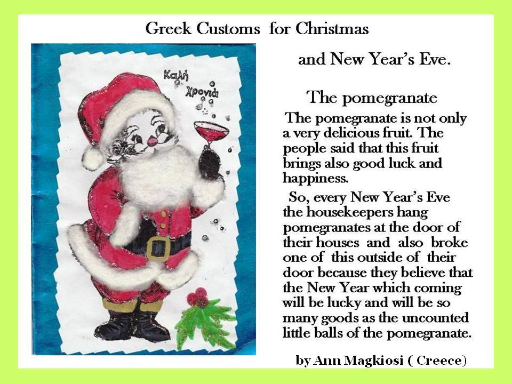
The illustration has done by children of Nipiagogio Rizarioy ,Trikala,Greece
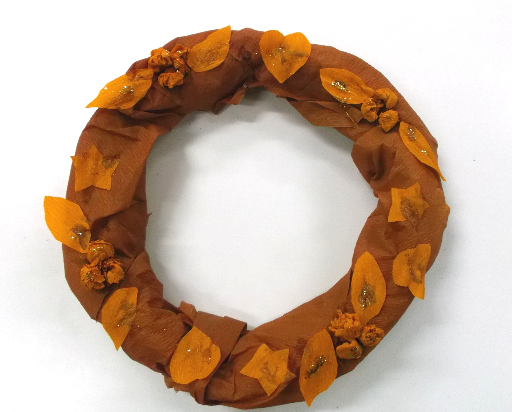
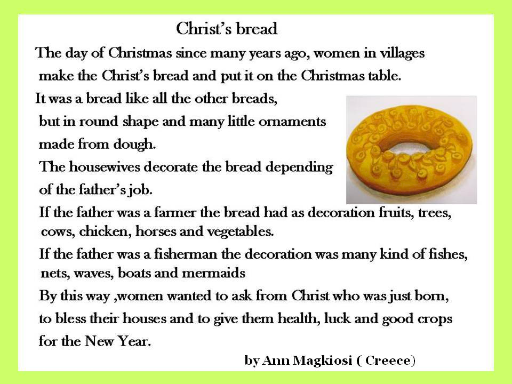
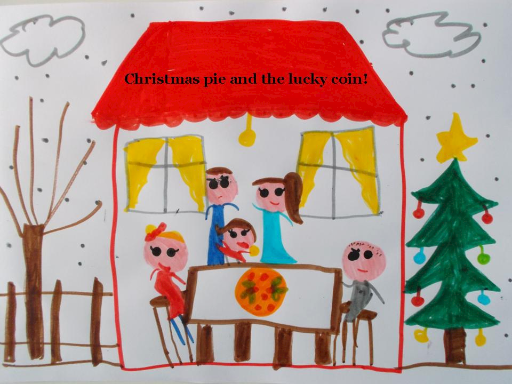
The illustration has done by children of Nipiagogio Rizarioy ,Trikala,Greece
Turkey-
Kutlukent 80. Yıl İlkokulu
(Belgin Tunç)
Actually, There live muslim people in Turkey generally but nevertheless we know that Santa Claus was a holly person who lived in Turkey (in Demre where is near Antalya).
We have a great tradition in Turkey. We always have wishes tree and most of people love to wish good things by tying sometings to the branches.
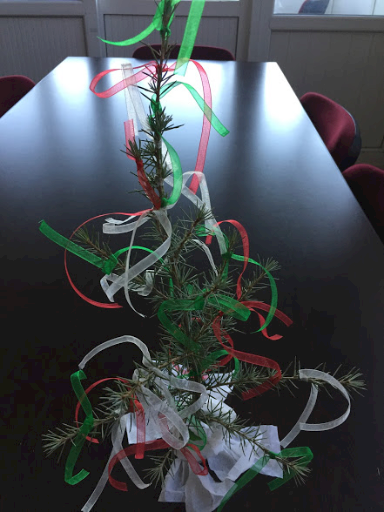
My pupils, Büşra, Efecan, Ela, Berat, Erdem wished loats of great things for everyone like hapiness, trust, succeed, health, no war, clean water ect.
"The custom of Cream"






"The custom of Cream"
Dogscreamymus or onion is a common plant in Crete. It grows wild and looks like a big onion.Even if you take it out of the earth and hang it, it does not stop producing new leaves and flowers.The people believe that this great vital force can transmit it to the animated and inanimate,so for New Year's Eve they hang a doggie in their homes!!!
by Aikaterini Papagianni(Greece)
" The horseshoe "
The petal
The horseshoe of the horse is one of the most well-known symbols of happiness and protection from the rage. According to tradition, the horse that wore it had magical qualities, the petal has the shape of a crescent that for many peoples is a occult symbol and finally it is iron and cold, properties that keep witches and magic apart. Many claim that the horseshoe proves to be a charm if one finds it random and has seven holes: four in one part and three in the other. The petal, to give its "lucky" qualities, must be hung behind the door with the opening upwards.
by Aikaterini Papagianni (Greece)


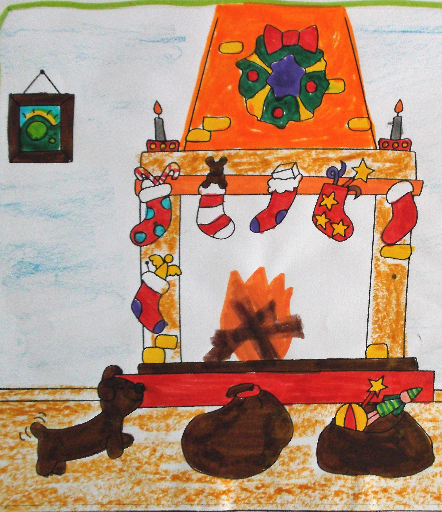
By children of 30 Primary school of Kalambaka,Greece

The marriage of the fire
On Christmas Eve in many parts of Greece, people "marry" the fire.They take a wood with a female name and one with a male name, usually from spiny trees. Barbed trees, in folk perception, remove demonic beings, such as elves. In Thessaly, returning from the church to their house, the girls put near to the fireplace clones of cedar trees and the boys branches of wild cherries. These small branches of trees represent their personal desires for a beautiful life. Then they put them in the fireplace and watch with interest which clown will burn first, as they say this is a good sign for the girl or the boy, respectively ,because it means who of them (the boy or the girl) will marry first.
Maria Taxa ,3o Primary School of Kalambaka ,Greece
Lithuanian main Christmas eve customs
by Bozena Stelamkova
In Lithuania, Christmas Eve is one of the most peaceful holidays of the year. It has always been a time when the whole family gathers at the dinner table. Tradition has it that all disagreements must be settled before Christmas Eve dinner so that the upcoming year may bring peace and joy. This little list will help you experience Christmas Eve in a very Lithuanian way.
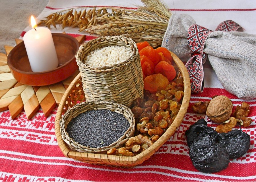
Before even touching any food on the Christmas Eve table, Lithuanian families share what is known as kalėdaičiai – thin wafers made of wheat, flour and water. Beginning with the eldest member of the family, the wafer is shared with everyone at the table. This is often accompanied by exchanging wishes for the upcoming year. If you’re in Vilnius before Christmas, kalėdaičiai can be bought in any church.
Enjoying a 12-dish Dinner
There are over 100 Lithuanian Christmas Eve dishes, all united by one fact – none of them are made with meat. The pre-holiday fast will only end on Christmas Day, so on Christmas Eve Lithuanians turn to dough and fish. Making 12 dishes for the dinner symbolises the months of the upcoming year. If you want them all to be successful, you should try a bit of all 12.
Hearing Animals Speak
Every Lithuanian child knows that around midnight on Christmas Eve, animals can speak, or at least that’s what the legend says. And if they do talk, they’ll tell you about the future that’s in store for you. It’s not that simple, though – you can’t just wait around for them to start speaking, because rumour has it that it’s dangerous and may not end well. It has to happen by chance, but do try to keep an ear out!
For this book have cooperated teachers from:
Greece - Ann Magkiosi
Lithuania -Bozena Stelmakova
Greece - Aikaterini Papagianni
Greece - Niki Spathara
Turkey - Belgin Tunç
Greece - Maria Taxa
Merry Christmas and Happy New Year!

- < BEGINNING
- END >
-
LIKE
-
COMMENT