This is dedicated to the "A" I hope to get in this class.

Before you read, here's some fancy science words that you should know!
Organism: A plant or animal
Decay/Decompose: When an organism breaks down into tiny bits and fades away
Carbon: Material that is common in living things
Experiment: To test a hypothesis
Hypothesis: An answer you have to a question
Process: A course of action with an end result.
Preserve: To keep something in its original form
What is a fossil?





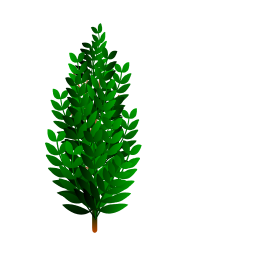
Fossils are leftovers or traces of animals and plants that you can see in the ground even after the plant or animal is dead for at least ten thousand years.

This old?
Fossils are very old.
No. Fossils are older.
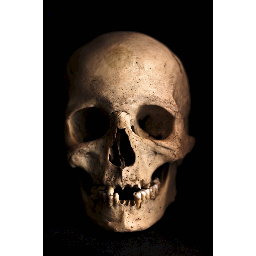
This old?
Most fossils are older than Grandma.
Most fossils are even older than the first person.
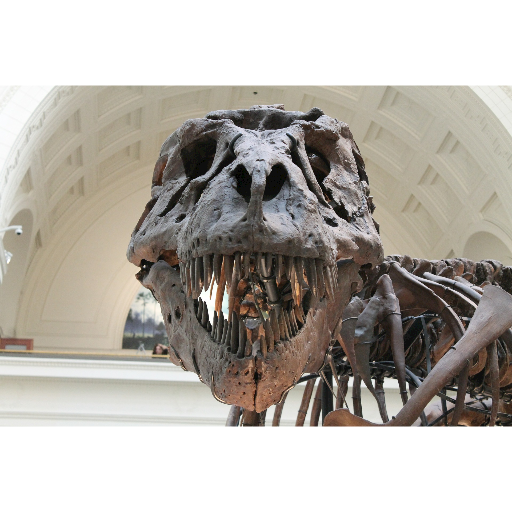
Think back about 65 million years ago.
This dinosaur is a fossil.
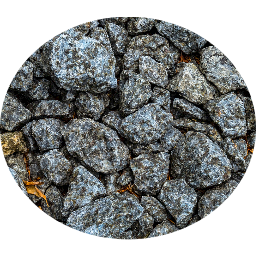
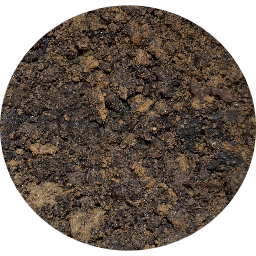
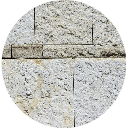
Fossils can be found in places like:
Rock
Gravel
Mud/Dirt

Fossilization means the way in which a fossil is made. There are many different ways that a fossil can be made.
One way that a fossil can be made is called casts and molds.

What's That?
You'll understand in a second with the experiment on the next page.
Experiment Time!


Take a coin and place it onto a round, flat piece of clay or play-doh.
Press down hard!
Carefully remove the coin.
First...
Then...
Finally...
You should get an indent that looks just like the coin! If you wanted to, you could even make something that looked just like your coin by pouring plaster into the hole. If you did that, the plaster coin would be called a cast. The hole that you took the coin out of is called a mold. With fossils, when the organism decomposes, a mold is left behind. If that mold is filled with special rock, it can form a cast of the organism. That cast is a fossil!
What have we learned here?
Another way a fossil can be made is called "preservation of original material". This has no experiment, but there are many fun examples of this process!
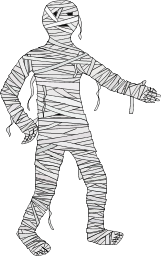
I'm a fossil! Mummification is a preservation of original material! This means that my original body was kept while I became a fossil!
Other examples of preservation of original material include:
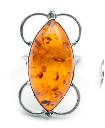
Flies trapped in amber!
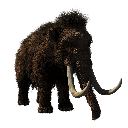
Woolly Mammoths preserved in ice!
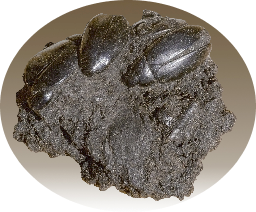
Bugs caught in tar!
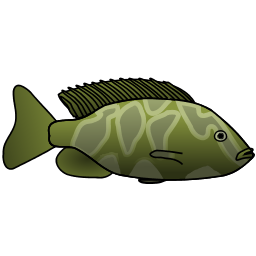
The final way that fossils can be made that we are talking about today is called carbonization. This is a little trickier to understand.
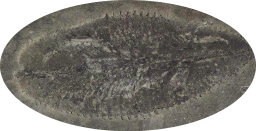
When an organism dies and decomposes, carbon leaves the body as a gas. Sometimes, that carbon can stay and create a black layer on top of the organism. When that organism decomposes, the carbon stays. That carbon is a fossil.
You have just learned what a fossil is and 3 ways that a fossil can be made. You're on your way to becoming a real scientist!

Goodbye!
- < BEGINNING
- END >
-
LIKE
-
COMMENT