Rhodes, Greece: Evgenia, Ioanna, Sophia and Zinovia
Thessaloniki, Greece: Dimitra, Eo, Eugenia, Rania and Varvara
Daugavpils, Latvia: Inga D., Inga Z. and Olga
Daugavpils, Latvia: Dina
Bydgoszcz, Poland: Malgorzata
Jaworzno, Poland: Marta
Satu Mare, Rumania: Lorena
Sotanga, Rumania: Maria-Magdalena
Tudela, Spain: Jone, Luisa, Marisol and Maru
Gölcük, Turkey: Yasemin
Thank you all the eTwinning partners involved in making this book

Happy Easter / ΚΑΛΌ ΠΆΣΧΑ/ KALÓ PÁSCHA!
GREECE
PASTIDA-RHODES
Kyria Sarakosti (Mrs. Saralosti)
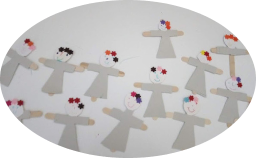
Kyria Sarakosti is a wonderful tradition that help us to mark the weeks of Nisteia ( Great Lent). The Great Lent starts on Clean Monday and ends on Holy Saturday, after midnight. Exactly 40 Days, That's why we call her Sarakosti (40 days). Her eyes and mouth are closed to remind us to fast. The cross on the top od her head reminds us to always have Our savio before us. Her hands are folded in prayer and she has seven feet, one for each week of nisteia. Each Saturday of nisteia, we break off a foot to mark the weeks until Easter.
On Holy Saturday, when we finally brake off her last foot
we all realise that Easter/ Pascua has finally arrived.
Traditionally Mrs. Sarakosti was made from salt dough.
We made her with cardboard with the help of the children
for our class, and every child made one for their own.
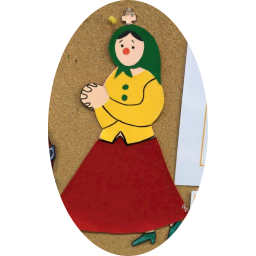
pastida kindergarten Rhodes-greece
The Holy Grave
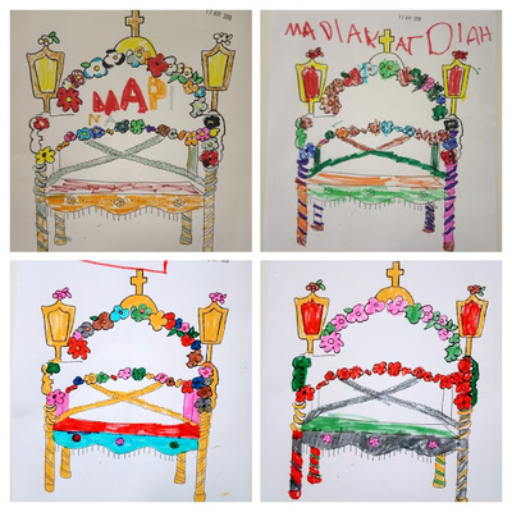
"Good Friday is an eminently mournful day that commemorates the Passion of Christ i all Greece. Even the most remote churches honor the tradition of the epitaph ( Holy Grave) filling the atmosphere with piety and devoutness. In every Greek city, village or island, the Passion of Christ o¡is revived through different traditions. From the early morning hours in all the Greek churches, the Epitaph decorated with flowers, is ready to receive the body of Jesus.
.
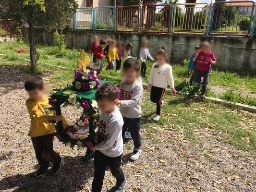
In most areas, the epitaph procession begins around 9 pm, but some parts of the country the procession takes place at noon or even o the morning of Holy Saturday.
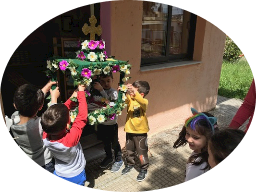
In Greece, there is also the peculiar tradition of faithful people who pass from under the epitaph, and it is considered to be a pious habit. Its meaning is for people to express their deepest reverence and faith to Jesus Christ who sacrificed himself ad suffered, by showing their humility and putting themselves beneath him and his miraculous and divine influence and blessing".
LAZARUS SATURDAY
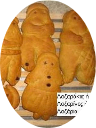
Lazarakia
One common tradition throughout Greece for the Saturday of Lazarus is the baking of Lazarakia. Lazarakia is a spice bread used to remember the miracle of Jesus raising Lazarus from the dead. It has many sweet spices in it and is Lenten, meaning it has no dairy or eggs in it. Lazarakia comes in the shape of a man (which is supposed to be Lazarus). There is a mouth and cloves for eyes. Lazarakia should look like the Lazarus in the icon of his resurrection, bound like a dead man with a shroud!
Our students hand-crafted the Lazarakia and as the tradition goes they sang the Song of Lazarus best known as "Kalanta tou Lazarou"
THE TRADITION OF LAMPADES AND THE FIREWORKS OF THE RESURECTION

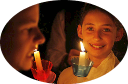
Every Good Saturday, late at night all the people in Greece are going to the church holding a candle (Lampada). The children are getting their candles as an Easter gift from their Godmother or their Godfather and it is decorated with colourfull ribbons and other easter ornamentals.
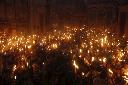
Just before midnight the Priest lights the candles of the people with the fire that comes from the Holy Grave of Jesus in Jerusalem. The churches and the squares are getting lighted only with the light of these candles creating an amazing atmosphere.At midnight the Priest is singing the resurection of Jesus and at the same time the sky is full of colourfull fireworks celebrating this miracle.
E
.After the church all the people are going back to their houses with their candles lighted with the Holy Fire and keep the candle on for some days. This brings a blessing to the house. Then they are sitting to have a dinner but before that they have to play a game. They are cracking each others Easter eggs and whoever has the strongest egg is the winner.
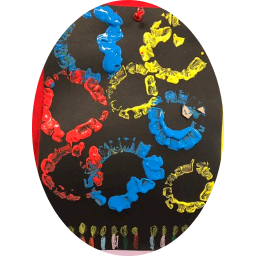
The children tried to draw the candles with the fireworks to present you their tradition.
Hope you like it!
Happy Easter / ΚΑΛΌ ΠΆΣΧΑ/ KALÓ PÁSCHA!
THESSALONIKI
GREECE
Greek Orthodox Easter is probably the biggest celebration of the year for most Greeks, with a lot of special traditions and family gatherings. So, how do Greeks celebrate Easter?
On Lazarous Saturday, children with baskets in hand sing for Lazarous
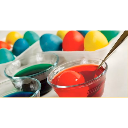
On “holy Wednesday “ we colour the easter eggs.
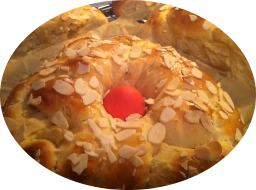
We bake brioche “tsourekia”
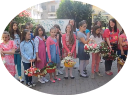
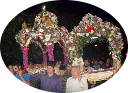
On holy Friday the procession ofthe bier of Christ takes place ( Epitaphios)
On saturday night we celebrate the Resurrection of Christ. We crack the easter eggs.
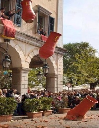
In Corfu people throw huge clay potsduring the celebration of “Botides”
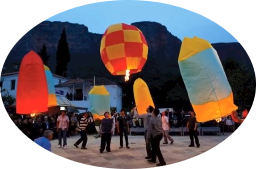
In Leonidio people make giant Hot air balloons “aerostata”

Happy Easter / Priecīgas Lieldienas!
latvia
"Spārīte"
Easter traditions:
Easter is the spring solstice celebrated in honor of the spring and the sun, in which ritual activities seek to help the earth's revival and ensure the fertility of the earth and its blessing in good time.
On Easter morning everyone rushes to the church, leaving only children, old and sick people at home. Breakfast should not be eaten until the landlord transfers the "blessing" (eggs, meat, salt, butter and bread) from the church.
We paint the eggs.
The egg is the symbol of the sun that has long been regarded as fortification and a magical means of life and fertility, and also an embodiment of animal fertility.
At Easter, the coloring of the eggs has a ritual meaning that the ancient Latvians associated with the awakening of the earth after the winter, the arrival of spring, including the cult of fertility and revival.
We break eggs
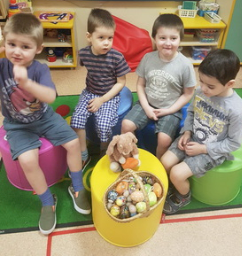
A well-known Easter tradition is egg breaking. If the egg is broken, it must be returned to the one who hit it. Who has the strongest egg, he will live the longest.
We roll eggs
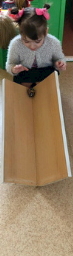
The egg is rolled down the board: if the egg touches an already lowered egg, the player receives both eggs, if not, he leaves it. Now the next player will try to touch this egg and take it.
Eggs cannot be eaten without salt, in summer you will lie a lot.
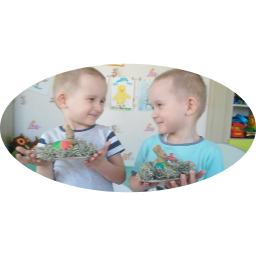

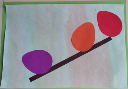
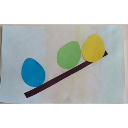
If at Easter you swing on a big swing, then in the summer mosquitoes will not bite.
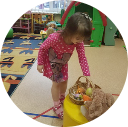
We are looking for easter eggs
At Easter, you need to take a willow branch and slightly beat people and pets. Then they will all be healthy. We must say: "Illness, go away! Health, come! "

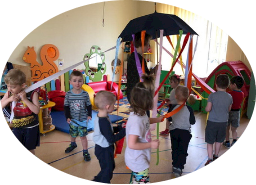
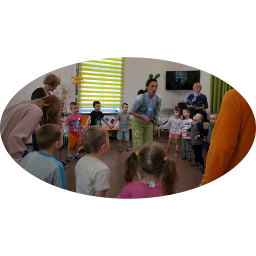
Happy Easter / Priecīgas Lieldienas!
latvia
"Sprīdīši"
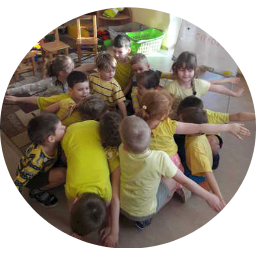
Activities

Happy Easter / Wesołych Świąt
poland
Bydgoszcz
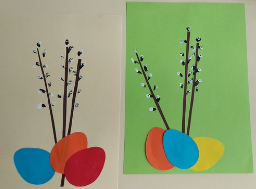
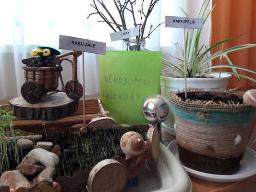
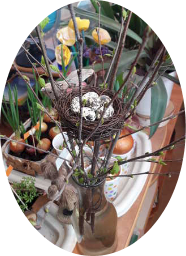
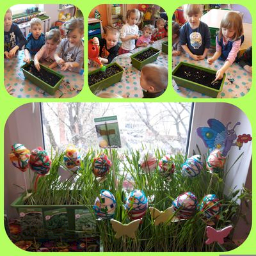
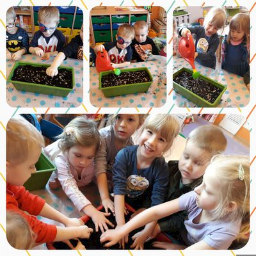
We are preparing for Easter: we sow Easter oats, we prepare Easter eggs and Easter cards for the nearest
Happy Easter / Paşte Fericit!
romania
Satu Mare
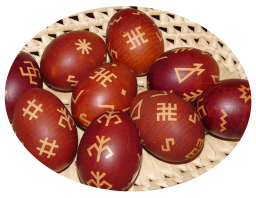
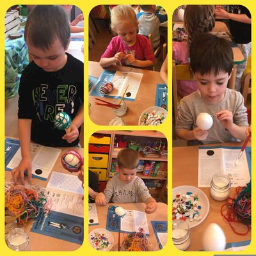
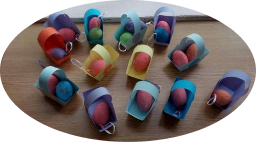
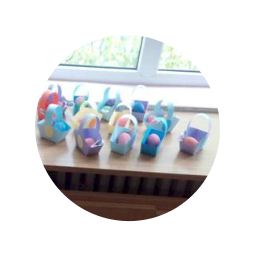
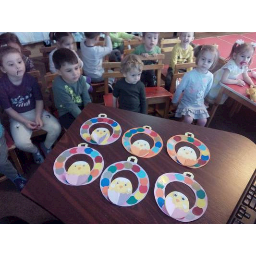
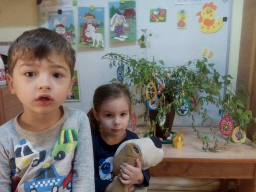
The word for Ester in Romania is Paste. The most commenly known and widespread Ester tradition in Romania is painting eggs. How the eggs are painted will vary from one region to the other, red is the commen and traditional color (it symbolizes Jesus's blood), but in modern days Ester eggs go in many other colors.
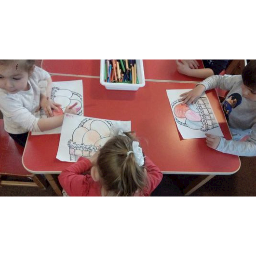
The Resurrection itself is celebrated on the nigh before the Ester Day. The night before the people go to church to light the candle and bring the resurrection light into their homes. On their way back to their homes, people would share the holy candle fire with others.
Happy Easter / Paşte Fericit!
romania
Sotanga
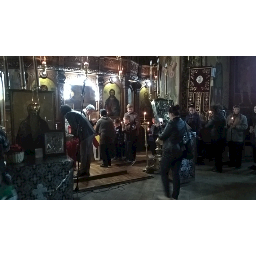
The Thursday before Easter the children, along with their parents, paint and decorate eggs. On Friday everybody goes to church with flowers called “floarea Pastelui” or other spring flowers which they then put on the altar table. After that it’s tradition to pass under the table three times each time saying a prayer.
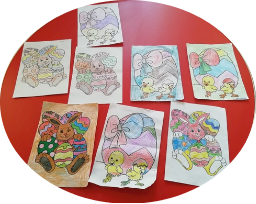
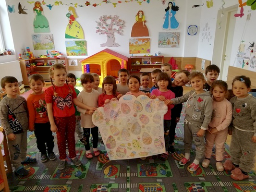
On Saturday the children go to the church again to commune while their parents or grandparents prepare the traditional Easter foods. The Easter is spent with the family cracking the decorated eggs and saying the following phrases:“Hristos a Înviat!” “Adevărat a Înviat!”
Happy Easter/ FELICES PASCUASericit!
spain
Tudela
Mrs. CUARESMA
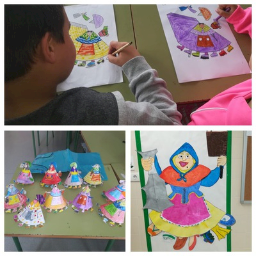
“Old Cuaresma” is a kind of calendar where an old lady called MRS CUARESMA, has seven legs (one for each week until Easter), and holds a fish (cod) in her hand. Each Friday after Carnival children cut one of her legs. It is a funny way to count the weeks to Easter
VOLATIN EASTER SATURDAY
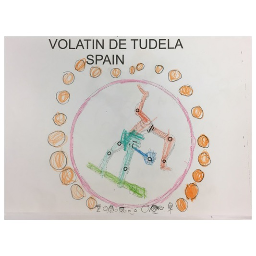
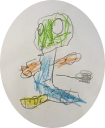
Festival of National Tourist Interest, the origins of El Volatín go way back to the 14th century. At 10 a.m. on Easter Saturday in the Plaza de los Fueros in Tudela, you can attend this unusual ceremony which symbioses the painful death of the traitor Judas Iscariot, who delivered his Master into the hands of his enemies for a few coins. A wooden doll or puppet with articulated limbs, dressed in burlesque style with an exploding cigar in its mouth, waits resignedly for it to be lit. With frenetic movements it starts jerking around incessantly until its costume and shoes fall off in shreds among the crowd. The spectators, especially the children, fight over the shreds along with a shower of sweets and balls launched by the Order of the Volatín.
ANGEL EASTER SUNDAY
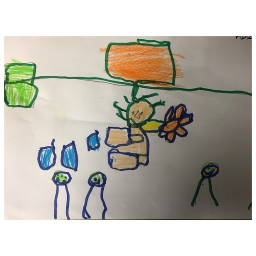
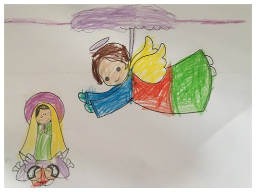
This long-standing tradition is held on Easter Sunday in the Plaza de los Fueros of Tudela. Festival of National Tourist Interest, an angel, incarnated by a child, descends from the skies until reaching the image of the Virgin, whose head is covered by a black veil as a sign of mourning for the death of her Son. The heavenly spirit dislodges the veil, a gesture that evokes the joy at the Resurrection of Christ.
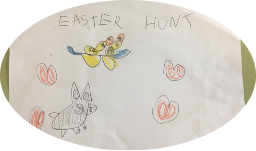
EASTER EGG HUNT
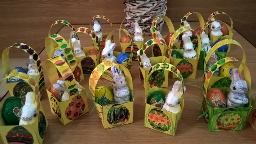
Wearing special glasses we follow the Easter Bunny prints to find its basket full of magic Easter coins.
Happy Easter / mutlu paskalyalar
Turkey
Gölcük
HAPPY EASTER to YOU and YOUR LOVELY FAMILY EASTER SYMBOLIZES the RENELWAL of LIFE
I wish you and your family the renewal of life, love,and happiness.
We congratulate the Easter holiday in Turkish culture as the spring holiday which we call 'hıdırellez'.
In the intercultural dialogue, we celebrate the Easter holiday, which is celebrated by our countries of love, as the Spring Festival, which we
call 'Hıdırellez' in Turkish culture.
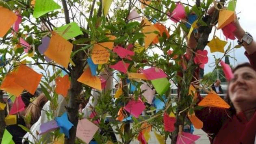
Rifle opening ceremonies in Hıdrellez is one of our traditions which are widely used. Ir Baht “in Denizli and its environs, çevresinde Bahtiyar Edir in Denizli and its environs, çevresinde Mantıfar” in Yörük and Turcomans, ük throwing rings in the mountains ”in Balıkesir and its surroundings,“ taking intent ”in Edirne and its surroundings, and t mania ve in Erzurum. .
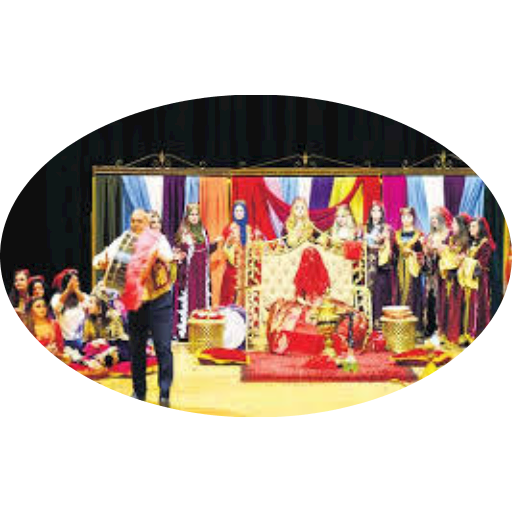
Ceremonies are held in the spring to test their luck with the belief that people will also have their fortunes as synonymous with the awakening of nature and all living things. The young girls, who want to try and make their fortune open the night before the hıdrellez, are gathered in a place of greenery or near a water. They put things like rings, earrings, bracelets in a pot of water, and then they attach their mouth to the bottom of a rose tree. Early in the morning they go to the pottery and drink coffee with milk and pray for the taste of their mouths.
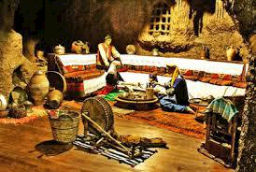
Then, the opening of the pottery of intent is started. While the contents are removed from the pot, it is also called mania. Accordingly, comments are made about the owner of the goods. This practice, which is specific to Hıdrelleze, is mainly done in this way, but it may show some differences compared to the regions.
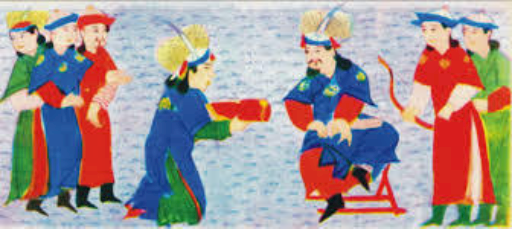
As a result, the celebration of Hıdrellez in Anatolia is still celebrated since ancient times in the history of mankind. Although it is celebrated under different names at different times, Hıdrellez motifs can be found in many places. The arrival of spring and the revival of nature were perceived by people as a situation to be celebrated by festivals. Thus, Hıdrellez, a spring holiday, gained a universal
- < BEGINNING
- END >
-
LIKE
-
COMMENT