This book was made with Storyjumper.



Hey why are most of the rabbits the same color as the grass?
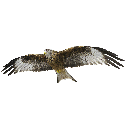
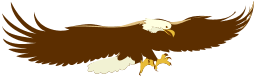
And why does that hawk dude only eats the dark rabbits?
Yo what's up
And why is it that the grass-colored rabbits get to survive?
Blah blah blah blah blah blah blah......
Alright shut up and I'll tell you.
It has something to do with natural selection. Natural selection is the natural force that causes organisms to adapt to their environment for better survival and reproduction.
Oh...
So we need to go back in time to know more about what happened.
TIME MACHINE 2.0
We are now in the 1800s, when the British scientist Charles Darwin developed his hypothesis for natural selection.
GALAPAGOS ISLANDS
See those finches? They all have different beak sizes and shapes. Those who eat bugs have sharp and long ones and those who eat nuts have round and short ones.
This caught Darwin's attention. He developed his idea of a common ancestor, which he thought was an organism with all of its offspring's traits.
Like that thing?


Not really. For example, a lizard might even have connections with a bird and a cow because they still have things in common.
Okay.
After more than 20 years of investigating, Darwin began to see it differently. He thought that variation in traits and environmental pressure came to create change.
But what are environmental pressures?
*Sigh*Let's go to a savanna. Why do you ask so many questions?



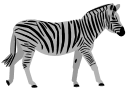

No it's mine!
It's my water!
Life is not easy. Organisms have to constantly fight each other for food, water, or space. And even though you are the strongest in your population, you still might get eaten by predators.
Then bring it on!
Wanna fight?
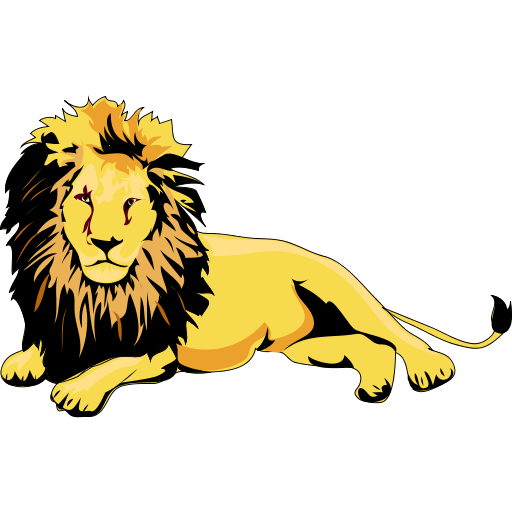
See that lion in the distance? It's going to eat one of the zebras. These environmental pressures causes change to happen. Organisms evolve overtime, but the changes are random.
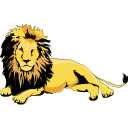
Ahhhhh!
Run!
Uhhh...
Let's get outta here.

Mwahahaha!
Help...
Now you understand what drives natural selection, back to your question about the rabbits.

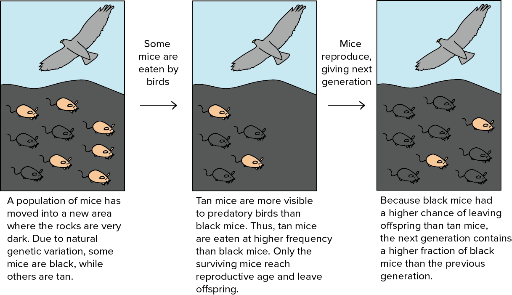
The rabbits all had a common ancestor. As that common ancestor reproduces, it gives random traits to random rabbits. These genetic mutations vary from good to bad.


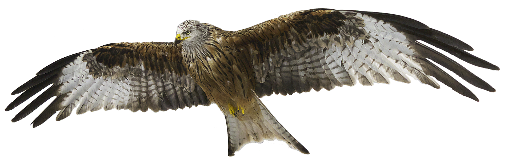
Those with dark skin will get spotted more easily by hawks, who eats them.
No hawk, have mercy!
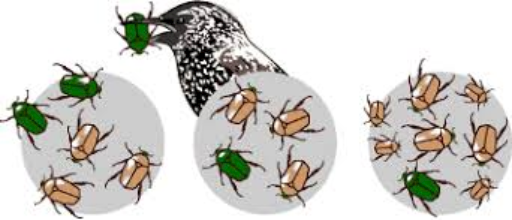
But those with the same skin color as the grass are camouflaged, so the hawk won't spot them easily and are less likely to eat them.

Where are they?
As a result, the rabbit has more chance to survive and reproduce. Overtime, the entire population could be all grass-colored. And those with dark skin become extinct.
Phew...
Nom Nom Nom!
So that's how it works! This is the theory that Darwin used to propose his famous idea of evolution.
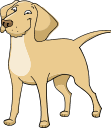
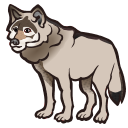
If you still don't think this is happening, look at wolves and dogs. Humans bred wolf cubs so that they are more suitable for being companions. This is called unnatural selection.
Well you could say that, but I'm not your great-great-great-great grandpa.
Which means you are my ancestor!!
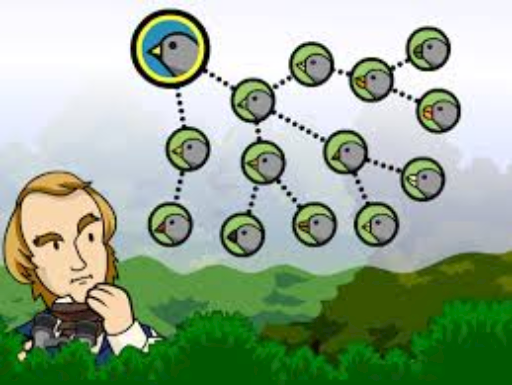
In his book On the Origin of Species, Charles Darwin compared natural selection to a giant tree. At the base of the tree are the common ancestors.
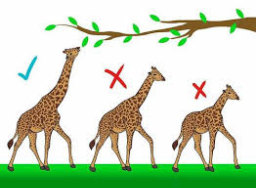
The sub-branches are separate species, like wolves, birds, and giraffes. Some, like the dinosaurs become extinct due to environmental pressure. Some survive, and give birth to new sub-branches, and make the tree of life grow bigger and bigger.
But does it take a long time for it to happen?
Oh yes. It took 3.5 billion years for organisms to transform on Earth!
Thanks for telling me about natural selection, bro! That was so cool!
No problem!
Bye!
See ya tomorrow!

I'm evolving!
What the-
Natural selection: the natural force that causes organisms to adapt to their environment for better survival and reproduction.
Variation: different traits from the same species.
Environmental pressures: things that makes an organism constantly fight and struggle for survival.
GLOSSARY
Charles Darwin: a British scientist who developed the ideas of natural selection and evolution.
Evolution: the change in the traits of a species over many generations and depends on the process of natural selection.
Common ancestor: an organism with all of its offspring's traits.
Traits: special characteristics an organism have.
Galapagos Islands: a chain of islands in South America, where Darwin first conducted his research.
DIAGRAMS
- < BEGINNING
- END >
-
LIKE
-
COMMENT