
This book is dedicated to family and friends who have supported me through college and to all my teachers who believed in me.

The Cherokee Nation
The Cherokee were one of the five civilized tribes. They were located in the southeastern United States and controlled about 40,000 square miles in the Appalachian Mountains.
They fought with British soldiers during the French and Indian War, and the American Revolution. After the American Revolution, the Cherokee no longer had power, and they were forced to give up some land in the Carolinas.
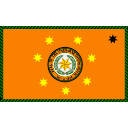
During the 1800s, the Cherokee became an advanced civilization because they adopted the ways of white settlers. Sequoyah, a Cherokee leader, developed the Cherokee alphabet made of symbols, and almost the entire tribe learned to read. They wrote their own constitution very similar to the United States constitution. The first Native American newspaper, the Cherokee Phoenix, was started and they even translated the Bible into Cherokee language.
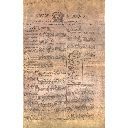
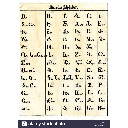
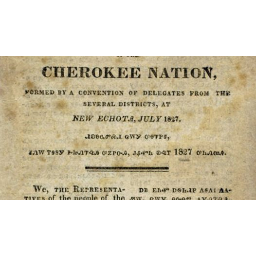
Cherokee Constitution Cherokee Phoenix Cherokee Alphabet
When gold was discovered on Cherokee land in Georgia, word got out to the white settlers. Many other settlers went to Georgia to seek gold, and the government wanted the land from the Cherokee. The Cherokee signed a treaty with the goverment of the United States, giving up all their land in the eastern United States. The treaty was eventually overturned by a Court that ruled that the Cherokee Nation was "a nation within a nation." The United States no longer had claim over Cherokee land, but the treaty was ignored.
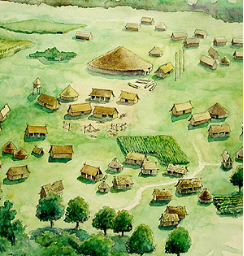
Cherokee Village
Several tribes were forced from their homes. Many Native Americans got sick and died because of cold weather, poor food supplies, and poor treatment by Americans. This march of the tribes was one of the most tragic events in American History known as the "Trail of Tears."
The remaining Native Americans were taken to what is now Oklahoma. It was unfit to live there and many Cherokee escaped to the mountains of North Carolina.
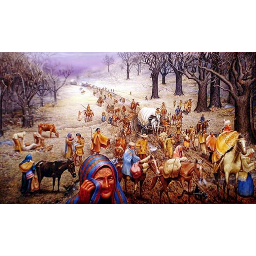
Trail of Tears
The Chickasaw Tribe
The Chickasaw were one of the five civilized tribes, along with the Cherokee. Most of the Chickasaw lived in Mississippi until they were forced from their homes. They were a small tribe but they were known as fierce warriors. Many people felt they were the bravest of the Indians living in the southeast. At an early age, boys were taught to fight and not complain about pain. The war chiefs were well respected and had the most authority. Their towns were built to withstand attacks. The Chickasaw won every major battle or war they fought.
The Chickasaw sided with the English during the American Revolution. The colony of Virginia was not happy and threatened to attack them. The Chickasaw told the colony they would meet them halfway and send them back to Virginia without their heads! After the war ended, the Chickasaw forged a relationship with the United States.
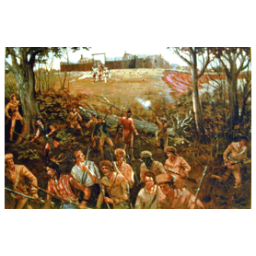
American Revolution
The Chickasaw were treated the same as the Cherokee. When white settlers moved to the southeast, they were forced from their land, along with the other civilized tribes.
Chickasaw were very skilled in battle, but also had other skills. One of their skills, still appreciated today, was making baskets.
The Chickasaw did not move
but did migrate with the seasons.
They built summer and winter
homes, and also ballfields because
they liked to play.
Today, the Chickasaw speak
English. A few still speak Chickasaw
to preserve their language.

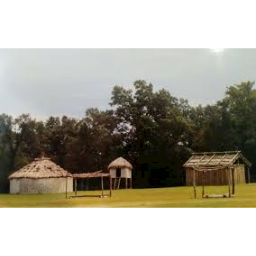
Chickasaw
Baskets
Chickasaw Homes
The Navajo Tribe
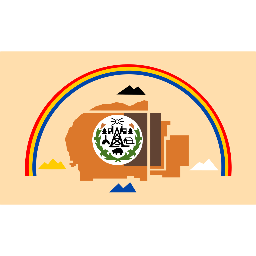
The Navajo Nation is the largest American Indian tribe. It has approximately 300,000 members spread across Utah, New Mexico, and Arizona. They call themselves "Dine" which means "the people" and their land is called "Dine Bikeyah", land of the people. The Navajo became sheepherders and are known as some of the best herdsmen in the southwest.
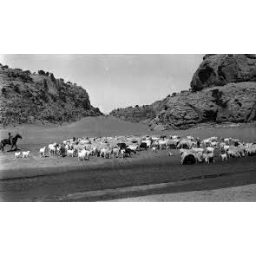
Navajo Sheepherders
The Navajo people did not live in villages. They lived near family so that they could help each other tend crops and look after their herds.
The Navajo often fought with Mexico. Mexicans treated them badly. They were kidnapped and held them as slaves. After the Mexican War, the Navajo thought the United States would help free their slaves from Mexico, but they did nothing.
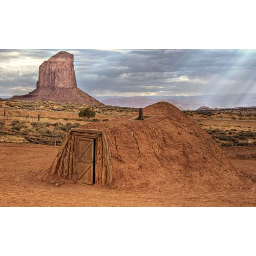
Navajo Home
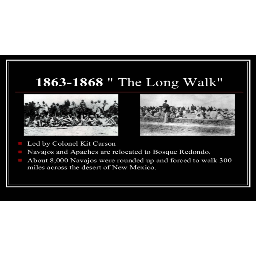
The Navajo were forced from their land when the United States military were ordered to burn their homes and crops. They were forced to march 300-miles to a prison camp in New Mexico. Many died during the walk that is known as "The Long Walk." The United States eventually signed a treaty to return the Navajo to live on their own land.
During World World II, many Navajo joined the United States Army. Many Navajo soldiers became "Code Talkers." They developed a system of coding messages to help defeat the Japanese. The Japanese never did break the code!
"Code Talkers" were honored by the Pentagon in 1992 for their work during the war. A monument was built on the Navajo Nation to honor the Navajo that served in World War II.
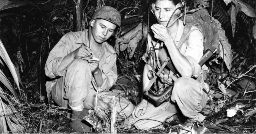
Navajo Code Talkers
The Apache Tribe
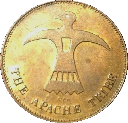
One of the fierciest Native American tribes was that of the Apache. Many people believe that Apache meant "enemy" or "fighting men." They fought through many hostile situations across what is now the western United States.
The term "bury the hatchet" was termed when the battle between the Apache and the Spanish was over. An Apache chief buried a hatchet to
symbolize the end of the war.
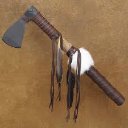
Apache Hatchet
The Apache had many fights with Mexico. When the United States went to war with Mexico, the Apaches let the American troops pass through their lands. However, when the gold rush brought settlers to their land, the Apache leader was beaten by miners
and was eventually killed.
The Apache lived in the hot desert and mountains. This atmosphere made the Apache tough, and the wars they fought gave them the reputation as savage warriors. They were one of the most dangerous tribes the United States Army fought!
Geronimo was the next chief. He never did become an actual Apache chief, because the people thought he was too compulsive. He was skilled at battle but was too vengeful.
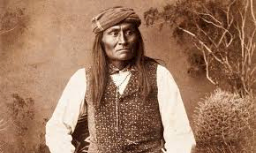
Apache Leader Mangas Coloradas
Geronimo and his troops battled against the Americans. He was the last Native American to resist troops and was viewed as the most evil of Native Americans. The Native Americans were outnumbered and surrendered. They were taken to prisons and most never returned home. Being a proud warrior, Geronimo was a celebrity and wrote his autobiography. He died after being thrown from a horse. He was out in the cold all night and developed pneumonia. Geronimo's last words were, "I should have never surrendered. I should have fought until I was the last man.
Geronimo
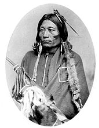
Native American Homes and Dwellings
The many Native American tribes in North America lived in different types of homes. Some homes were built for harsh winters, others were built to keep them cool because of the heat. They were very creative at building their homes.
Wigwams were built where there
were many forests and stood up to
ten feet tall. Their frames were
wooden and were covered by mats
and sheets of birchbark. Most were
built in the shape of a dome or cone. Mats were made to cover the floor and also used like blankets to keep warm.
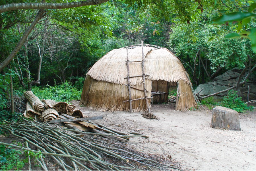
Wigwam
Grass houses were built by Native Americans in the Southern Plains. They looked like wigwams but were built using different materials. The prairie has a lot of grass, so the houses were thatched with prairie grass. Some of the houses were built four stories high.
Wattle and daub houses were made in the southeastern United States. They were built with a frame of cane, vines, or wood and coated in clay or mud. These houses were for permanent settlers because of the time it took to build each house.
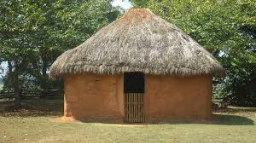
Wattle and Daub House
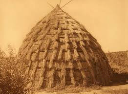
Grass House
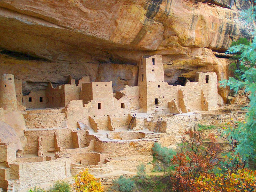
The Anasazi in the southwestern United States built homes called cliff dwellings. The homes were built along sides of cliffs or under the overhang. They used a ladder to climb into their homes. One cliff dwelling was called the Cliff Palace. It had more than 150 rooms. The Balcony House had to be reached by climbing a thirty-two foot ladder and crawling through a tunnel. The homes were built for protection.
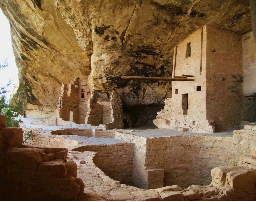
Balcony House
Cliff Palace
Famous Native Americans
Native Americans fought many battles and lost their lands. However, tragedy has not kept them from making many achievements and other contributions to society. Several Native Americans have left a mark on history. A few of them are listed below:
Squanto - helped the Pilgrims survive their first winter in North America by giving them food and helping them grow their own.
Sacagawea - helped the Lewis & Clark expedition by serving as an interpreter.
Sequoyah - wrote the Cherokee alphabet.
Ira Hayes - served in the United States Army in World War II. He helped raise the flag on Iwo Jima.
Wilma Mankiller - first woman elected to be chief of the Cherokee.
Pocahontas - helped the Jamestown colony survive winter by bringing them food.
I hope you have enjoyed my story on different Native American tribes, their homes, and a few famous Native Americans.
The End
- < BEGINNING
- END >
-
LIKE
-
COMMENT