This is the collaborative Book of the eTwinning project A JOURNEY THROUGH THE WATER.
Students from around Europe wrote a legend or a story about their river, lake or sea.
They translated it into English.
They worked in teams: schools were matched and each school drew a partner's legend.

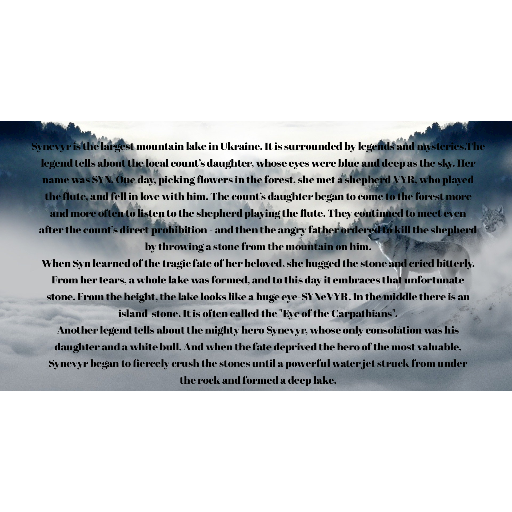
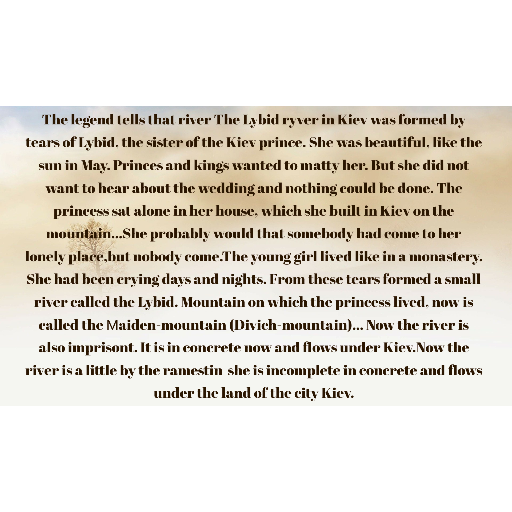
UKRAINIAN LEGENDS
Text by Nataliia Vysochynska team ,Ukraine/Kyiv,KEY SCHOOL

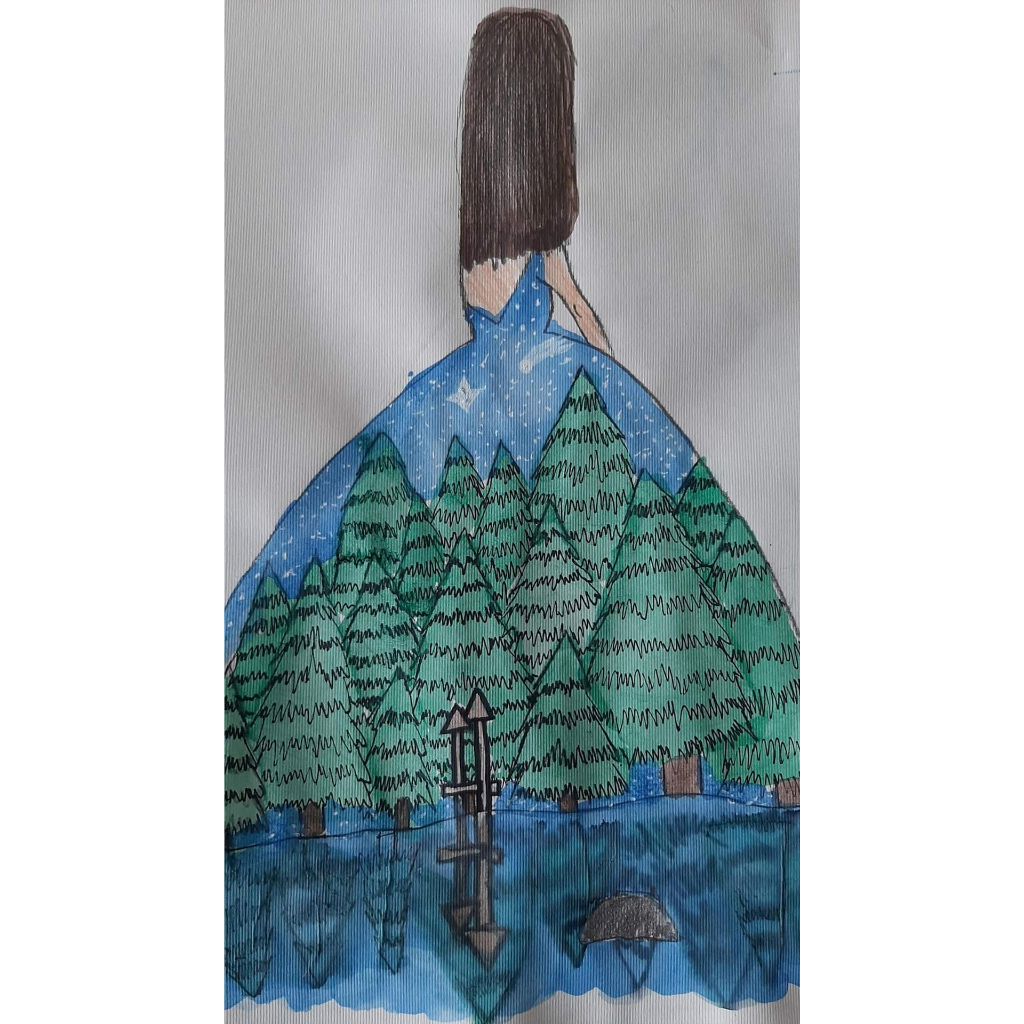
UKRAINIAN LEGENDS .Arts by Suzana Jagić team, Primary school Ivanec, Croatia

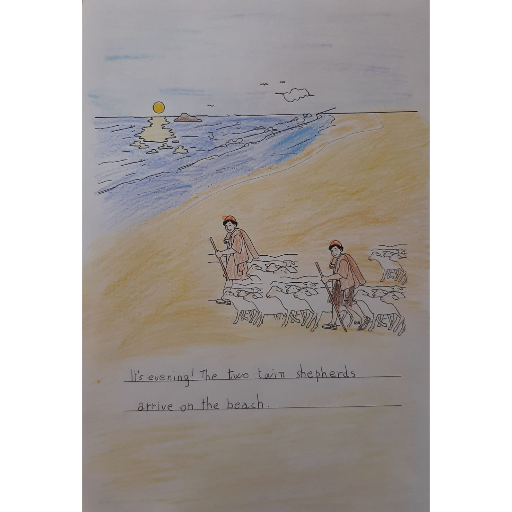
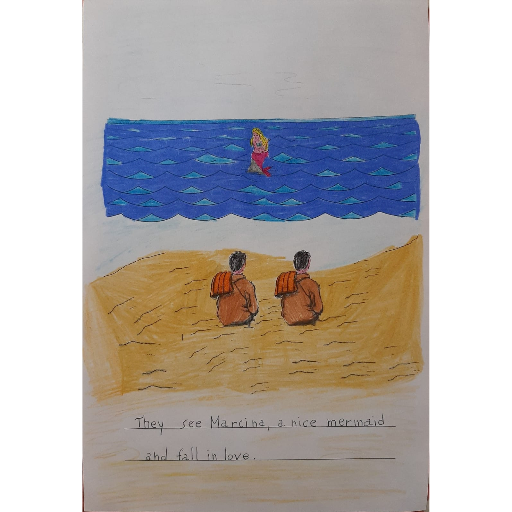
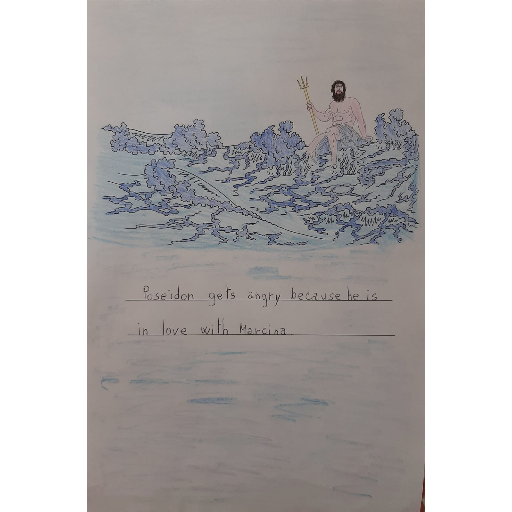
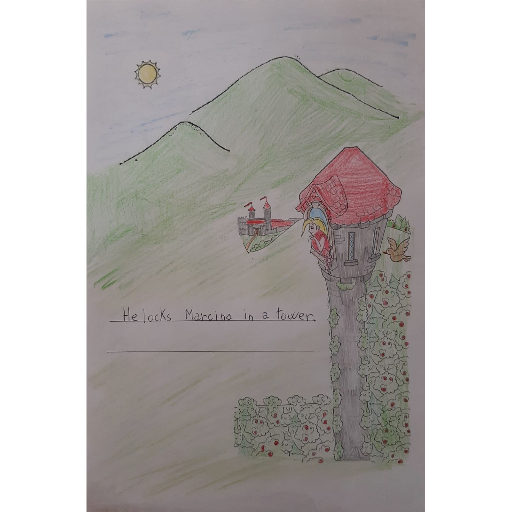
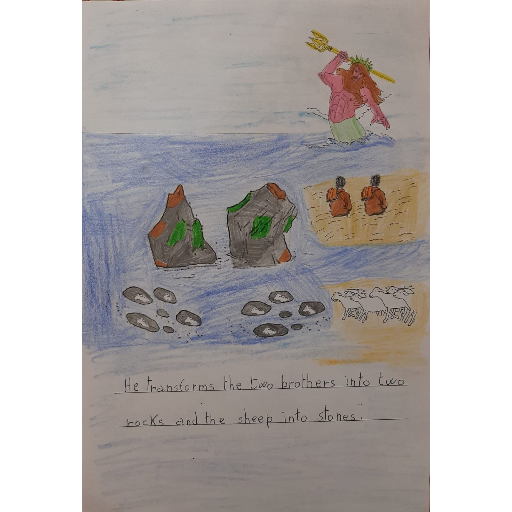
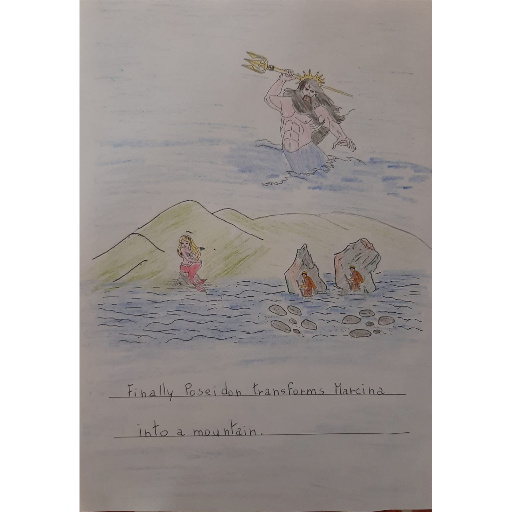
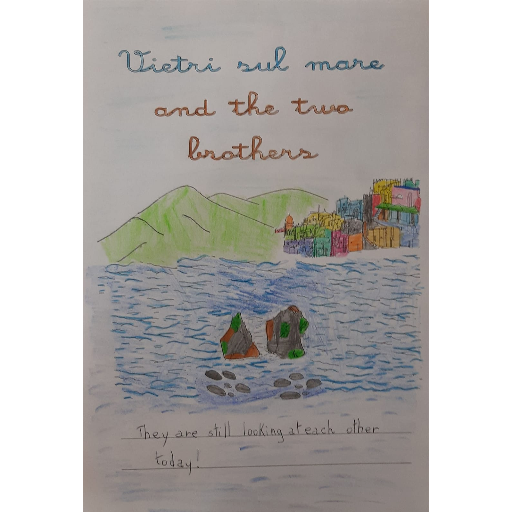
THE LEGEND OF THE TWO BROTHERS
IN VIETRI SUL MARE
Comvass School
IC"Mons.M.Vassalluzzo"
Roccapiemonte
Italy
Teacher Antonella Trezza
Croatian legend
The legend of the origin of Bistrica and Mrzljak
Text by Suzana Jagić team, Primary school Ivanec, Croatia
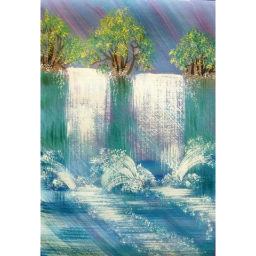
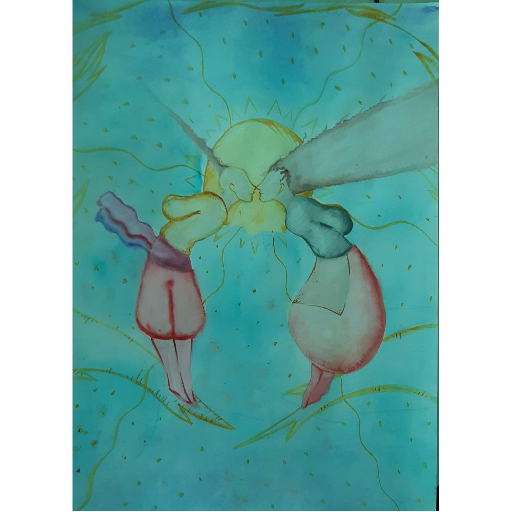
Arts by Nataliia Vysochynska team ,Ukraine/Kyiv,KEY SCHOOL

https://bit.ly/3pEfdHz
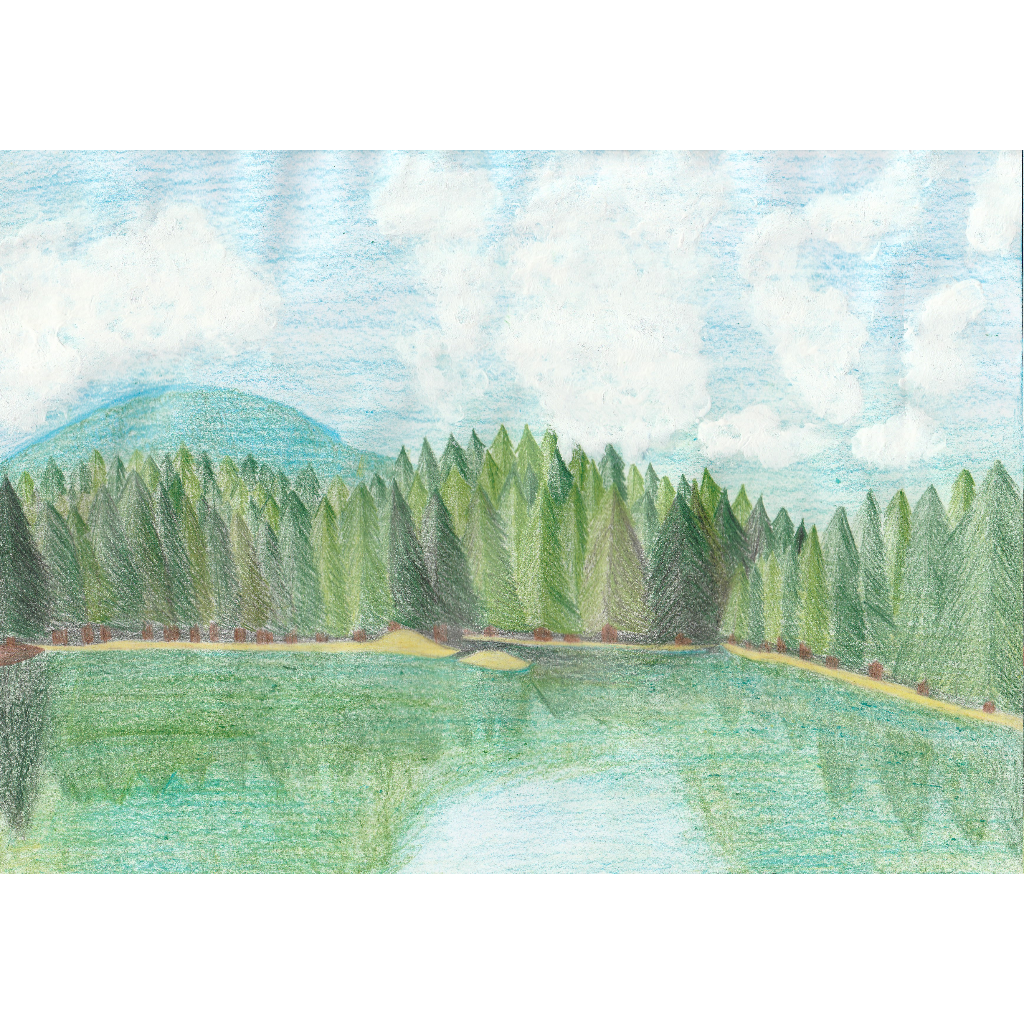
Klara, Ivanec, Cro
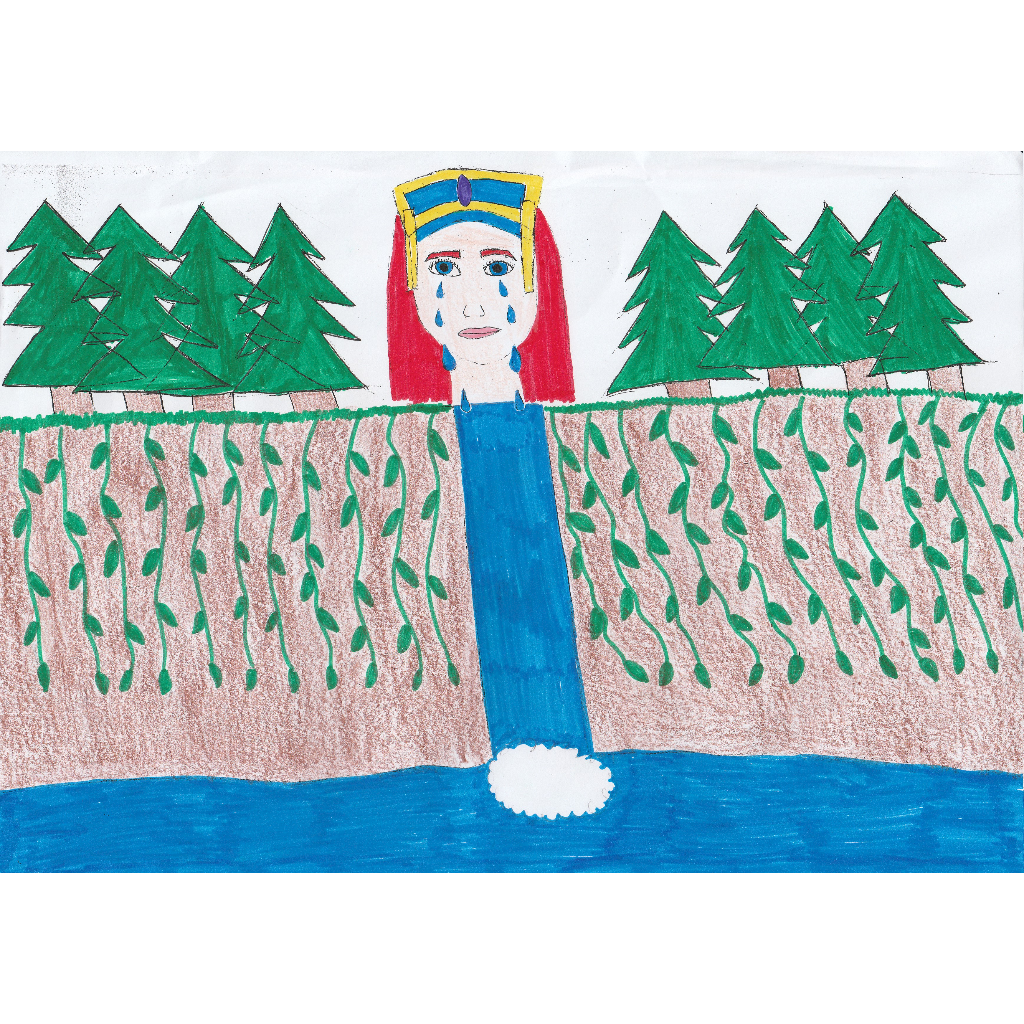
Nika, Ivanec, Cro
THE WRECK FROM COSTINEȘTI
THE BLACK SEA
Written by Răzvan/Team Voicu Corina Valentina/Liceul Tehnologic Aiud/Romania
The legend of Costinesti/Team Voicu Corina/Romania
Art: Angela Barletta Primary school ITALY

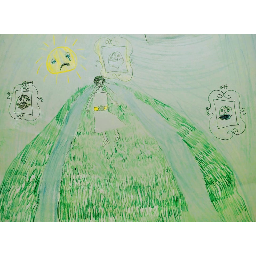
THE LEGEND OF TWO RIVERS:
MUREȘ AND OLT
Written by Alexandra
from the team of Buta Ramona Dora/Liceul Tehnologic Aiud/Romania
There was once an emperor who had two sons: Mureș and Olt.
One day he liked the war, but never returned. His sons decided to look for him. The Empress refused, but begged him never to part.
THE LEGEND OF TWO RIVERS:
MUREȘ AND OLT
Team: Buta Ramona, Romania
Arts by Angela Florou 6th P.S.Artemis Greece
They did not listen and parted. When she saw that they were no longer coming, the Empress began to weep unceasingly.
From her tears
were born the two rivers:
Mureș and Olt.
Written by Georgia from 6th P.S.Artemis Greece
Teacher Angela Florou
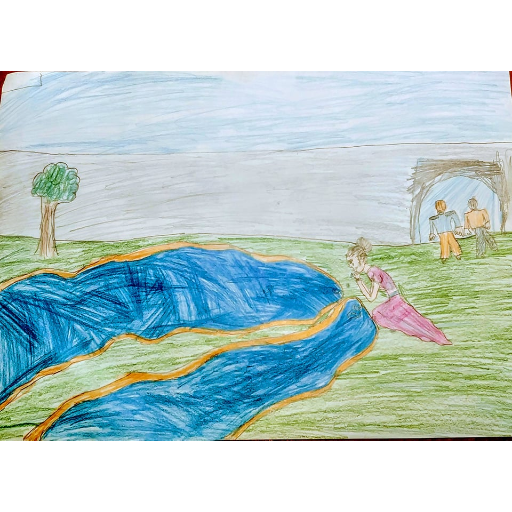
Marathon Lake is an artificial lake formed by the construction of the Marathon Dam to meet Athens' water needs.
The problem of water scarcity has plagued the inhabitants of the region of Attica since antiquity and is explained by the myth of the name of the city of Athens.
According to this legend, the god Poseidon and
the goddess Athena fought for the name of the city. Poseidon offered water as a gift to the city and the goddess Athena donated the olive tree.
However, the gods - judges of the duel were not
impressed by the gift of Poseidon, who gave the
victory to the goddess Athena and the city now
officially took its name, Athens.
Poseidon became angry and decided to deprive Athens of water because they underestimated his precious gift.
The inhabitants of the basin, depending on the means of each season, from time to time made various efforts to supply water ...
Today the ancient Greek temple at the foundations of the Marathon dam is a copy of the Athenian temples at Delphi to "exorcise" the water shortage and symbolizes victory of modern Athenians in this battle ...
Legend: The Marathon Lake
Angela Florou/Greece
Arts by Buta Ramona Dora
Liceul Tehnologic Aiud/Romania
Croatian Slovenian collaborative work:
Croatian folk tale about Plitvice Lakes
Slovenian folk tale: Fairies shaped the Bled lake
Primary school Vladimir Nazor, Đakovo, Croatia
Primary school Litija, Litija, Slovenia
Snježana Krišto
Nena Mandelj
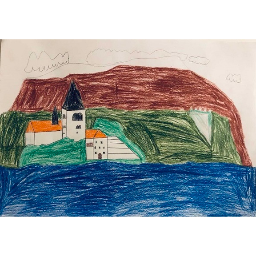
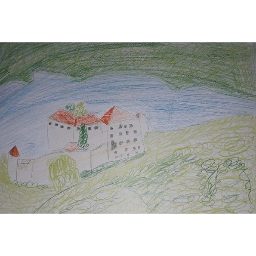
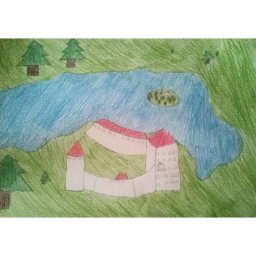
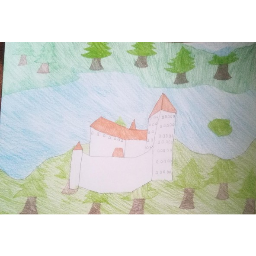
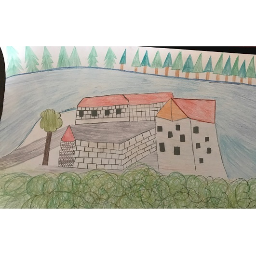
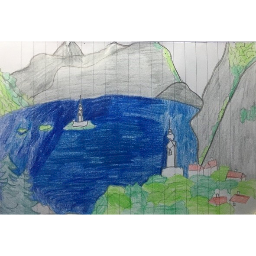
Slovenian folk tale: Fairies shaped the Bled lake
Once upon a time, there was no water at the location of Lake Bled, but a meadow valley with a small hill and a rock, where mountain fairies danced at night. Shepherds grazed their sheep in the valley, which ate grass around the fairy rock. The fairies asked the shepherds to put a fence around their dance area so that the grass would remain soft. The shepherds just laughed at their request. "If you won't fence our hill we will do the work ourselves!" warned the insulted fairies. When even these their threats had failed and one day, the youngest and most beautiful fairy broke her leg while dancing, the angry fairies called upon the springs and brooks to storm into the valley and fill it with water. Only the hill with the rock remained as an island in the middle of the lake, where fairies could dance in light starry nights. Although fairies left these places a long time ago, a beautiful fairy lake and an island below the mountains were left behind. This is Lake Bled.
LibBros (students of library club, Litija, Slovenia)
Students from Primary school Vladimir Nazor, Đakovo, Croatia illustrate Slovenian story:

Croatian folk tale about Plitvice Lakes
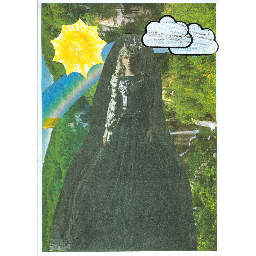
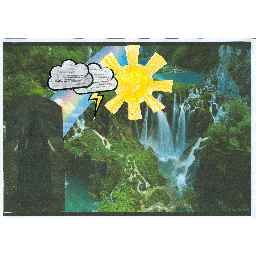
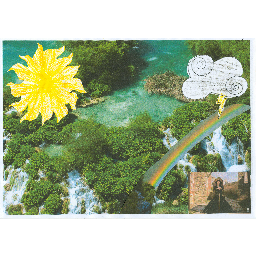
Once upon a time, there was a big drought. People were praying for the rain. One day they heard a voice saying: “Come to the Source of life in the morning. Tell honestly about everything that’s in your soul and I'll be with you.“ Older people knew it was the voice of the Black queen. The tribal elder said to them: “The Black queen will listen to you. She knows who is tells the truth and who doesn't. Don't try to see her! You can't see love and goodness. You need to find them in your hearts.“ People started talking about their troubles and everything that was in their souls. Then they saw a rainbow and heard the queen's voice: “This is your land. It's still rich and beautiful to you. Love it! I'm not a wonder, I'm your daughter. I'm your love and hope. I heard you and I know your hearts. You told the truth. It's my truth, too. Go to your homes now. The rain will fall and you will have beautiful land again. My tears will make water. After that, people saw two clouds: the dark one and the white one. It started raining. Water started flowing in a row of sixteen beautiful lakes – Plitvice Lakes.
Primary school Vladimir Nazor, Đakovo, Croatia
Students from Primary school Litija, Slovenia made collages of folk tale which students from Primary school Vladimir Nazor, Đakovo, Croatia uploaded in on the previous page.
Team: Jolanta Zamoyska, Poland
MILENIUM Primary School
Arts: Teresa Todaro, Italy
Alberobello 3^ Primary School
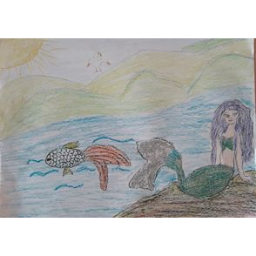
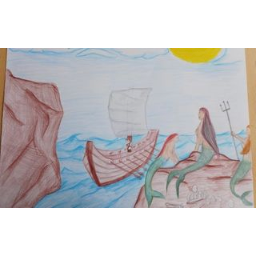
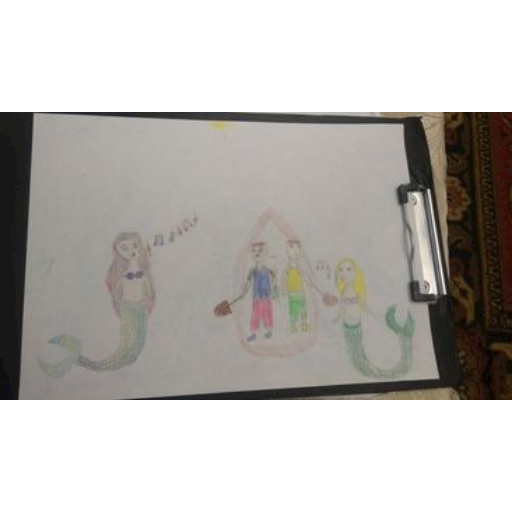
Once upon a time, when Poland was covered by forest, in the middle of the Vistula river, lived a young fisherman named Wars. He loved Vistula river. He had a boat and whenever he went fishing, he always returned with many fish.
Wars liked night fishing the best. One night he noticed a beautiful girl who had a fish tail.
It was a beautiful mermaid. She didn’t see Wars and she started to sing.
When Wars heard the singing girl he immediately fell in love. Since then Wars has been watching the beautiful mermaid every night.
One day he decided to talk to her. Her name was Sawa. She also loved Wars.
They decided to get married. And suddenly Sawa’s tail vanished!
Wars and Sawa built small village on the bank of Vistula river. The village where they lived was called WarSawa (Warsaw).
THE END
The Italian Legend of Pizzomunno and Cristalda
Written by Teresa Todaro team
I.C. Morea- Tinelli Primary School, Italy
It is said that at the time when the current city was only a village made up of sparse huts and inhabited by fishermen, a tall and strong young man named Pizzomunno lived there. Also in the same village lived a girl of rare beauty, with long sun-colored hair named Cristalda. The two young people fell in love, loving each other hopelessly without anything could separate them. Pizzomunno faced the sea every day with his boat and punctually the sirens emerged from the sea waves to sing sweet songs in honor of the fisherman. The sea creatures did not just sing, but prisoners of Pizzomunno's gaze offered him immortality several times if he agreed to become their king and lover.
The love that the young man poured on Cristalda, however, made the offers of the sirens useless. One of the many evenings in which the two lovers went to wait for the night on the islet that rises in front of the coast, the sirens, caught by a fits of jealousy, they attacked Cristalda and dragged her into the depths of the sea. Pizzomunno chased his beloved's voice in vain. The following day the fishermen found the young man petrified by pain in the white rock that still bears his name today.
Even today, every hundred years, the beautiful Cristalda returns from the abyss to reach her young lover and relive their ancient love for just one night.
Arts by Jolanta Zamoyska
MILENIUM Primary School, Poland
THE LEGEND OF THE SEA MERMAID PARTENOPE (The birth of Neapolis)
Luigina Marona DDS Mondragone Terzo Italy- Primary School class 5^ A S. ANGELO
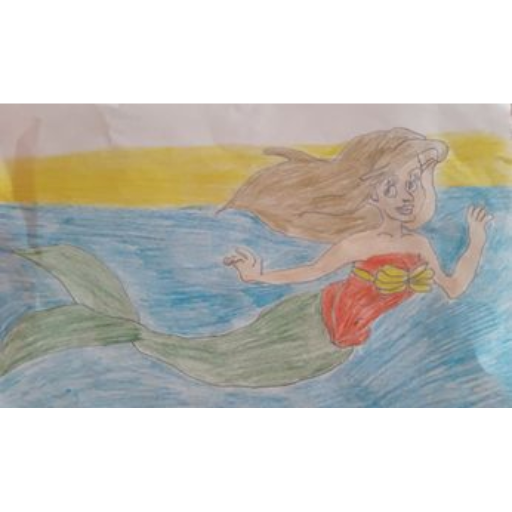
A legend that tries to explain the birth of the city of Naples is the Legend of the Mermaid “Partenope”. It is narrated by Homer in the 12th song of the Odyssey.The myth is due to Homer's Odyssey and the closeness between Ulysses and a particular mermaid. A mermaid is a half-woman and half-fish creature with a hypnotic voice, capable of seducing
by her singing and then killing men crossing the sea but if the seduction does not take place the Mermaid is destined to disappear forever. Ulysses, a very curious man, warned by the Sorceress Circe, decides, however, that he wants to hear the Mermaid sing. He forces his men to plug their ears with wax, and, to avoid the danger of being hypnotized, he gets tied to the ship mast. So, Ulysses does not become prey to the sweet sea creature and Partenope, in love, failing to seduce Ulysses and she lets herself die getting carried away by the waves. The sea currents bring Partenope’s body to the coast, among the rocks of Megaride (where today stands the “Castel dell'Ovo”).
Fishermen find her and worship her like a goddess. Partenope is transformed by giving life to the morphology of the Neapolitan landscape, with the head resting to the east on the height of Capodimonte and the foot to the west towards the promontory of Posillipo. That place begins to be called "Neapolitan city" and the beautiful Mermaid Partenope is its symbol and in Sannazzaro square there is a fountain with a beautiful mermaid. If it is true that every unrequited love leaves room for a new wonder, then we can say that the one between Partenope and Ulysses has given rise to one of the most fascinating wonders in the world: NAPOLI !
Mondragone: The Legend of the Dragon
DDS Mondragone Terzo, Italy
Teacher: Maria Tartaglia & Rosa Di Resta
Primary school: S. Angelo Class / V B
Mondragone is a town bathed by the Tyrrhenian Sea, at the foot of mount Petrino, located between the Volturno and Garigliano plain. Since ancient times it has always been a place of conquest for its low coasts and its particular fertility of the flat soil. The arrival of populations from the sea forced the locals to take refuge on top of the mountain where a Rocca was built.
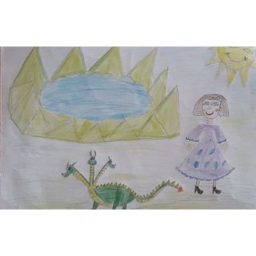
The official story states that the castle belonged to the Dragoni family, who found refuge from the raids of the saracen pirates by taking refuge on the Rocca. Other legends speak of a lombard prince named Dragone and his daughter Rocca, who escaped the hunger of the terrible dragon of the castle. It is said that a proud and noble-looking knight, more than two meters tall with golden hair, rode what was now a cursed land, the Rocca di Monte Dragone. On his way, he met the girl Rocca who, absorbed in her sadness, told him about the escape of the Dragoni family from the inhabitants of the city. They had to deliver a young nobleman to the dragon every year in exchange for the protection of the territory.
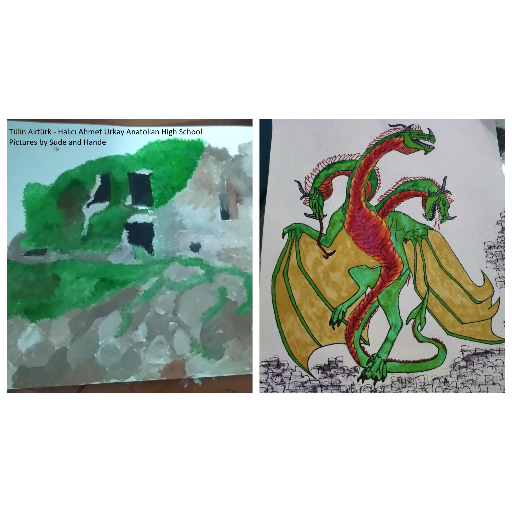
It is said that the white dragon was a huge monster with three heads, long tongues of fire and that his roar echoed within the castle walls, so much that the whole mountain shook. The good knight, pitied by Rocca's story, decided to help her get rid of her hungry monster. Thus, while the dragon came down from the mountain to drink from the rivers, the hero threw himself against it. He grabbed him by the horns and managed, with a single blow, to cut off all three of his heads as they rolled down the mountain. Even today, in the place where it is said that the dragon was killed, there are the chasms created by the three heads, near which one can hear the rushing flow of his blood, while in the cave below, his atrocious roar seems to resound:
the echo of the "The Dragon’s mouth" of Monte Dragone.
Tülin Aktürk Halıcı Ahmet Urkay Anatolian High School
Story by Hüseyin and Furkan
Legend of Kızkumu
King of Bybassos and a fisherman fell in love with each other. Princess goes down to the beach and sent signals with an oil lamp to the fisherman when night comes. Fisherman slowly and quietly swims to the beach with his boat after he saw the signal. Princess and fisherman meet at the beach and spend time together. It works for a while until the king realizes this. He gives orders to his soldiers to capture the fisherman. Orders were clear. Soldiers would capture the princess and use an oil lamp as a trap to catch the fisherman.
However, the princess escapes from the soldier and jumps to the sea to reach her lover.Every step she took turned a sand path. While soldiers trying to shoot the fisherman one of the arrows hits the princess but hopefully, the fisherman rescues the princess and nobody saw them after this incident.
The legend says that the sand is red because of the princess’s blood and according to another relief, your wish will be accepted while walking the sand path princess made.
Drawings of The Legend of KIZKUMU
DDS Mondragone Terzo. Italy Class: 5^B S.Angelo Teachers: Maria Tartaglia & Rosa Di Resta
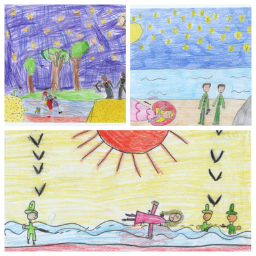

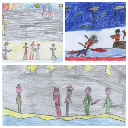
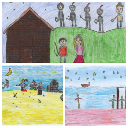
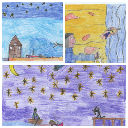
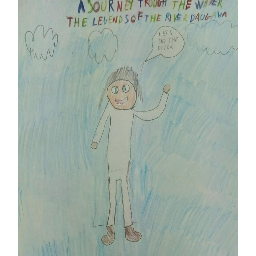
The Legend of the biggest river Daugava
VALMIERAs Pārgaujas Primary school, 3rd class
Teacher: Vineta Zegele


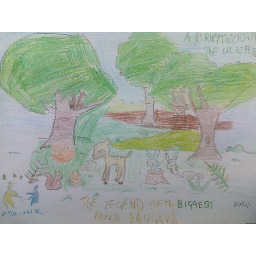
When God created trees, birds and animals, and fishes, the river Daugava wasn’t yet.
All birds and animals started to wrangle. The God saw that and decided to give them something to do.
He called all of them together and said : “Let’s start to dig the river Daugava!”
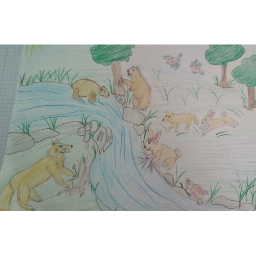
All animals and birds started to work. The rabbit and the fox had got agile legs so they started to measure the way of river.
The mole started to make a ridge for river and badger made it wider. The bear as strongest animal carried ground and pattered it near the river. All animals and birds work very fast and very good, so the river was very soon ready.
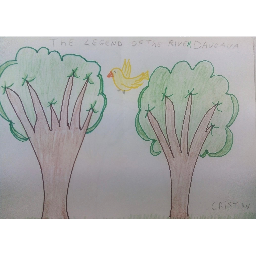
After that the God came to see how was the work done. He praised all animals and birds who had worked, but saw one rain bird who just was jumping from tree to tree. He asked :
“Why didn’t You work?”
The rain bird answered:
“I have got very beautiful yellow wings? If You would have such beautiful clothes, do you want to work so dirty work?”
The God became angry and said:
“OK, then You can’t drink water from this river. You can drink only from rain on leaves and stones!”
“Let’s flow to the sea! I called you Daugava!”
The legend of the biggest river Daugava.
Teacher :Ida Gravano DDS Mondragone Terzo
5A Incaldana Primary School Italy
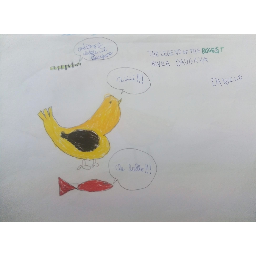
The Legend of Lariosaurus
Como Rebbio Primary School, ITALY
Teacher: Monica Frigerio
Grade fourth
Do you know Loch Ness and its monster, Nessie? In Lake Como, Italy, you can come across "Larrie". Lake Como is one of the deepest European lakes. In 1946 two hunters near Colico, the north shore of Lake Como, said that they met a creature with harsh reddish scales, ten or twelve metres long. The two hunters shot at the "thing" that quickly disappeared.
This strange animal was called Lariosauro, the same name used a century before to name a prehistoric reptile (Lariosaurus balsami).
In 1954 a couple, father and son, spotted something with a rounded snout and webbed feet swimming on the water. It was long only eighty centimetres.
Three years after a bathysphere, which submerged ninety metres deep off the coast of Dervio, met an animal with a crocodile-like head and a body length of about two meters.
The last meeting was in 2003: a giant eel, about 10-12 meters long, was seen in Lecco.
We can’t really say how much truth lies in these stories, but… just for your info, a room in the Natural History Museum in Lecco has been dedicated to Larrie. A proof of how much impact some legends can have on local culture!
Drawing made by Stefania Rusescu from "George Calinescu" Secondary School, Onesti, Romania
Teacher Lacrimioara Sabareanu
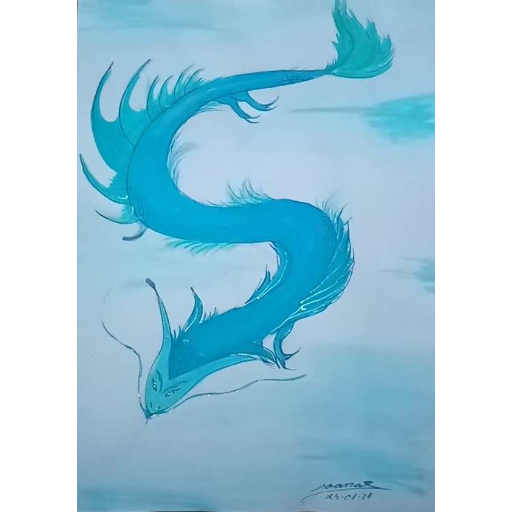
The fisherman of Cefalù
Angela Barletta , primary school ITALY
Once a fisherman from Cefalù, in pulling the net in the boat, felt it heavy heavy, and who knows what he thought he would find there. Instead he found a little fish along a little finger, grabbed it angrily and was about to throw it back into the sea when he heard a thin voice saying:
- Ouch, don't hold me so tight.
The fisherman looked around and saw no one, neither near nor far, and raised his arm to throw the fish, but here is the little voice again:
- Don't throw me, don't throw me!
Then he understood that the voice was coming from the fish, he opened it and found inside a small little child, but well made, with feet, hands, face, all right, only that behind his back he had two fins, like fish .
- Who are you?
- I'm the sea boy.
- What do you want from me?
- If you keep me with you, I'll bring you luck.
The fisherman sighed:
- I already have so many children to support, this luck must have touched me to have another one to feed.
- You'll see ... - said the sea boy.
The fisherman took him home, made him make a little shirt to hide his fins and put him to sleep in the cradle of his last born, and he didn't even occupy half a pillow with the whole person. What he ate, however, was a fright: he ate more than all the other fisherman's sons, who were seven, one hungrier than the other.
- A good fortune indeed! Sighed the fisherman.
- Let's go fishing? - the sea boy said the next morning with his thin little voice.
They went, and the sea boy said:
- Stand straight until I tell you. Here we are. Throw the net below.
The fisherman obeyed, and when he withdrew the net he saw it full as he had never
seen it before, and it was all top quality fish.
The sea boy clapped his hands: - I told you, I know where the fish are.
In a short time the fisherman got rich, he bought a second boat, then a third, then many, and they all went into the sea to cast their nets for him, and the nets were filled with fine fish, and the fisherman earned so much money that he had to study. from accountant one of his sons to count them.
Becoming rich, however, the fisherman forgot what he had suffered when he was poor. He treated his sailors badly, paid them little, and if they protested he fired them.
- How are we going to feed our children? - they complained.
'Give them some stones,' he replied, 'you will see that they will digest them.
The sea boy, who saw everything and heard everything, said to him one evening:
- Mind that what has been done can be undone.
But the fisherman laughed and paid no heed to him.
Rather, he took the sea child, locked him in a large shell and threw him into the water.
And he who knows how long will have to pass before the sea child can free himself.
Legend: The fisherman of Cefalù
Angela Barletta, Italia
Art: Team Corina Voicu Valentina
Liceul Tehnologic Aiud- Romania
The Water Drop Tale
Öğretmen Mukadder Akaydın Primary School-Umut Şencan
Everyone knows what a magnifier is, a kind of lens that magnifies everything a hundred times. Thousands of small creatures appear when a drop of water is viewed with a magnifying glass. However, if we look with the naked eye, we cannot see any of them. But they are always in that water. Once upon a time there lived a man named "giant uncle", he wanted to have everything nice and interesting, if he could not get it, he would either resort to the wizard or invent all kinds of ways by himself.
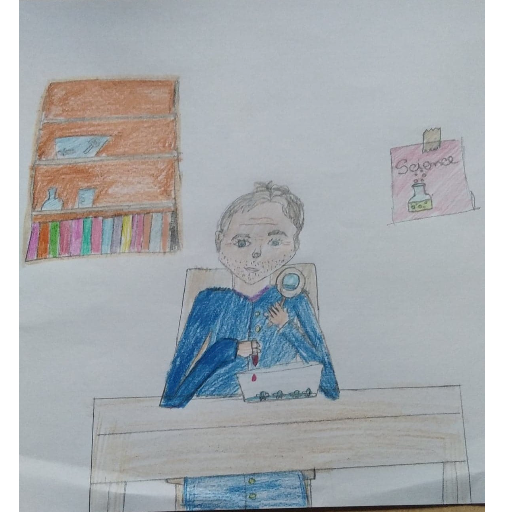
One day, he took a magnifying glass and examined a drop of water and those invisible creatures were constantly moving, jumping and jumping in the water. He found it very interesting, but thought of coloring it to see it more clearly and a red color was dripped into it. This was a witch's blood. Suddenly, the creatures in the water turned pink. He compared these creatures to living things in a city. They are pushing, fighting, pulling each other and biting mercilessly. The ones below want to go up and they are constantly trying to digest them. "Actually, it's just a drop of water," he said. “But it's still a real-life example. But wouldn't everything be more beautiful if all living things looked at each other with love? he finishes.
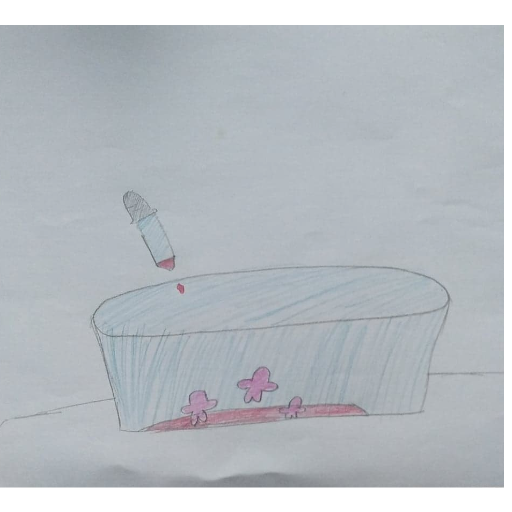
Andreea Goldschmidt
Școala Gimnazială, Comuna Puchenii Mari - România
"The story of Mureș and Olt" Romanian legend
drawings by student from Öğretmen Mukadder Akaydın Primary School-Umut Şencan
It is said that there was once an emperor and an empress who had two boys, who looked alike, but with very different natures: one was fierce and troubled – his name was Olt, the other quiet – his name was Mureș. The king went to war when they were little children, but he never returned. Growing up, the big boys wanted to look for their father, maybe they would track him down.
That is why they came to their mother, the empress, asking for a blessing on the way. Their mother enjoyed their good thoughts, but she was also sad that they were going out into the world.
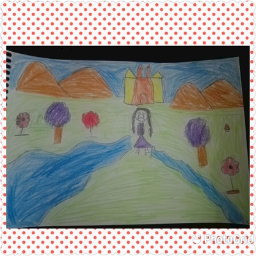
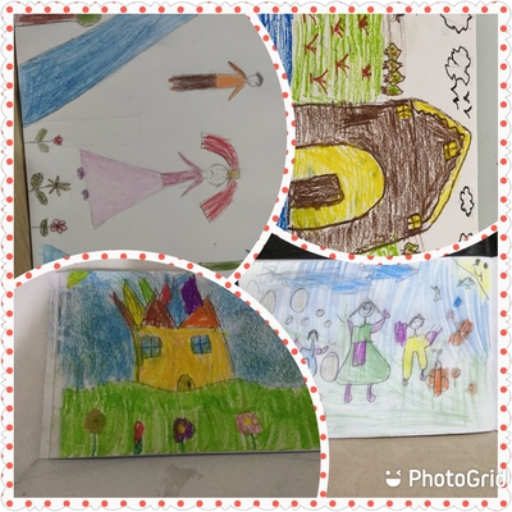
She blessed them and asked them to go together, not to break up on the road, whatever it was. That's what the boys promised, setting off.However, as soon as they left the palace, located on the top of the mountain, they quarreled, due to their different natures ... And Olt took it to the south, and Mureş to the north, going their way. The Empress learned of the separation of the brothers and was very upset and cried. She tried to find them and unite them, but failed. Mureş missed his brother and he also turned south, but he did not catch up with the rushing Olt. From the cry of their mother, both Olt and Mureş turned into two rivers. The Olt kept running among the rocks, foaming, and the Mureş took it in another direction, flowing quietly, between the plains.
ROXANA DUMITRACHE
ȘCOALA GIMNAZIALĂ, COMUNA PUCHENII MARI - ROMÂNIA
”THE LEGEND OF THE THREE RIVERS”
Marios
E1-2nd P.S. Artemidos- Greece
Ruijie
E1 -2nd P.S. Aremidos Greece
Being quick by nature, the older brother got angry with the other two and set off in a whirlwind where he thought he was fine, accompanied by some of the prince's soldiers.The middle one, a lad, and the little one, a boy from Oaches, grabbed her to the south. After a while, however, it seemed to the younger brother that the older brother was right and he also took it to the rising sun. They wandered with the prince's soldiers for many days and nights in search of the golden bath. Eventually, the boy who had taken to the south came across the treasure in the mountains. But the moment he wanted to show it to the soldiers, Vâlva Comorii came out of the bathroom and enchanted him, turning him into a stone sheepfold, and the earth trampled by his feet. He did the same with his other two brothers, so that they could never find the treasure. The soldiers did not have a better fate either, Vâlva Comorii turning them into small, fast-flowing waters.
Theodora
E1-2nd P.S. Artemidos
Greece
This is the story of the three seekers of the golden bath who became the Crişul Repede, the quick one by nature, the Crişul Negru, the oacheş, and the Crişul Alb and the Christian soldiers who accompanied them, who also became cris.
Legend has it that their stone sheepfolds will still be at the source of the rivers, if the rains and winds had not crushed them. Like any legend, it has a grain of truth.
The Criş, especially the White one, have their springs in the area of the Apuseni gold deposits and have a direction of flow from east to west, the White and the Black Criş converging in the Double Criş, which then joins its waters with the Fast one, forming the Triple Criş or the Common Cris.
George
E1-2nd P.S. Artemidos
Greece
"The Erasinos river and the little bears!"
writers: 5th graders
Theodora, Mario, Spyridoula, Ruijie, Selina
from Ε1- 2th P. S. of Artemis - Greece
teacher: Sotiriadou Ariadni
drawings by: students from
Puchenii Mari,Romania
teacher: Dumitrache Roxana
The Erasinos river and the little bears
On the 4th B.C. , the Priestess of the goddess Artemis, the Bee, gathered all the little priestesses near the Erasinos river of Vravrona to tell them about the river and the little bears.
She told them about the river which was wide and about twenty steps wide. This river there were five thick, square columns so that the water could flow between them. She showed them the middle pillar which was thicker than the others and the large slabs thrown from one pillar to another.
She led them on a beautiful stone bridge (the oldest bridge in the world)
and there they were told an ancient story about how they became little priests ...... little Bears.
Then the High Bee said to them:
“Girls, you are called bears because a long time ago here, lived a tame bear which all the people in the surrounding areas loved very much”.
The bear along with the deer were the best friends of the goddess Artemis the bear.The children played and swam with them in the river and sometimes even fed it by hand and carried nuts, honey and fruit.
But one day a little girl played a little bit more with the bear.
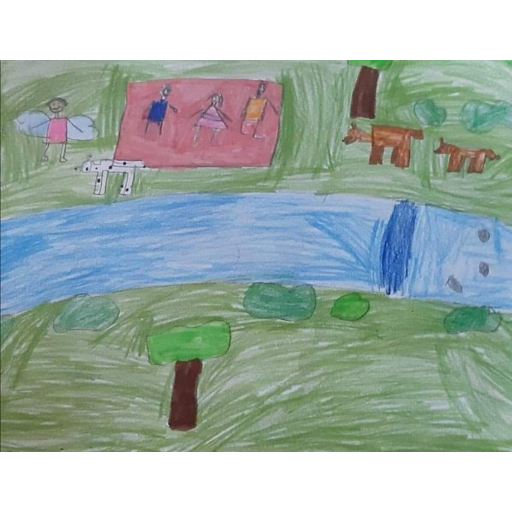
The bear got angry with the little girl and scratched her face. Her brothers got angry and killed her.
The Goddess Artemis was very upset that mortals dared to kill her sacred animal and sent famine, poverty and many diseases all over Greece. Erasinos river felt grief and as a result it flooded.
People wondered what to do and went to the oracle of Delphi.
Pythia told them: "The goddess Artemis is angry because humans killed her sacred animal and only if every year, every city sends little girls aged from 5 to 10, who would offer their services, the diseases would stop".
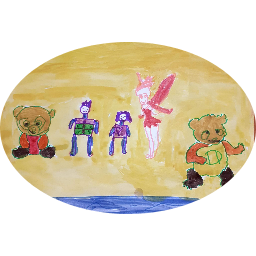
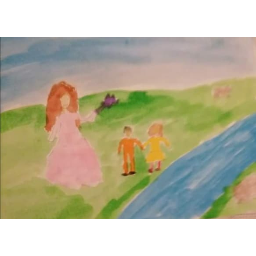
Since then, every year all the cities of Greece gathered little girls in the temple, educated them and dedicated them to Goddess Artemis.
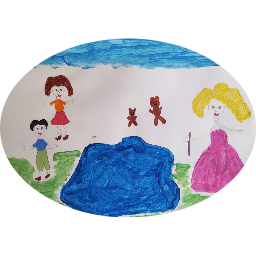
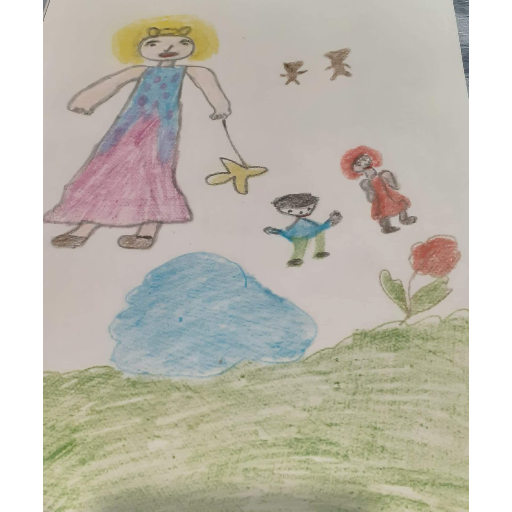
The young girls who stayed there as priests of the goddess were called "Bears", the river Erasinos river calmed down and so everyone lived happily ever after.
LEGEND : THE ATLANTIS OF MONDRAGONE
BETWEEN LEGEND AND REALITY
DDS MONDRAGONE TERZO,ITALY
Teacher: IDA GRAVANO CLASS V A INCALDANA
The legend tells that the town of Sinuessa was destroyed by an extraordinary earthquake followed by a tsunami. Probably it was founded by the Romans in 296 BC, it was a strategic port and served as a military defense along the Tyrrhenian coast. The colony of Sinuessa was situated between two important rivers the Garigliano river to the north and the Volturno to the south, both navigable, and mainly used as communication routes.
The town of SINUESSA, in the period of its maximum splendor, was a dream place, a fantastic vacation spot, a strategic city on the high coast of Campania famous for the extraordinary fertility of the land. Almost certainly the Via Appia, the legendary consular road that connected Rome with Brindisi and which still exists today, reached Sinuessa and there are a lot of legends about it. The city of Sinuessa possessed a winning mix of two things the Romans loved at madness: wine and water. The wine is named Falerno del Massico, (still today the pride of Mondragone and its surroundings), it was produced in the mountains just behind the many Roman villas.
It was known everywhere around the Roman Empire and was celebrated by Horace, Pliny, and other classical authors. For their love of water Romans created some SPAs as the area around Sinuessa was rich of springs called "Acquae Sinuessanae", still today there are sulphurous waters with thermal systems and gaseous area in the place called Le Vagnole.
Archaeological discoveries The statue of a Venus famous as "Venus of Sinuessa", is a Hellenistic sculpture attributed to the Greek sculptor Praxiteles, datable to the 4th century BC. and found in 1911 in the archaeological area of the ancient city of Sinuessa near the current Mondragone.
Sculptures were used to embellish the rich villas of which the ancient Sinuessa was full. Scholars believe that this Venus was inside a house that belonged to Cicero, a famous orator and politician. Around this sculpture there are various legends. The first tells that the Venus of Sinuessa had been purchased for only a Euro, when its value was at least 500,000 Euros! Today it is possible to admire it at the Archaeological Museum of Naples while in the local museum in Mondragone there is only a copy.
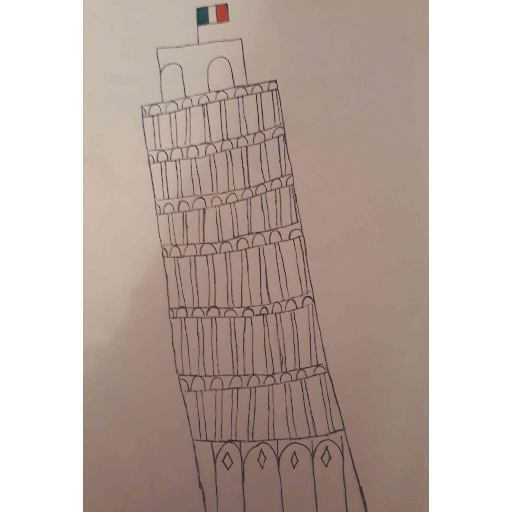

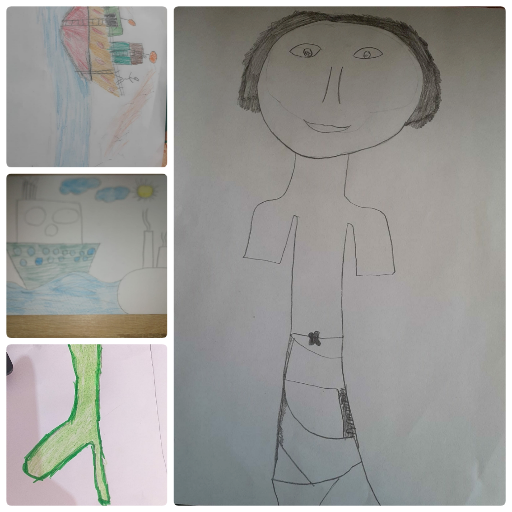
Drawings of Valmieras Primary school 3rd class about Italy
LEGEND : THE MYSTERY OF THE LAKE
DDS MONDRAGONE TERZO,ITALYTeacher: Maria Cristina Strozzi
Class: VB INCALDANA
Between the town of Mondragone and a little city called Falciano del Massico, there is a small lake of volcanic origin, surrounded by dense vegetation and populated by freshwater fish.
It is said that one day a fisherman found the remains of a large fish torn by large jaws, he claimed to have seen the shadow of a huge crocodile swimming in the waters.
The last sighting is recent and dates back to last August when a crocodile was spotted enjoying the sun in the waters of the lake. Again, nothing was found.
The legend tells that the last Duke of Mondragone, the Duke Del Grillo, who lived in the Palace, had a wild crocodile that he fed with all the people who did not follow his orders.
Is it the same crocodile that, after escaping from the palace, is still hiding in the lake and reappears on rare occasions?
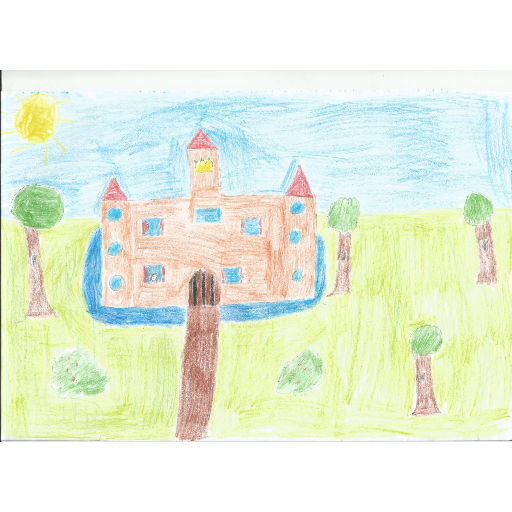
Ioanna Georgiadou and her Pupils of the Sixth Grade, from the 28th Primary School of Thessaloniki illustrating the legend . . .
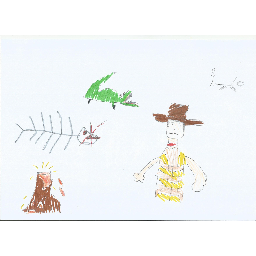
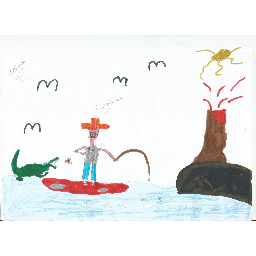
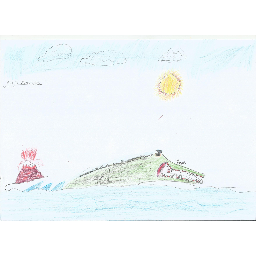
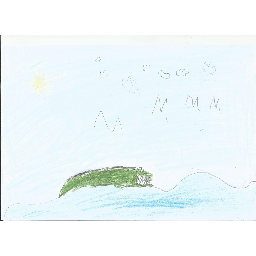
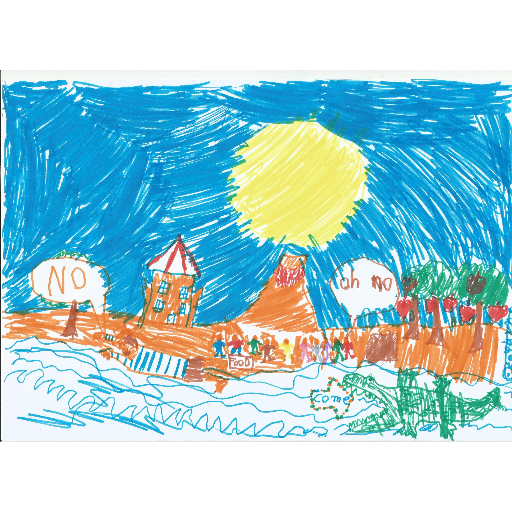
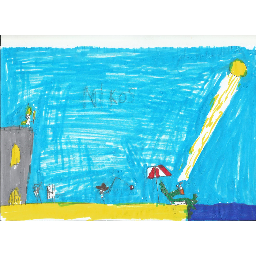
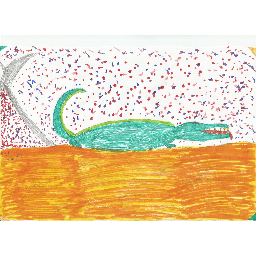
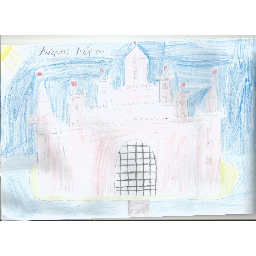
The crocodile enjoying himself
in the lake
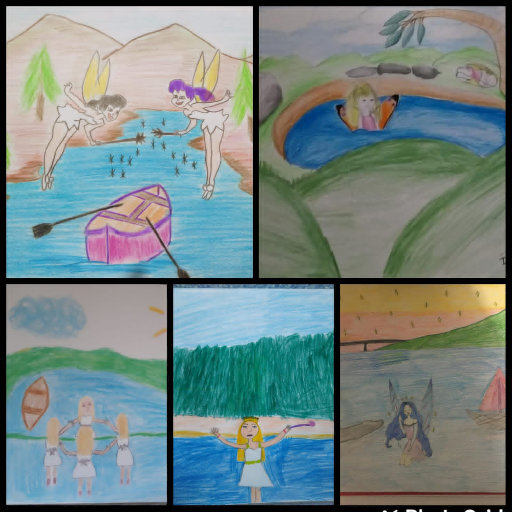
The Legend of the Drava Fairies,
written by pupils of 5c class, Primary school V. Nazor, Đakovo, Croatia, teacher Ivana Hrastović Mandarić, drawings made by : pupils of Şehitler Secondary School Manisa, Turkey, teacher Serap Sonal
The Legend of the Drava Fairies
Flowing down the Drava river on a boat you can meet many miraculous and fantasy creatures. During the time, people have invented many legends connected to the river. There is a famous legend that the Drava Fairies (Dravske vile) appear above the water at summer nights.
Sometimes they dance together forming a circle and sometimes they just walk on the water. Some people believe that they appear at the end of June floating above the Drava water. If you meet them they will not hurt you but you must not watch them for too long, or you will never return to the real world.
You might become enchanted with their ethereal beauty. But very few people saw this dance.
These Fairies are good-natured and people say that they are always dressed in white long dresses and have beautiful faces and long silky hair. Their skin is very delicate and pale and their bodies are very slim.
They try to avoid people and appear on some hidden parts of the river that people rarely visit.
drawings for the Legend of the Drava Fairies (Serap SONAL Şehitler Secondary School Manisa/TURKEY)
'THE MYTH OF PHAETON'
(the Po River)
writers: 4th graders from
Parco dei Fiori Primary School
Cinisello Balsamo (Milan -Italy)
teacher: Chiara de Cunzolo
drawings by: students from
Dr. Franjo Tudman Primary School Brela (Croatia)
teacher: Gorana Babic
The waters of the big Po River have inspired various myths and legends. The best known is the myth of Phaeton. He was Apollo's son.
The myth has it that one day Phaeton had stolen his father's chariot while he was carrying the sun. Phaeton lost the chariot's control because didn't possess the necessary strength to lead his father's winged horses.
t
The skittish horses, in fact, began to run madly all around the celestial vault: firstly they flew too high and burnt a stretch of sky which became the Milky Way.Then, they flew down too close to earth ,thus devastating some territories which became deserts.
Zeus, the Thunder God, was very angry and in
order to save the earth, threw a thunder bolt
at Pheaton,who fell down and died, burning
near the mouth of the river "Eridanus" (the ancient greek name of the Po river).
The Heliades, Phaeton's sisters, mourned his death inconsolably thus transforming themselves into poplars ;their tears turned into amber.
Even Cygnus ,a friend of Phaeton ,wept for him near the river banks, until the Gods, moved to pity, transformed him into a white
E
T
bird: the swan.
The point where Phaeton fell down corresponds to the stretch of Po that laps Crespino,a town in the province of Rovigo which is located just below the river bank.
The expression "fetid" or "stinking"arises from the fact that the exhalations coming from the lying and burning body of Phaeton were so smelly that many birds died.
PHOTOS BY TEACHER GORANA'S STUDENTS
LEGEND OF GOD'S WELL
(BOZJI STUDENAC)
authors: 4th graders, Dr. Branimir Markovic Primary School, Ravna Gora, CROATIA
teacher: Andrijana Simcic
drawings: pupils of 2nd Primary School of Artemis, GREECE
In the past, the hill Javorova kosa
was full of meadows and pastures
where hard-working farmers were
spending all summer mowing the
grass. When they felt tired and
exhausted from mowing, they would
find refreshment in the nearby spring
of potable water called Božji studenac
(God's Well).
They would drink the water and also
wash their face and eyes with it.
The legend says this water had and still has healing properties for the eyes. If you washed your eyes with it, your sight would surely improve and you would see better.
A Legend about Giresun/Aretias Island
Emre DEMİRVURAN, Mehmet Gürel Primary School,Turkiye
There are many legends and stories written about Giresun Island and we would like to share one of them.
Once upon a time, there was a beautiful daughter of a cruel king named Mitridates. The daughter of him was a not only beautiful but also modest person. This young girl fell in love with the shepherd of the castle, and this showed her modesty even in choosing the right one to marry. And the shepherd loved the young beauty with all his heart as well.

The loving couple would meet, talk and hug each other secretly. As the time passed by, the King Mitridates heard about the affair between these two lovers. Without any investigation and wasting time, he ordered his men to hang the shepherd on a cherry three on Aretias/Giresun Castle. Upon hearing this sad incident, the young girl lost her mind and soon after died. Consequently, the king got ill and became a bedridden person.
He suffered from this illness for many years in his garish palace on Aretias/Giresun island that his moanings and cries were easily heard by the others in the highlands of Giresun city. After a while, the king died with endless and severe pain. The folk living around the island believed that the king was cursed upon his cruelty to the young lovers and that the shepherd’s soul wandered around the island. The folk also believed that Mitridate’s soul was there as well, still in pain and suffering. And this belief has reached even us today.
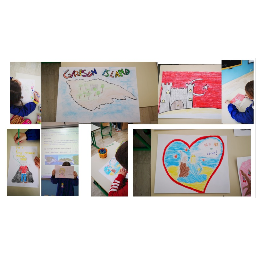
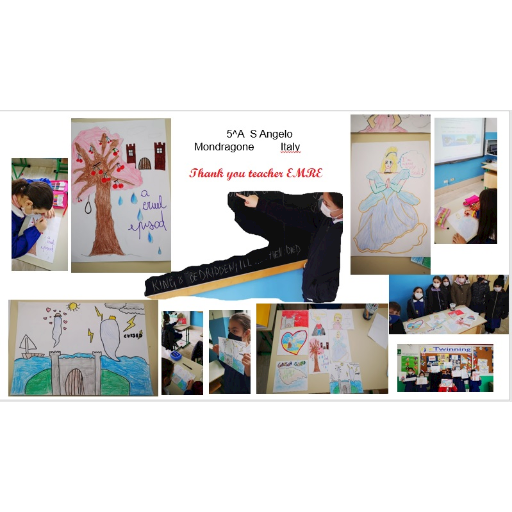
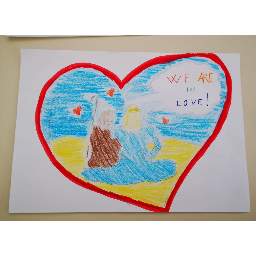
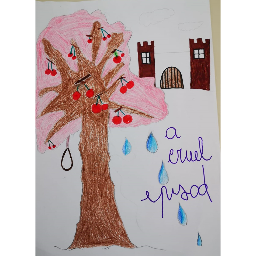
Class 5 A Mondragone Terzo L. Marona Italy
LEGEND OF SAMODİV LAKES
When dark winds blew, Pirin Mountain began to sway and thunder. Frightened beasts fled along the paths, birds fluttered their wings in the thick darkness. White rivers blackened and flooded the green mountain meadows. The trees twisted their tops to their roots, as if begging someone for mercy. The high peak became dark and scary. There stood some invisible force, catching the heavy clouds in its hands and throwing fire over the whole mountain. During this time, the old shepherds put their palms over their eyes, looked up, and said to the younger ones: - We have angered the god Perun with something, that's why he sends us fire. Perun was the god of storms, and Pirin Mountain - his kingdom. He lived on the inaccessible peak with his eight daughters. In the evening he gathered them by the fire, lit the stars above them and ordered: "Be as inaccessible as the stars!" They were obedient, accepted their father's word and listened to him about everything. If he asked them to catch a deer, they immediately carried out their father's order. The god of storms and thunder was pleased to have good daughters. Once they were walking on the ridge of a high peak and looked at the plain. From there you could hear merry shepherd's bells and thin music of flutes. The girls listened, looked around and noticed the shepherds. They saw boys for the first time. The next day they decided to sneak through the thick branches of the trees and see them up close. They were bored in the mountains to live alone.
They saw boys for the first time. The next day they decided to sneak through the thick branches of the trees and see them up close. They were bored in the mountains to live alone. One thing Perun's daughters forgot: their father was a god and read their minds. The god was angry. He began to boil with grief and poured fiery stones all over the mountain. Birds and wild beasts fled, trees fell. Frightened, Perun's daughters ran up to him and asked: "What made you angry, Dad?" "You!" He shouted. "You're cheating on me!" "But ... we didn't do anything," they replied. Perun did not believe their words. He led them under the steep peaks and told them: "I will kill you as I kill beasts." Perun's eight daughters were saddened and shed large tears. Eight lakes appeared where they cried. "I won't give you to anyone," Perun threatened. - I will turn you into samodivas, so that you are only mine and do not think about the people of the plain. God Perun fulfilled his threat. Eight samodivas appeared in the eight lakes hidden under the steepest cliffs. They came out of the water at night, stood on the shore and stared at the distant shepherd's fires for a long time. Human voices came from there.
legend: Art:
Aneliya Ilieva Hatice Yavuzyılmaz
Comprehensive school Yıldıztepe primary school
Valery Petrov, Bulgaria İstanbul Turkey
Art:Hatice Yavuzyılmaz
Legend of Samodiv lakes
GİRL TOWER LEGEND
A sultan had a much beloved daughter. One day, an oracle prophecised that she would be stung to death by a venomous snake bite on her 18th birthday. The sultan, in an effort to thwart his daughter's early demise by placing her away from land so as to keep her away from any snakes, had the tower built in the middle of the Bosphorus to protect his daughter until after her 18th birthday. The daughter was placed in the tower, where she was frequently visited only by her father. On the daughter's 18th birthday, the sultan had her brought a basket of exotic sumptouous fruit as a birthday gift, delighted that he was able to prevent the prophecy. Upon reaching into the basket, however, an asp that had been hiding amongst the fruit bites the young woman and she dies in her father's arms, just as the oracle had predicted. Hence the name Maiden's Tower.
legend:Hatice Yavuzyılmaz
ART: Aneliya Ilieva
Comprehensive school
Valery Petrov, Bulgaria
ART: Aneliya Ilieva
Comprehensive school
Valery Petrov, Bulgaria
THE LEGEND ABOUT RIVER ČESMA
Drawings by the 8th-grade students from Tairov school, ARMENIA
Teacher: Armine Safaryan
Written by the students from primary school OŠ Čazma, CROATIA
Teacher: Danijela Šajtar
THE LEGEND ABOUT RIVER ČESMA
So one day Bara, the bell ringer's wife, went to cut the sticks in the Česma shoals with other shrubs. When they had cut a lot of reeds, she went into the water to wash her feet. As soon as she entered the water, a goose swam up to her and wrapped itself around her legs. Whenever Bara wanted to catch her, the goose would move away. As soon as Bara came close to her goose, she would move away again and swim further and further into the river Česma, and Bara followed her. And when the river Česma had already begun to pull her towards the middle, the bushes would notice it and shout: “Run, Bara, out of the water. Leave that goose, it's not a goose but an Aquarius! ”Bara started swimming with all her strength and ran towards the hill, and the goose turned into a hairy Aquarius after Bara as well. She ran to her party, which was sitting by the fire. When she hid next to her bell-ringing husband, Aquarius approached the fire without fear. He didn't dare to say a word.
He warmed himself for an hour, then went into the water.
So now everyone knew that the stories of their midwives about the aquarius living in the river Česma were not made up and that it really exists and lures people into a deep river. WHEN THE NOON BELL RINGS, DO NOT GO TO THE RIVER ČESMA!
STUDENTS: Matej Žugaj and Iris Huđin
MENTOR: Danijela Šajtar
SCHOOL: OŠ Čazma,Croatia
By Tairov school students, Armenia
teacher: Armine safaryan
The nymph Neda
and the rivers Nedontas and Neda
by 18th Elementary school of Kalamata
class D2
GREECE
Drawing by
Cvetanka Petrevska
OU "Braka Miladinovci" Dedebalci
N. Macedonia
Nedontas is a river of Messinia.
It originates from Taygetos and flows into the Messinian Gulf west of Kalamata. The river is thirty kilometers long. Its name is very ancient.
Both rivers of Messinia, the Nedon and the Neda, took their name from the nymph Neda, the 3rd eldest daughter of the Ocean, a Nymph and mother of 4 ancient muses.
But who are the Nymphs?
In Greek mythology, the Nymphs are beautiful female creatures, spirits of nature, symbols of grace and protectors of youth. They live in caves and rivers where they spin and sing all day long praising the Olympian gods with their sweet voices. They wander in the mountains, accompany Artemis and play with her. They dance with Pan and the goddess Aphrodite in the meadows and on the slopes. They live very long and eat ambrosia. They are dreamy and magical figures. It is considered dangerous to meet them, and there are many myths about people away with the fairies.
Neda, like many nymphs, is a deity of water and rivers.
Legend has it that as soon as Zeus was born, Rhea's mother gave him to Neda and two other nymphs to protect him from her husband, Saturn. Because at that time Arcadia was dry and Rhea wanted to bathe her son, she hit the Earth with her stick begging Gaia for water. So, a rich spring came out and the river that was created was named Neda.
It is one of the two Greek rivers with a female name.
THE LEGEND OF THE SUNKEN TOWN PELEGRIN
TEXT: Gorana Babić and pupils, OŠ dr. F. Tudjmana Brela, Croatia
PICTURES: Chiara de Cunzolo and 4th graders Parco dei Fiori Primary School - Cinisello Balsamo (MI)-Italy
Pelegrin was a large and beautiful town that one day was damned and sunken. The legend has it that each year on Christmas exactly at midnight a carriage with two white horses at full gallop emerges, in which there are a princess and a prince. In order to open the town, i.e. to make it emerge again, the person who at the time is at that place should jump into the carriage and pass the reins to the prince.
The story was written down by Stipe Zubanović in his book titled "Walking with the Bora" ("Hod s burom").
A somewhat different version has been presented by Ante Putnik (Ante Carević) in his book:
The inhabitants of the sunken town of Pelegrin impatiently await the moment when the town will be reborn. However, in order for this to happen, we are waiting for a hero who, at midnight exactly atChristmas, will come near Gogolj and wait for the girl on a white horse. He will accept her hand and take her to Čerovica.

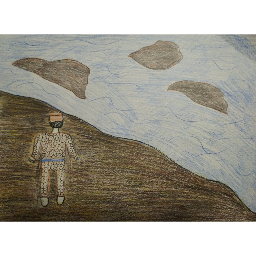
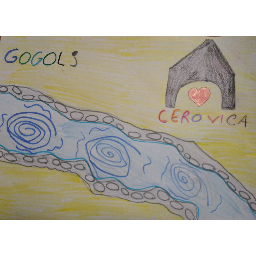
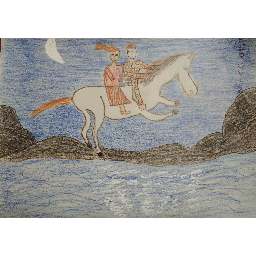
The road to Čerovica, a votive shrine of the sunken town, is full of perils the largest of which are the wild waters that are closely accompanying the riders in the intention to swallow them.
Anyhow, we are still waiting for a hero who will help that the story on the sunken town of Pelegrin gets its continuation. Good luck!
THE LEGEND OF LAKE SEVAN
Written by 8th grade students from Tairov school, ARMENIA
Teacher: Armine Safaryan
Drawings by the students from primary school OŠ Čazma, CROATIA
Teacher: Danijela Šajtar
Lake Sevan is the fifth largest mountain lake in the world after Lake Titicaca. It is one of the largest freshwater alpine lakes in Eurasia.
Legend tells us that in the
place where Lake Sevan is
situated nowadays there
used to be a village with
forests, hills and beautiful
gardens.
Near the village there was
a wellspring and the people of the village got water from that stream. It was a small but very strong spring and once the water flowed it had to be stopped by a big stone.
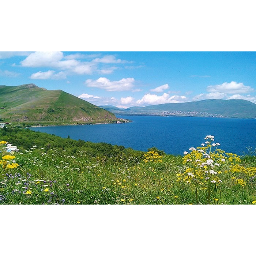
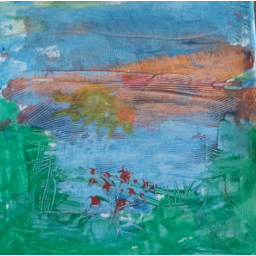
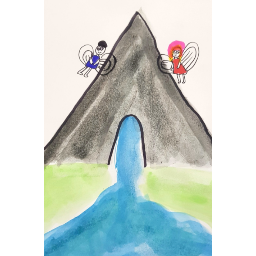
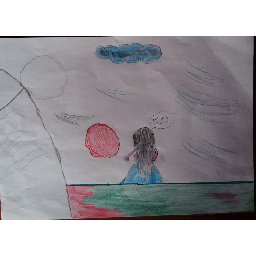
One evening a young beautiful girl went to the spring to fill her jugs with water. She was absent-minded and was daydreaming all the while. When the jugs were full she went home and forgot to put the stone back in its place. Water continued to flow all night and flooded the village. The people of the village woke up and understood what had happened. They ran away and put a curse on the one who had left the spring open, so he/she would turn into stone. At once the forgetful girl turned into stone. Meanwhile the water continued to flow and soon covered the whole territory forming a lake with a rocky island. Today this rocky island still dominates the blue surface of Lake Sevan, looking like the head of the girl.
By the students from primary school OŠ Čazma, Croatia
Teacher: Danijela Šajtar
A boy named Prut was living in a village in the mountains. He used to go in the forest to bring wood. One evening, he worked so hard that he didn't realize it was night. He decided to sleep in the mountains. He dreamed of a beautiful girl all dressed in green who approached him singing. When he wanted to touch her, she disappeared.
The second evening he pretended to be asleep and, when the girl came, he caught her and asked her what her name was. The girl told him that her name was Hoverla and the two decided to live together in the mountains.
Hoverla was the daughter of Mount Tsar and was not allowed to live among mortals, and when her father found out about the love between the two he cursed her. Hoverla, because she could not live without Prut, threw herself into a deep abyss.
Prut did not return to the village, remained in the mountains and mourned Hoverla for a long time. Since then, a river has begun to flow, making its way through the rocks. People called him Prut.
The Prut River springs near Mount Hoverla and forms Romania's border with the Republic of Moldavia and partly with Ukraine.
THE LEGEND OF THE RED LAKE
”George Calinescu” Secondary School, Onesti, Romania - Lacrimioara Sabareanu, 5th grade A
Located at the foot of the Hășmașu Mare Mountains, in the Eastern Carpathians, Red Lake is the most famous natural dam lake in the country. It was formed in 1837 by the collapse of a slope, following the rather strong earthquake of that year. Its red colour is due to the reddish alluvium as well as the reddish limestones in the surroundings.
It is also called Killer Lake, both because of the colour of the blood and especially the legend. It is said that ... an extremely beautiful girl named Eszter fell madly in love with a boy she met at a fair. The two decided to get married, but unfortunately the boy was taken into the army, and the girl was waiting for him in vain. Very sad, Eszter went to the spring by the lake every day to fetch water and wept for the young man's longing.
One day, the girl was seen by a robber who promised her all the riches in the world if she would marry him. The girl refused, but the robber tried to force her to become his wife. Eszter asked for help from the mountains, and the rocks heard her prayers. One July night, a storm started and the mountain collapsed and buried the girl, the outlaw, but also a shepherd with his flock. It is said that today's Red Lake was formed in that place. If you look in the water of the lake, you see the brightness of Eszter's green, teary eyes...
The current surface of the lake is about 11 hectares, and the depth reaches 9.6 meters. Today, Red Lake retains the appearance of a drowned valley. The tops of the fir trees in the old forest are the testimony of what happened. And this impresses Romanian and foreign tourists.
Artwork by Monica Frigerio's students
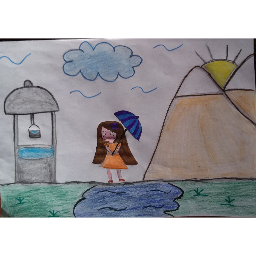
"A mythical Mermaid"
A legend from the Sixth Grade of the 28th Primary School of Thessaloniki, Greece
Teacher: Ioanna Georgiadou
Some decades ago, Gods decided to give to Alexander the Great the gift of immortality, having seen how good General he was and also, how faithful he was to Greece. So, they placed a goblet with the water in his room’s table.
His sister, whose name was Thessaloniki, entered the room and without knowing the facts, she drunk the water emptying the goblet. When she realized what she did, and that this water was for her brother in order to become immortal, she was really sad, so sad that she wanted to finish her life...
So, she went up to a high cliff and jumped into the sea, wishing that she dies. However, because of the fact that she had drunk the immortal water, she did not die, but she was transformed into a . . . mermaid . . . who lives forever into the deep sea.
According to this legend, when the Mermaid runs into ships, she always asks the sailors: “Is Alexander the Great alive? Have you seen him? He is my brother!”
If the sailors answer “Yes! He is alive and travels around, conquering the world!” Mermaid helps them to travel safe and reach their destination quickly.
However, if they answer: “No. . . He is dead since many years!” Mermaid makes the sea have big waves and sinks their ships.
So, if you meet our Mermaid, and she askes you: “Is Alexander the Great alive? Have you seen him?” be careful which answer you will give to her!
by 5^B Incaldana, DDS Mondragone terzo Italy
T: Maria Cristina Strozzi
CVETANKA PETREVSKA N.MACEDONIA
OU,,BRAKA MILADINOVCI,,DEDEBALCI
4&5 GRADE CLASS
Legend of Lake Dojran
On the place of today's lake stretched a wide valley with lush meadows and various gardens. In one raised place there was a large spring. Beside the valley lived a beautiful girl named Dojrana. Many boys were in love in Dojrana, as well as a Turkish nobleman - Kajmakam. The beautiful girl did not want to marry him. Kajmakam started following her and followed her every step of the way. She found herself in a hopeless situation and threw herself into the big spring.
The spring started pouring in honor of the innocent girl and flooded the whole valley. In a short time the valley turned into a beautiful lake just like the girl Dojrana. The lake was named Dojran Lake and the city Dojran. So says the folk legend.
DRAWINGS BY:
18th Elementary school of Kalamata
class D2
GREECE
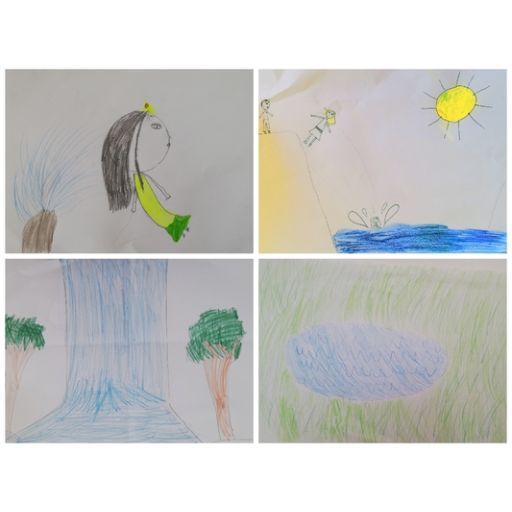
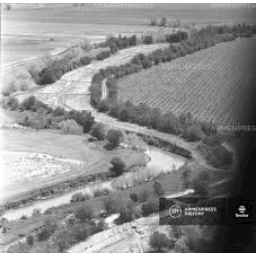
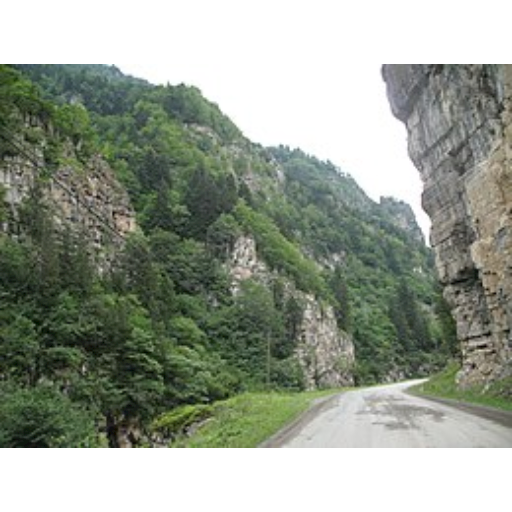
Armenia, Abovyan Basic School No.2
Narine Markosyan
Secondo Circolo Didattico di Poggiomarino (NA) ITALIA Classi quarte Plesso Flocco/ Bonagura Maddalena and De Rosa Beatrice Carmela
L e g e n d of the B l a c k Lake

Armenia, Abovyan Basic School No.2
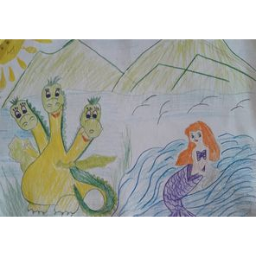
A dragon of forty-headed came in time to drink half of the water of the Black lake then lay down, rested and then to drink the other half, to dry it. The commanders of God used each other, took the lake, raised it, took it to the sky, freed it from the dragon. The dragon could not get up and drank the water anymore, crackled with thirst and dispersed.
Legend of the Black Lake. I'm sure there will be some interesting photos.

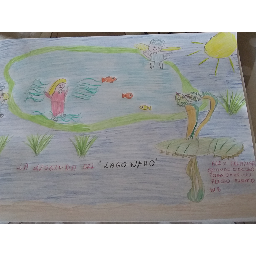
There lived a beautiful girl in the Black lake. When there was a sun , she came out of the water, and played with the waves. This girl clings to the feet of the animals in the lake, and didn't let them out of the water.
Legend of the Black Lake. I'm sure there will be some interesting photos.
Secondo Circolo Didattico di Poggiomarino (NA) ITALIA Classi quarte Plesso Flocco/ Bonagura Maddalena and De Rosa Beatrice Carmela
Art Gallery of our Italian partners
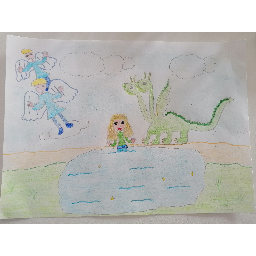
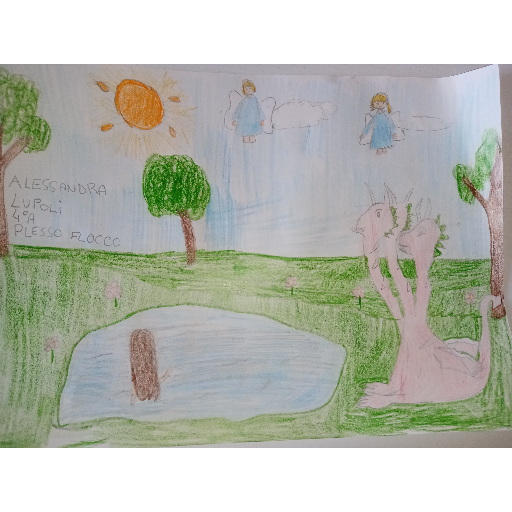
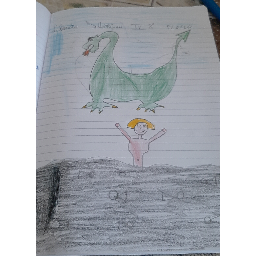
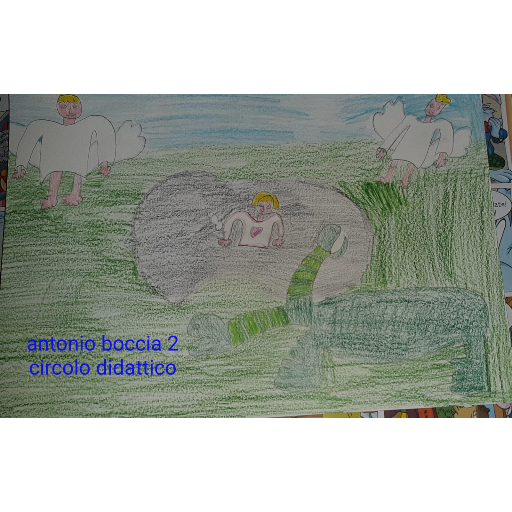
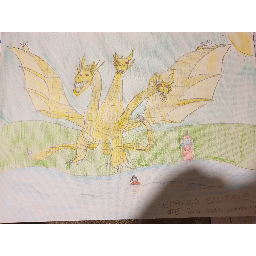
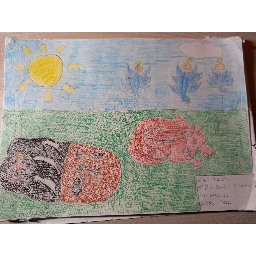
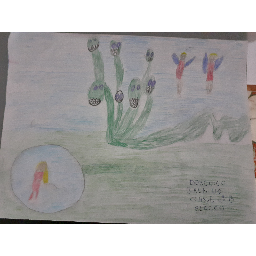
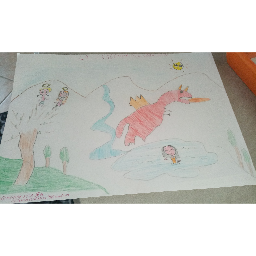
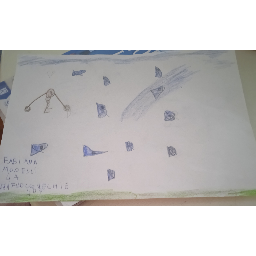
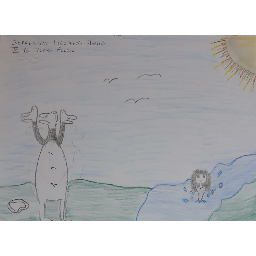
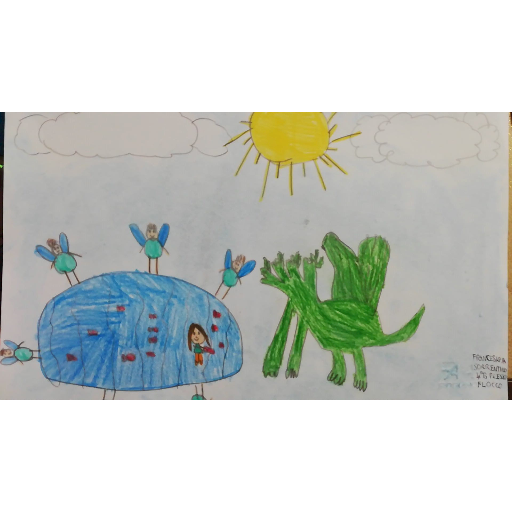
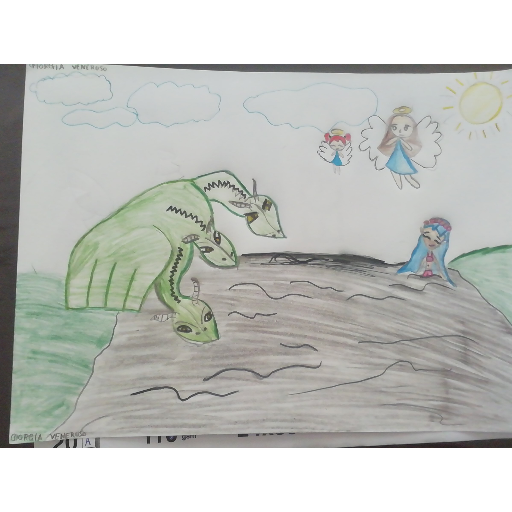
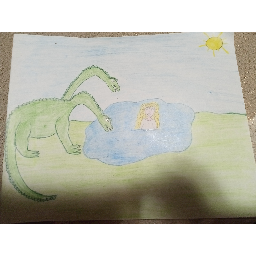
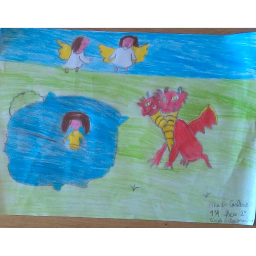
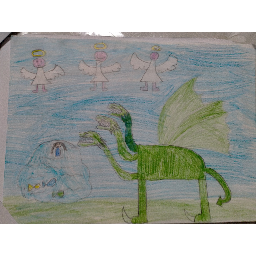
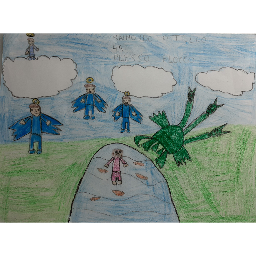
Drawings by students of Primary School of Secondo Circolo Poggiomarino (NA)
Legend of the Black Lake
Narine Markosyan/ Armenia
Legend of the Meghradzor river
Narine Markosyan/ Armenia
Bonagura Maddalena and De Rosa Beatrice Carmela/ITALIA
1. Armenian country is rich of nature wonders. Meghradzor river is one of them. The story goes that in the place of Meghraget source once there was a tonir (a big jor dug in the earth). One day the wife of the priest of the village was baking bread. A beggar came and asked for some bread for the love of Christ.
The woman gave the bread, then the beggar asked for some cheese. She gave the cheese, too. The beggar asked for a kiss for the love of Christ. The priest's wife appreached her cheek to the beggar and gave him a kiss. At the moment the priest entered the room and saw how they were kissing, so he got very angry with his wife. The woman tried to justify herself and said that she had done it for the love of Christ.
"If it is so," said the priest, "then throw yourself into tonir for the love of Christ." The woman immediately threw herself into the burning tonir. The burning tonir filled immediately with honey-sweet water and became a river. The woman became a fish and swam in the springs of the river.
2. Armenian country is rich of nature wonders. Meghradzor river is one of them.
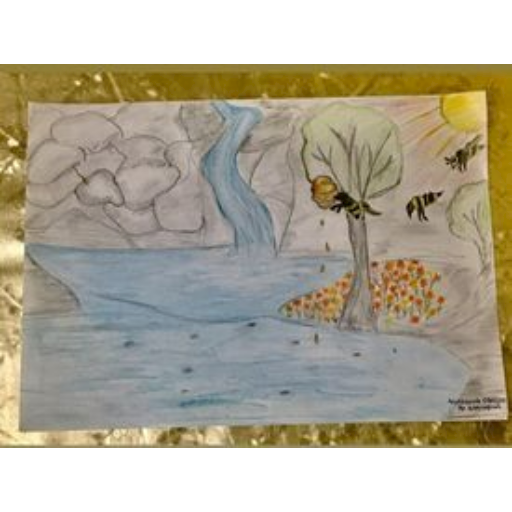
The banks of the river flowing in that gorge are very rooky and unapproachadle. But when the sun shines in the sky, many wild flowers and grass begin to bloom and smell sweetly on those stones. The wild swarms of bees build their hives in these places continuously.
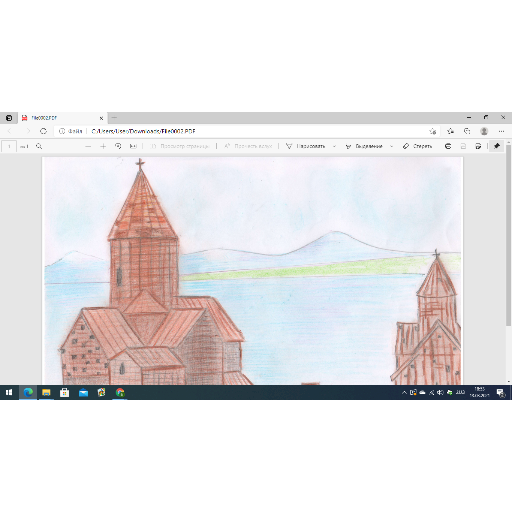
And in summer, in the midday hot, the honey in the heated bee-hives melts and starts to flow into the river drop by drop. And the water becomes sweet and fragrant. The galaxy of these natural phenomena prompted people the name of the river - Meghradzor.
Armenia, Abovyan Basic School No.2
Secondo Circolo Didattico-Poggiomarino (NA) Italy
Plesso Flocco-Classi Quarte
Teachers: Bonagura Maddalena and De Rosa Beatrice Carmela
Partners: Armenia, Abovyan Basic School No.2
Teacher: Narine Markosyan
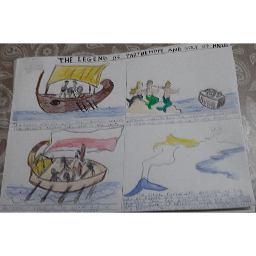
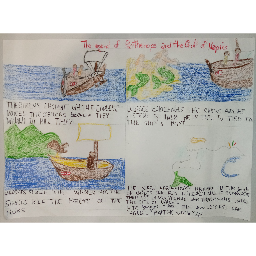
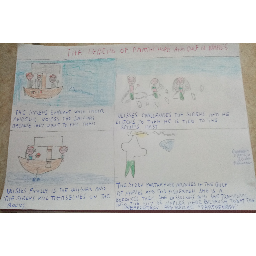
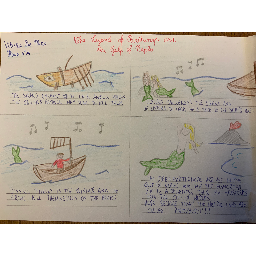
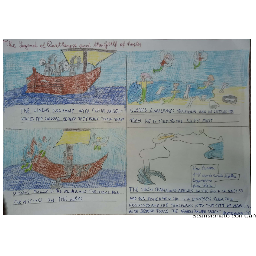
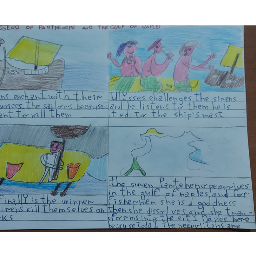
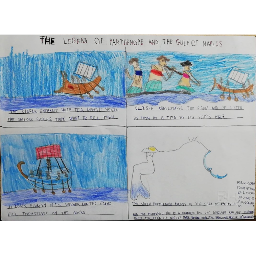
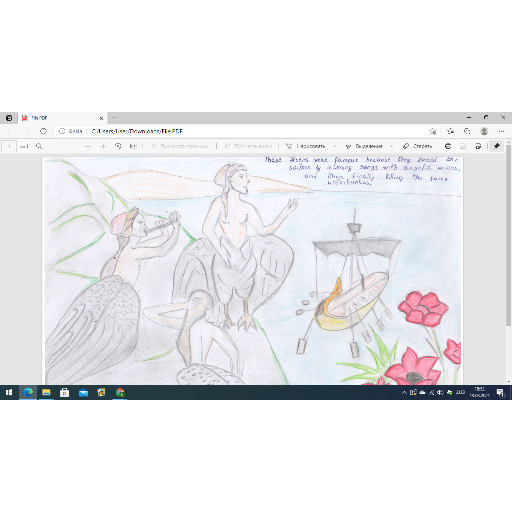
The Legend of Parthenope and the Gulf of Naples
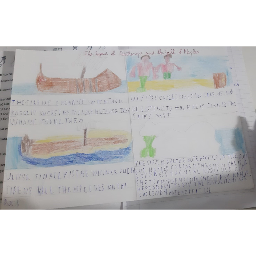
This legend is narrated by Homer in the XII canto of the Odyssey. The Poet describes Ulysses, who is very curious, he wanted to hear the song of the Sirens.
These Sirens were famous because they lured the sailors by intoning songs with angelic voices, and then finally killing the same unfortunates.
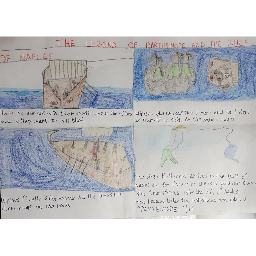
But Ulysses, known for his audacity and cunning, also thanks to the help of the sorceress Circe, ordered his men to put caps to not listen to the sirens.
He wanted to challenge these figures, by being tied high on the ship's mast and bravely listening to the famous songs of the Sirens.
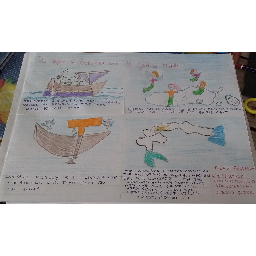
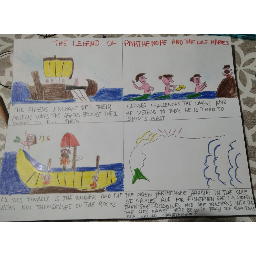

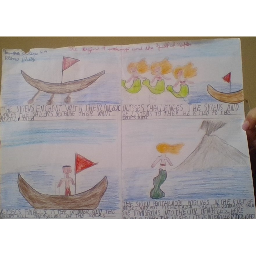
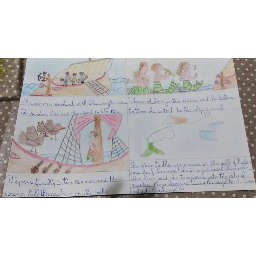
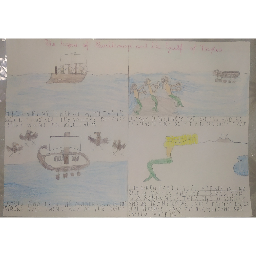
It happened that Ulysses did not fall prey to these "girls", and they committed suicide out of desperation, hurling themselves over the rocks.
Thanks to the sea currents, the Parthenope Siren found herself among the rocks of Magaride (where the Castel 'dell' Ovo currently stands).
The fishermen who rushed, after having found her, venerated her as a Goddess. At that point the body of the Siren dissolves and morphologically transformed into the landscape of the city of Naples.
Today the Neapolitans are called Partenopei.
Art Gallery of our Armenian partners
Narine Markosyan
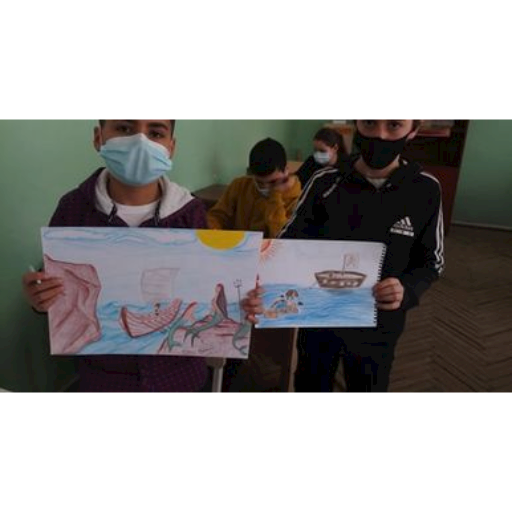
Art Gallery of our Armenian partners
Narine Markosyan
Art Gallery of our Armenian partners
Narine Markosyan
Armenia, Abovyan Basic School No2


Armenia, Abovyan Basic School No2

Armenia, Abovyan Basic School No2
Legend: IPHIGENIA, THE PRIESTESS OF THE TEMPLE OF ARTEMIS IN VRAVRONA
Authors: Mika, Marios, Jason
Teacher: Kontogiori Dimitra-2nd Primary School of Artemis, Greece(E2)
Drawings by pupils of Andrijana Simčić,
Dr. Branimira Markovića Primary School, Croatia
After the abduction of Helen, the Queen of
Sparta along with the Prince of Troy Paris, the Greek army and fleet gathered in Avlida in order to launch a campaign against Troy and take back Helen.
However, the ships could not leave the port of Avlida because goddess Artemis wouldn’t let the winds blow that would eventually lead them to Troy. She was angry because Agamemnon had killed her sacred deer. The only way to depart was to sacrifice Agamemnon's daughter Iphigenia. The leader of the Greeks was Agamemnon.
Nevertheless, at the moment of Iphigenia’s sacrifice, goddess Artemis exchanged the girl for a deer and led her to the Land of the Bulls, the Black Sea, where she became a priestess in the Holy Temple of Artemis.
Her brother Orestes went there and helped her to return to Greece and become a priestess at the Holy Temple of the goddess in Vravrona.
Erasinos river flowed through the temple. Iphigenia and the other priestesses had a good time playing and swimming in the river. At some point, Erasinos river flooded and destroyed the holy Temple. As a result, the sanctuary was abandoned in the following years.
Agamemnon kills the Sparta ship fleet
the deer
Drawings by pupils of Andrijana Simčić,
4th grade, Dr. Branimir Marković PS, Croatia
the Sparta soldiers and flag
goddess Artemida
preventing wind blowing
Iphigenia swimming
in Erasinos river
Dr. Branimir Marković PS
i
Iphigenia, the priestress of Erasinos river
the temple of Artemis flooding
in Vravrona, Greece
temple of Artemis in Vravrona
THE LEGEND OF THE WOMEN OF WATER
Escola Lavinia (5th grade)
The women of water is a legend from Catalan mythology. The women of water live in every watery place: rivers, lakes, jumps of water...but they are mostly seen in Montseny’s crystalline waters.
The legend explains that they protect nature and that if you spy on them they throw water at you and they can turn you into rocks. In winter when the water is frozen they live inside crystal castles. But on hot summer nights they take a bath in the lake and they can do things like make a flower to blossom or bring water to life.
Normally, they avoid contact with humans but It’s said that a long time ago in Viladrau lived a woman of water in the waters of Gorg Negre. On a full moon evening a man went to the Gorg Negre and he saw a very beautiful woman coming out of the water. He fell in love with her immediately and he asked her for marriage. He offered her his house, his land and all his money. She accepted but with one condition: he was never to remind her of her aquatic origin. They married and were very happy. Also they had two children.
Sadly, a very bad day they had a strong argument and the man reminded her of her aquatic origin, breaking his promise. Then she returned to the Gorg Negre water and nobody saw her again. But every night she returns to the house to kiss her children and drops some tears on the living room table. Every tear that she cries turns into pearls by morning.
Andriana Gorceag Moldova
Floresti Primary School
The legend of the river Răut
The Răut River has a length of 286 km and is entirely included in the territory of the Republic of Moldova, as the largest tributary of the Dniester and, at the same time, the largest river that springs and flows entirely on the territory of Moldova. The river begins at its source from Rediu Mare locality, Dondușeni district, and flows into the Dniester near Ustia village, Dubasari district.
In the localities located under the Răut river basin, 832 springs are registered, of which 66 are dried. In Gribova village, Drochia district all springs are dried up. To a large extent, the springs are equipped with good quality water. Water is used for drinking, partially irrigation, watering animals and other household necessities.
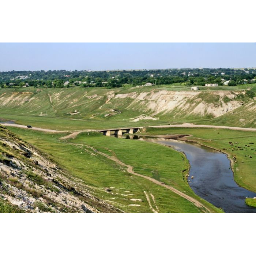
On the river Răut are located the town. Bălți, Floresti and Orhei, with a wide range of economic activities, which consequently condition the condition and quality of the river water.
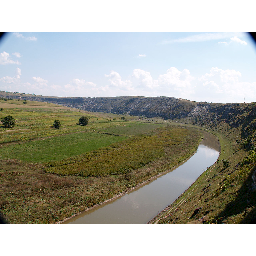
The localities have 53305 mine wells, of which 564 - are dried. In Lunga village, Floresti district, 60 mine wells are affected by gas. Water is used for drinking, household purposes, irrigation of gardens in the household sector, watering pets.
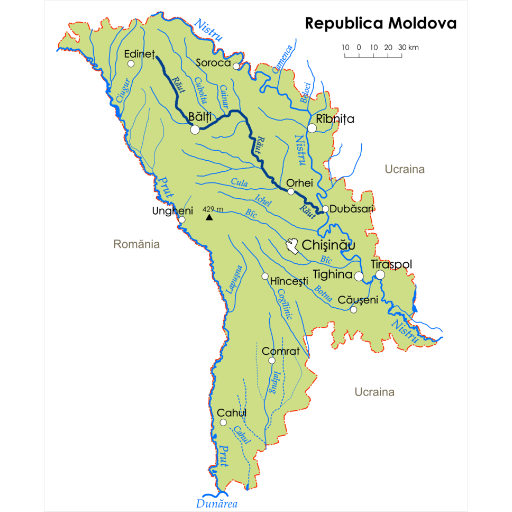
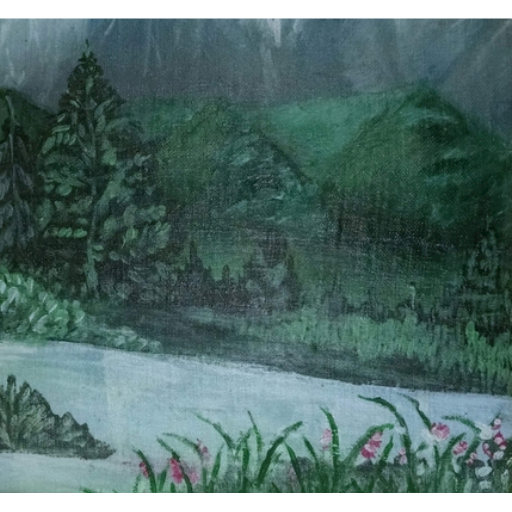
The legend of the river Răut drawn by Natalia Sîncu's team from Drochia, Moldova
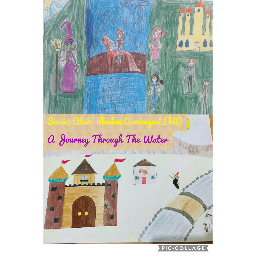
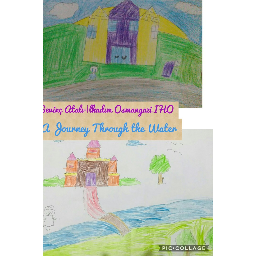
Teacher Name : Sevinç Atalı - Turkey
İlkadım Osmangazi IHO
KIZILIRMAK( scarlet river ) BRIDGE
According to rumor , the bridal procession goes to buy brides on horses according to old conditions.
While crossing to old wooden bridge , the horse is startled by a flying eagle and the other horses are scared , and the old wooden bridge collapses and the bridal processions drowns in Kızılırmak.
In memory of this bride , since that day , every bride definitely passes through the stone bridge built here while getting married , wishes are made , stones are thrown into the river .
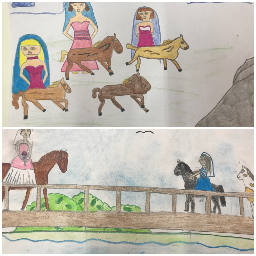
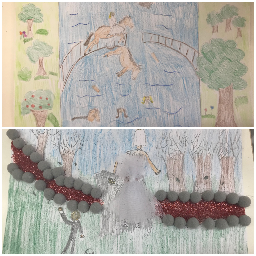
Drawings by the students of Primary school (Poggiomarino) Italy (Teacher- Teodosio Giuseppina)
The legend of Kizilirmak bridge
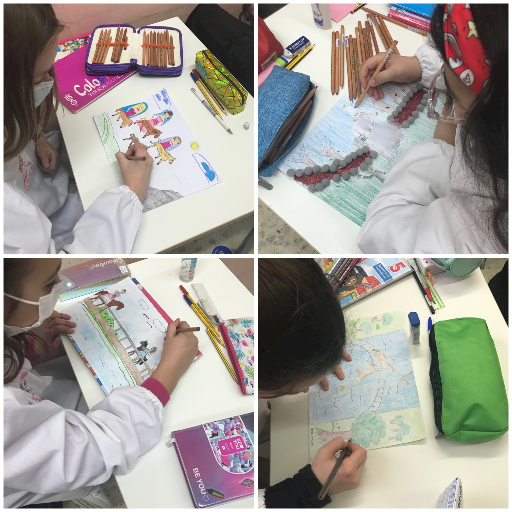
Working
in
progress
at school
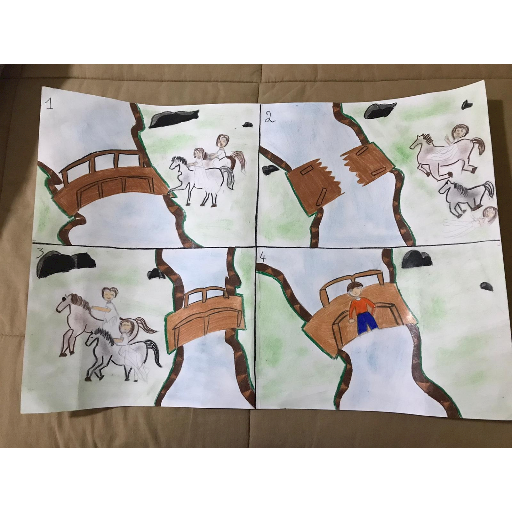
Other drawings to illustrate the legend of our Turkish partners
Students from Poggiomarino -Teacher Elia Paola Tammaro
The legend of our country
and
the river "Sarno"
In the early 1700s,the Marquis De Marinis built a palace in the so called locality of Tavernapenta,because it was close to the river Sarno.There was a shop and an oven that had a "penta "(a turkey) as its sign.The construction of the palace gave importance to the place and next to the name of Tavernapenta appeared the name of Poggio Marino.
The hill (poggio) was a base where the De Marinis family used to ride.
One day the Marquis crossed the river "Sarno" on his horseback and he was amazed by the limpid and clear waters of the river.
Suddenly he noticed a strange thing,the waters became dirty and dark.
An old and evil witch that had passed by with a magic potion,had polluted the river.The Marquis, from that day, was always sad because he was unable to give his people a clean and clear river.
Written by the students from Primary School "2°Circolo
Poggiomarino /Italy
Teachers /Teodosio Giuseppina and Elia Paola Tammaro

The legend of Olt and Mures
School Nr.7 Galați, România/ Class 4B
Monica Cecilia Păduraru
The two great rivers in our country entered the public consciousness through one of the most beautiful legends
In ancient times, when charming stories were told, on the top of a mountain in the Eastern Carpathians could be seen a fortress with two towers. The king and the queen had two twin sons, who looked like two drops of water.
The boys were similar in appearance, but had completely different natures. One or two quarreled and fought to the blood, for heaven's sake. That's how God left them!
When they grew up, the king left the fortress with the army and went to war, where he never came from. Craiasa sent horsemen to all the horizons, looking for her husband, but the messengers did not find the master anywhere. The king had died far away, in a bloody battle. But the queen did not know this secret.

"What am I going to do with my naughty boys?" "I kept making two separate towers just to see them at peace. In the north tower lives Mures, and in the south tower stands Olt," that's what the two boys called them. "Look, they got married, and they still don't get along."
- Brother Olt, said one day the Muresul who was more sober, my mother always cries for my father, what do we do?
- I say, Brother Mures, to leave the quarrel and go in search of my father. Maybe he's somewhere in a dungeon and he needs our help to free him.
Olt and Mures went to their mother and told her about their decision to look for their father. Hearing what they say, their mother shed tears of pain, but also of happiness.
Fortunately because her sons were worthy and understood, and sad because she broke up with them and was afraid of losing them.
- Okay my boys! he finally bent down. Go in search of your father! Muresule, and you Oltule, I advise you to always stay together, like horses in a carriage, and do not detach from each other and have fun!
And the princes left. But as soon as they left the city, they started arguing about which way to go. For, as I told you, they were different in nature and thought.
- Let's go north! proposed Muresul.
- Nay! Let's head south! cried Olt. And, as in childhood, they began to punch him mercilessly.
In the end, they did not listen to their mother's advice and said:
- I grew up in the north tower and I go there immediately! said Muresul.
- And I grew up in the south tower and I'm going there! the Olt girl.
So they parted and went their separate ways. The dark-walled Mures started to the north, and the natural Olt quickly rushed to the south.
After a while, Mures lost his longing for his brother:
- We quarrel, Muresul thought, but we hold on to each other. My mother asked us not to break up. Why don't I go back and look for Brother Olt?
In the seat city, the queen receives news from her messengers:
- Right from the gate, married lady, Olt and Mures quarreled and broke up, breaking your wife's command!
Upset, the girl ran to turn her sons off the road, but could not reach them because they were running away, only in different parts. She began to weep violently, springs from her eyes and praying:
- God, please guide my boys' steps! I lost the thief, God forbid, just never let my naughty boys perish.
God listened to the prayer of the church and at once decided to turn them into immortal rivers. And rivers have remained until today, keeping their names: MURESUL and OLTUL.
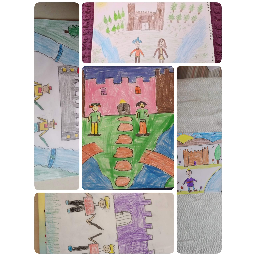
Drawings for the The legend of Olt and Mures (România)
Şengül Kaya Kızılca Primary School
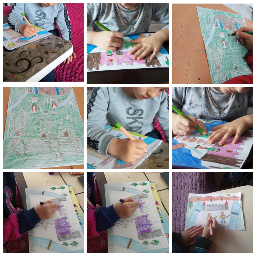
ŞENGÜL KAYA/ KIZILCA PRİMARY SCHOOL
Story by Eslem and Ekrem( written )
THE LEGEND OF THE GIRLS 'DREAM
It was the name of a bloody, exciting and extraordinary legend dating back centuries to " girls stream ..."Legend; It is a region located 45 kilometers from Ereğli in the early 1900s.Some people did not dare to cross the girls Creek for years. According to the story of "Girls Stream Legend", the heroes of the legend are 3 young girls.According to the stories, there was a miller in the region at that time. This person helps the Turkish villagers to meet their food and food needs through the miller. According to the legend, the miller, who provided the food and provisions of these Turkish groups, shouted after an argument with a villager one day; It is said, saying "I will reap these peasants". A villager who hears what the miller says, shares what he heard with other villagers and a decision is made among the villagers to kill the miller. This is where the "Girls Stream Legend" starts. The miller, who goes on a horse caravan on certain days of the week for the food needs of the villagers, is ambushed by the villagers on one of his journey. Learning that their father was killed by the villagers, the three daughters of the miller, thinking that they would also be killed, take as much food as they can and go up the mountain. The struggle for life of the girls who climb to the mountains gains a new dimension with the end of their supplies and they have to be bandits.
The name of the girls who started to block roads and rob men in the place where the legend took place, spreads throughout the region ...Girls Creek is now the nightmare of the shopkeepers. For those who did not regret passing Girls Creek! .. The bandit gang, formed by the girls whose names spread throughout the region in a short time, adds a new power to its power every day. However, nobody but themselves knows that the 3 people at the head of the bandit gang are girls. But one day the magic of the girls is broken, and one of the bandits realizes that the heads of the gang are girls. And there is conflict between the bandits. While 3 girls lost their lives in the conflict, other members of the gang lost their lives. When the girls die, the gang breaks up. The legend of girls stream is ending, but the beauty of the stream in the region where this legend takes place burns you.
Drawings made by: School Nr.7 Galati, Romania
Teacher :Monica Cecilia Paduraru

Romania/Croatia collaborations
Teacher: Loredana Popa, Romania
students: 4th grade, School nr.17, Botosani
Teacher: Atanasija Bilić, Croatia
students: 4th grade, Primary school don Lovre Katića, Solin
The legend of the St. Ana Lake
4th grade, School nr.17 Botosani, Romania
Loredana Popa
This Lake is the only volcanic lake in Romania and there are two different legends surrounding its origins.
According to the first, there were two brothers, rivals, who wanted to show off. One of them wanted to show he had the best carriage so he got the most beautiful girls in the village to drag it. Because the carriage was too heavy and the girls couldn't, he whipped them. One of the girls cursed the man and a storm suddenly broke out.
It killed the man and destroyed his castle. The lake formed on the place where the castle used to be and the legend says it formed from the girls' tears.
The second legend tells us about a girl, Ana, whose parents forced her to marry a man she didn't love. She begged them not to make her, but they didn't listen because the man was very rich. According to the legend, she ran off, the night of her wedding, and threw herself in the lake.

The legend of the Red lake
4th c grade, Primary school don Lovre Katića, Croatia
teacher: Atanasija Bilić
Once upon a time, a rich man named Gavan lived on the edge of a big cliff. He had a large and beautiful palace. Everything was his, fields and wood all around the surroundings of town Imotski. He lived a very debauched life and was a great glutton. He was ruthless towards everyone, especially towards the poor. His door was always closed to the poor. Even worse was his wife Gavanusha, wicked and greedy. She did not know about God, and she never helped the poor, but only mocked and ridiculed them. There was no worse woman under the sun.
Gavan had many sons and daughters, but the children were no different from Gavan and Gavanusha.
One day Gavan decided to make a big feast for his friends, who were ruthless and cruel as he was. During the feast, an angel appeared in the form of a ragged poor man, asking in the name of God for a crumb of bread for himself and the hungry children who were with him.
When Gavan saw the poor man, he was very angry that he was bored during his feast. Gavan's sons and daughters immediately ran to let the dogs out to tear the poor man and his children apart. They would have done that if Gavanusha had not objected at the last moment, not out of pity, but because she was pregnant and was afraid that such evil would harm her. She got up from the table, took a piece of bread, and pushed it with her left foot in front of the poor man, angrily saying to him: "Take it and thank our gratitude."
The angel took a piece of bread, kissed it, and distributed it among the children. Then he asked Gavanusha: "Give me, lady, in the name of the God, a drop of water, and God will give you chastity in your birth and property." Instead of Gavanusha's mercy, she swung her foot to strike the poor man, saying: "What good is your God to me as long as I have my Gavan?"
The angel became angry at such heartless behavior, threw off his poor clothes, took the fiery sword of God in his right hand and pierced the sky with heavenly light, cursed Gavan, his wife, their children, guests, and all Gavan's palaces, and flew to the heavenly heights.
At that moment, lightning flashed in the sky, thunder rumbled, the earth shook terribly! The palace fell through and with it all the court, Gavan, Gavanusha, their children, and all the guests. On that spot, Red Lake was created.
Even today, the walls that are said to be the remains of the great Gavan's palace remain on the edge of Red Lake.
Illustrations by Elena, Ana, Alessia
Teacher: Loredana Popa, Romania
students: 4th grade, School nr.17, Botosani
Armenia Tsovazard village secondary school
Teacher Narine Khachatryan
students ․ Lusine Argishti, Areg, Susan
Legend of the Aegean Sea
Teacher Faize Böcügöz
Yeşeren Schools:
Izmir, Turkey:
There was a gypsy chief living on the Aegean coast. He was the head of the gypsies all over the world. In his tribe there was a girl whose name was legendary. Although she was an ordinary beauty like all gypsy girls, she danced with her beautiful voice so much that her reputation spread all over the world.
The chief would organize summer entertainment on the Aegean coast every evening.
In these entertainments his people gathered on the beach,lit fire, drank lots of wine, ate lambs and played music.
Everyone, with great curiosity, would wait for the gypsy girl to come out and perform her famous magical dances. Finally, the beautiful gypsy girl would appear with the wild rose she wore in her hair, cymbals on her fingers and a long skirt. Suddenly all the voices stopped, the musicians started playing the most playful pieces, and the gypsy girl danced with her lively body.
As she turned, her skirts opened like a rose, her beautiful legs glowing like Venus sculptures in the moonlight.
The wild rose she wore to his silk hair was always in place. For this reason, the name of the gypsy girl was changed to Wild Rose.
In Anatolia, on the opposite shores of the Aegean, and even on the Arabian shores, everybody heard of her name and they all came to watch her dancing.
The old chief eventually decided to marry this gypsy girl, whom he fell in love with, in a wedding that would last for forty days and forty nights. A feast was held on the Aegean beaches every night of the wedding.
It was the last night of the wedding. At a time when everyone was drunk, a gypsy teenager in dirt, scruffy and patch attacked the chief, stabbed and killed him. The Gypsy girl, who could not stand the bloodshed, started to walk towards the sea, in front of everyone ...
The gypsy girl did not sink in the water, she was walking on the water surface. He walked, walked, walked away, remained like a dot in the blue and disappeared.
According to the legend, that night the gypsy girl got ugly from the sorrow of the chief, who loved her so much.
Only every full moon goes to the Aegean beaches with her old beauty, old shape and dances and then walks to the sea she came from, disappears in the blue waters.
That’s why wild roses bloom on the Aegean coast every full moon, and the sounds of gypsy music come from the forests.
The river of life: Aventino
Primary School of Palena
Class 4°
Teachers: Cellucci Malvina - Falcone Dina Manuela
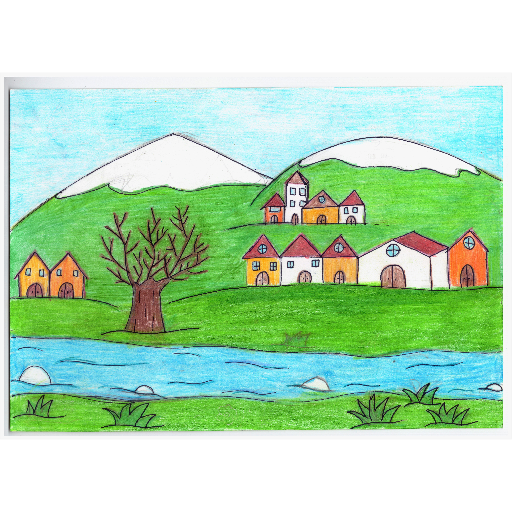
Long time ago, a shepherd boy lived in a valley. His name was Tino. Every morning Tino moved on the mountains to graze. In the valley there wasn’t any grass, because the river had dried up.

One day, while he grazed his flock, there was a big storm, with lightning, everywhere.
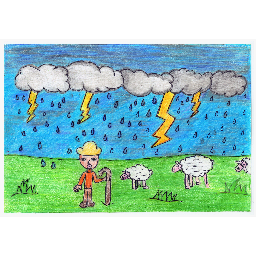
When the storm ended, the shepherd boy saw a hole in the ground; he approached to the hole and he started beating on it with his stick. The hole became very big, and the rainwater went inside it.

The shepherd boy went home; when he arrived at the first houses of the town he began to hear the sound of flowing water. He went to look in the dry bed of the old river. He did not believe his eyes: instead of dry weeds and stones there was a clear river flowed quietly!!! The water in the hole descended towards the valley and had become a splendid source.

From this day, people returned into the valley; it turned into a luxuriant expanse of green.
The river took the name of Aventino, from the shepherd boy who, with his stick, made the waters flow towards the valley. Since then and still today from the source, among green plants, freezing water rich in life continues to flow.
YEŞEREN SCHOOLS
IZMIR / TURKEY
Teacher: Faize BÖCÜGÖZ
Students: Dicle Avru DAL
Nermin Eda GÜVEN
There was a land on the site of Lake Sana with forested hills and flowery fields. Near the village, under a hill, there was an abundant spring, from which the villagers took out the large cap of the spring while taking water. One evening one of the village brides goes to the spring, takes out the lid, fills the jug and comes home, forgetting to close the well. The water flows out and flows in four directions.
When it reaches the houses, the residents run away, saying: "Whoever missed the source will become a stone." And the forgetful bride becomes a stone, and the water constantly rises to form Lake Shana, from the surface of which the petrified bride's head barely rises.
Armenia Tsovazard Village
Secondary School
Teacher: Narine Khachatryan
Students: Lusine Argishti, Areg, Susan
The legend of Hercules and BIVIERE from LENTINI
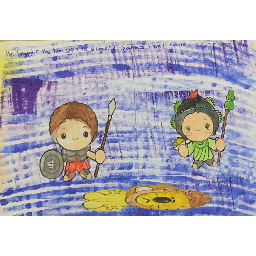
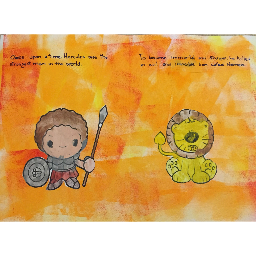
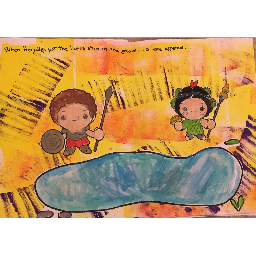
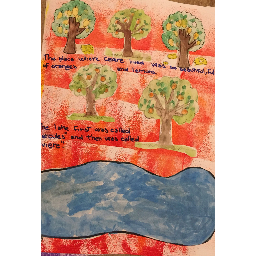
Once upon a time, HERCULES was the strongest man in the world. To become immortal and stronger he killed an evil and invincible lion called NEMEO. He brought the lion skin to beautiful goodness named CERERE. The place where CERERE lived was so beautiful full of oranges and lemons When Hercules put the lion's skin on the ground...a lake appear...The lake first was called "Lake of HERCULES and then was called BIVIERE ( Rossella Ferrante IC RICCARDO DA LENTINI ITALY)
Antonella D'amico ICS 2 CHIETI ITALY
The Legend of Mary from Puntaluce
Once upon a time, on the famous "Abruzzo trabocchi's coast ", there was a small church, dedicated to Mary from Puntaluce. Inside the church there was a precious golden statue to whom the habitants of the town were very devoted. During the turkish invasions, in the 16th century, the statue was stolen by the invading peoples. But when the turks restarted from the small town, the miracle happened right at the sea... An hold bell submerged in the sea for many years began to ring and at the moment the statue was found in its place, inside the church, and the ship of the smugglers sank. Since then, every year, in memory of that legendary and sacred event, at the same time, the local sailor carry, on their boats, that same statue in procession. Right at the moment of ceremony, it is said, the tolling of the submerged bell echoes at sea for centuries. (Antonella D'Amico ICS2 CHIETI ITALY)
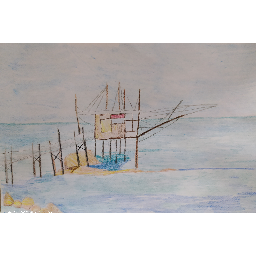
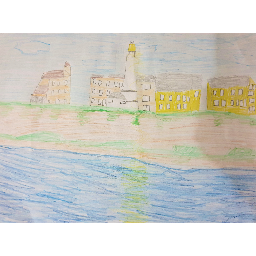
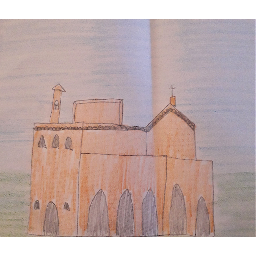
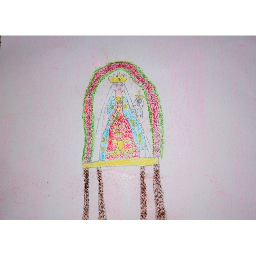
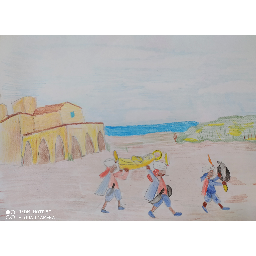
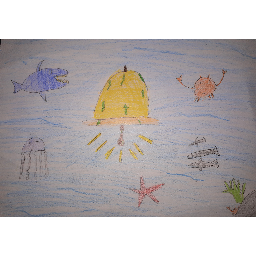
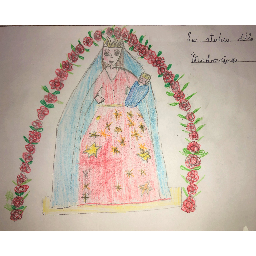
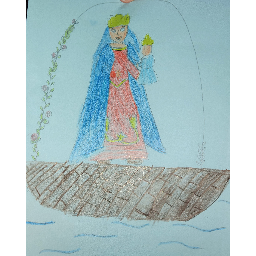
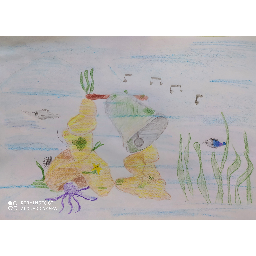
Rossella Ferrante IC RICCARDO DA LENTINI ITALY
Romania/Croatia collaborations
The legend of the Horses' Waterfall
Teacher: Loredana Popa, Romania
students: 4th grade, School nr.17, Botosani
Teacher: Svjetlana Vuić, Croatia
students: 4th grade, Primary school don Lovre Katića, Solin
The legend of the Horses' Waterfall
(Cascada Cailor)
Class 4B - School nr.17 Botosani, Romania
Teacher: Popa Loredana
According to the legend, Muntele Piatra Rea (The Evil Rock Mountain) was the locals’ favourite place to keep the "stables" of horses from spring to autumn because of its huge pastures. But this place was not so quiet. From time to time the bears would come to find easy prey from the dozens or even hundreds of horses on the mountain. Stream).
But in an open place the bear's chances were slim. So the bear usually tried to corner the horses above the precipices where Cascada Cailor (The horses’ waterfall) is currently located. Here the poor animals had no choice but to throw themselves into the abyss, so the bear was the winner. On a dark night, with no visibility and a very big storm, the bear came again to choose its prey. Frightened by lightning and the bear's unexpected attack, the animals rushed straight to the precipice. Some of them escaped but a lot of animals fell into the abyss.
The locals say the bear got about 15 horses then.Since then, the locals marked by the event have started to use the name The Horses’ Waterfall. But not only the waterfall received this name. The mountain is called Muntele Cailor (The Horses’ Mountain), the cirque glacier was called Podul Cailor (The Horses’ Bridge) and the stream that falls down the cliffs is called Izvorul Cailor (The Horses’ Stream).
Primary school don Lovre Katića, Solin
Class: 4th B
Teacher: Svjetlana Vuić
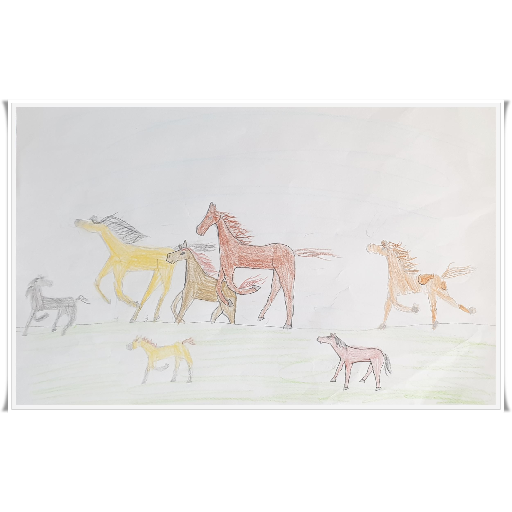
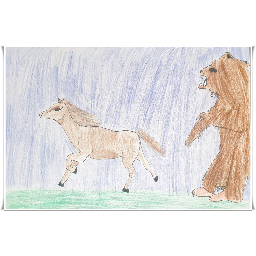
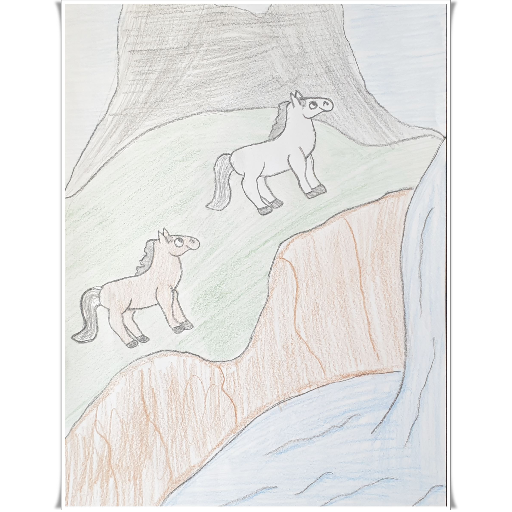
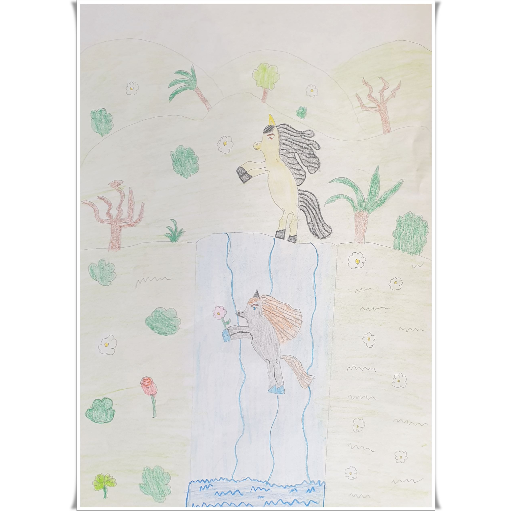
Romania/Croatia collaborations
Legend about the Adriatc Sea
Teacher: Loredana Popa, Romania
students: 4th grade, School nr.17, Botosani
Teacher: Svjetlana Vuić, Croatia
students: 4th grade, Primary school don Lovre Katića, Solin
Legend about the Adriatic Sea
4th b grade, Primary school don Lovre Katića, Croatia
teacher: Svjetlana Vuić
A long time ago, during prehistoric times, mother Bura and father Jug lived in the land called Illyria. They had two children: a son, Velebit, and a daughter, Adriana. Velebit was a strong, tall young man, and his sister Adriana (Adria) was a gentle beauty with a slender body, blue eyes, and long blonde hair.
Their joyful days were interrupted when the father, Jug decided to start a journey to find an even more beautiful country. He gave a promise to his family that he will return in 7 years. Seven years have passed when Bura, Velebit, and Adriana climbed the top of the hill to welcome their husband and father.
They noticed a large bird, fluttering on the horizon, it announced the arrival of Jug. As soon as Jug appeared in the sight, only moments away from his homeland and family, an evil spirit stopped and imprisoned him.
He thought that if Jug was locked down, he would easily defeat Velebit and kidnap Adriana, whom he fell in love with. A dreadful silence raised above Illyria. With the disappearance of Jug, every sound disappeared as well. Once happy and cheerful people were now overwhelmed with fear. One stormy night, the spirit rushed like a hawk towards the fertile land.
Out of fear, mother Bura turned into an eagle, Velebit was petrified and became a mountain that still bears his name and Adriana fell off of a cliff and transformed herself into the Adriatic Sea.
Today, we get to enjoy the beauty of the Adriatic Sea, which south wind (Jugo) stirrers in a moment with waves, which reminds us of Adriana’s presence and suppressed anger over her family's destiny.
Legend about the Adriatic Sea
Teacher: Loredana Popa, Romania
students: 4th grade, School nr.17, Botosani
THE LEGEND OF AVENTINO RIVER
by Maria Concetta Di Fabrizio - Malvina Cellucci
Primary School Lama dei Peligni (class fourth)
She reached the soft Little Cloud. At first, Turchesina was alone, but then she found many other pretty droplets. They were happy and they soon began to party; suddenly a joft moved Little Cloud.

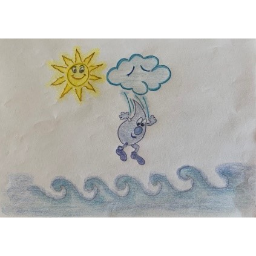

Turchesina, a droplet of water, relaxed in her sea under the Sun, her friend. Suddenly, she became light; she flied slowly into the air.
It was the breath of Ventino, a spiteful wind, very envious of the droplets’ joy; he moved Little Cloud to another place, unknown and cold.


All the droplets, scared and cold, launched themselves down, some hands with hands, others hugging each other. All reached Earth.
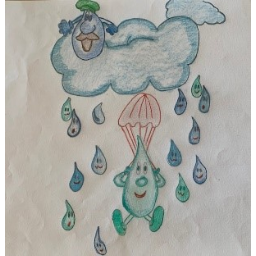
Turchesina, with other droplets, failed on the peaks of Maja; they, slowly and together, began to descend to the valley.
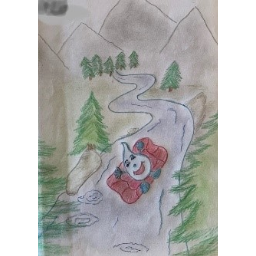
Along the way they decided to go, all together, towards the sea, singing a song dedicated to Ventino.
For this reason the river with Turchesina and friends, took the name of Aventino.
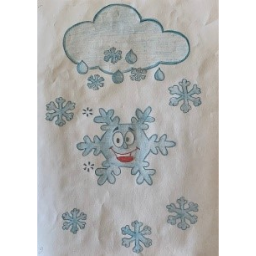
A WONDERFUL SPECTACLE
4th Class - Primary School Gessopalena - Ic. Palena - Torricella Peligna
Teachers: Ersilia Emma Persiani, Valentina Salvatore, Sandra Testa.
There is a lake in a wood near Bomba, a small village in Abruzzo. There are a lot of fantastic animals here but the lake is polluted.
The animals live not well becouse they can’t eat and drink.
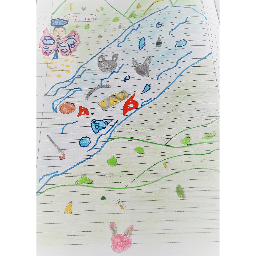
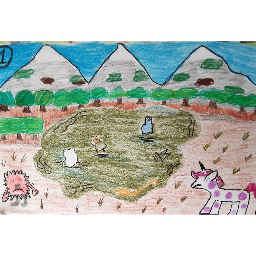
One day, the Fairy of Clouds freezes the waters and she cleans the lake with the magic and the help of the animals.
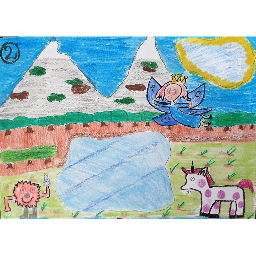
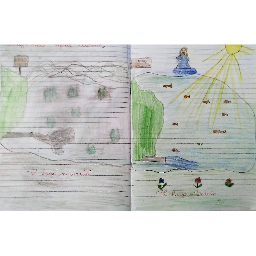
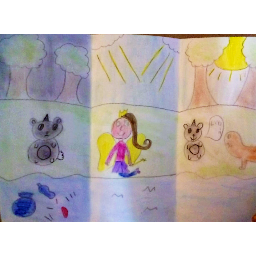
The Clouds Fairy calls the sun to melt the ice on the lake.
The waters begin to move, the animals begin to feed and the nature shows a wonderful spectacle.
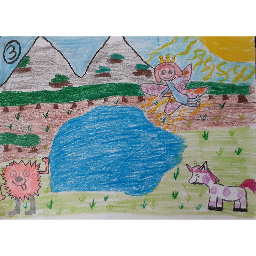
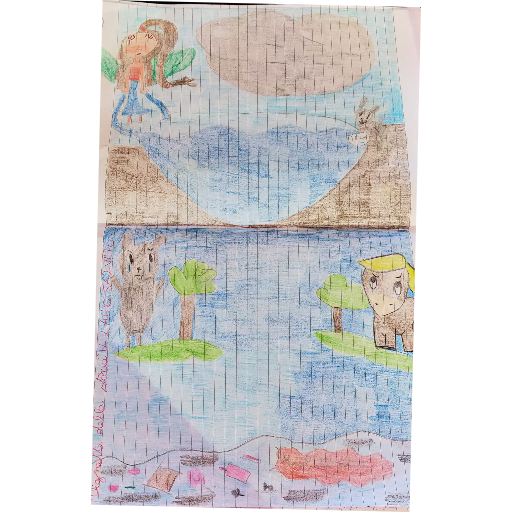
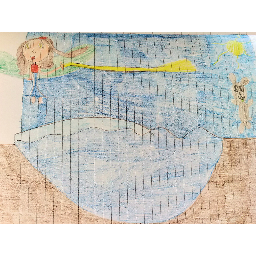
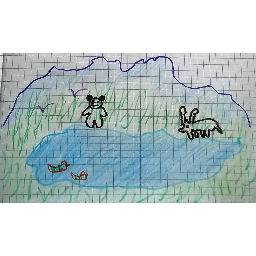
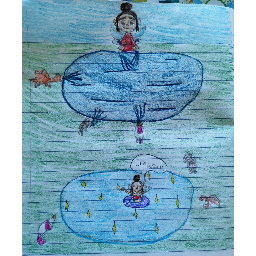
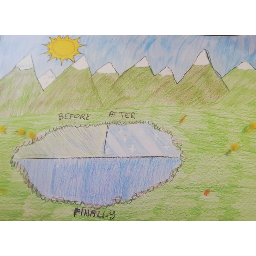
The legend of Costești - Stânca lake
PI Gymnasium no.2, Drochia, Moldova
Teacher - Natalia Sîncu
The Costești Stânca accumulation lake is the largest lake on the territory of the Republic of Moldova. Most often, tourists arriving in Costești - Stânca prefer to visit the village of Văratic, where the river Ciuhur flows into a blue lake surrounded by rocks. One of them is called "Rock of Love".
Legend has it that here, once upon a time, in a Moldovan village lived two young men - a very beautiful girl, a peasant girl, and a boy, the boyar's son from those places. The two loved each other very much, but they had to keep their relationship a secret. After a while, the young people decided to unite their destinies and have a wedding, but when the boy wanted to ask for the girl's hand, his father, who was very severe, forbade him to see her again. Then the young people in love decided to run away. They climbed the highest rock, put the wedding rings on the ground and threw themselves into the void.
According to legend, the young man turned into a river, which is now called Ciuhur and flows at the foot of the cliff, where the girl turned. Later, this place was called the "Rock of Love", as a symbol of the eternity of this feeling. It is said that at night, during the full moon, the boyar's son and the peasant's daughter walk through these places, holding hands. The locals say that if someone tried to follow them, he would turn to stone and stay there forever. People are sure that this is why the banks of the river are rocky.
- < BEGINNING
- END >
-
LIKE
-
COMMENT