Write down at least one argument in favor of or against animal testing. On the next page someone should write another argument contradicting yours. And so on and so forth...
NB: In order to find ideas for your arguments visit the 'project' entity on e-class.

Animals feel pain and fear
No more invasive biomedical testing should be performed on sentient and complex animals like primates, dogs and cats. Even rats have been proved highly intelligent and capable of feeling fear and pain.
Animals can’t talk for themselves so we need to be their voices and bring their plight out into the daylight.
Dora Pazolidou, A3
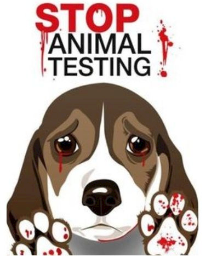
Even though animals suffer greatly in tests and experiments, we should also consider how humanity would suffer without them. Animal testing ensures the safety of countless drugs and vaccines. Without it, humans could suffer from serious and even lethal side effects.
Androniki Toziou
Human Safety
The pro-animal-testing scholars are suggesting that it is crucial medicines be tested on living systems due to their complexity. Studying cell cultures in a petri dish, while sometimes useful, does not provide a clear depiction of the effect it could have in human body systems. Moreover, some illnesses (e.g. Blindness, high blood pressure) cannot be studied outside a living organism, and therefore animals are essential for the best results possible.
Safiya Anastasiades A1
Animals and humans are not the same
Even though animals have some similarities with humans , their bodies cannot be compared to the anatomy of the human body. Their skin, their fur, everything they have does not always match with how the human body works or even responds to these tests. Not every animal species responds in exactly the same way, just as not all humans respond in the same way to all medicines and treatments.Therefore, the results are not always reliable.
Elena Tsitamidou A3
Animals themselves benefit from the results of animal testing.
Vaccines tested on animals have saved millions of animals that would otherwise have died from rabies, distemper, feline leukemia, infectious hepatitis virus, tetanus, anthrax, and canine parvo virus. Treatments for animals developed using animal testing also include pacemakers for heart disease and remedies for glaucoma and hip dysplasia.Animal testing has been instrumental in saving endangered species from extinction, including the black-footed ferret, the California condor and the tamarins of Brazil. The American Veterinary Medical Association (AVMA) endorses animal testing to develop safe drugs, vaccines and medical devices.
Mariza Soufleri A3
ANGELOS FOTIADIS A3
Katerina Farakou
That is true, people need to find solutions on how to test medicines, but that doesn't mean they have to use it on animals. And since humans are considered to be the smartest species on the planet they must be able to find a solution that is better than testing it on them. Plus humans and animals can both feel pain and die, so people should be able to understand how it feels and if they are not, then it's because they've never felt something that painful before. So why should other living souls go through that?
Tsioukis Apostolos
Animals deserve a better life, outside the "torturing" laboratories
According to recent data, recorded by the global community, only 5% of animals used in experiments are protected by law.
A percentage like that was expectable since the animal welfare law does not apply to rats, mice, fish and birds, which account for 95% of the laboratory animals used in research.
Consequently, laboratory animals are classified to a special category, in which their rights are violated and they continue to be mistreated, abused or even killed.
Siopi Andriana A'3
Nevertheless, animals often make better research subjects than human beings because of their shorter life cycles. Laboratory mice, for example, live for only two to three years, so researchers can study the effects of treatments or genetic manipulation over a whole lifespan, or across several generations, which would be infeasible using human subjects. Mice and rats are particularly well-suited to long-term cancer research, partly because of their short lifespans.
Ariadni Bougia
- < BEGINNING
- END >
-
LIKE
-
COMMENT