 "No one knows where the shoe pinches like the wearer.”
ATTRIBUTED TO A ROMAN SAGE.
This book was created and published on StoryJumper™
©2014 StoryJumper, Inc. All rights reserved.
Publish your own children's book:
www.storyjumper.com

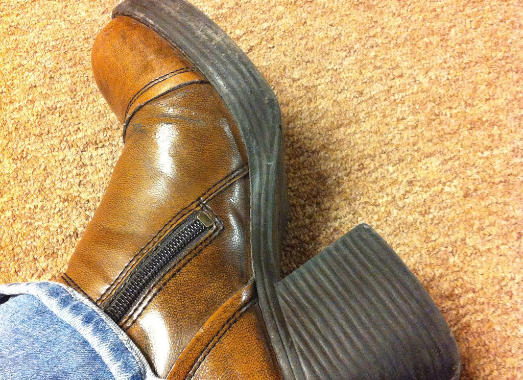

WHEN was the last time you bought a pair of shoes? How did
they fit you? Were they comfortable? How long did it take you
to choose them? How helpful was the shop assistant or fitter?
Did you buy them for style rather than comfort? How do they
feel now that you have worn them a while? Do they pinch you
anywhere?
Buying shoes is not as simple as it sounds. And getting the right
size is almost like stepping into a labyrinth.
Why is that?
 Comfortable shoes .....
Getting the Right Fit
First of all, which is your larger foot—right or left?
You think they are both the same? Think again!
Another factor to take into account is that each foot
has four phases of fit: static fit, weight-bearing fit,
functional fit, and thermal fit. What are the
differences?
Regarding static fit, the book Professional Shoe
Fitting says: “This is the fit of the shoe with the foot
at rest (the customer seated).”
As the expression “weight-bearing fit” suggests, it is
measured when the person is standing. This
position changes the size and shape of the foot.
The above-quoted reference states: “The foot at rest is
essentially a loose bag of bones and gristle that suddenly
‘solidifies’ on weightbearing, becoming a foot of different fit
requirements.” But there are two more fits.
The functional fit is the fit under dynamic conditions—when
walking, running, jumping, or doing other exercise. This “creates
a foot of different combinations of size, shape and proportions.”
The fourth fit is the thermal, which refers to the alterations that
take place as a result of heat, humidity, and moisture. These can
cause an increase of 5 percent in foot volume. Little wonder that it
is a relief to take your shoes off at the end of the day, especially if
you are wearing the wrong size! And often that is the case.
How should you measure your feet?
A popular tool in some countries for assessing size is
the Brannock device. (See photo.) This can be used to
obtain three basic measurements: the overall length of
the foot, the distance from the heel to the ball joint, and
the ball width. But, of course, each foot has its own
shape and volume. For that obvious reason, we try
shoes on before we buy them. Herein can lie a trap.
Have you ever had the experience of trying on shoes
that you really like, only to find that they pinch slightly?
“The shoes will stretch,” says the salesman. You buy
them and begin to regret it a few days or weeks after
you start wearing them. And there is the beginning of
your next corn, ingrown toenail, or bunion!
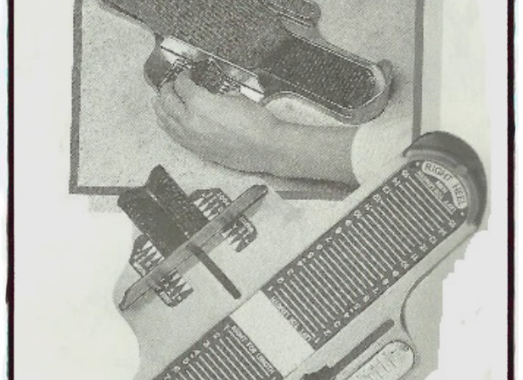
 The Brannock device
Are You Getting That Perfect Fit?
Is it possible to find a perfect fit? Professional Shoe
Fitting gives the quick answer no. Why not?
“Because of several insurmountable obstacles. . . .
No person has two feet of exactly the same size,
shape, proportions or functional character.” So if a
shoe is perfect for your larger foot, it will not quite
fit the bill for the other one. “This does not suggest
that good fit isn’t achievable, but only that we
should be more cautious about the term or idea of
‘perfect’ fit.”
If you want to see where your feet are causing
pressure in a shoe, take a look at some of your old,
used shoes. Look inside the shoe at the lining.
Where do you notice the most wear? Frequently,
the evidence will point to the heel seat, behind the
heel, and to the ball of the foot. What does this
mean? It means that “certain sections of the shoe
are not properly mated with the corresponding
sections of the foot. Some sections are getting
excessive wear while others are virtually
untouched.”
Even the throat of the shoe is important for comfort.
Have you noticed that shoes can have different throat-
line styles? With the bal style, the two upper quarters
are pulled together at the lowest lace point. However,
if you have fleshy feet, then the blucher style is more
comfortable, since the sides remain separated at the
lowest lace point. (See diagram). Why is this detail
important? The same source says: “Many or most heel
irritations from the shoe are often the direct result of a
shoe being too tight at the throat, thus crowding the
heel back against the counter.”
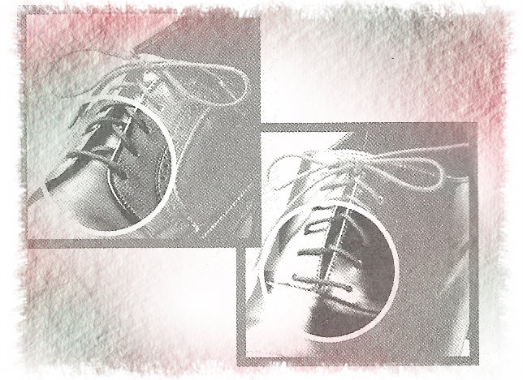
 Throat-line styles
 Blucher
 Bal
BalWhat About Women’s High-Heeled
Shoes?
The female preference for high heels imposes
different stresses on the body. High heels tend
to alter body posture, often causing a forward
tilt, which, in turn, demands more knee bend in
order to keep the body straight. High heels also
contract the calf muscles, which then become
more prominent.
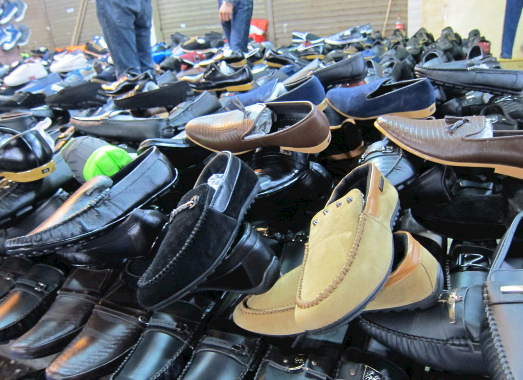
Thus, the heel is often the crucial part of a
woman’s shoe and the key to her comfort or
discomfort. Professional Shoe Fitting says that
there are three prime reasons for the heels on
shoes:
‘(1) “status,” such as adding to one’s height,
(2) cosmetic purposes—an added design or
style feature on the shoe,
(3) enhanced appearance—such as women’s
high heels giving more contour to the legs.’
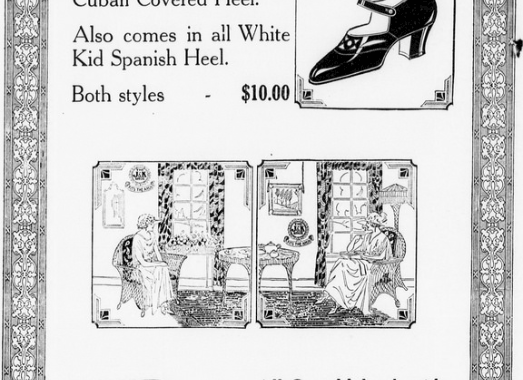
Women should be particularly conscious of the heel
pitch, which determines where the line of the body
weight passes through the heel. If that line is at the rear
or front edge of the heel, trouble could result. Why is
that? Because it can lead to the heel buckling and
causing a nasty fall.
From this brief discussion, it is evident that getting the
right fit of shoes takes time and perhaps even extra
expense, since a good shoe requires more time to
produce. But your shoes can mean so much to your
general comfort and even to your health. So take your
time. Get proper measurements. Be patient. Do not be
fooled by fashion or appearances.
Points to Watch When Choosing Shoes
William A. Rossi and Ross Tennant offer the following
suggestions in their book Professional Shoe Fitting.
“The purpose of measuring the foot is not, as
supposed, to determine the precise shoe size required.”
Why is that?
Because shoe sizes can be affected by many factors,
such as heel height, style, patterns, materials used, and
brand. This is especially true today when footwear is
being manufactured in so many countries with varying
standards.
When your foot is measured, pull the toe of the sock or stocking
forward so that the toes are not bent, resulting in a false reading.
How should you be measured—seated or standing?
“To measure with the customer seated is the lazy way.” It results in a
false reading. Therefore, stand up to have your feet measured. Yes,
both feet. Do not assume that the left foot is the larger. Measure
both!
“Professional shoe fitting is a skill and service that is the
exclusive territory of an elite corps of individuals associated
with an equally elite legion of stores who understand and
appreciate the importance of highly skilled shoe fitting.”
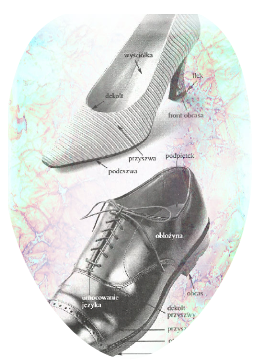
 Components of a shoe
sole, vamp, throat
sock lining, heel breast
top lift, toe cap, outsole,
welt,
vamp, throat line, tongue
bar,
quarter, heel pad, heel
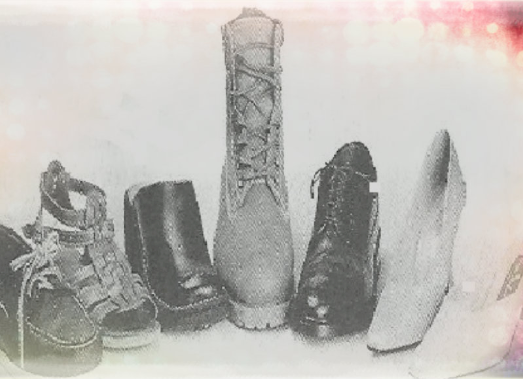
All shoe designs are based on these seven basic styles
Bibliography:
William A. Rossi and Ross Tennant
Professional Shoe Fitting.

- < BEGINNING
- END >
-
DOWNLOAD
-
LIKE
-
COMMENT()
-
SHARE
-
BUY THIS BOOK
(from $4.19+) -
BUY THIS BOOK
(from $4.19+) - DOWNLOAD
- LIKE
- COMMENT ()
- SHARE
- Report
-
BUY
-
LIKE
-
COMMENT()
-
SHARE
- Excessive Violence
- Harassment
- Offensive Pictures
- Spelling & Grammar Errors
- Unfinished
- Other Problem





COMMENTS
Click 'X' to report any negative comments. Thanks!