This book is dedicated to all the people from the Past who made possible that we can enjoy the Cultural Heritage...
Garcia Eva
Marinelli Maria Concetta
Tullo Gina
and
all the italian and spanish students partners
MAY, 2018


This is a collaborative book written by Italian and Spanish partners about CULTURAL HERITAGE in Italy and Spain.
World Heritage
Heritage is our legacy from the past, what we live with today, and what we pass on to future generations.

UNESCO seeks to encourage the identification, protection and preservation of cultural and natural heritage around the world considered to be the outstanding value to humanity.
ITALIAN CULTURAL HERITAGE
Italy hosts 53 sites recognized by UNESCO as a World Heritage Site. It is the country that has the largest number of cultural heritage sites in the world.
SPANISH CULTURAL HERITAGE
Spain hosts 46 sites recognized by UNESCO as a World Heritage Site. It is the third country in the world that has the largest number of cultural heritage sites in the world, after Italy and China.
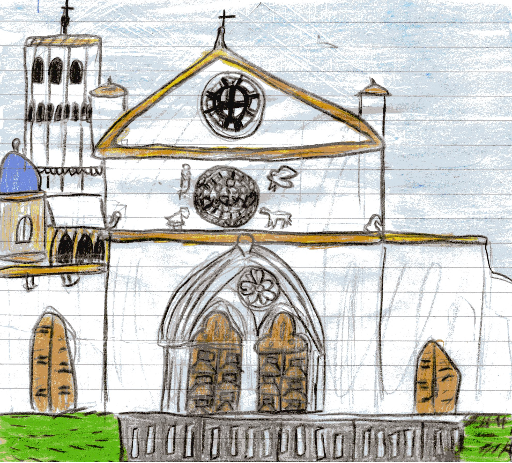
ASSISI - ITALY
The city of Assisi is located in central Italy, in Umbria.
St. Francis was born there. He was the founder of a religious order and he was proclaimed saint.
Assisi is a unique example of a city sanctuary in its natural environment.
The city has a wealth of art treasures and religious architecture, including the Basilica of St Francis.
CAMINO DE SANTIAGO -SPAIN
The "Camino de Santiago" or "pilgrimage to Santiago de Compostela" is a medieval Catholic pilgrimage whose purpose is to reach the tomb attributed to the apostle Santiago el Mayor, located in the crypt of the cathedral of Santiago de Compostela in Galicia (Spain).
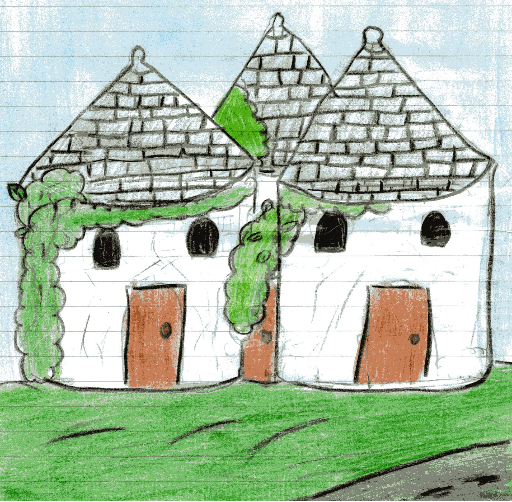
TRULLI OF ALBEROBELLO - ITALY
Trulli are ancient, typical houses of Alberobello in Puglia, in the south of Italy. These buildings are made of white stone of the Murge plateau. Alberobello is a charming tourist village.
SEVILLE'S CATHEDRAL - SPAIN
The Cathedral of Santa María de la Sede de Sevilla is the largest Christian Gothic cathedral in the world. Unesco declared it in 1987, together with the Real Alcázar and the Archivo de Indias, a World Heritage Site. The building was made on the site that remained after the demolition of the old aljama mosque in Seville, of which the minaret (the Giralda) and the Patio de los Naranjos are still preserved.
POMPEI AND ERCOLANO - ITALY
The remains of the ancient Roman cities of Pompei and Ercolano offer the possibility of knowing many aspects of everyday life in the ancient Rome. They were buried by the eruption of Vesuvius in 79 After Christ.
In these cities it is possible to admire sculptures, mosaics and murals dating back more than 2000 years and to walk among the houses, temples, theaters and baths. Every year many tourists come from all over the world to visit this place.
CITY OF CUENCA - SPAIN
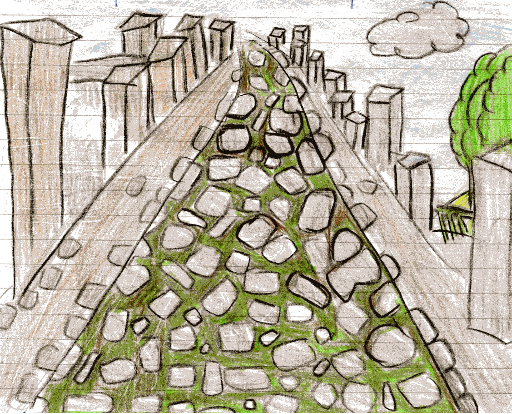
Cuenca is an amazing urban reality where the times of the past and those of the present are linked, where cultural heritage and natural heritage complement each other and offer the visitor an opportunity to be surprised.
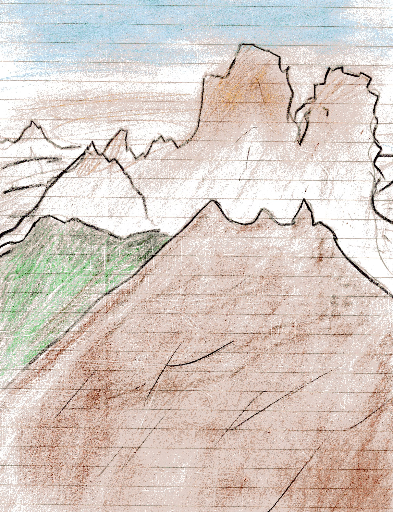
DOLOMITI - ITALY
The mountain group of Dolomiti owns some of the most beautiful peaks of Italy and the planet.
Dolomiti are UNESCO World Heritage Site for their geological features, for the beautiful landscapes in every season of the year and, of course, for their majestic and impressive beauty.
Magic, nature and beauty: this is Dolomiti.
DOÑANA - SPAIN
Doñana is a Spanish protected natural space located in Andalusia. Due to its privileged geographic location between two continents and its proximity to the meeting place of the Atlantic and the Mediterranean,
in Doñana you can see more than 300 different species of birds per year, as it is a place of passage, breeding and wintering for thousands of them European and African. It is considered the largest ecological reserve in Europe.
AMALFI COAST - ITALY
Amalfi, Positano, Ravello, Praiano, Furore, Vietri sul Mare are just some of the 16 villages of the Amalfi Coast, a stretch of land washed by the waters of the Tyrrhenian Sea.
The Amalfi coast represents a perfect example of Mediterranean landscape of great cultural and natural value with the narrow streets of the villages, the fragrant and luxuriant vegetation, the perched houses and the sea of an intense and deep blue.
Each of these villages, with their traditions and their particularity gives sparkling and lively atmospheres.
MEDITERRANEAN DIET -SPAIN/ITALY
The Mediterranean Diet is a valuable cultural heritage that represents much more than a simple nutritional guide, rich and healthy. It is a balanced lifestyle that includes recipes, cooking methods, celebrations, customs, typical products and diverse human activities.
Among the many health-promoting properties of this food pattern, we can highlight the type of fat that characterizes it (olive oil, fish and nuts), the proportions in the main nutrients that are stored in its recipes (cereals and vegetables as the basis of dishes and meats or similar as "garnish") and the richness in micronutrients that it contains, fruit of the use of seasonal vegetables, aromatic herbs and seasonings.
VINEYARD LANDSCAPES OF PIEMONTE: LANGHE-ROERO AND MONFERRATO - ITALY
A succession of gentle hills and slopes whose vines draw beautiful geometries: these are the typical landscapes of the Langhe, Roero and Monferrato.
They are part of the UNESCO World Heritage List because they represent a landscape with a natural environment with the deep wine culture. The panoramic view of the hills is enriched by ancient villages and beautiful castles.
ROMAN WALL OF LUGO - SPAIN
The Roman wall of Lugo surrounds the historic center of the Galician city of Lugo in the province of the same name in Spain. The ancient Roman city of Lucus Augusti, founded by Paulo Fabio Máximo on behalf of the Emperor Augustus in the year 13 a.C.
with the purpose of annexing, definitively, the northwest of the Iberian peninsula to the Roman Empire was endowed in the Low Empire with a wall of defense that has lasted, with the few reforms, untilthe present. The wall, with a length of 2266 meters, crowned by 85 powerful towers, delimits the historic center of the Galician city.
CINQUE TERRE - ITALY
The Cinque Terre in Liguria are historical and colourful villages. They are in a spectacular position on the sea, with their rocky, wild coastline and their terraces full of renowned vineyards.
LA ALHAMBRA - SPAIN
The Alhambra is an Andalusian palatine city located in Granada, in the autonomous community of Andalusia, Spain. It consists of a set of palaces, gardens and fortress that housed a real citadel within the city of Granada, which served as accommodation to the monarch and the court of the Nasrid Kingdom of Granada.
Its true attraction, as in other Muslim works of the time, not only lies in the interiors, whose decoration is among the peaks of Andalusian art, but also in its location and adaptation, generating a new landscape but fully integrated with the pre-existing nature. In 2016 it was the second most visited monument in Spain.
OPERA OD SICILIAN PUPPETS- ITALY
The puppet theater known as Opera dei Pupi was born in Sicily at the beginning of the 19th century and had a great success among the working classes.
The stories told, whose dialogues are almost always improvised by the puppeteers, are based on the medieval chivalric literature, on the Italian poems of the Renaissance, on the lives of saints and on the stories of bandits.
FALLAS DE VALENCIA - SPAIN
The Fallas are a festival that goes from March 15 to 19 with a tradition rooted in the city of Valencia and different populations of the Valencian Community. Officially they begin the last Sunday of February with the act of the Crida.
The popular version of the origin of the fallas is that they were started by the guild of carpenters who burned on the eve of their patron San José's day, in a purifying fire, the old shavings and junk, cleaning the workshops before entering spring.
The Fallas are, thus, a way to announce the arrival of spring.
NATIONAL PARK OF TEIDE - SPAIN
The Teide National Park occupies the highest area of the island of Tenerife (in the Canary Islands) and Spain. In this area is the Teide volcano, which with its 3718 meters, is the highest peak of the Canary Islands, of Spain and of any land emerging from the Atlantic Ocean. It is also the third largest volcano in the world from its base in the ocean floor.
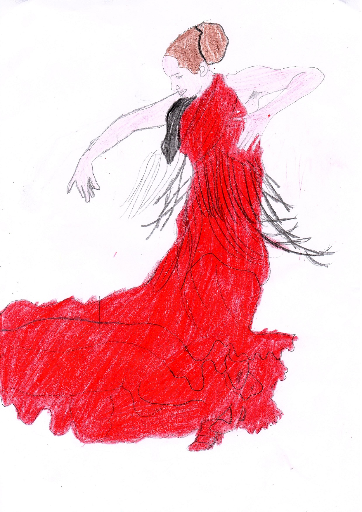
FLAMENCO - SPAIN
Flamenco is a musical genre typical of Andalusia. Its main facets are singing, playing and dancing, also counting on its own traditions and rules. As we know it today, it dates from the 18th century. In November 2010, Unesco declared it Intangible Cultural Heritage of Humanity.
THE ART OF NEAPOLITAN PIZZA MAKERS- ITALY
"The traditional art of Neapolitan pizza makers" is transmitted from generation to generation and promotes respect for cultural diversity and human creativity.
Pizza is one of the most loved and favourite food in the world.
E-TWINNING PROJECT
HAPPY DAYS WITH FRIENDS AND PARENTS!
2017-2018

- < BEGINNING
- END >
-
DOWNLOAD
-
LIKE
-
COMMENT()
-
SHARE
-
BUY THIS BOOK
(from $24.79+) -
BUY THIS BOOK
(from $24.79+) - DOWNLOAD
- LIKE
- COMMENT ()
- SHARE
- Report
-
BUY
-
LIKE
-
COMMENT()
-
SHARE
- Excessive Violence
- Harassment
- Offensive Pictures
- Spelling & Grammar Errors
- Unfinished
- Other Problem





COMMENTS
Click 'X' to report any negative comments. Thanks!