 By Amy Reed, Sung Chan Na, Karthik Sai Kura, Ethan Seitz
period 6
This book was created and published on StoryJumper™
©2010 StoryJumper, Inc. All rights reserved.
Publish your own children's book:
www.storyjumper.com


"'The Amazing Race': Producer's Mysterious Death Now Being Ruled an Overdose." -
Zap2it. N.p., n.d. Web. 12 May 2013.


 Pre-Travel
 Vaccines, Vaccines
every where!
Hepatitis A Recommended for all
travelers
Typhoid For travelers who may eat or
drink outside major restaurants and
hotels
Yellow fever Required for all travelers
arriving from a country with risk of
yellow fever transmission and for
travelers who have been in transit in an
airport located in a country with risk of
yellow fever transmission. Not
recommended otherwise.
Japanese encephalitis For travelers who
may spend a month or more in rural
areas and for short-term travelers who
may spend substantial time outdoors in
rural areas, especially after dusk
Hepatitis B Recommended for all
travelers
Rabies For travelers spending a lot of
time outdoors, or at high risk for animal
bites, or involved in any activities that
might bring them into direct contact
with bats
Measles, mumps, rubella (MMR) Two
doses recommended for all travelers
born
Hepatitis A vaccine because it was
recommended for all travelers
Typhoid vaccine because we may eat or drink
outside major restaurants and hotels
Yellow fever vaccine because is is required for
all travelers arriving from a country with risk of
yellow fever transmission and for travelers who
have been in transit in an airport located in a
country with risk of yellow fever transmission.
Japanese encephalitis vaccine because we would be
short-term travelers who may spend substantial
time outdoors in rural areas
Hepatitis B vaccine because it is recommended for all
travelers
Rabies vaccine because we would be spending a lot
of time outdoors
Measles, mumps, rubella (MMR) vaccine, with two
doses because we were travelers born after 1956
Tetanus-diphtheria to catch up on our 10 year
booster shot
Polio vaccine because it is recommended
"MD Travel Health." MD Travel Health. N.p., n.d. Web. 12 May 2013.
China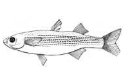
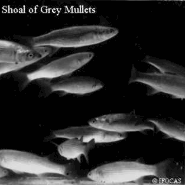
Reproduction: The Grey mullet uses a bubble
nest, which is a nest of bubbles made from a
secretion slit on its side, causing bubbles to
form around their next. The male will usually
make the bubble nest, and let the eggs float up to the nest, and wait for the eggs to
hatch in about 24-48 hrs, while the female just lays then through external fertilization,
and the male protects the fertilized eggs even from the female. The eggs also have a
buoyancy that allow them to float to the surface, and contain an oily coating.
Adaptations- Has two dorsal fins, the first is long with 4 spines and the second is a
sail like shape, and both are used to maintain balance and aid in turns. They also have
elongated bodies instead of stout bodies like other fish, for the purpose of movement,
and not having extra body mass to move around with using excess energy, and
instead require less food and energy for swift movement. Also the mullet takes on the
favor of its surroundings or food source, so a mullet in muddy or polluted waters is
often inedible and not preferred by predators depending on its location or
environment.
Flathead mullet or the grey mullet,
Class:Actinopterygii
Mugil cephalus


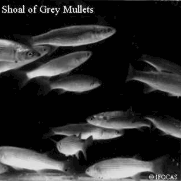
Significance to environment- They eat algae
and plankton, which both stops the overpopulation
of the plankton, and algae bloom in their
environment. They are also common prey for most other
larger fish, and people, allowing other larger fish,
crustaceans and even sharks to have a source
of food.
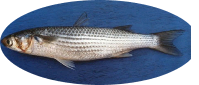
"Grey Mullet in the Aquarium, by John B. Clark,
B.Sc." Grey Mullet in the Aquarium, by John B.
Clark, B.Sc. N.p., n.d. Web. 10 May 2013.
"Mullet Facts." Mullet Facts. N.p., n.d. Web. 10
May 2013.
Bora Bora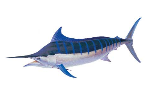


Fish Blue Marlin, Makaira mazara
Rare fish that can be found year
round near Bora Bora
Reproduction- The full grown female blue marlin
release thousands of eggs that are usually one
millimetre in diameter, and free float in the
Atlantic, where they can grow up to 0.6 in. a
day. Instead of protecting their young, they lay
a countless number of eggs, creating a higher chance of a few of the fish surviving to
adulthood.
Adaptations- The blue marlin travels at very fast speeds, so it has its first two dorsal fins
supported by several spines, and a strong, flexible skeleton. The female is also 4 times larger
in mass and several inches to feet larger than the males, for reproductions strains and
requirements. The bill is also long and stout, with a pointed tip, which is used for more
intimidation against predators than actual offensive uses such as catching prey of fending off
a predators. The blue marlin will also change its diet depending on its size, such as plankton
when it first hatches and smaller fish or even small crustaceans or squid as it grows into
adulthood.
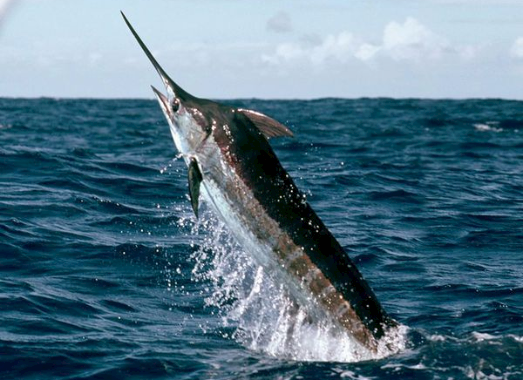
Significance- The blue marlin is a higher tiered
predator, and don’t have many natural enemies, but
the largest sharks, and fishermen. They have a diet of
other fish, crustaceans, squids, and sometimes
vegetation.

Size relative to a
human
"Indo-Pacific Blue Marlin."
Wikipedia. Wikimedia Foundation,
04 July 2013. Web. 10 May 2013.
"Blue Marlin." National
Geographic. N.p., n.d. Web. 10
May 2013
Brazil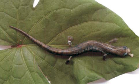
The brazilian salamander,
Bolitoglossa paraensis


Reproduction- The female brazilian
salamander is typically larger than the male,
to be able to reproduce. The female will
fertilize the eggs before they are laid,
internally, and will lay 8 to 14 eggs each time.
The brazilian salamander doesn’t lay a
countless amount of eggs and instead lays a few
eggs that will be well cared for, and most should be able to survive to adulthood.
Adaptations- The brazilian salamander, or any salamander requires an extremely moist environment for
both water content or dehydration, and to breath. Salamanders are lungless, meaning they use other
means to breathe and survive, through their skin or even the tissue in their mouth and throat, but can
only do so, with a high amount of moisture. Most salamanders are also very slender, to be able to move
swiftly from predators, and move through water. They will also stay under logs and leaves, like frogs and
toads to keep from dehydrating.
Significance- The salamander is a primary consumer, and eats mostly small plants, or algae, or even
smaller animals, when grown to full size. They are also common prey for most predators and is a large
source of food for the rest of its ecosystem.
You've previewed 10 of 16 pages.
To read more:
Click Sign Up (Free)- Full access to our public library
- Save favorite books
- Interact with authors


- < BEGINNING
- END >
-
DOWNLOAD
-
LIKE
-
COMMENT()
-
SHARE
-
SAVE
-
BUY THIS BOOK
(from $3.19+) -
BUY THIS BOOK
(from $3.19+) - DOWNLOAD
- LIKE
- COMMENT ()
- SHARE
- SAVE
- Report
-
BUY
-
LIKE
-
COMMENT()
-
SHARE
- Excessive Violence
- Harassment
- Offensive Pictures
- Spelling & Grammar Errors
- Unfinished
- Other Problem





COMMENTS
Click 'X' to report any negative comments. Thanks!