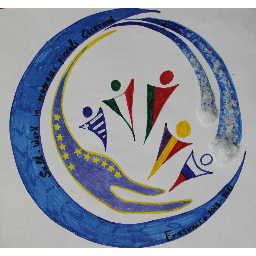
The idea of this fairy tale was born in the Erasmus Program and the project Salt work in Progress: piccoli ciceroni 2020-2021.
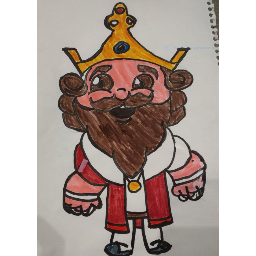
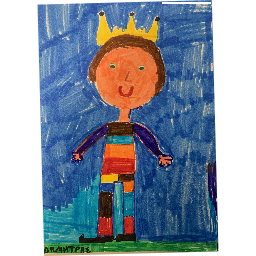
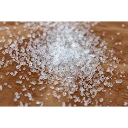
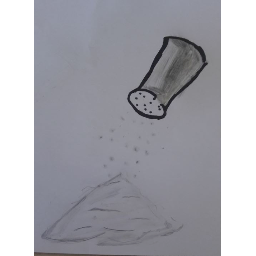
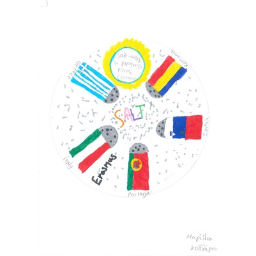
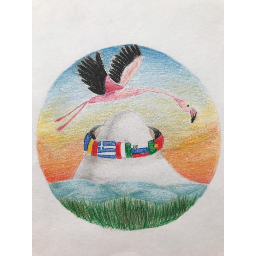
The photos and the drawings used, were made by the 4th graders of the 20th Primary School of Heraklion, Crete.

UNSALTED is our food but full of salt is our tongue!
Introduction of the project:
(5 children enter the stage. The following music of Manos Hadjidakis is suggested to be heard https://www.youtube.com/watch?v = r2zFwAj2UrI . The children hold little salt in their hands , they form a circle themselves, they gently bring their hands close one to the other and pretend that they smell or taste it , or that they salt something. Then they form a semicircle.)
,
Child 1 : The story that we’ll tell today, we’ll tell adding plenty of salt.
Child 2 : It happened once in the old days, in a country that was ruled by a king.
Child 3 : You all know this story; a very beautiful princess…
Child 4 :… told her dad in the palace, that she loved him as much as she would love salt.
Child 5 : The king got angry, furious in fact, and he exiled her to a distant country.
Child 1 : Then he ordered everyone in the palace never to add salt in the food.
Child 2 : Throughout the whole country from one edge to the other, the salt disappeared even from tears.
Child 3: And whoever dared to add salt to the food, the king himself punished.
Child 4: The years passed, almost six, no one could bear such an evil thing.
Child 5 : Everyone to cook without salt, no matter if they lived in the huts or at the palace.
Child 1 : Our story never really happened …
Child 2: It belongs to our imagination, to fairy tales.
Child 3 : But remember, fairy tales do good,
they teach children what is right.
Child 4 : …and that in this world, only love
is worth as much as salt and even more .
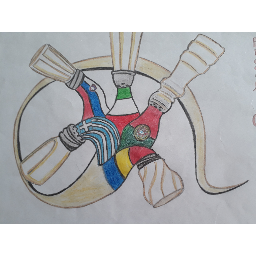
Child 5 : Let’s see now what is going on in the palace, and what the cooks are suffering without salt.
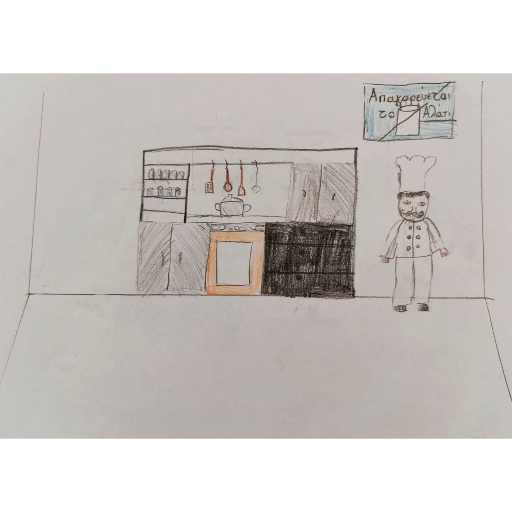
SECOND SCENE: Cooks
(The cooks appear on the stage. Under the sounds of the following music
https://www.youtube.com/watch?v=92iVi1tqdME
the following pantomime takes place:
Each cook has a pot and cooks. The Chef goes and tastes some food from every pot but he doesn't like anything. The cooks gesture to justify that the bad taste is not their fault but it’s due to the lack of salt. After the end of the pantomime, the cooks start talking to the public about their sufferings.)
CHEF: I can’t stand this anymore. To be a chef and not be able to use salt! Can you believe it?
COOK 1: You are right. Who heard this before?
COOK 2: Is it our fault that the king's daughter told him that she loved him like salt?
COOK 3: No, of course not.
CHEF: Yes, but we stew over it. COOK 1: How can food be tasty without salt? COOK 2: Everyone complains that the previous cook cooked better. COOK 3: But why did he leave the palace then? COOK 1: Because he could not cook without salt.
CHEF: Exactly. He legged it out and then they brought us to take the matter into our own hands.
COOK 2: We try to cook delicious meals without salt.
COOK 3: Sometimes we add plenty of lemon, and other times plenty of vinegar.
COOK 1: Sometimes we add little mashed fish into the sauce.
All together: Yucky !!
COOK 2: Without washing it first to keep it as salty as possible.
All together: Yucky !!
COOK 3: And of course we add so little that no one notices.
COOK 1: Because if they understand us…. Woe to us!
COOK 2: Do you know how strict the law is?
COOK 3: Even the sea water is forbidden to the citizens.
COOK 1: It’s because they know that whoever collects seawater, does it to get the salt.
COOK 2: Do you know what some people even think of? They collect their sweat that contains salt!
All together : Yucky !!
COOK 3: It’s just that lately the salt has disappeared even from the sweat.
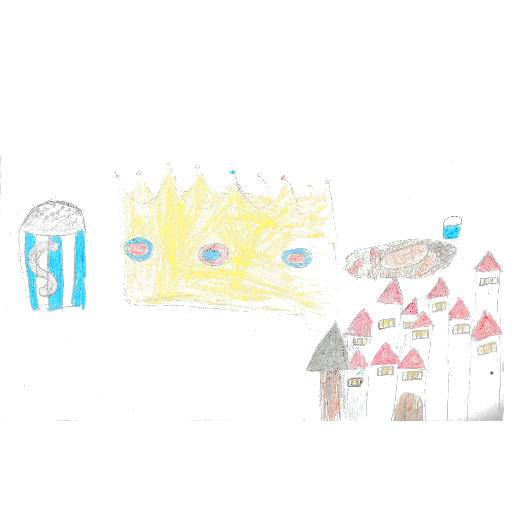
SCENE THREE: The king's concern.
(3 children appear and say the following words)
Child 5: This is what the Chef suffers in kitchen,
Child 6: but in the palace above, the king bursts and sighs.
Child 7: Of course he has his counselors who help him
Child 5: and the big problems they discuss with him.
Child 6: Today, however, the problem is not small.
Child 7: It is quite dangerous and rather serious.
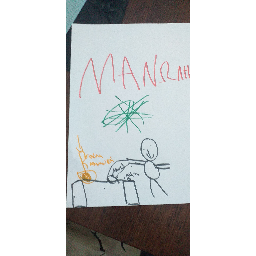
(The king appears with his advisors. The king is nervous and goes three times from one end of the stage to the other. His advisors look at him. As the king strolls around, the following music is heard (the first 30 seconds): https : // www . youtube . com / watch ? v = cVY 91 ffIV 8 U
As soon as the music stops , the king
sits on his throne
(a chair, covered in red cloth)
and begins to speak
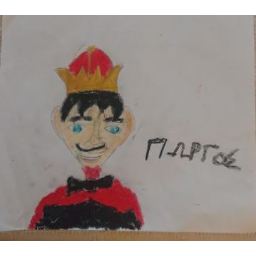
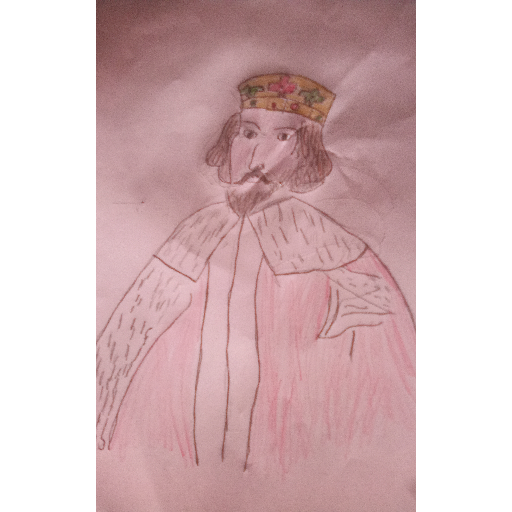
KING: Counselors, have you heard? My daughter is back.
COUNCIL 1 : Yes, my king, we know. She is in the kitchen cooking.
COUNCIL 2 : My spies heard her saying that she will add salt in the food.
KING: I know. That's why I have invited you here. Tell me what to do!
COUNCIL 3 : Punish her!
KING: Again?
COUNCIL 1: Again.
COUNCIL 2: Prohibition is for everyone.
COUNCIL 4 : Exceptions are not allowed.
COUNCIL 3 : Whoever dares to put salt on his food must pay.
COUNCIL 4 : This is what must be done.
Narrator 1 : And so it happened! Nobody put salt on their food!
However Lydia, the king’s daughter who had been exiled for years, had an idea¨; to hide the salt in the tongue of each resident of the kingdom .
Narrator 2: Of course when we say tongue we do not mean the tongue which we have in our mouth but the tongue, the language, that people speak. In Greece we speak Greek, in England they speak English, in Germany they speak German.
Scene Four
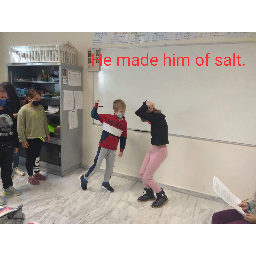
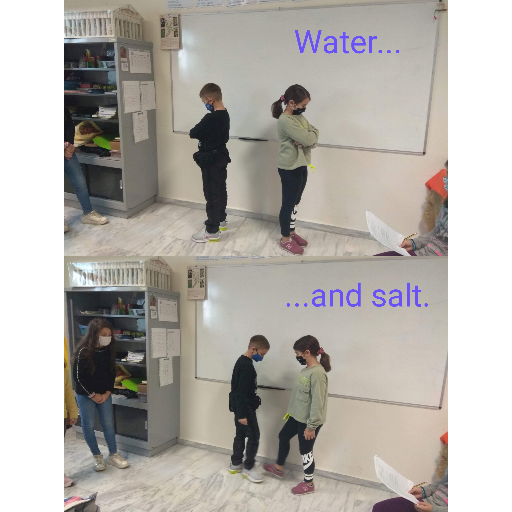
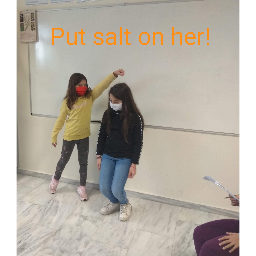
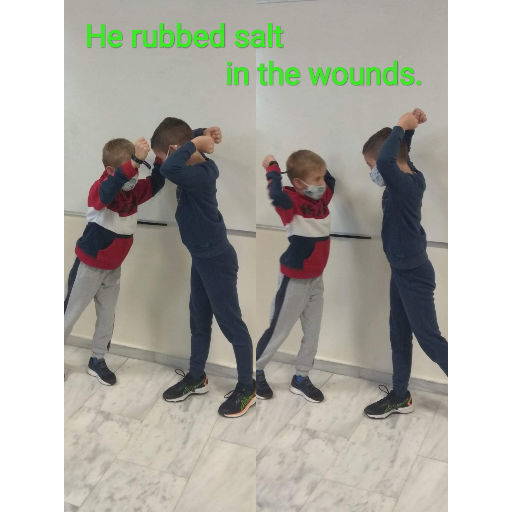
(Lydia enters the scene holding paper and a pencil , she sits on a chair, thinks and writes. While Lydia says each phrase, some kids represent the phrases using pantomime and then they stay like a tableaux vivant until they hear the etymology of the expression by a child.)
Lydia: My salted phrases are ready! Let’s see the first …
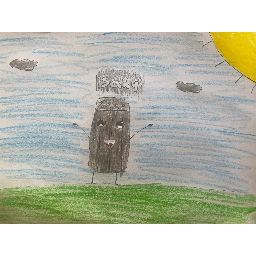
" We ate bread and salt"
Etymology: It symbolizes the inseparable bonds of friendship
"He made him of salt"
Etymology: When one hits another mercilessly .
Salted Phrases
"Water and salt"
Etymology: It means the end
of a misunderstanding .
"Put salt on him/her"
Etymology: Avoid someone unwanted .
"Unsalted"
Etymology: When we want to characterize someone as indifferent .
"She rubbed salt in the wounds"
Etymology: When someone speaks harsh words to someone to heart him .
- Full access to our public library
- Save favorite books
- Interact with authors
- < BEGINNING
- END >
-
DOWNLOAD
-
LIKE
-
COMMENT()
-
SHARE
-
SAVE
-
BUY THIS BOOK
(from $6.39+) -
BUY THIS BOOK
(from $6.39+) - DOWNLOAD
- LIKE
- COMMENT ()
- SHARE
- SAVE
- Report
-
BUY
-
LIKE
-
COMMENT()
-
SHARE
- Excessive Violence
- Harassment
- Offensive Pictures
- Spelling & Grammar Errors
- Unfinished
- Other Problem






COMMENTS
Click 'X' to report any negative comments. Thanks!