
CREATIVE DRAMA LESSON PLAN 1
Title
My Story
Authors
Hasan T.
Summary
Lesson :Lıfe science
Recognized :Be sensitive to people with disabilities
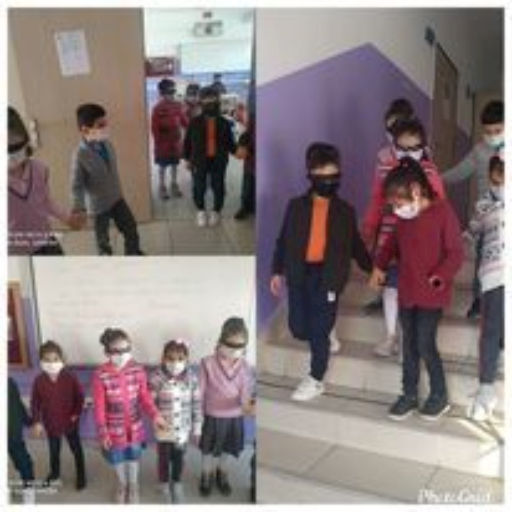
The teacher enters the classroom and takes a few steps with his eyes closed.
Students are encouraged to talk about how difficult it is to live without seeing. Then the students are matched in pairs. One of the spouses is blindfolded and places his hand on the palm of the other spouse. The class is circulated with his eyes closed with the guidance of his hand movements. Sit in a circle and talk about what they feel. They are made to empathize
Student ages
Primary school students 8 ages
Aims of the lesson
Speaks impromptu
Makes animation appropriate to the story me
Preparation time: 5 min.
Teaching time: 15 min.
Teaching resources (material & online tools)
zoom, eba, 21 century skills
CREATIVE DRAMA LESSON PLAN 2
UTHOR: ZEYNEP İNAN
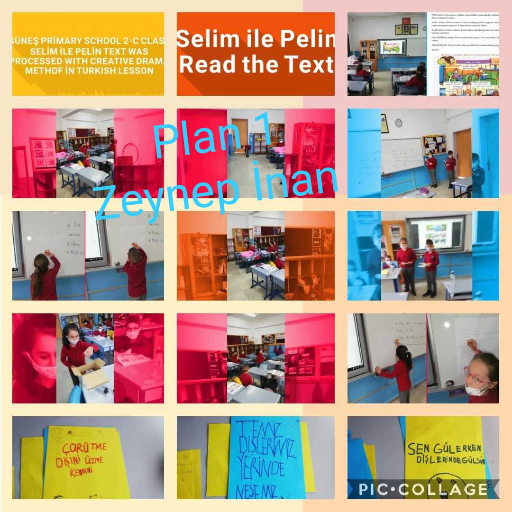
SUMMARY: I wanted to use the creative drama method in my 2nd grade Turkish lesson. I wanted to take advantage of creative drama while doing the activities on the text of "SELİM and METİN" in our Turkish textbook.
SUBJECTS:
Turkish lesson,
1. HEALTH AND SPORTS theme HEALTHY NUTRITION
2. WRITING INSTRUCTIONS
3. UNPREPARED TALK
4. POSTER DESIGN
AIMS OF THE LESSON
He answers questions about what he is listening to.
He makes impromptu speeches.
Writes short instructions.
Creates a poster.
Preparation time: 10 min.
Teaching time: 40’+40’
PREPARATION –WARM-UP WORKS
Preparatıon: Role cards suitable for the text in the textbook,
Large-sized papers are prepared by the teacher for instructions and posters. He is brought to the classroom.
Warm Up:
THE "ASSOCIATION BALL" GAME IS PLAYED.
The group stands in a circle.
The facilitator is part of the group. He holds the ball in his hands. Explains the rules of the game.
The person who will start the game says a topic aloud. For example; household items, pets, summer vacation, cars, etc.The aim of the group is to throw the ball at each other and, with each shot, say a new word, making a connotation about the spoken word. The first person speaks a word related to the chosen topic and throws the ball. Subsequently, the person holding the ball speaks another word that it conjures up in the spoken word itself.
For example; If the subject is summer, the first person shouts 'beach' when throwing the ball. The person holding the ball says 'crab' when he throws it again; following, "gripper," "clothespin," "laundry basket," "washing machine," "electricity," etc. connotations can continue.
If the ball falls, the same word is said, or the associative word is delayed, the person is asked to form a new sentence by combining the first word in the game with the last word.
After this person has the sentence, they say a new word around a new topic. Throws the ball. The game continues in the same way.
At the end of the game, the facilitator explains the purpose of the game: “Although creativity sometimes requires direct thinking, it often requires freeing our minds, making associations, and inspiring even from the points that seem distant at first sight. With this game, we aimed to relax our mind and open the door to associations. "
Rol Play:
After the warm-up game, the text "SELİM ile PELİN" in the Turkish textbook is read with the students. After the teacher has read the text once, then the students are divided into 2 groups (1-2-1-2) by the teacher using the number method. The role cards prepared by the teacher are given to the students. Students are told that they will animate the text according to what is written on their role cards. The students are given time and expected from the willing group to do the animation. Then the second group does the animation.
After the animations are completed, the questions in the textbook are answered after listing the events in the text in order of occurrence.
The 1st lesson ends. (30 minutes)
In the second lesson, students and their groups write together the instructions about brushing on the big instruction sheet given by the teacher. Afterwards, the students are asked to design a poster with the theme A healthy life starts from the mouth. The work of designing a woolen poster will also be done as a group. (30 minutes)
EVALUATION-DİSCUSSİON STAGE
During the evaluation phase, children are asked verbally about what they need to have healthy teeth. Answers are listened to. The student is given the opportunity to speak in front of the public.
The criticism is listened about the animations.
And what has been learned is written on a piece of paper and rolled into a ball and thrown into the basket brought by the teacher.
TEACHİNG RESOURCES(material&online tools)
Role Cards
Basket
Large White Paper
21st CENTURY SKİLLS
Critical Thinking and Problem Solving
Creativity and Innovation
Collaborate
Communicating
CREATIVE DRAMA LESSON PLAN 3
Author: Emlik IRMAK
Course Name: Life Science
Grade Level: 2nd grade
Theme: Life in Nature
Subject and Purpose: To explain the formation process of the day, month, year and seasons
Recommended Time: 2 lessons (40 + 40 minutes)
Teaching Learning Methods and Techniques: Question and answer, written and verbal expression, use of creative drama techniques
Tools and Materials: Chair, textbook to be used during lecture, materials that can be used for drama work.
Course Outcome: HB.2.6.9. Investigates the effects of the shape and movements of the world on human life.
Student Outcome: Learns the formation process of the day, month, year and seasons.
Makes creative drama work in cooperation.
Expresses feelings, thoughts and ideas throughdrama.
Warm-up Game
Bullshit Chair
Grade 1 stands in a circle. A chair is placed in the middle of the circle.
2. The rules of the game are explained: "We will play a game to develop our creativity muscles. There is only one rule of the game: To produce the most ridiculous ideas possible. I ask the person who has a solution to the question I asked to go to the middle chair and speak his opinion. you will receive as much applause. "
3. The teacher explains the question: "How are the seasons formed?"
4. The students start to express their ideas on a voluntary basis.
5. The ideas shared are applauded by the students. The more ridiculous, the stronger the applause should be.
6. At the end of the game, a short explanation is given to the students: "Creativity is a feature that increases when we free ourselves and we think and we start to produce better ideas as we move away from our anxieties and fears. I would like to Produce an idea for the problem without getting caught in the barriers and thinking "this idea is absurd, impossible, unpleasant, impossible". Remember, our aim is to keep ideas alive, not to kill them. If the thought of "no way" comes to your mind for some reason, think about how the idea could be and continue producing. "
Process
After the warm-up game, the teacher explains the formation process of the day, month, year and seasons.
After the lecture, the students are asked to explain the formation process of the day, month, year and seasons with the Fictional Space Creation technique. The class is divided into groups to practice the technique. Students are asked to imagine that they are the sun and the moon in space. Based on this dream, students are asked to animate the events that take place by making use of the phenomena of the Earth's rotation around itself (rotation) and the Sun's orbiting (entanglement).
Evaluation
In order to evaluate the subject reinforcement performed by applying the Fictional Space Creation technique, the following questions are asked to be answered by the teacher.
1- Did the students talk about the formation of days, months, years and seasons at the end of the application?
2- Were the concepts of world, sun, day, month, year and season used correctly during the application?
3- Have the phenomena of the Earth rotating (spinning) and circling the Sun (orbiting) were shown separately?
CREATIVE DRAMA LESSON PLAN 4
Lesson
Social studies
Class - Students Age
Primary school fourth grade – Students are 10 years old.
Title
Development of technological tools from past to present
Aims of the lessons
-Compares the past and present uses of technological products.
Recommended Time
-2 lessons (40+40 minutes)
Author
Samet HAMLI
Teaching resources (material & online tools)
A typewriter, a megaphone, mobile phone, laptop, microphone and background cartons.
The course of the lesson
Preparation-Warm-Up Studies
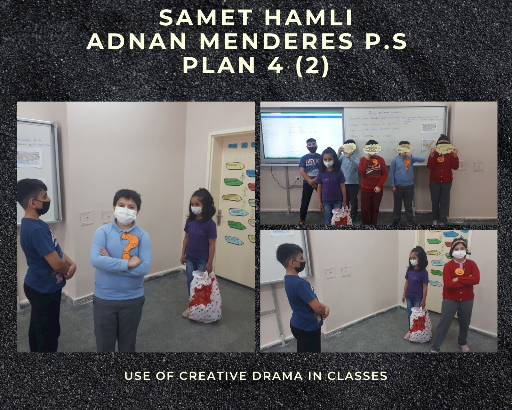
The teacher brings a megaphone, mobile phone, laptop, microphone and background cartons to class before the lesson begins. It creates fire-like shapes from background cartons. He says to students, I want you to close your eyes and sit back in your rows. He tells students to imagine what I say.
Students are asked to imagine going back to very old times, lighting fires and smoke, trying to send news to their friends with what they have written. They are asked to think they are writing a letter to a distant friend. They are then asked to think that they are talking on a mobile phone, making video calls on a mobile phone, using a computer, sending emails to their friends.
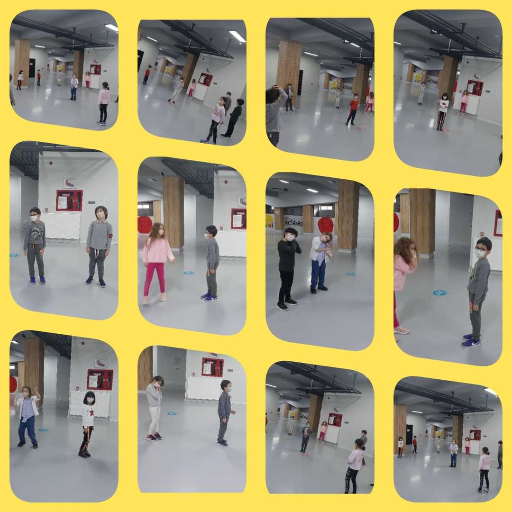
Students are asked to open their eyes and are asked to line up in a circle in front of the board. Then they are told to make their statements with their body language as they rotate in circles. In order to send news to your friend with smoke, you write letters, talk with a megaphone, talk with a microphone, talk with a mobile phone, make a video call with a mobile phone, write an email, such as actions as moving in a circle, students portray with their body language.
• Role play
The teacher distributes the materials he brings to the classroom to the students. Students ask them to improvise with these materials (typewriter, megaphone, fire made of background cardboard, mobile phone, computer, microphone) to demonstrate what they can experience by sorting them chronologically from past to present.
• Evaluation - Discussion Stage
The teacher asks students to discuss in what order and how the materials brought and revived can be developed over time. Students are asked and discussed what difficulties they have when sending news with technological paths and materials that are outdated compared to today when they improvise.
21st century skills
Collaborative work,
Innovation,
Creativity,
Leadership
Communication

CREATIVE DRAMA LESSON PLAN 5
Lesson
Traffic Safety
Class - Students Age
Primary school fourth grade – Students are 10 years old.
Title
Illuminated traffic signal device and traffic signs
Aims of the lessons
Explains the basic concepts of traffic.
Recommended Time
-2 lessons (30+30 minutes)
Author
Samet HAMLI
Teaching resources (material & online tools)
Background cardboard in various colors, scissors, tape, steering wheel, plate.
The course of the lesson
Preparation-Warm-Up Studies
The teacher asks students to sit back and tell them to close their eyes and imagine them walking down a Main Street. Then we imagine that they are waiting because the red light is on when we cross to the opposite side of the road, then the yellow light is on and we are preparing to cross, now the green light is on and we are going to the opposite side of the Yesil road with quick steps from the pedestrian crossing. Now we're approaching our school, and we're going through the school pass to the opposite side of the road, and since it's a school pass, the commuters are waiting for us to pass when we cross. Now we have arrived at our school and he says we can open our eyes.
After the teacher explains to students the meaning of yellow, red and green lights, he asks students to line up in a Yesil circle. If the teacher shows the cardboard in his hand, he says that we must act according to it, without disturbing the shape of the circle. They walk fast in green, prepare in yellow and tell them to stop when the traffic light, made of red background cardboard, is shown. The teacher shows the students traffic lights made of fund cardboard in a mixed way. In students, they act according to the color of light without breaking the circle.
• Role play
The teacher in the classroom is told that students should take roles. It asks them to improvise the illuminated traffic Beacon (different colors) pedestrian crossing, school crossing, pedestrians and commuters. He gives students a short time to plan it and asks them to portray their role. All students will be directed to take part.
• Evaluation - Discussion Stage
The teacher asks students what they are going through and what they are learning in class, and this is discussed. He asks where they see passing traffic signs around them. It asks and discusses what can happen if there are no traffic signs. Finally, by showing passing traffic signs in class, students are asked to share what they mean and what they should do.
21st century skills
Critical thinking
Creativity,
Leadership
Communication
CREATIVE DRAMA LESSON PLAN 6
Lesson
Science
Class - Students Age
Primary school fourth grade – Students are 10 years old.
Title
Force
Aims of the lessons
-Performs experiments for force to give motion to objects and to change the shape of objects.
Recommended Time
-2 lessons (30+30 minutes)
Author
Samet HAMLI
Teaching resources (material & online tools)
Ball, string, scissors, paper, play dough.
The course of the lesson
Preparation-Warm-Up Studies
Students are told that today the effects of force on objects will be processed. Students are asked to stand up and think about what is being said in their minds and pretend to animate it with their body language. And respectively:
- You're trying to push a heavy rock.
- Now we're trying to pull the same rock.
-A ball comes quickly towards you and you try to throw the ball towards another friend
- You're trying to stop a ball coming towards you.
-We make house, car or human from paper by cutting rectangular shape paper
-We make various shapes by changing the shape of the game dough
- Breaking a stick into multiple pieces
His sentences are sung.
Then students are asked to be in rows in the form of a circle. When they are lined up in a circle, we walk now they speed us up, we run at a light pace, now they change our direction, we change our direction, and we run in the opposite direction. Students are told that now they stop us, and we stop, and now they change our shape, and we become a square line, and the students perform.
• Role play
Students are taken to the school's garden. Students are given a ball and rope. They are asked to accelerate, stop, change direction with the ball, and pull, push with the rope, and do so in improvisation. In addition, students are also given scissors, paper and play dough in the classroom. They are asked to improvise how the shapes of the game dough and paper will change in an animation. In both studies, all students are required to take part.
• Evaluation - Discussion Stage
Students are asked what roles they take in improvisations and how they feel. They are asked to relate strongly to what they portray. The effects of force are discussed. Explain by associating the subject of force with the studies done in the course.
21st century skills
Critical thinking
Creativity
Leadership
Communication
Problem solving
CREATIVE DRAMA LESSON PLAN 7
Lesson
Turkish
Class - Students Age
Primary school fourth grade – Students are 10 years old.
Title
Punctuation
Aims of the lessons
-Uses punctuation marks where appropriate
-Reads aloud and silently, paying attention to punctuation marks.
Recommended Time
-2 lessons (30+30 minutes)
Author
Samet HAMLI
Teaching resources (material & online tools)
Background cardboard, scissors, bag, colored pencils
The course of the lesson
Preparation-Warm-Up Studies
The teacher enters the classroom with a bag in his hand. After greeting the class, he asks students what might be in the bag. The teacher listens to the students ' answers, then removes Scissors, a cardboard fund, crayons of various colors inside the bag. Ask them to guess what they will do with these materials this time?
He says we'll all see it together as the lesson progresses without giving the right answer. It tells you that punctuation marks will be processed in this course. He tells students about the characteristics of various punctuation marks, while he asks students to make a sentence in which the punctuation mark, which is described, will be used. Everyone says their answer at the same time.
He asks students to line up in a circle. When a comma is called, they are asked to walk slowly, stop at the point, accelerate at three points, express joy, fear, surprise or sadness with their facial expressions at the exclamation point. In the question mark, the direction changes to the opposite side. The teacher says punctuation in a mixed way, while the students try to make the movements they should make in the form of a circle.
• Role play
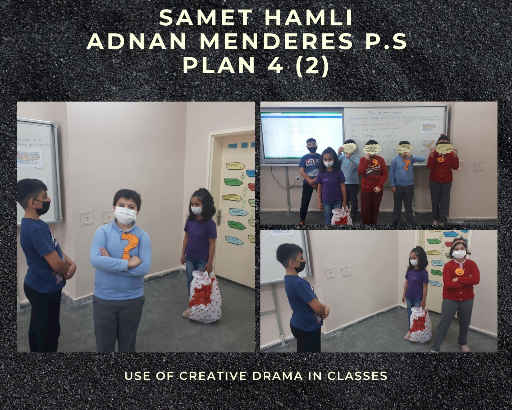
He asks students in the class to improvise according to the designed scenario, where the conversation is going on inside, the people who will give the speech. At this time, some of the students become punctuation marks. And according to which punctuation mark should be used in passing sentences, it appears in the dialogue scene. The teacher tells everyone to take charge, not to be afraid of making mistakes.
• Evaluation - Discussion Stage
Students are asked how they feel during the activities during the course and answers are received. They are asked how they relate the activities to punctuation. The answers are listened to and the answers are discussed. If they were to improvise again, what role would they want to be in and why? At the end of the course, what is learned is asked and discussed. So the subjects are repeated.
21st century skills
Critical thinking
Creativity
Leadership
Communication
Problem solving
CREATIVE DRAMA LESSON PLAN 8
Authors
Duygu HAMLI
Summar
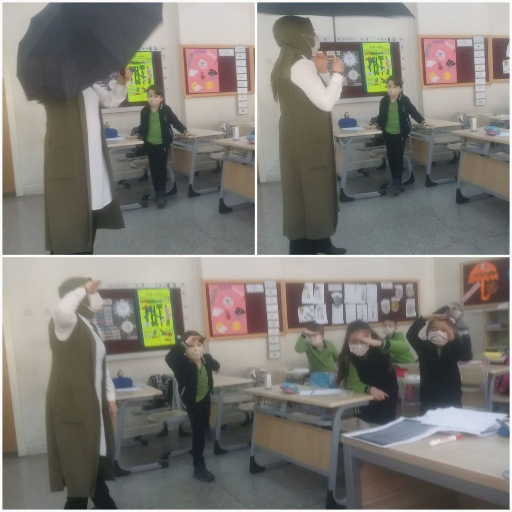
The teacher enters the classroom with an umbrella in his hand. Good morning students, how are you? I think I'm a little wet today. What should I do to dry my umbrella? Answers received.The teacher asks the students to stand up. Are you aware that there is a ship approaching us? The pirates are coming. The pirates catch the students and take them to the ship. a storm breaks out and the ship sinks. All the children fall into the sea and become a drop of water. Yes, the kids are now.rs the classroom with an umbrella in her handr enters the classroom with an umbrella in her hand
Students age
Primary school students 8 age
Aims of the lesson
Recognizes natural events.Time
Preparation time: 15 min.
The teacher finds an umbrella. It wets a little. He reads the script. Designs interim evaluation
Teaching time: 25 min.
Preparation-Warm-Up Studies
The teacher enters the classroom with an umbrella and draws the attention of the students. He talks about the rain. it makes all students stand up. says a ship is approaching. He says the pirates are coming.
Role play
The students fall into the water and pretend to be the water drop. the air warms up. They rise to the sky. some rain, some snow, some hail. students behave appropriately for the role.
Evaluation - Discussion Stage
The discussion is started by asking questions to the students.
How does it feel to be a water drop?
What if it doesn't rain?
How does snow or hail occur?
So, how should drivers and pedestrians behave in traffic in foggy weather?
Teaching resources (material & online tools)
zoom, eba,
21st century skills
Creativity and innovation
Collaborative work and leadership
Lifelong learning and personal management
CREATIVE DRAMA LESSON PLAN 9
Title
Sort and Compare
Authors Duygu HAMLI,
Summary
Compares different amounts of money with a value not exceeding 100 lira
NOTE: A single unit (kurus or TL) is used for comparison.
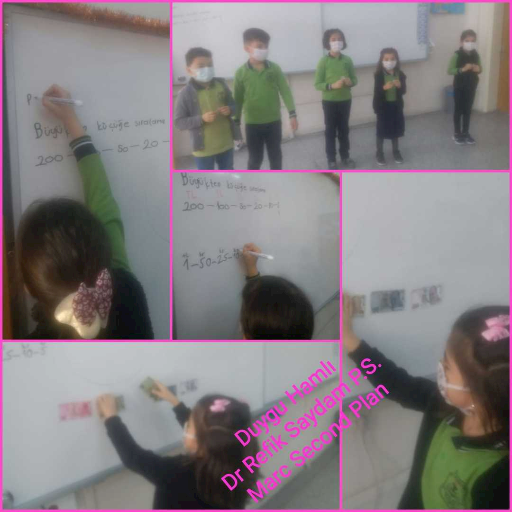
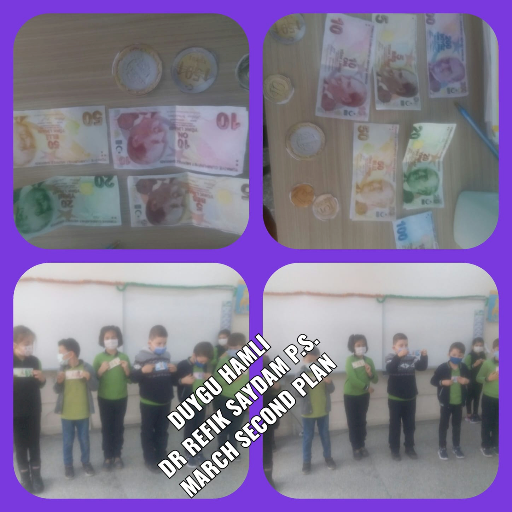
The teacher enters the class saying that I am rich. Whoever has wealth now has a lot of money. Each student becomes a volunteer money. They hold samples of coins in their hands. which one is bigger is discussed. students are ranked.
the classroom with an umbrella in her handr enters the classroom with an umbrella in her hand
Students age
Primary school students 8 age
Aims of the lesson me
Compares different amounts of money with a value not exceeding 100 lira
Preparation time: 15 min.
preparation of coins
Teaching time: 25 min.
Students choose the money they want to be at the table and take it in their hands. The teacher asks: Who is older than Elif?
Who is smaller than Elif?
In the classroom, in front of the board, the buns are arranged according to the size of the money in the students' hands. The drama continues until all the students are finished. The comparison of the coins is written on the board.
Preparation-Warm-Up Studies
Role play
Students are asked to enter the role of money.
Evaluation - Discussion Stage
The discussion is started by asking questions to the students.
zoom, eba,
21st century skills
Creativity and innovation
Collaborative work and leadership
Lifelong learning and personal management
CREATIVE DRAMA LESSON PLAN 10
Title
The Park
Authors
Duygu HAMLI
Summary
A story is read to the students. The teacher is calm and gives tasks to the students where the story should be dwelled on. At the end of the activity, students are asked to act out the conversation between the heroes in the story.
Students age
Primary school students 8 ag
Aims of the lesson
Determines the subject of the text she/he listens.
Preparation time: 10 min.
Teaching time: 30 min.
A1
"There are two patients with a terminal illness in a room of a hospital. Both of the patients are bedridden and unable to get up.
One of the patients is lying by the window and can see the park outside.
The other patient lies by the wall and does not see the park. That's why the patient at the window tells the park to the other patient. nt pushes the button on the edge of the wall, and the doctors come immediately.
A3
One day on the windowsill she recovers and is discharged.
A4
The next day, the patient by the wall asks the doctors and goes to the windowsill.
He turns his head excitedly to see the park. What is this? There is no parking! There is only a gray colored hospital wall ... "
1) Ask the students to only tell the A1 and A2 parts of the story and conclude the story.
2) Why did the patient at the window create an imaginary park and tell the other patient? I wonder what was its purpose? Ask students to discuss these questions and write them in a common paragraph
Role play
Students are asked to act out the conversation between heroes in the story.
Evaluation - Discussion Stage
The discussion is started by asking questions to the students.
zoom, eba,
21st century skills
Creativity and innovation
Collaborative work and leadership
Lifelong learning and personal management
- Full access to our public library
- Save favorite books
- Interact with authors
- < BEGINNING
- END >
-
DOWNLOAD
-
LIKE
-
COMMENT()
-
SHARE
-
SAVE
-
BUY THIS BOOK
(from $16.79+) -
BUY THIS BOOK
(from $16.79+) - DOWNLOAD
- LIKE
- COMMENT ()
- SHARE
- SAVE
- Report
-
BUY
-
LIKE
-
COMMENT()
-
SHARE
- Excessive Violence
- Harassment
- Offensive Pictures
- Spelling & Grammar Errors
- Unfinished
- Other Problem





COMMENTS
Click 'X' to report any negative comments. Thanks!