Susumu Tonegawa was born on September 5th, 1939, in Nagoya, Japan and is still living.
Tsutomu Tonegawa was the father of Susumu Tonegawa. Since he was an engineer with a textile company, as a child Susumu was moved to a small factory town frequently, almost every few years. But, eventually he and his brother moved to Japan's capital city, Tokyo, to stay with his uncle where he attended renowned Hibiya high school.
renowned Hibiya high school.
Throughout high school, Susumu was fascinated by chemistry but eventually grew an interest in molecular biology after a couple years.
Toward the end of high school, Susumu applied for the University of Kyoto. After passing his entrance exam on his second attempt, he enrolled in the spring of 1959 at the age of 19. After graduation with a bachelor's degree in chemistry in 1963, he pursued his interest in molecular biology as a graduate student. He was then accepted by the University of Kyoto’s institute for Virus research.
University of Kyoto
After a couple months, his doctoral advisor told him, if he really wanted to learn molecular biology, then he should go to the United States. He then became a graduate student of the University of California, San Diego in the fall of 1963 and graduated with a p.h.D. in 1968 at the age of 28.
University of California, San Diego
In January 1971, his American Visa ran out. Susumu then moved to Switzerland to work at the Basel Institute for Immunology. He stayed there for another 10 years. He still struggled during his first year since he had very minimal knowledge about immunology but within a few years he won the Nobel Prize.
Basel Institute of Immunology
Molecular Biology: A field of biology that explores and studies the compositions, structures, and interactions of cellular molecules.
Neuroscience: The scientific study of the nervous system which works side-by-side with other fields such as mathematics, linguistics, engineering, computer science, chemistry, philosophy, psychology, and medicine.
What was Susumu Tonegawa's field of study?
Neuroscience:
Molecular Biology:


The Somatic Mutation Theory: Genes rearrange themselves to create various antibodies so that only a few genes are needed to generate many varieties of antibodies.
Famous Discoveries
Tonegawa wrote an influential paper in 1976 at Basel, Switzerland which scientifically proved The Somatic Mutation Theory. He found out that mutating DNA segments were separated by introns, which contained a gene called enhancer. Introns are inactive, or noncoding strands of DNA. Furthermore, antibody diversity was generated by somatic recombination of the inherited gene segments and by somatic mutations.
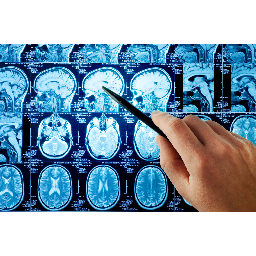
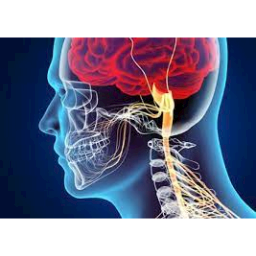
Susumu Tonegawa’s discovery of the genetic principle for generation of antibody diversity made important contributions across neuroscience. By applying multiple advanced techniques of gene manipulation, he unraveled the molecular, cellular and neural circuit mechanisms that underlie learning and memory. His studies then broadened toward neurological diseases. His discovery led to the groundwork for future research in the causes of cancer, to specify, mostly in blood cancers like leukemia and lymphoma.
- Full access to our public library
- Save favorite books
- Interact with authors

- < BEGINNING
- END >
-
DOWNLOAD
-
LIKE
-
COMMENT()
-
SHARE
-
SAVE
-
BUY THIS BOOK
(from $3.79+) -
BUY THIS BOOK
(from $3.79+) - DOWNLOAD
- LIKE
- COMMENT ()
- SHARE
- SAVE
- Report
-
BUY
-
LIKE
-
COMMENT()
-
SHARE
- Excessive Violence
- Harassment
- Offensive Pictures
- Spelling & Grammar Errors
- Unfinished
- Other Problem

COMMENTS
Click 'X' to report any negative comments. Thanks!