This is a ture sorty

Hi, Today I Carleigh will tell you all about the history!
Marco Polo was born in 1254 Venice. He died in 1324 in his home in Venice. He went to China. He went on a trail or a path called Silk Road The Silk Road was not a road. When He got to China he got tea silk and spices there was a Mongol empire and their lead was Kubina Khan. While Marco Polo was in China he got in jail his roommate was called Persia. He wrote e a book called "The adventures and travels of Marco" He served as a spy for Kubina Khan. They travel and explore a lot.
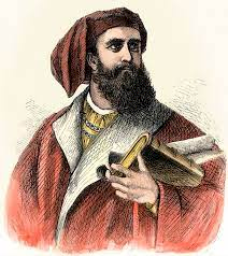
You might ask why did people travel and explore, well I'll tell you they travel and explore to trade and gain knowledge. Marco Polo was a merchant. Again where did he go you might ask well He went to china to get tea, silk, and spices.
Hey guys this chapter will be about the renaissance.
The Renaissance was a fervent period of European cultural, artistic, political, and economic “rebirth” following the Middle Ages. Generally described as taking place from the 14th century to the 17th century, the Renaissance promoted the rediscovery of classical philosophy, literature, and art.


This chapter is about Vespucci
Amerigo Vespucci was an Italian merchant, explorer, and navigator from the Republic of Florence, from whose name the term "America" is derived. He became a Castilian citizen in 1505. Amerigo Vespucci was an Italian-born merchant and explorer who took part in early voyages to the New World on behalf of Spain around the late 15th century.
Vespucci during his second voyage spent a great deal of time among the natives, eating and sleeping among them in order to understand their lives and customs. He would later describe them as naked, well-proportioned, and cannibalistic.
One tribes he encountered were nude men and women who were cannibals. He did not see the “Indians” as savages but merely recorded their actions without passing judgment. Shortly after his return to Spain, Vespucci went to Portugal, where he met with King Manuel.
Amerigo Vespucci was initially motivated by his early career work as a mercantile for the house of Medici in Florence, Italy and later Spain.“I resolved to abandon trade and to fix my aim on something more praiseworthy and stable; whence it was that I prepared for going to see part of the world and its wonders.”I resolved to abandon trade and to fix my aim on something more praiseworthy and stable; whence it was that I prepared for going to see part of the world and its wonders.”
By 1502, the Florentine merchant and explorer Amerigo Vespucci had figured out that Columbus was wrong, and word of a New World had spread throughout Europe. America was later named for Vespucci. And, as researchers now recognize, neither man was actually the first to discover the Americas.
On February 22, 1512, Amerigo Vespucci died of malaria in Seville, Spain. He was just a month shy of 58 years old. Vespucci made his discovery while sailing near the tip of South America in 1501. Amerigo Vespucci was one of many European explorers during the Age of Exploration, or Age of Discovery, which took place from the mid-1400s to the mid-1500s.
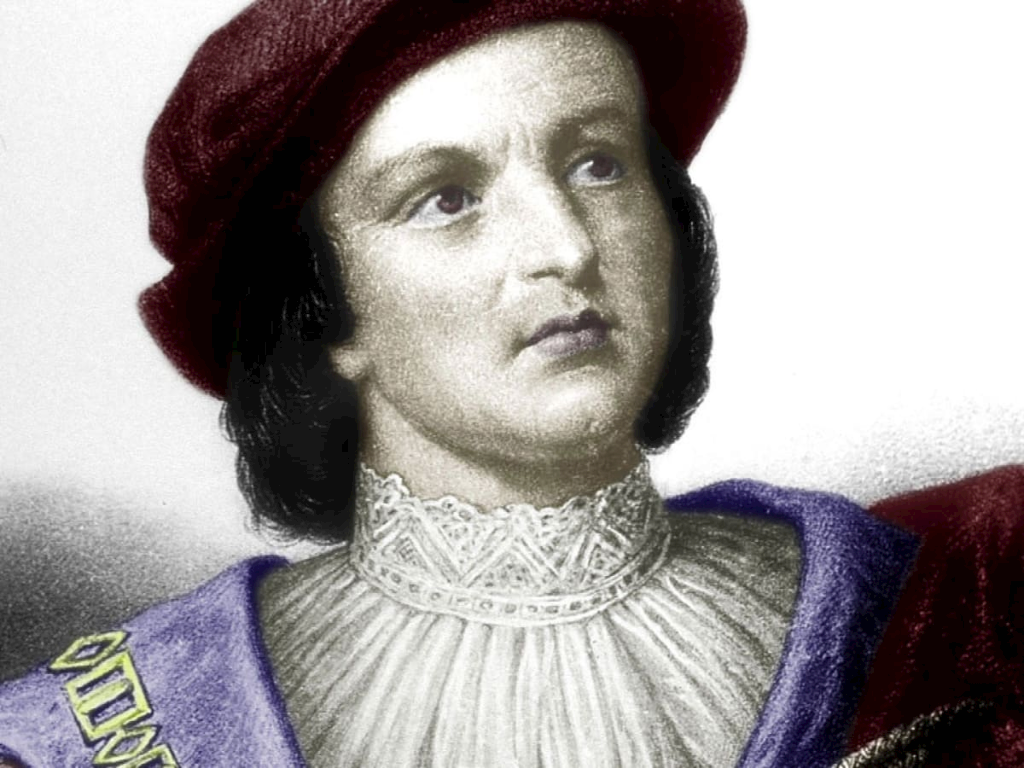
This chapter is about Hernando Cortes.
Spanish conquistador Hernán Cortés (c. 1485-1547) is best known for conquering the Aztecs and claiming Mexico on behalf of Spain. Cortés (full name Don Hernán Cortés de Monroy y Pizarro Altamirano, Marquis of the Valley of Oaxaca) first served as a soldier in an expedition of Cuba led by Diego Velázquez in 1511.
There, eager to march inland to the Aztec capital of Tenochtitlan, Cortés destroyed 10 of his 11 ships, cutting off his men's only hope of retreat and leaving them with no option but to head inland. The expedition ultimately destroyed the Aztec Empire and began the long and often brutal process of colonizing Mexico.
Cortes was a ruthless leader whose ambition was matched only by his conviction that he could bring the Indigenous peoples of Mexico to the Kingdom of Spain and Christianity, and make himself fabulously wealthy in the process. As a controversial historical figure, there are many myths about Hernan Cortes.
Those of his men still loyal to the Governor of Cuba conspired to seize a ship and escape to Cuba, but Cortés moved swiftly to quash their plans. To make sure such a mutiny did not happen again, he decided to sink his ships, on the pretext that they were not seaworthy.
It is easiest to look at Cortes and see the negative effects of his actions. By his actions, he conquered the native peoples of Mexico and subjected them to Spanish rule. This meant that the natives lost much of their native culture. It meant that they came to be subordinate people in what used to be their home.
Interpretation 1: Cortes was a villain. He was a vicious gangster who crushed the noble Aztec civilization. Interpretation 2: Cortes was a hero. He was a brave explorer who brought civilization to the barbaric Aztecs.
Where did Hernan Cortes grow up? Hernan Cortes was born in Medellín, Spain in 1485. He came from a fairly famous family and his father was a captain in the Spanish army. His parents wanted him to become a lawyer and sent him to school to study law when he was fourteen.
"Cortés, the conqueror of Mexico, may have had more unfree Indians than anyone else in the world. In addition to owning three thousand or more indigenous slaves outright, his estate forced as many as twenty-four thousand laborers a year to work as tribute (they were sent by their home villages for a week at a time)."
Hernán Cortés was a Spanish conquistador or conqueror, best remembered for conquering the Aztec empire in 1521 and claiming Mexico for Spain. He also helped colonize Cuba and became a governor of New Spain. Cortes heard of Christopher Columbus' discoveries in the new world. He wanted to travel and see new lands. He also wanted to make his fortune and fame. Cortes sailed for the New World in 1504. After Cortés became aware of their arrival, he left Pedro de Alvarado in charge in Tenochtitlan with 80 soldiers and brought all his forces (about two hundred and forty men) by quick marches to Narváez's camp in Cempohuallan on May 27. In 1504 he sailed for Santo Domingo (Dominican Republic), moving to Cuba in 1511 where he assisted Diego Velázquez in his conquest of the island and made his reputation for courage and daring.
- Full access to our public library
- Save favorite books
- Interact with authors
I hope you like this book about the history!
- < BEGINNING
- END >
-
DOWNLOAD
-
LIKE(1)
-
COMMENT()
-
SHARE
-
SAVE
-
BUY THIS BOOK
(from $8.19+) -
BUY THIS BOOK
(from $8.19+) - DOWNLOAD
- LIKE (1)
- COMMENT ()
- SHARE
- SAVE
- Report
-
BUY
-
LIKE(1)
-
COMMENT()
-
SHARE
- Excessive Violence
- Harassment
- Offensive Pictures
- Spelling & Grammar Errors
- Unfinished
- Other Problem





COMMENTS
Click 'X' to report any negative comments. Thanks!