
Chapter 1
"Are you ready for the Fair?" Dad asked.
"Yes!" Maggie exclaimed. She was very excited. It's her first time to the fair!

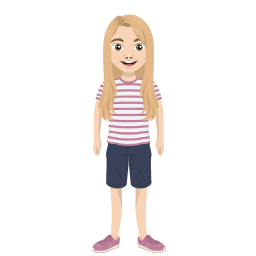
Maggie was looking out of the window when she remembered something from school. "What is a sensation? I remember reading it in my book but I just don't get what it means."
"Hmmm, that's a good question," Dad said, "A sensation is physical. It's the actual thing that comes in contact with your body from a stimulus, which is like what you see, smell, hear, touch, or taste. There are even special cells that respond to the stimuli, those are called sensory receptors" This made sense to Maggie, but she still wanted to know more.

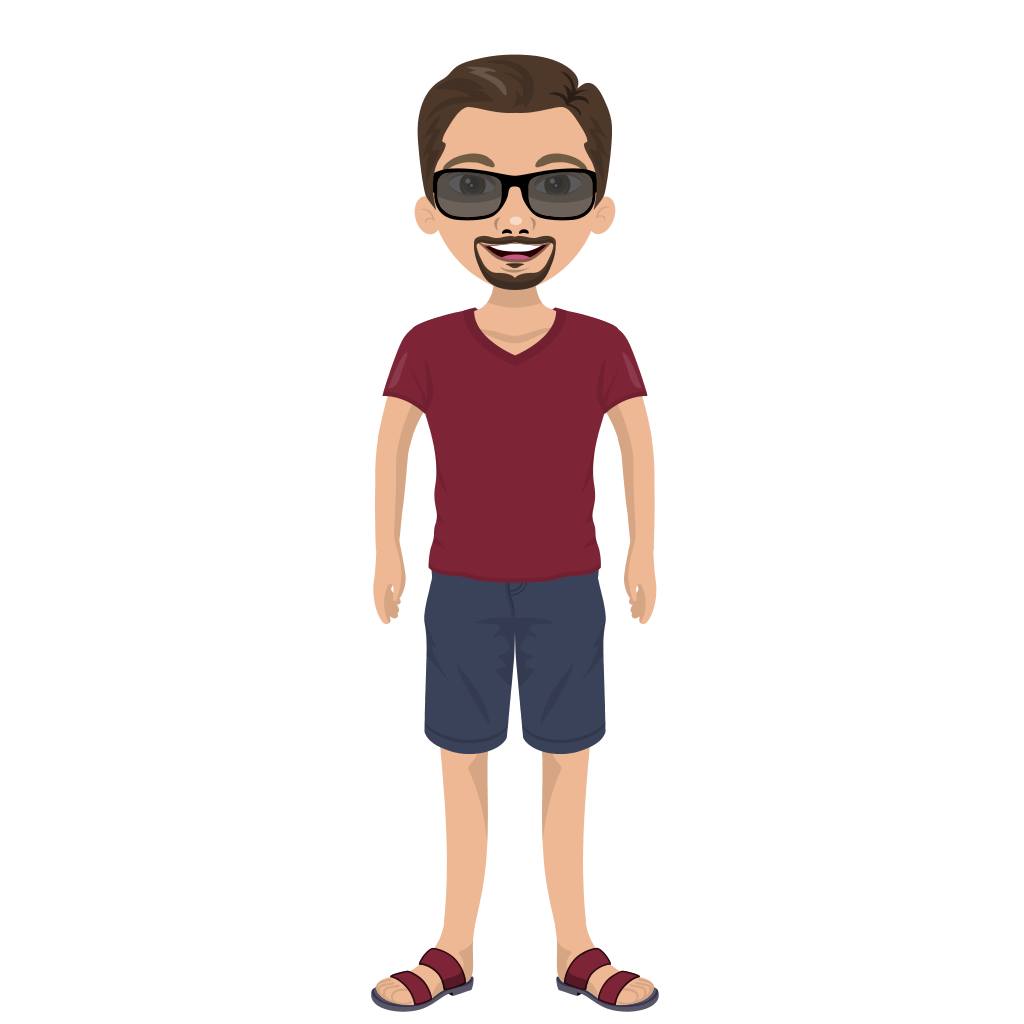
"However, a sensation is different than how you feel. A sensation is how your sensory receptors respond to a stimuli so your brain can understand, and the perception is how your brain processes and interprets the sensation," Dad continued. Perception? That's new. Maggie thought she might get them confused.
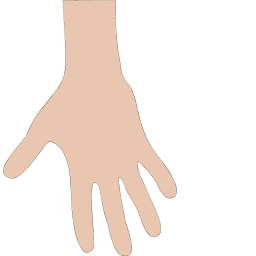
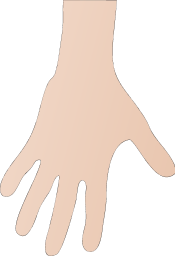
Maggie looked down at her hands and thought about their dog. "So, when I pet Candy, touching her is the sensation, but when I think she's soft, that's perception?"
"That's right kiddo! However, when you get a constant exposure of the stimulus, you get used to it, so your sensitivity, or your ability to notice it decreases. That's called sensory adaptation, and it happens so you don't get too overwhelmed."


"That's why whenever you claim your shoes don't stink after you play soccer, we say you're wrong! We smell your stinky shoes, and you just don't smell it because you're used to it!" Dad said. That made Maggie giggle.
However, habituation is whenever you get used to a stimulus, and you don't respond to it as much. It's like whenever your little brother Alex continues to try to scare you by yelling 'Boo!', but he's done it so much that you don't get scared when he does it anymore," Remembering when Alex tried to scare her, Maggie rolled her eyes, "He can be so annoying!" Dad chuckled.
Chapter 2
Finally! They arrived at the Fair! There were colorful tents and rides and games where Maggie could win big stuffed animals!


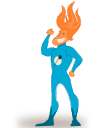


"Wow! There are so many colors! It's so pretty!" Maggie exclaimed, looking around her, having her eye on a stuffed bear.

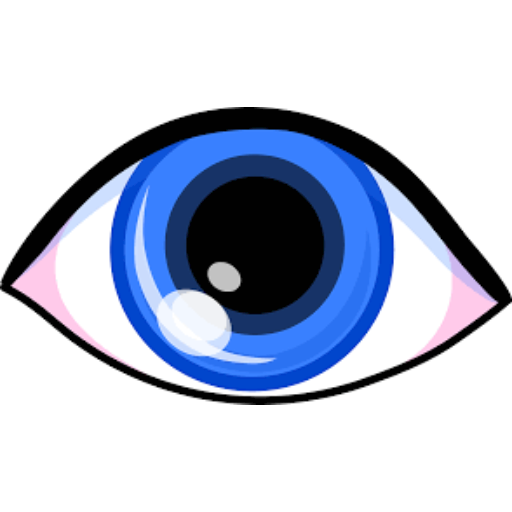
"Isn't it?" Dad smiled. "That's another cool thing about our brains and senses. It can determine a color based on the wavelength of an energy. There's a theory that we only have 3 different receptors to convey colors - red, green, and blue- using cones, which can see the hue of a light, and if the light triggers a combination of these cones, then we see other colors. There are other cells in our eyes which work better in darker light and work in a gray scale, and those are called rods. The cones respond to the wavelengths in bright light, seeing colors."
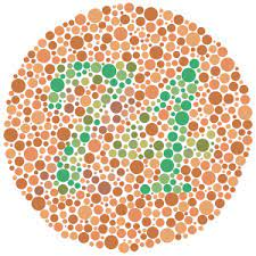
"Color blindness, like our dog, Candy, happens when the person lacks a functioning red- or green- sensitive cones. Sometimes, an after image happens. If you look at a green square on a piece of paper for a long time, it's opposite color, red, would show up on white piece of paper. Same with yellow and its opposite- blue. That happens because you tired the rods that see green/yellow, and when you look at white, it contains all colors, so you see more of a red/ yellow because they aren't tired. "
"Wait, so you're saying that there are actual rods and cones in our eyes?" Maggie asked, that didn't really make sense- how did they fit in there? Maggie didn't quite understand the structure of her eye.
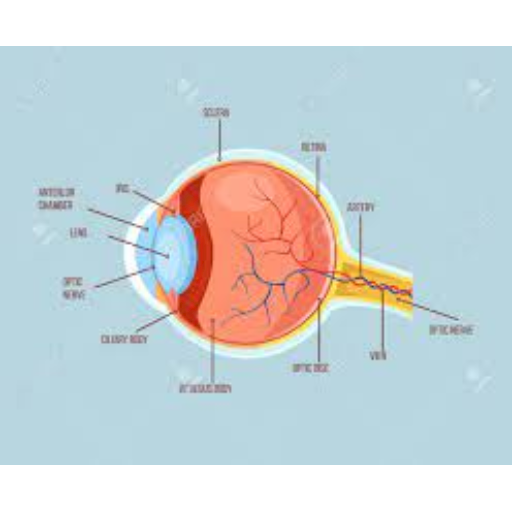
"There aren't actually cones and rods in your eyes, silly! That's just what the cells in your eyes are called," Dad said. "The eye is sort of complicated, so I'll break it down for you."
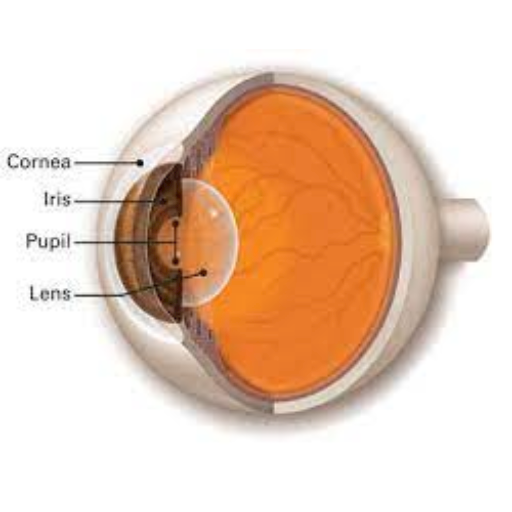
"There are many different structures of the eye that work together to create an image your brain can understand: there's the cornea, which is sort of a dome that covers the iris -the colored part that makes your eyes brown and adjusts to a light's intensity- and the pupil."
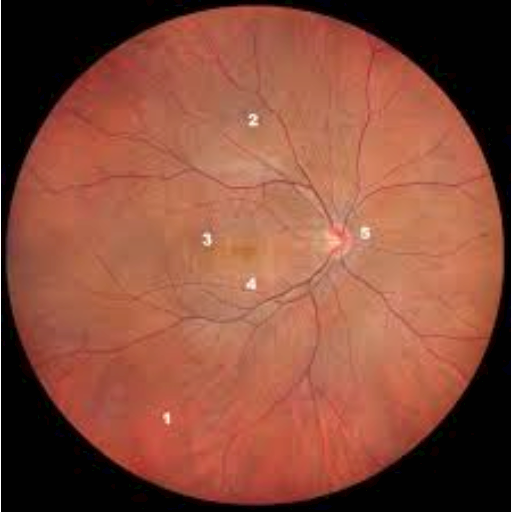
"The retina aligns the back of the eye and consists of the cells called rods and cones that are sensitive to light so that we can relay the message to the visual cortex and brain."

"Take the sun. First the light passes through the cornea, and the light bends onto the lens. When the light passes through the lens, it's bent a second time and focuses the light rays onto the retina. When it arrives at the retina, the image is formed. Technically, we see the image upside down from the two light bends in the cornea and lens, but its turned right side up in our brain," He explained."

"If the eye is an abnormal shape, then you will have trouble seeing. Your mom is nearsighted, which means her eye is too long, so the light does not focus correctly from the lens to the retina, causing things far away to be blurry. Interesting, huh?" Dad said.
"Wow! I didn't realize our eyes were so complex... and it's really cool how our brains can process light from wavelengths! It kinda makes me want to know more about the other stuff my brain can do," Maggie said as she played games with Dad.
Chapter 3
As they walked they heard the chatter, music from the rides, and the sounds of the animal barn nearby. "Dad, how do we hear? How does that work?" Maggie asked.
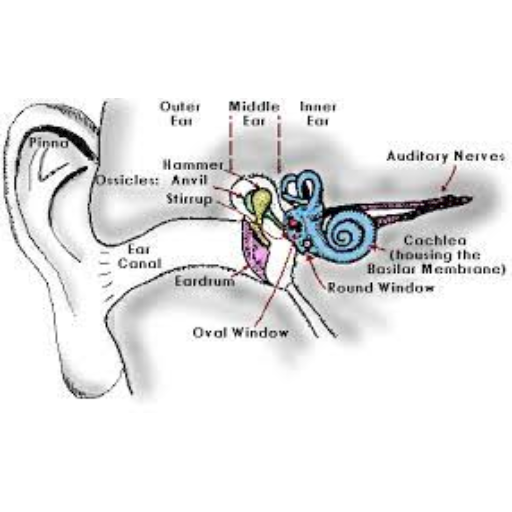
"Our ears have different parts that work together. It's very cool how they combine so we can hear unseen air waves and receive them from others. "
"Sound waves vary in shape- the height determines their loudness, and the length, also known as frequency, determines the pitch, how high or low it is. The higher the frequency, the shorter the waves, and the higher the pitch ,"
"These airwaves will strike your eardrum, causing it to vibrate. The outer ear, the part you got your piercings on, funnels these waves, and he bones of our middle ear amplify and relay the eardrums vibrations ,"
Look at this bear I want one!
Dad continues, "This changes the pressure in our ears, which causes part of our ear, the basilar membrane, to ripple and bend the tiny hair cells on the surface, which the movement forms the auditory nerve,"
Oh! I'm over here!
Hey!
Nice to see you again!
I'm hungry!
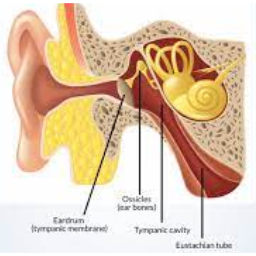
"The middle ear is made of 3 tiny bones, the hammer, anvil, and stirrup, all of which pick up vibrations and transmit them to the cochlea, which is a snail shaped tube in your inner ear. That's where the hairs move and signal that auditory nerve"
"Hearing loss is serious and can be really hard on people. Your Grandfather, he has one of two types of hearing loss- conductive hearing loss, which is damage to the mechanical system, the eardrum and middle ear bones, that conduct sound. It often happens along with our genes and aging, aka, your grandfather is getting old- as much as he wishes he isn't," He laughed.
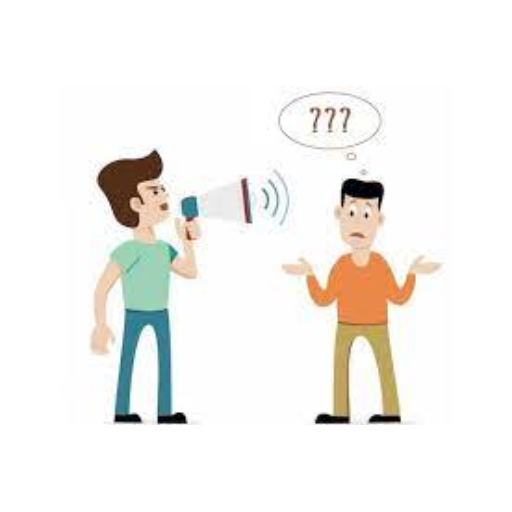
"The other one is called sensorial hearing loss, which is what happens when the cochlea's hair receptors or the auditory nerve is damaged,"
Maggie said once he finished,"Ok! Wow, that's kind of cool! It's kind of crazy that we can hear through little sound waves that hairs in our ears pick up!"
Chapter 4


Dad and Maggie decided they wold stop by a booth and buy a hot dog. It was so good! This made Maggie think about their conversations earlier about sensations, sight , and hearing.


"Dad," she began, "I've heard about taste buds before, but how do they work?"
"Taste involves several basic sensations," He explained. " They were once thought to be sweet, sour, salty, and bitter, but now we know there is a 5th one, named umami, which that savory, meaty taste,"



- Full access to our public library
- Save favorite books
- Interact with authors
- < BEGINNING
- END >
-
DOWNLOAD
-
LIKE
-
COMMENT()
-
SHARE
-
SAVE
-
BUY THIS BOOK
(from $11.19+) -
BUY THIS BOOK
(from $11.19+) - DOWNLOAD
- LIKE
- COMMENT ()
- SHARE
- SAVE
- Report
-
BUY
-
LIKE
-
COMMENT()
-
SHARE
- Excessive Violence
- Harassment
- Offensive Pictures
- Spelling & Grammar Errors
- Unfinished
- Other Problem






COMMENTS
Click 'X' to report any negative comments. Thanks!