Mrs. Karia...
give me a 100 pls

Periods on the periodic table are the rows of elements which go horizontally across the periodic table. As you go right on the periodic table the number of valence electrons increase. This also means that the protons and neutrons will also increase in relation to the electrons. Reactivity of the atoms increase as you go further right or left on the table However, the noble gases are an exception to this rule.
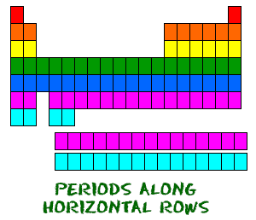
Periods
Families are the different classifications for elements in the period table. All elements that are in the same family have similar properties, such as reactivity or malleability. Their names usually describe what they are: such as alkaline metals, or noble gases. Unlike periods, elements in the same family have much more in common to one another, while elements in the same period are similar only due to having the same number of electron shells.
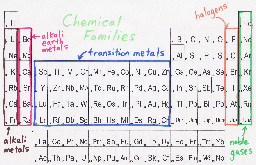
Families/Groups
Protons are extremely important and one of the fundamental parts of an atom. Protons weight 1u and have a positive atomic charge. Protons are on of the two types of sub-atomic particles in the nucleus. They are used to determine the element's identity, as the protons of an element never differ. This is not like a neutron which differs for each element. The protons of the atom name the atomic number, which also affects where the element is in the period table. The more protons = larger atomic number = further down the period table. The one below would be hydrogen as it only has only 1 proton. d
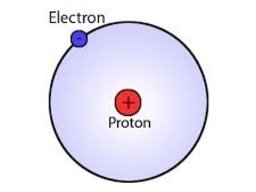
Protons
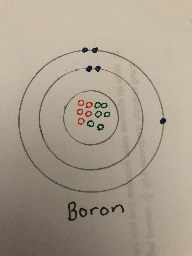
Metals, non-metals, and metalloids are the three main types of elements in the period table. On the furthest left and middle you can find the metals, with the exception of hydrogen. Near the middle right section we can find a mixture between metals and non metals: the metalloids. Properties vary for each type as metals are incredibly good conductors of heat and electricity. Non-metals are usually in their gaseous state and are not as structurally confident as a metal. Metalloids are used to describe the elements that have properties of both. They are usually malleable and a semi-conductor. An example of a metalloid would be boron, shown below.
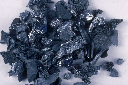
Metals/Nonmetals/Metalloids
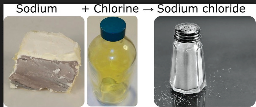
Valence electrons directly affect the chemical properties of an atom. Since protons and neutrons are the same in an atom, the valence electrons do not change. The valence electron is always trying to get rid of its atoms or gaining one more. Since the atom is yearning to lose, it becomes extremely reactive in the search for another atom. However, the only way they can achieve this is by combining with another atom that meets the criteria. This means that the elements with either 1 valence electron or 7 would be the most chemically reactive. Bhor models are a great way to represent the reactivity of an atom, as it clearly shows the valence electrons in the atom. For example, Sodium and Chlorine would combine to create salt which is a non-reactive substance.
Valence Electrons

The families/groups in the period table
Alkali Metals
Alkaline Earth Metals
Transition Metals
Boron Family
Carbon Family
Nitrogen Family
Oxygen Family
Halogens
Noble Gases
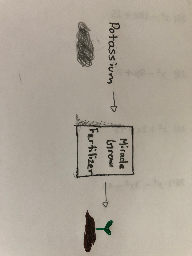
Alkali Metals are located in furthest left column of the periodic table. They are very soft, to the point where they can be cut with knife. They are also lustrous and have good thermal/electrical conductivity. Most reaction comes from oxidation where Alkali Metals can explode. You can generally find them already combined with other elements naturally. The reason for their reactivity is because they only need to get rid of one of their electrons to have a complete shell. Potassium, Lithium, and Sodium are 3 different alkali metals. Potassium is essential to be maintained in any living organism, so important in fact that cells are made of 95% potassium. When mixed to chlorine it is used in everyday plant fertilizers. It is also an ingredient in medication for high blood pressure patients.
ALKALI METALS
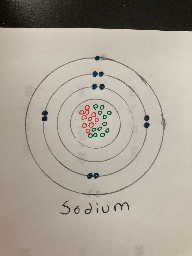
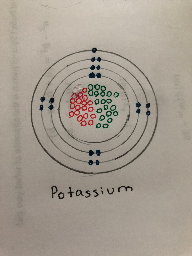
Green = Neutrons
Red = Protons
Blue = Electrons
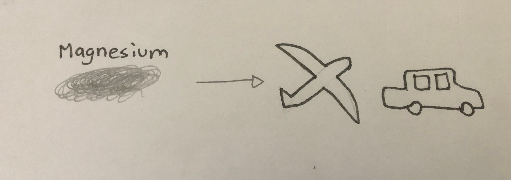
The column on the right of the Alkali Metals are the Alkaline Earth Metals. They are somewhat reactive and are lustrous just like the Alkali Metals. Elements in both of these families cannot be found in natural which they in their uncombined form. Alkaline Earth Metals have low densities, melting points, and boiling points. Unlike Alkali metals, they have 2 valence electrons which they are trying to lose. This justifies their lower reactivity. Magnesium, Calcium, and Beryllium are a few of the Alkaline Earth Metals. Magnesium is an incredibly light alloy, so it is used in car and airplane constructions. It is also used in other types of products which proposes light metals. Calcium on the other hand is a key component in biological life, especially for the development of bones. Calcium can be found in milk, nuts, or taken as supplements.
Alkaline Earth Metals
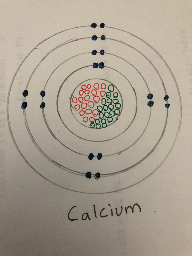
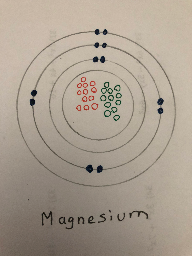
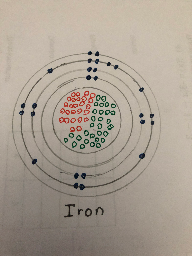
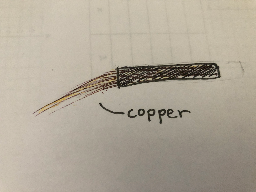
Transition Metals make up the largest middle portion of the period table. They are usually malleable, ductile, good conductors of heat, have high densities, high boiling points, and high melting points. They are also not very reactive in comparison to halogens or alkali metals. Most transition metals have 2-4 valence electrons. Transition metals are what you would normally think of when you hear the word metal. This would include Iron, Tin, Gold, Copper etc. They make up most of the structural things in our lives. Copper is especially good at conducting electricity due to the ability to provide a smoother path for electrons, so it is commonly found in electrical wiring. Iron, as you would know, is used for construction and manufacturing for its strong structure and almost no reactivity.
Transition Metals
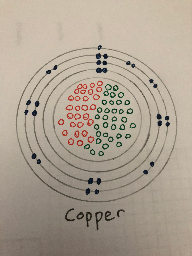
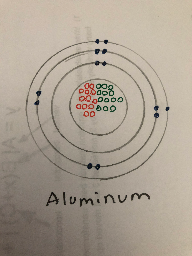
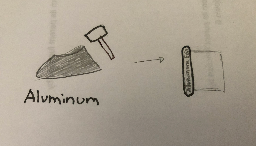
The Boron Family is the column which starts with boron on the top and goes all the way down Thallium. Some elements include Boron, Aluminum, Gallium, and Indium, Boron is a metalloid while the other elements in the family are metals; however, they are poor conductors. The elements excluding Boron are brilliant white metals. Unlike the metals on the other side of the table, elements in the Boron can be found in their uncombined state in nature. Soap and laundry detergent is known to have borax in it, which is composed of boron and other elements. Boron is also found in many other cosmetic and health products. You can find pressed sheet of aluminum used a foil as an insulator while packing food or baking.
Boron Family
- Full access to our public library
- Save favorite books
- Interact with authors
- < BEGINNING
- END >
-
DOWNLOAD
-
LIKE
-
COMMENT()
-
SHARE
-
SAVE
-
BUY THIS BOOK
(from $4.99+) -
BUY THIS BOOK
(from $4.99+) - DOWNLOAD
- LIKE
- COMMENT ()
- SHARE
- SAVE
- Report
-
BUY
-
LIKE
-
COMMENT()
-
SHARE
- Excessive Violence
- Harassment
- Offensive Pictures
- Spelling & Grammar Errors
- Unfinished
- Other Problem






COMMENTS
Click 'X' to report any negative comments. Thanks!