


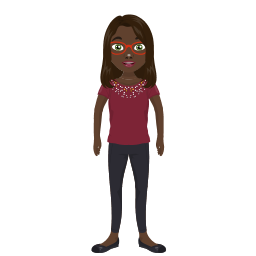

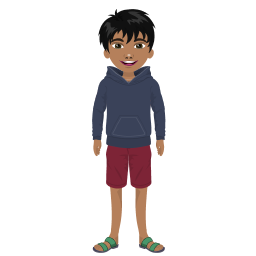

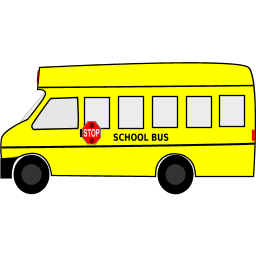
On a humid afternoon, Mr. Wilson's 5th-grade class was excited to go on a field trip to the museum. The concept they will be exploring is the phases of the moon. Mr. Wilson told everyone to be on their best behavior and to remain close to the tour guide. The bus was waiting outside near the school's main street. Mr. Wilson and his students walked through the open hallways and through the streets until they arrived at the bus stop.


When Mr. Wilson and his students arrived at the museum, it was surrounded by evergreen trees and had a large stairway leading to the entrance. They entered the museum since it was so large. Inside, they saw architectural designs, artwork, and scientific objects, among other things. The tour guide, Ms. Sarah, said to all of the students to be on their best behavior while they are exploring the museum. "Okay, folks, gather around me as we will be heading to the scientific objects area." Sarah exclaimed.


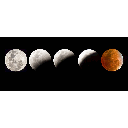





As Mrs. Sarah led Mr. Wilson's students through the scientific exhibits, they noticed a diorama of a lunar eclipse occurring at night on a full moon. The picture portrayed a situation in which people are fascinated by the moon's look and how it changes in the sky. "This explains the moon's changing color during the night. This is known to as a lunar eclipse." Sarah stated this. This interesting fact amazed the kids.
Mrs. Sarah let the students roam around the room while she and Mr. Wilson talked. The students wanted to know more about the lunar eclipse because they were learning about it in class. Mrs. Sarah accepted it and told them how a lunar eclipse worked. The students were interested in knowing more about the lunar eclipse. Many works of outer space artwork were seen by the children and the general public. "Wow, whoever painted this moon is very talented." One of the kids stated. They also examined how scientific objects affect mass and friction when stacked on top of one another.




After the astonishing experience of the museum, Mr. Wilson and his students thanked Sarah for their opportunity. However, when they were about to leave to go to the school bus, something appeared in the sky. The lunar eclipse had begun and the moon turned red. The crowd was confused, attempting to figure out what the moon looked like. It turns out to be something they had learned during their museum trip.
- Full access to our public library
- Save favorite books
- Interact with authors
Lunar eclipses happen so often that we can barely notice what is going on. After the revolutionary experience of Mr. Wilson's classroom at the museum, the moon only takes place only when the moon is in a position directly opposite to the sun. When the moon completely distorts the sunlight, it is referred to as a total solar eclipse; when it conceals it partially, it is referred to as an incomplete or a pattern, solar eclipse. There is life in outer space and we can learn a lot from it, to develop curious learners.
- < BEGINNING
- END >
-
DOWNLOAD
-
LIKE(1)
-
COMMENT()
-
SHARE
-
SAVE
-
BUY THIS BOOK
(from $3.39+) -
BUY THIS BOOK
(from $3.39+) - DOWNLOAD
- LIKE (1)
- COMMENT ()
- SHARE
- SAVE
- Report
-
BUY
-
LIKE(1)
-
COMMENT()
-
SHARE
- Excessive Violence
- Harassment
- Offensive Pictures
- Spelling & Grammar Errors
- Unfinished
- Other Problem





COMMENTS
Click 'X' to report any negative comments. Thanks!