We write this book to show everyone who reads it has a clear view about the development of technology and the effect on human life. We hope you will enjoy this book.
Group 2:
- Nguyễn Gia Bình
- Trần Hòa Hiếu
- Nguyễn Xuân Đức
- Đặng Nam Bình
- Lê Quang Huy

The first industrial revolution began around 1750/1760 to about 1820/1840 in the United Kingdom. The salient feature of the industrial revolution is a mechanical engineering (powered by steam and water power) was born and improved, replacing manual labor thereby increasing output. The dominance of capitalism is more comprehensive, breakthrough in manufacturing create a large amount of wealth. The development of machinery and its wide application in manufacturing, has brought the fields of heavy industry to a new level, in addition to the confirmed position of the light industry fields. Rapid progress also
Chapter 1: The First Industrial Revolution
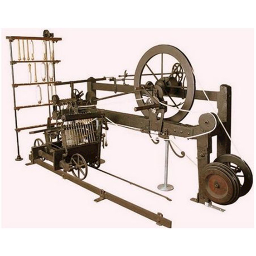
causes many problems. When workers leave their farms to work in factories with higher wages, it leads to shortages of manufactured food, increasing urban pollution as people flock to cities, living conditions worsen because urban resources are overwhelmed. In some cities, manufacturers dump waste from factories into rivers. Textile industry: Before 1784, textile factories had to be located near the river to take advantage of the flowing water. In 1784, the steam machine was invented by James Watt, thanks to this invention the loom could be placed anywhere. In 1785, Edmund Cartwright invented a loom that increased weaving productivity by 40 times.
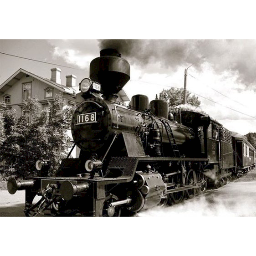
Metallurgical industry: In 1885, Henry Bessemer invented a blast furnace capable of smelting the liquid iron into steel, overcoming the disadvantages of the previous machine. Transportation industry: The first locomotive ran on steam in 1804. By 1829, the train speed had reached 23km/h. This success has exploded the railway system in Europe and America. In 1807, Robert Fulton invented a steamboat that replaced oars or sails. Workers have acquired new and distinctive skills, and their relationship with their duties has changed; Instead of becoming craftsmen working with hand tools, they became machine operators. Finally, there is a psychological shift: confidence in the ability to use resources and master nature is enhanced.
However, it has deepened poverty, workers are frequently displaced by technological improvement, exploited and abused in the workplace. The Second Industrial Revolution took place from 1870 to 1914, just before World War I. It was a period of growth in pre-existing industries and the expansion of new ones, such as steel, oil, and electricity. , and use electricity for mass production. Major technical advances during this period included the telephone, the light bulb, the phonograph, and the internal combustion engine.
Chapter 2: The Second Industrial Revolution
Immediately after the first industrial revolution, the second industrial revolution took place from the 1870s to the outbreak of the first world war. This time is associated with the development of industrial powers like Great Britain, Germany and the United States. This industrial revolution is characterized by the use of electrical energy and the introduction of large-scale mass production lines.
The decisive factor of the second revolution is the shift to production on the basis of electro-mechanical engineering and automation. The creation of new industries on the basis of pure science turns science into a special industry of labor.
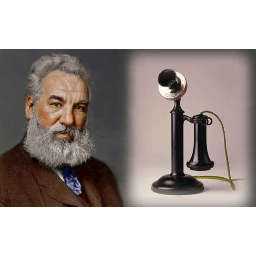
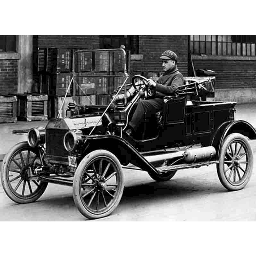
Many inventions have improved in the second industrial revolution including printing and steam engines. In1860 the first combustion engine was born, tested as an engine for early cars in the 1870s. Communication means such as telegraphs and telephone were introduced in 1880, communication by telephone was immediately applied all over the world. In 1903, two American brothers, Wilbur and Orville Wright, built the first airplane. Thanks to these inventions, people's lives have been improved.
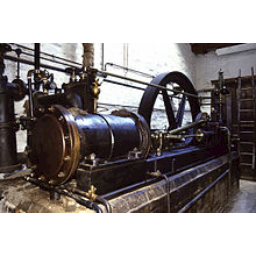
In rural areas, chemical fertilizers, biological research, and agriculture have all improved productivity. The output of metal, rubber, and other industrial products has increased rapidly, strengthening economic sectors. Manufacturing industries develop at a fast rate, thanks to a myriad of production lines, quality standards, and automation. During this time, the tendency of urbanization began to accelerate, resulting in societal effects. The globe now enjoys modern living standards and unrivaled quality, despite fast population growth, thanks to the second industrial revolution.
For society
The second industrial revolution has opened the era of mass production tools promoted by the birth of the electrical and industrial assembly line that was spreading many countries like Japan, Russia,... The revolution has created the premises to advise the socialism of the world scale. The Second industrial revolution has created new premises and a solid basis for developing the industry at a higher level.

Chapter3:The 3rd Industrial Revolution (Technology 3.0 or Era 3.0)
Part A: What is Technology 3.0? The cause of the event
The 3rd industrial revolutions are said to have started around 1969 when much of the electronic, digital, and computer infrastructures were strongly developed. Technology 3.0 is considered the digital era. Transforming from mechatronic devices to today's technological devices.
Due to the impact of World War II, many countries had to put all their efforts into research in the field of military science and technology in the hope of winning.
After the end of World War II, the superpower centered the arms race again.







Part B: The Achievements
For the society and the economy:
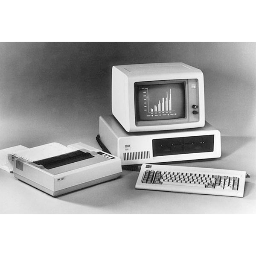
Advances in electronic infrastructure, computing, and digitization as was catalyzed by the development of semiconductors, supercomputers (the 1960s), personal computers (1970s and 1980s), and the Internet (1990s). At the end of the 20th century, this process was completed thanks to high-tech scientific achievements. Satellites, airplanes, computers, telephones, the Internet... are the technologies we enjoy today because of this revolution. The economic impact of the digital revolution has been extensive. For example, without the World Wide Web (WWW), globalization and outsourcing wouldn't be as possible as it is today.
The 2011 revolution was enabled by social networking technology and smartphones. However, these revolutions in perception have largely failed to achieve their goals because of the hardline Islamic governments and in Syria. Facilitating natural and social resources, allowing for relatively fewer production costs to produce the same volume of consumer goods. As a result, it has led to a change in the structure of social production as well as the correlations between areas I (agriculture - forestry - fishery), II (industry and construction), and III (services). of social production. To radically change the forces of production.

For human life:
These devices help people solve work quickly and efficiently without having to spend too much labor. Phones not only help us connect, keep in touch with each other, but also help us entertain, do business, pay, .. but the internet is indispensable. The Internet is an effective tool for people to generate income.

- Full access to our public library
- Save favorite books
- Interact with authors
- < BEGINNING
- END >
-
DOWNLOAD
-
LIKE(3)
-
COMMENT()
-
SHARE
-
SAVE
-
BUY THIS BOOK
(from $4.19+) -
BUY THIS BOOK
(from $4.19+) - DOWNLOAD
- LIKE (3)
- COMMENT ()
- SHARE
- SAVE
- Report
-
BUY
-
LIKE(3)
-
COMMENT()
-
SHARE
- Excessive Violence
- Harassment
- Offensive Pictures
- Spelling & Grammar Errors
- Unfinished
- Other Problem





COMMENTS
Click 'X' to report any negative comments. Thanks!