The United Kingdom is an independent state that consists of four countries: England, Scotland, Wales and Northern Ireland. The United Kingdom can be found in Western Europe and its capital is the city of London.

Traditions and Customs
1.British maypole dancing
A maypole is a tall wooden pole erected as a part of various European folk festivals, around which a maypole dance often takes place. The festivals may occur on Midsummer (June 20-26) or Pentecost (Whitsun), although in some countries it is instead erected at Midsummer. In some cases the maypole is a permanent feature that is only utilised during the festival, although in other cases it is erected specifically for the purpose before being taken down again.
2.Hogmanay (pronounced hog-ma-NAY) is the Scottish holiday that celebrates the new year. Observed on December 31, festivities typically spill over into the first couple of days of January. In fact, there’s a tradition known as “first-footing”, in which the first person to enter a home brings the residents good luck for the coming year — of course, the guest must be dark-haired and preferably male; redheads and women aren’t nearly as lucky! Author Clement A. Miles says in Christmas in Ritual and Tradition that this tradition stems from back when a red- or blonde-haired stranger was probably an invading Norseman. Gifts are exchanged, and one of the popular food items on the Hogmanay menu is the black bun, which is a really rich fruitcake.
Hogmanay: Scotland' winter celebration
3. Guy Fawkes Night
The Queen’s Speech, or in a lengthier title the Speech from the Throne, is a speech made by the reigning monarch at the state opening of the Parliament. Here, the queen addresses the legislature and speaks about the government agenda. The speech is usually penned by the monarch’s advisors, with the queen having the final decision on its contents. There have been instances that the queen will not be able to deliver her speech for some reason. In the United Kingdom, the reigning monarch can freely choose a delegate to represent her through the speech.
4.The Queen's speech
Educational system
Education in England is overseen by the United Kingdom's Department for Education. Local government authorities are responsible for implementing policy for public education and state-funded schools at a local level.
England also has a tradition of independent schools (some of which call themselves public schools) and home education: legally, parents may choose to educate their children by any permitted means. State-funded schools may be selective grammar schools or non-selective comprehensive schools (non-selective schools in counties that have grammar schools may be called by other names, such as high schools). Comprehensive schools are further subdivided by funding into free schools, other academies, any remaining Local Authority schools and others. More freedom is given to free schools, including most religious schools, and other academies in terms of curriculum. All are subject to assessment and inspection by Ofsted (the Office for Standards in Education, Children's Services and Skills).
The state-funded education system is divided into Key Stages based upon age: Early Years Foundation Stage (ages 3–4 by August 31st); primary education (ages 5 to 10 by August 31st), subdivided into Key Stage 1 (KS1) Infants (ages 5 to 6 by August 31st) and Key Stage 2 (KS2) Juniors (ages 7 to 10 by August 31st); secondary education (ages 11 to 15 by August 31st), subdivided into Key Stage 3 (KS3; ages 11 to 13 by August 31st) and Key Stage 4 (KS4; ages 14 to 15 by August 31st); Key Stage 5 is post-16 education (ages 16 to 17 by August 31st); and tertiary education (for ages 18+)
Monuments
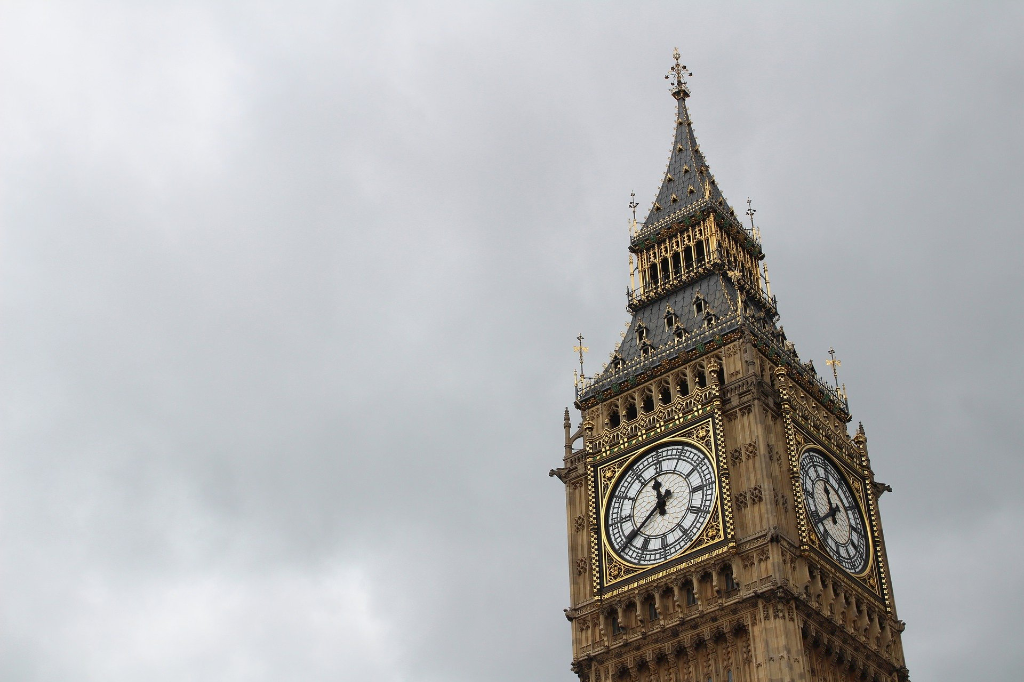
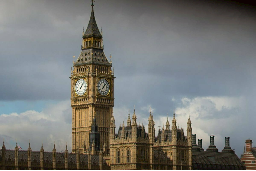
1. Big Ben is the nickname for the Great Bell of the striking clock at the north end of the Palace of Westminster, although the name is frequently extended to refer also to the clock and the clock tower. The official name of the tower in which Big Ben is located was originally the Clock Tower, but it was renamed Elizabeth Tower in 2012, to mark the Diamond Jubilee of Elizabeth II.
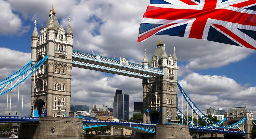
Tower Bridge is a Grade I listed combined bascule and suspension bridge in London, built between 1886 and 1894, designed by Horace Jones and engineered by John Wolfe Barry. The bridge crosses the River Thames close to the Tower of London and is one of five London bridges owned and maintained by the Bridge House Estates, a charitable trust founded in 1282. The bridge was constructed to give better access to the East End of London, which had expanded its commercial potential in the 19th century.
2.
1.
Personalities
- Full access to our public library
- Save favorite books
- Interact with authors
- < BEGINNING
- END >
-
DOWNLOAD
-
LIKE(1)
-
COMMENT()
-
SHARE
-
SAVE
-
BUY THIS BOOK
(from $2.99+) -
BUY THIS BOOK
(from $2.99+) - DOWNLOAD
- LIKE (1)
- COMMENT ()
- SHARE
- SAVE
- Report
-
BUY
-
LIKE(1)
-
COMMENT()
-
SHARE
- Excessive Violence
- Harassment
- Offensive Pictures
- Spelling & Grammar Errors
- Unfinished
- Other Problem






COMMENTS
Click 'X' to report any negative comments. Thanks!