 To Mrs. Vara and Mrs. Longo
This book was created and published on StoryJumper™
©2010 StoryJumper, Inc. All rights reserved.
Publish your own children's book:
www.storyjumper.com



 Hola, me llamo Miguel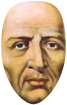



Father Miguel Hidalgo y Costilla was born on
May 8, 1753 in Guanajuato, Mexico. He
studied theology in what is now Morelia.
Throughout his schooling, he was under the
strong influence of the Jesuit Order.





 What does the fox say?
People called him "The Fox" because they
considered him sly and crafty.



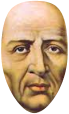



After graduating in 1782, Hidalgo became a
Roman Catholic priest and a professor at San
Nicolás Obispo, where he wrote two treatises
concerning theology.
After being assigned to fulfill his priestly duties
in San Felipe Torres Mochas, his parishioners
began to complain that Hidalgo's activities and
thoughts were too radical. He was accused of
womanizing, gambling, and public heresy, and
received complaints about continual
celebrations that were referred to as "Little
France". People claimed they had heard him
deny the existence of hell, lampoon Santa
Teresa, and argue that "fornication is not a
sin". He even went so far as to read banned
books. Despite the commotion, Hidalgo
remained untouched by the authorities.
Hidalgo disliked the mundane aspects of
priesthood, spent money lavishly, and was
often late to repay his loans. He did enjoy
preaching and the tasks of paternal
humanitarianism.
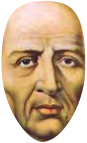








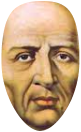






Since he was a part of a group of intellectual
priests, he had access to many different types
of European literature. He enjoyed the works
of early critics of monarchy and absolutism.
Hidalgo believed political sovereignty resided
in the people, not the king, and supported the
implication that Mexican-born Spaniards —
criollos or Creoles — were the sovereigns of
Mexico.




Hidalgo and those in agreement with his ideas
began to conspire against the Spanish crown.
Because the Creole population was denied
access to privileged government positions,
they hoped to free the colonies from Spain and
assume those positions. In 1804, the Spanish
government passed a law, the Consolidación
de Vales Reales, in an attempt to raise royal
revenues. This nearly ruined Hidalgo's family
fortune.
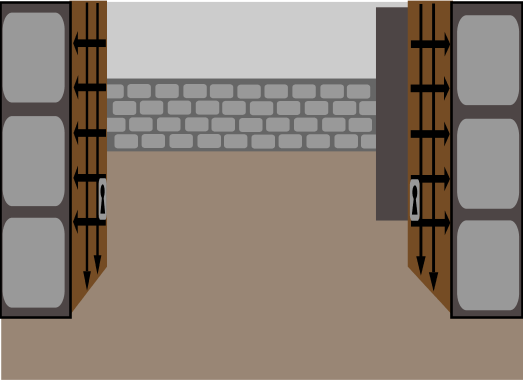






In September of 1810, a member of the
anticrown conspiracy betrayed the others by
informing royal officials of the plot to rebel. In
attempt to create an excuse, Hidalgo claimed
that the rebellion was for all Mexicans, not just
for Creoles.



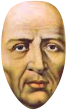

 The fox says, "Death
 to the Spaniards!
Long live the
Virgin of Guadalupe!"
On September 16, 1810, Hidalgo proclaimed
his authority in the name of the Mexican
Nation. He rang the church bell to call the
parishioners. He cried the famous "Grito de
Dolores" as he took an image of the virgin on
canvas and placed it on a stick to lead the
rebellion.
You've previewed 17 of 26 pages.
To read more:
Click Sign Up (Free)- Full access to our public library
- Save favorite books
- Interact with authors

- < BEGINNING
- END >
-
DOWNLOAD
-
LIKE(1)
-
COMMENT()
-
SHARE
-
SAVE
-
BUY THIS BOOK
(from $5.19+) -
BUY THIS BOOK
(from $5.19+) - DOWNLOAD
- LIKE (1)
- COMMENT ()
- SHARE
- SAVE
- Report
-
BUY
-
LIKE(1)
-
COMMENT()
-
SHARE
- Excessive Violence
- Harassment
- Offensive Pictures
- Spelling & Grammar Errors
- Unfinished
- Other Problem





COMMENTS
Click 'X' to report any negative comments. Thanks!