
I woke up this morning, but not to the smell of my mother's delicious pancakes. It felt odd. I heard her walking up the staircase.

"Mom, why don't I smell anything for breakfast", I stated. She smiled and said, "well, there isn't much food in the fridge. Why don't you head to the supermarket for me"?

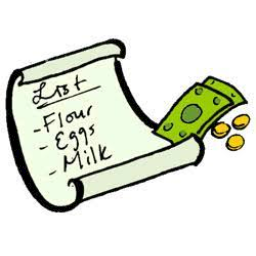
She handed me a list of all the food items I needed to purchase. Flour, eggs and milk were on top of the list. I decided to get ready and head on out.
It wasn't a far walk to the supermarket. I decided to take the shortcut, which was a pathway that was located a few blocks away from my home. It was quite exciting.

Once I arrived at the supermarket, I felt thrilled. I only have ever been to the supermarket with my mother, but never alone. She gave me a cellphone, in case of an emergency.
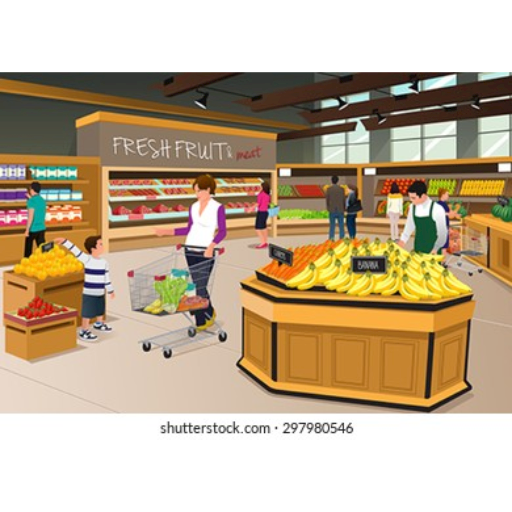
I decided to walk around each and every one of the aisles to see where the flour was located. I got lost, so I decided to ask one of the employees.
"Hey, sir. Do you have any idea where the flour might be?" I read his name tag. He went by the name of Eric. He looked quite friendly. He showed me to the aisle where the flour was.

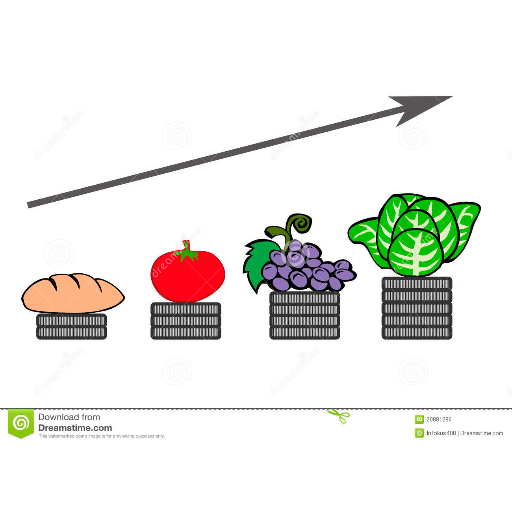
As I was looking around for the flour, I was quite shocked at the price range. The prices have never been this high when I would go shopping with my mother. We were already unstable financially, so I didn't know if we would be able to afford the food.
Erik told me how he was shocked about the prices as well. He saw the news in 2021, where cp24 announced that the food prices at grocery stores would rise. He shared with me how he had a great interest in economics, and he studied it in college.
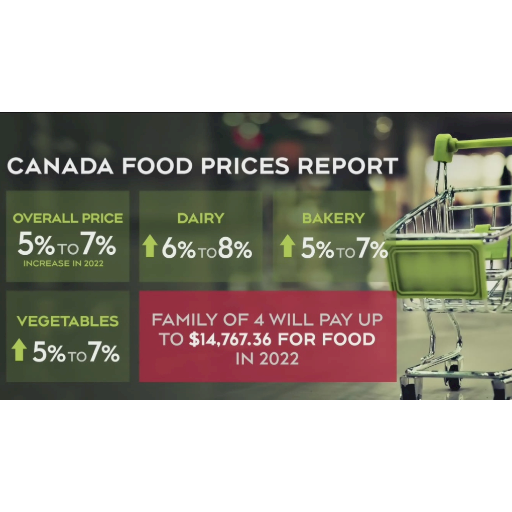
Eric stated how the food prices were going to increase by five to seven percent during this year. He explained to me about demand-supply, where demand refers to the amount of some good or service consumers are willing to purchase at each price. Demand can be based on wants and needs.
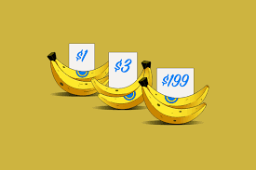
He related this situation to one of the S.P.I.C.E factors. The demand for a product can also be affected by changes in the prices of related goods such as substitutes or complements. A substitute good is a good or service that can be used in place of another good or service. As electronic books, like this one, become more available, you would expect to see a decrease in demand for traditional printed books. A lower price for a substitute decreases demand for the other product. In this case, I noticed that the oranges were much more expensive than the apples, and I knew mother would be fine with either or.
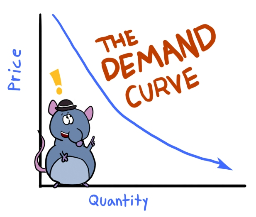
If there are changes in demand, for example, apples, there will be a shift in the demand curve. If people continue wanting apples over oranges, the demand for oranges will decrease over time, shifting the curve to the left.
I wanted to buy peanut butter for my sandwiches, but the prices for jam have skyrocketed. Eric said that they are both complementary goods, If the price of jam rises, since the quantity demanded of jam falls (because of the law of demand), demand for a complement good like peanut butter decreases, too.

Eric had stated something about an "opportunity cost". I knew that the word opportunity itself meant for something to be possible, but I didn't realize what it could mean in economical terms.

Eric stated how in economics, we need to expect what we will lose, as well as gain. This can correspond to the opportunity cost. He pulled up an illustration of a PPC curve, otherwise known as a production possibilities curve.
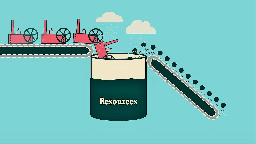
I was quite confused, so I asked him to give me an example. He told me that the current situation I am in right now can be related to the opportunity cost. The prices of food products have gone up, and I can either make a purchase now for me to eat breakfast this morning, but that money can no longer be spent on something in the future. It can be seen as benefits, or pleasures by choosing an alternative.
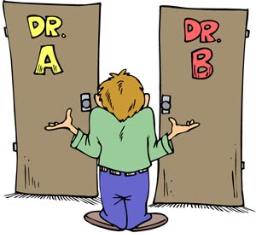
Mother sometimes decides for us to eat at that Italian restaurant near our home, rather than making a meal at home, even though it was quite expensive for our budget. Eric said that this is also an opportunity cost. I wonder if this will change, now that the food prices are gone up.

Eric talked about a branch of economics, which is called macroeconomics. This branch studies the behaviour of individuals, and firms that are a part of the economy. He said that the main economical goal that the federal government has tried to maintain is price stability. If the prices of goods and services are able to go up, then consumers' incomes will stay the same, if consumers have less income.

Canada's situation in 2022 is inflation. Canada uses a tool called the consumer price index (CPI). This index measures the changes in levels of prices that take part in goods and services. The CPI can be used to calculate the inflation rate in an annual percentage. Eric said that the CPI in march of 2021 was 130.4, but now in January of 2022, it is 143. The inflation rate would be (143-130.4)/ 130.4 x 100, making it 9.6%, which is quite a bit.
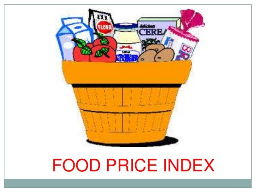
Eric also said that across the country, food supply chain disruptions caused by the pandemic have contributed to the increase in food prices. There are labour shortages between several links of the food supply chain, which include production, and delivery.

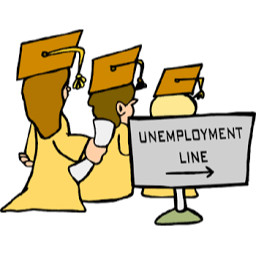
An example in this situation can be cyclical unemployment, where because there is a reduction in overall consumer spending because of inflation, demand for goods and services also has a decline in all industries, therefore fewer workers are needed. Other types of unemployment include structural, frictional, seasonal and classical unemployment. I asked Eric if this can be calculated through a percentage, and he said the unemployment rate is the percentage of the labour force not working at any given time.
"How can equity and income distribution be correlated to this inflation?". I asked Eric. Eric said that equity is related to concepts such as equality and fairness. Looking at average incomes in Canada, the average that is calculated by Canada's total income, and the total population is the mean average income. Income distribution can be examined into groups called quintiles which is one-fifth of the total number of earners. These patterns can be seen through the Lorenz Curve.
Eric said that in the 1996 census, the average income in Canada was said to be $25,196, but with economic growth and price inflation, the amount was changed to $48,930 by 2016. The rise in food prices can be related to income distribution. Mother doesn't make much of a high income, so this situation is quite problematic for my family.
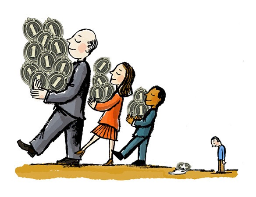
Income inequality in a free market can vary from people who have different physical and mental abilities, people with a different degree of education, how much more willing a person is to work longer and harder hours than others, family background, luck, and health can affect income as well. If you inherit money or marry someone wealthy, your income may rise. Mother became ill a couple of months ago, and she had to take some time off of work, meaning her income decreased due to health reasons. Rising food prices are likely to alleviate poverty and inequality.
We can't determine how many Canadians are poor until we decide on a poverty level. The media portrays some children who are poorly clothed and in conditions where desperate aid is needed. With Canada's social welfare safety net, this form of extreme poverty is quite rare.

- Full access to our public library
- Save favorite books
- Interact with authors
- < BEGINNING
- END >
-
DOWNLOAD
-
LIKE
-
COMMENT()
-
SHARE
-
SAVE
-
BUY THIS BOOK
(from $7.99+) -
BUY THIS BOOK
(from $7.99+) - DOWNLOAD
- LIKE
- COMMENT ()
- SHARE
- SAVE
- Report
-
BUY
-
LIKE
-
COMMENT()
-
SHARE
- Excessive Violence
- Harassment
- Offensive Pictures
- Spelling & Grammar Errors
- Unfinished
- Other Problem






COMMENTS
Click 'X' to report any negative comments. Thanks!