
Italian animals in danger
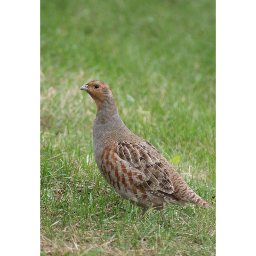
The Italian grey partridge is a flightless non-migratory medium-sized bird. In adults the dominant color of the plumage varies between gray-blue and reddish, as well as in the young specimens, but with less marked tones. The adults feed almost exclusively on seeds, buds, leaves, berries, while the whole chick’s diet is made up of protein – insects and larvae – in the first three weeks of their life.The birds prefer open fallow lands, this is also why the species is so vulnerable. The Italian grey partridge loves cereal fields, grasslands and pastures with hedgerows and bushy, grassy edges. It prefers open fallow lands also for breeding and nesting.
Justas (Lithuania)
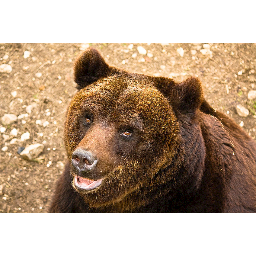
The Marsican brown bear also known as the Apennine brown bear, is a critically endangered subspecies of the brown bear, with a range restricted to the Abruzzo National Park, and the surrounding region in Italy. Debate exists as to whether should be considered a subspecies or a taxon of its own. The male Marsican bears can weigh up to 200 kg, with an upright height of 1.9 to 2 metres, while females are typically smaller. They are among the largest carnivores in Italy. The bears are usually very shy, and often only appear at night. The Apennine brown bears range is a small isolated population located within Italy's Abruzzo, Lazio and Molise National Park.
Julius (Lithuania)
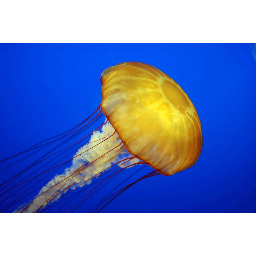
Jellyfish and sea jellies are the informal common names given to the medusa-phase of certain gelatinous members of the subphylum Medusozoa, a major part of the phylum Cnidaria. Jellyfish are mainly free-swimming marine animals with umbrella-shaped bells and trailing tentacles, although a few are anchored to the seabed by stalks rather than being mobile. The bell can pulsate to provide propulsion for highly efficient locomotion. The tentacles are armed with stinging cells and may be used to capture prey and defend against predators. Jellyfish have a complex life cycle; the medusa is normally the sexual phase, which produces planula larva that disperse widely and enter a sedentary polyp phase beforereaching sexual maturity.
Jellyfish
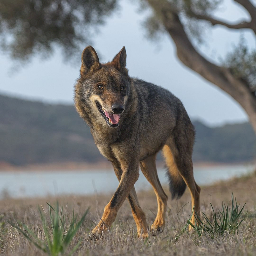
The Italian Wolf is a medium wolf. Male Italian Wolves have an average weight of 24 – 40 kilograms (53 – 88 pounds), with females usually being 10% lighter. The body length of the Italian Wolf is usually 100 – 140 centimetres (39 – 55 inches). Their fur colour is commonly blended grey or brown, though black specimens have recently been sighted in the Mugello region and the Tuscan-Emilian Apennines. The Italian Wolf is a nocturnal hunter which feeds primarily on medium sized animals such as Chamois, Roe Deer, Red Deer and Wild Boar. In the absence of such prey items, its diet will also include small animals such as hares and rabbits.
However, in areas where large herbivores such as deer have been reintroduced, such as the Abruzzo National Park, packs consisting of 6 – 7 individuals can be found.
Dainius (Lithuania)
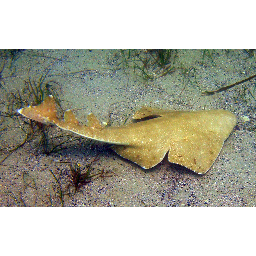
The angelsharks are a group of sharks in the genus Squatina of the family Squatinidae. They commonly inhabit sandy seabeds close to 150 m (490 ft) in depth. Many species are now classified as critically endangered by the International Union for Conservation of Nature. Once common over large areas of the Northeast Atlantic from Norway, Sweden, Morocco, and the Canary Islands, to the Mediterranean and Black Seas, there is now significant fishing pressure which has resulted in significant population decline.
Domantas (Lithuania)
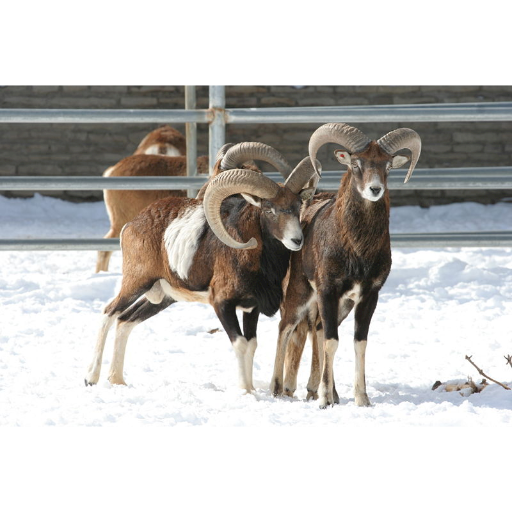
The European mouflon (Ovis aries musimon) is a feral subspecies of the primitive domestic sheep. It was originally found only on the Mediterranean islands of Corsica and Sardinia, but has since been introduced into many other regions of Europe. It is not to be confused with Ovis gmelini, also called the mouflon, which occurs in the Middle East and is also ancestral to modern domestic sheep.
Paulius (Lithuania)
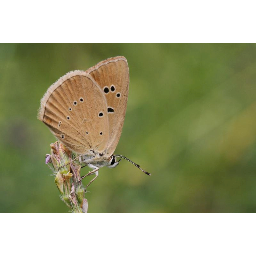
The Piedmont anomalous blue (Polyommatus humedasae) is a species of butterfly in the family Lycaenidae. It is endemic to Italy, where it is known from the Aosta Valley in the Italian Alps. It is mainly found on altitudes of 800 to 1,000 meters but at times up to 1,600 meters.
There is one generation per year with adults on wing from July to August, with a peak in the second half of July.
The larvae feed on the flowers of Onobrychis montana and Onobrychis viciifolia. They are attended to by ants.
Dovydas (Lithuania)
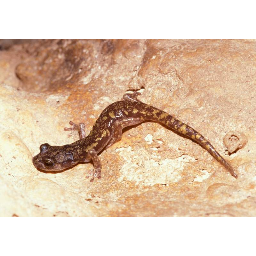
The Supramonte cave salamander (Speleomantes supramontis) is a species of salamander in the family Plethodontidae, endemic to the island of Sardinia (Italy). Its natural habitats are temperate forests, rocky areas, caves, and subterranean habitats (other than caves). It is threatened by habitat loss.
Karolis (Lithuania)
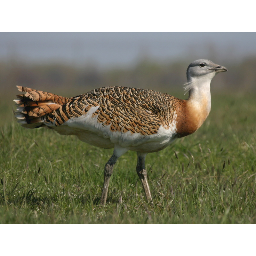
The great bustard (Otis tarda) is a bird in the bustard family, the only member of the genus Otis. It breeds in open grasslands and farmland from northern Morocco, South and Central Europe, to temperate Central and East Asia. European populations are mainly resident, but Asian populations migrate farther south in winter. It has been listed as Vulnerable on the IUCN Red List since 1996.
Augustas (Lithuania)
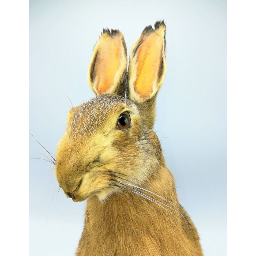
It is similar to the European hare in appearance, being largely brown with a cream-coloured belly. It differs in having grey rather than white bases to the hairs of the underfur. It is smaller on average than the European Hare with a head and body length of 44.1—61.2 cm, a tail length of 6.6—11.2 cm and a weight of 1.8—3.8 kg.[4] The ears and hind legs are relatively longer, 9—12.6 cm and 11.4—13.5 cm respectively.
Gabrielė (Lithuania)
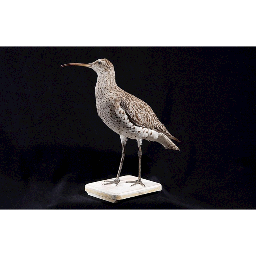
The slender-billed curlew is a bird in the wader family Scolopacidae. Isotope analysis suggests the majority of the former population bred in the Kazakh Steppe despite a record from the Siberian swamps, and was migratory, formerly wintering in shallow freshwater habitats around the Mediterranean. This species has occurred as a vagrant in western Europe, the Canary Islands, the Azores, Oman, Canada, and Japan. The slender-billed curlew is a small curlew, 36–41 cm in length with a 77–88 cm wingspan. It is therefore about the same size as a Eurasian whimbrel, but it is more like the Eurasian curlew in plumage. The breeding adult is mainly greyish brown above, with a whitish rump and lower back. The underparts are whitish, heavily streaked with dark brown. The flanks have round or heart-shaped spots.
(Emilis Lithuania)
Animals in danger in Turkey
by Italian team
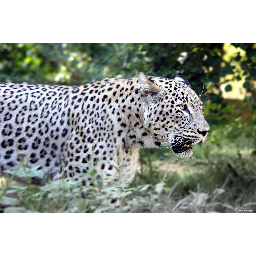
Persian Leopard
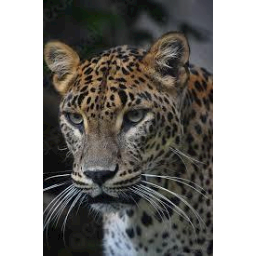
The Persian leopard, also known as the Northern Iranian leopard or the Caucasus leopard, is a leopard subspecies found mainly in the Near East. Today its range is almost limited to Iran but still present with a limited number in the Greater Caucasus, it is the only large cat left on European soil. Longevity is 12-15 years in the wild and can reach 23 years in captivity.
Mbaye Khady
(italy)
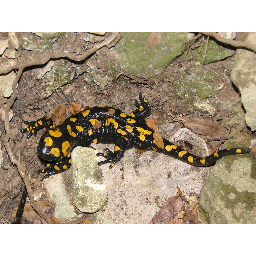
It is in southern Turkey. The infraimmaculata salamander has got dark green skin covered with yellow spots, which warns predators of the poisonousness of its flesh. It feeds on small insects, reptiles and plants. It can live both in water and on land. The reproductive period is between May and June.
This animal is called panthera pardus. It is found in the Caucasus region and has an approximate body weight of 60kg. Persian leopards avoid areas with long-lasting snow cover and areas close to urban development. Their habitat, therefore, consists of subalpine meadows, deciduous forests and rugged gorges.
-Ylber Hetemi (italy)
PANTHERA PARDUS
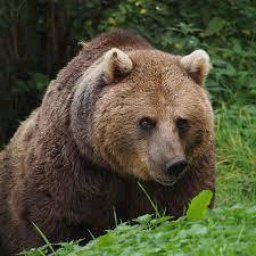
BROWN BEAR
Situated on Turkey’s north, the Black Sea region boasts luscious green forests, tall mountains and villages. They weigh 700 pounds. Thet are speedy. They’ve been recorded at speeds of up to 30 miles an hour. They
can grow between 5 and 8 pounds.( Victoria, team Italy)
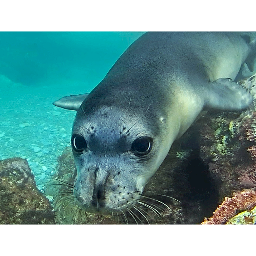
MEDITERRANEAN MONK SEAL
The habitat of this pinniped has changed over the years. Mediterranean monk seals had been known to give birth and seek refuge on beaches.
The rapid increase in human population, tourism and industry have destroyed seal's natural habitat.
They usually live in underwater caves that are dangerous for newborns and are the cause of major mortality among babies seals.
This animal is very shy and tries to avoid contact with humans.
Carolina Mazzotti(Italy)
- Full access to our public library
- Save favorite books
- Interact with authors
- < BEGINNING
- END >
-
DOWNLOAD
-
LIKE
-
COMMENT()
-
SHARE
-
SAVE
-
BUY THIS BOOK
(from $5.79+) -
BUY THIS BOOK
(from $5.79+) - DOWNLOAD
- LIKE
- COMMENT ()
- SHARE
- SAVE
- Report
-
BUY
-
LIKE
-
COMMENT()
-
SHARE
- Excessive Violence
- Harassment
- Offensive Pictures
- Spelling & Grammar Errors
- Unfinished
- Other Problem





COMMENTS
Click 'X' to report any negative comments. Thanks!