This book is dedicated to BE THE PROTECTORS OF THE BEES project members and all bee friends.
The Authors
Simona Cobe Mesure Keklik
Onur Akman Mariana Antonov
Melina Kefallinou Selin Çoşkunoğlu
Songül Yılmaz Merve Şahin
Natalia Olefirenko Esra Çiftçi
Abdurrahman Adabaş Yıldız Erdel
Mehtap Kasap

ABOUT A HONEY BEE AND THE BIOLOGY OF IT




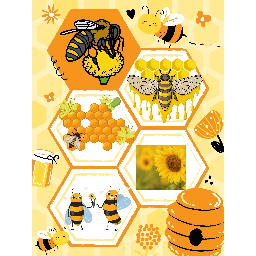
The honey bee is 1.2 cm long.The head and the thorax are hairy and often yellow in color.Two large compound eyes and three simple eyes are located on top of the head.
Honey bees are gregarious creators and worrk together to ensure the continuity of life in the hive.

by Yıldız ERDEL
Solmaz Güzel Primary School


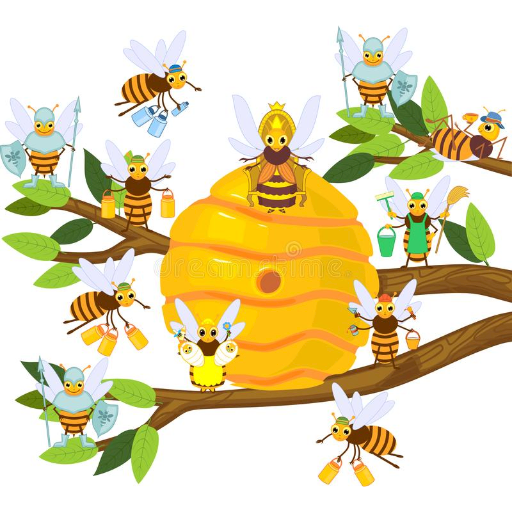
I am a drone, a male honey bee. I am larger than the workers, I have big eyes. I stay all day, I don't collect nectar nor pollen.
BEE FAMILY
I am the queen bee, just one in the hive and mother of most.


We, the worker bees are defending the hive, we procure the pollen, make the honey, nurture the larvae and pupae in each of these brood cells.
by Simona Cobe, Gymnasium School „Dacia”-Oradea, Romania


THE LIFE OF HONEY BEES
MESURE KEKLİK/ŞEHİT ALİ İHSAN ÖGER PRIMARY SCHOOL
Honey bees are collective living creatures and they live together for the continuity of life in the hive. (worker bee-queen bee-drones).Honey bees live an average of 1.5 months, drones live 6 months, queen bees live 2 years or 7 years.
Onur AKMAN Sivas Altınyayla Atatürk İlkokulu
COMMUNICATION BETWEEN THE BEES
Bees, which are so miraculous for life, have 20 thousand different types. They provide a job with similar rhythms for their own movement pleasure. Each bee has a unique sound and this sound is related to its different activity. The sound they make is for transmitting. Dangerous, they buzz louder to herald danger. The bee, which has a vital model in the bee colony, has a richer voice.
THE DUTIES OF BEES IN POLLINATION
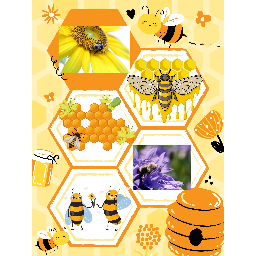
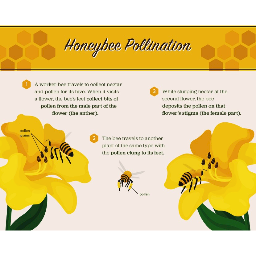

Mariana Antonov/The "Nifon Bălășescu" Gymnasium School from Tulcea

BEHAVIOURS OF HONEY BEES IN NATURE

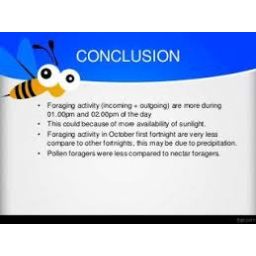
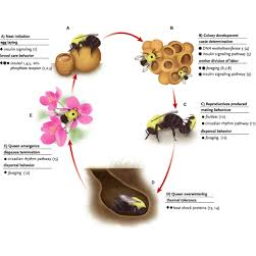
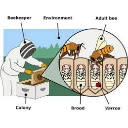
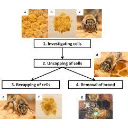
Mariana Antonov/The "Nifon Bălășescu" Gymnasium School from Tulcea

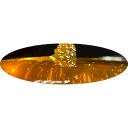


Step 1 : We, the worker bees, collect the nectar using our proboscis. Nectar, along with our saliva is stored in our honey stomach.

Step 3: We fan our wings to dehydrate the honey
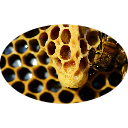
Step 4 : Finally, the honey is deposit into the cells of the honeycomb, capped with beeswax in order to stay fresh.
THE PROCESS OF BEES MAKING HONEY
by Melina Kefallinou, 6th Primary School of N. Philadelphia Greece
Step 2 : We pass the nectar to the worker bees that wait for us back in hive. As the nectar is chewed and passed from bee to bee our enzymes change it.
THE DISEASES OF THE BEES

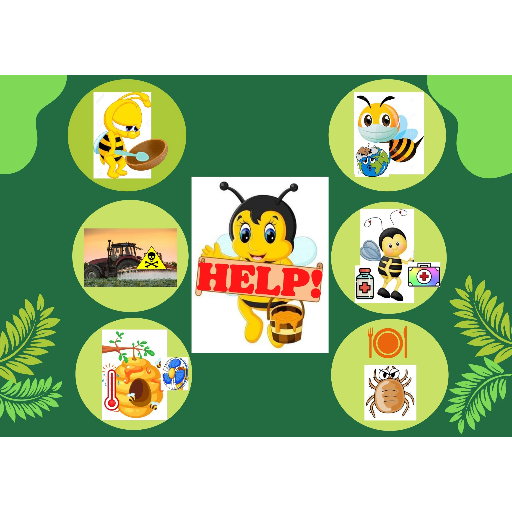
The Varroa mite is a major threat to the European honeybee. Brood diseases such as American foulbrood (AFB) and European foulbrood (EFB) affect honeybees in the larval and pupal stage. Nosema is a disease that is caused by a unicellular parasite.
Viral diseases such as Deformed Wing Virus (DWV) and Chronic Bee Paralysis Virus (CBPV) are often latent in bee colonies. Ranging from pollen mites to wax moths, they all benefit from honeybees in one way or another.
Selin COŞKUNOĞLU- Demirtaş Gevher Sönmez Primary School
ЧИННИКИ, ЩО ЗАГРОЖУЮТЬ ЖИТТЮ БДЖОЛ
Merve Şahin /Dr.Hakan Kundak İlkokulu
Amazing Bee Facts
Abdurrahman ADABAŞ
Kemal-Sabriye Ocakçı Primary School
BEES LIFESPAN
The life span of a honey bee colony depends upon the survival of a variety of bees within it. If only the queen lives, for instance, a colony cannot survive, as she cannot produce honey or pollinate flowers on her own.
Esra ÇİFTÇİ - Andaç Yarma Secondary School
COMMUNICATION BETWEEN BEES
As social insects living in a colony, honey bees must communicate with one another.Honey bees have two primary methods of talking to one another:
the first one is movement and
the second one is odor.
Mehtap Kasap/KOZLU CUMHURİYET PRIMARY SCHOOL
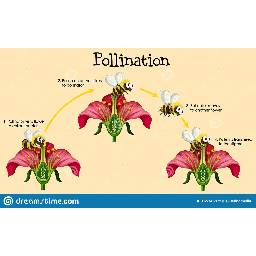
THE ROLE OF THE BEES IN POLLINATION
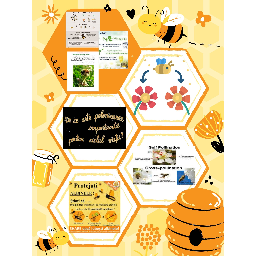
Bees are essential in growing flowers and plants. They use the process of pollination where they transfer tiny little grains of pollen from the flower of one plant to the flower of another of the same kind of plant. Transferring this pollen helps the flowers to continue to grow
SONGÜL YILMAZ/DALAMAN ATATÜRK ORTAOKULU.
- < BEGINNING
- END >
-
DOWNLOAD
-
LIKE(1)
-
COMMENT()
-
SHARE
-
BUY THIS BOOK
(from $2.99+) -
BUY THIS BOOK
(from $2.99+) - DOWNLOAD
- LIKE (1)
- COMMENT ()
- SHARE
- Report
-
BUY
-
LIKE(1)
-
COMMENT()
-
SHARE
- Excessive Violence
- Harassment
- Offensive Pictures
- Spelling & Grammar Errors
- Unfinished
- Other Problem





COMMENTS
Click 'X' to report any negative comments. Thanks!