To everyone who likes music!



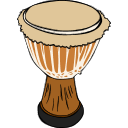

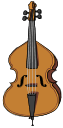
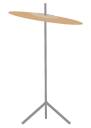
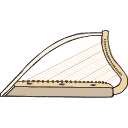

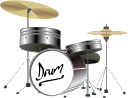
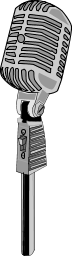

First and foremost, what even is music? Music is sound. Quiet sound, loud sounds, they mostly all are music. The music you hear isn't all of the music in the world. Whether it's Jazz, Rock-N-Roll, Classical, or another one, its all music. Even tapping your finger is music (to most scientists). In this book, you will be learning about the different families of instruments, the notes of a music sheet, and more info about notes, and the composers in music.
STRINGS FAMILY
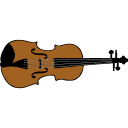
This family has instruments that are made out of wood. The instruments have a body that helps them vibrate and create sound, through the F-holes on either side of the instrument. You play by plucking or moving the bow across the strings. A few examples of string instruments are the Violin, Viola, Cello, and Bass. Some people ask if a Piano is a string instrument. It is not, with hammers that hit a string, causing it to vibrate, rather than plucking or moving a bow across the instrument.
PERCUSSION FAMILY
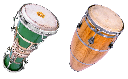
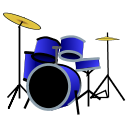

This family's instruments make sounds by hitting something or shaking something. A lot of Drums are in this family. You can think of this family as the metronome, or beat, of the full orchestra. The percussion family also includes smaller instruments, like a pair of Claves, Shakers, Wooden Maracas, Guiros, and Cowbells. Funny names, eh? The bigger instruments are drum sets, cymbals (a type of gong), and bigger drums.
WOODWIND FAMILY
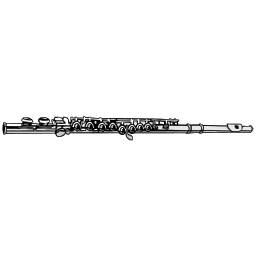
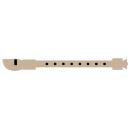
This family's instruments are made out of wood. To play this type of instrument, you blow air into it, then press on one of the pegs on the instrument. Woodwind instruments are very old. Some sources say that they are around 43,000 years old. That means they're even older than when people started farming plants and domesticating animals! The instruments in this family include the Flute, Clarinet, Oboe, Bassoon, English Horn, Saxophone, Recorder, and the Piccolo.
BRASS FAMILY
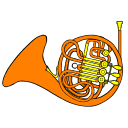
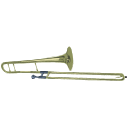
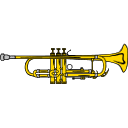
The Brass family is the family with horns. Some instruments that are made of brass are actually not in the brass family, like the Saxophone. To play a Brass instrument, you make a "buzzing" sound by rubbing your mouth into the mouthpiece. There are many instruments in the Brass family. Most are horns. There is the French Horn, Trombone, Tuba, Trumpet, Tenor Horn, Bass Trombone, Cornet, and Flugel Horn.
WHAT ARE THE NOTES


When you look at a piece of sheet music for the first time, it looks like a bunch of dots with lines above just stuck on the paper. The first thing to know is the notes. Each note on the paper is a letter. Not like letters written on paper, but letters that make you know which note to play for each bar line. A bar line is a line that divides music into measures or bars. On the next page, you will learn what the note values are.
THE NOTE VALUES
The lengths of the notes are different. There is the whole note, which is held for 4 beats, the half note, which is held for 2 beats, the quarter note, which is held for 1 beat, the eighth note, which is held for 1/2 of a beat, the sixteenth note, held for 1/4 of a beat, the thirty-second note, held for 1/8 of a beat, and so on. There are also things called ties and slurs. A slur is a marking that puts two notes together, essentially deleting the pause in between two notes.
THE NOTE VALUES - CONTINUATION
The difference between a tie and a slur is that a tie is a slur that has two same notes. The slur binds two different notes. The tie is used when a note is wanted longer than the bar line can hold. Example: If the composer wants a note that is 8 beats long, and the time signature is 4/4, the composer would have to draw a tie between two same whole notes. On the next page, you will learn about the note letters and about what a time signature is.
NOTE LETTERS
To read music, you need to know the notes. If you're playing an instrument, the note letters will make you know what note you are required to play on that instrument. If you are playing the Piano (which most people do), you should know that a key is a letter of the alphabet (A through G--no H through Z). The sound goes from low to high. A, lowest in one octave, B, second-lowest, C, third lowest, and so on.
TIME SIGNATURE
At the top of a music sheet, below the title of the piece and composer, at the start of the music notes, you will see a weird sign, the time signature, and the key you will be playing in. The weird sign is either the G clef or the Base clef. The key signature is a fraction. The most used key signature is 4/4, or C (common time). For example, 2/8 means 2 eight notes in a measure. The top number is how many beats are in a measure. The bottom is what note the beat drops on. The next page has information about dotted notes.
- Full access to our public library
- Save favorite books
- Interact with authors
THANK YOU!
- < BEGINNING
- END >
-
DOWNLOAD
-
LIKE
-
COMMENT()
-
SHARE
-
SAVE
-
BUY THIS BOOK
(from $3.59+) -
BUY THIS BOOK
(from $3.59+) - DOWNLOAD
- LIKE
- COMMENT ()
- SHARE
- SAVE
- Report
-
BUY
-
LIKE
-
COMMENT()
-
SHARE
- Excessive Violence
- Harassment
- Offensive Pictures
- Spelling & Grammar Errors
- Unfinished
- Other Problem





COMMENTS
Click 'X' to report any negative comments. Thanks!