 This book is dedicated to Ms. Woods for designing this fun project!
This book was created and published on StoryJumper™
©2010 StoryJumper, Inc. All rights reserved.
Publish your own children's book:
www.storyjumper.com


Hi, I am Bubba
Today, we are going to go on an adventure
through the Universe and discover how space was
created!
Along the way, we are going to face many
challenges, but also make amazing discoveries.
So get ready, because here we go!



 BANG!!!
There is strong evidence that the solar system formed about
4.5 billion years ago and it took about 500 million years
for the planets to form in their current location and orbits.
The Big Bang is believed to be the start of the universe.
At this time, the universe was a really hot and compact ball.
Then BAM!
The ball exploded and expanded throughout the universe.
After the explosion, the Universe cooled and the formation
of stars and planets began.


The sun formed from a big cloud of gas and
dust. The cloud was dark and cold, and its
gravity caused it to fall together. When nearly
all the gas and dust had fallen together, the
center became very hot and very dense.
Earth is about 93,000,000 miles from the
sun. If we could build a highway and drive a
car to the sun at 65 miles per hour, it would
take over 160 YEARS to get there!





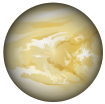


In the solar nebula around the sun, dust and ice particles
occasionally collided and combined. These tiny particles formed
larger bodies that soon became something called planetesmials
up to a mile or two across.
If a cloud is dense enough, its own gravity causes it to collapse
onto itself. The solar system is thought to have collapsed from a
cloud that was initially about a million times larger than the
current solar system!! When the planetesimals started to collide
with one another, they formed planets.
As the solid materials were heated by the collisions, they
became liquid. This heating happened to all planets - but the
bigger the planet the more heat that was generated.
Slowly the planet begins to loose heat - the smaller the planet,
the quicker it lost heat.



Oh NOOO! It is my worst enemy.
Help me defeat him by yelling with me!!
"Ms. Woods is the best teacher ever" Ms. Woods is the best
teacher ever"

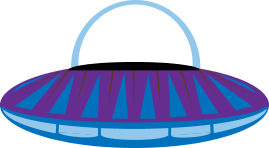
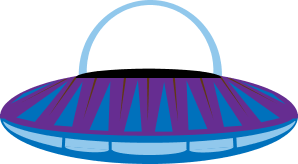
 caboom!!
Wow! Thank you!!
Now we can continue on with our journey with no
interruptions.
I am eternally grateful to each one of you :)

All of these stars were created when giant gas
clouds start to clump together and collapse in upon
themselves.
This clumping is often caused by energy waves
from nearby exploding supernovae. As they
collapse, the molecules that form the clouds
compress in upon each other to form helium and
hydrogen.
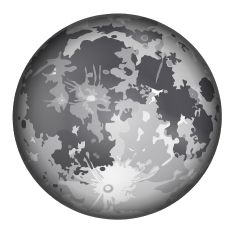
Mercury is the first planet of the Solar System!
The section of nebula that formed Mercury formed
a dense, metallic core with a thin silicate crust on
the surface.
As asteroids bombarded the surface, internal lava
flowed out and formed a new crust.
Over time, Mercury's core cooled down and
shrunk. As a result, the outer crust cracked.
Another wave of lava covers the older crust.
Aside from occasional asteroids, Mercury will
remain generally unchanged for centuries.
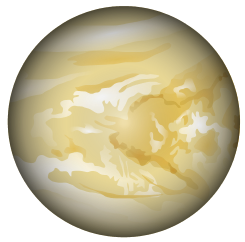

Our next step is to the second planet in the Solar
System, Venus!!
Venus was formed when large amounts of dust and
gases gathered together over many years to form
the planet.
Venus is believed to have been a victim of a large
collision. This is because its rotation is reversed
from the rest of the planets in the solar system.


Third, is our home planet -- EARTH!
During the first period in which the Earth existed, the surface
was under a continuous shower by meteorites, and volcanism
is believed to be severe due to the large heat flow. The gas
and volcanic activity produced the atmosphere. When water
vapor began to condense, the vapor gathered in the
atmosphere and cooled the exterior of the planet to form a
solid crust and produced the oceans.
As the surface continually changed over hundreds of millions
of years, continents formed and broke up. The continents
migrated across the surface, occasionally combining to form a
supercontinent.
You've previewed 21 of 33 pages.
To read more:
Click Sign Up (Free)- Full access to our public library
- Save favorite books
- Interact with authors


- < BEGINNING
- END >
-
DOWNLOAD
-
LIKE(1)
-
COMMENT()
-
SHARE
-
SAVE
-
BUY THIS BOOK
(from $6.59+) -
BUY THIS BOOK
(from $6.59+) - DOWNLOAD
- LIKE (1)
- COMMENT ()
- SHARE
- SAVE
- Report
-
BUY
-
LIKE(1)
-
COMMENT()
-
SHARE
- Excessive Violence
- Harassment
- Offensive Pictures
- Spelling & Grammar Errors
- Unfinished
- Other Problem





COMMENTS
Click 'X' to report any negative comments. Thanks!