

Traditions from Turkey presented by
DenizHOTAL, Fatma Deniz - Hacı Ömer Tarman Anatolian High School
9AkenanefeSAL, MehmethanSal - Salbaş Anatolian High School
FurkanAFL - Aksaray Şehit Pilot Hamza Gümüşsoy Fen Lises

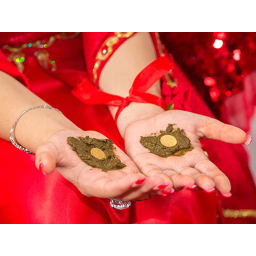
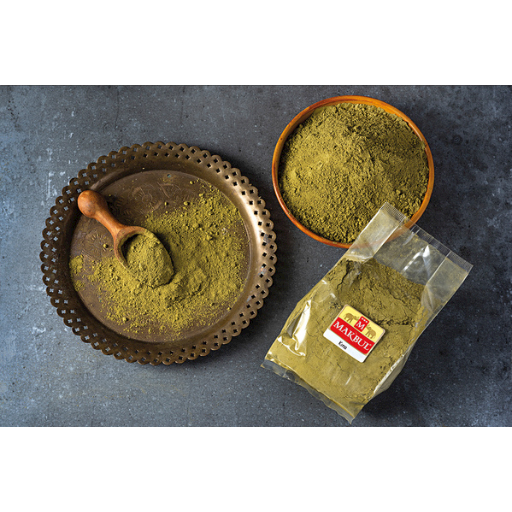
Henna is a flowering plant. The coloring matter prepared by drying and grinding the leaves of this plant and the temporary shapes created on the body by using this substance are also called henna. It has been used since ancient times to dye skin, hair and nails, as well as silk, wool and leather.
In the Turkish belief system, henna is seen as a sign of devotion, and therefore in Turkish culture, henna is used for three things. It is a tradition to apply henna to sacrificed animals, military candidates and at pre-wedding henna nights.
Tooth Wheat is a celebration for little babies when their first tooth comes out. The reason for this traditional celebration is; It is the belief that the baby will have a painless teething process and have healthy teeth for life.
It all starts with the appearance of the baby's first tooth. The first person to notice the baby's tooth is the special attendee of the party and gets the baby a gift that he can keep for a lifetime.
After the wheat is cooked, a clean cloth is laid on the floor and the baby is placed on top of it, and a handful of cooked and cooled wheat is poured over his/her head.The wheat remaining on the baby's head is collected and strung on a rope. This tradition is done so that the baby's teeth are in a single row and straight like pearls. The remaining wheat grains on the cover are collected and given to the birds to eat, and it is believed that the baby will be a good person for nature and other living things. The most important stage of the Tooth Wheat party concept is to place items that symbolize certain professions on the floor covering and the doll is placed at an equal distance from all items.

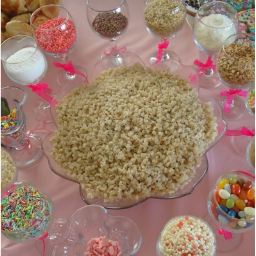
The baby is expected to reach for one of the objects standing in front of him. It is believed that whatever object the baby first picks up, the baby will have a profession related to it.
HIDIRELLEZ
Hıdırellez, which is inscribed on the UNESCO Representation List of Intangible Cultural Heritage of Humanity, is one of the seasonal holidays celebrated in the Turkic world. This culture stands out with its impressive story and different traditions.
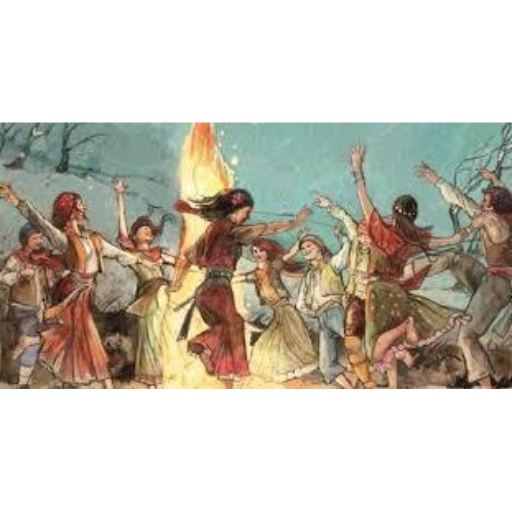
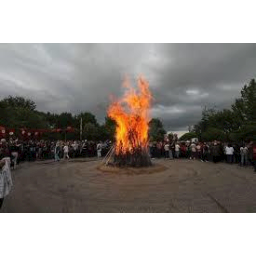
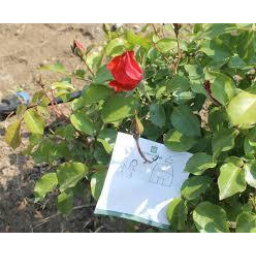
Celebrated as the day on which Hızır (Al-Khidr), a major spiritual figure who is believed to have helped those in distress, and prophet İlyas (Elijah), believed to be the ruler of the seas, met on earth, Hıdırellez has been passed down from generation to generation for centuries. On the evening before Hıdırellez, people draw their wishes such as a home, car and child on a piece of paper and attach it to the branch of the rose tree or reflect it on the soil at the bottom of the tree. Money is also buried at the bottom of the rosewood, as it is believed to bring abundance.
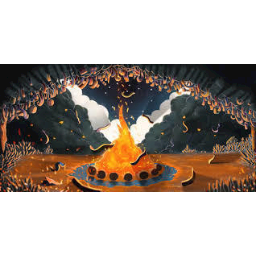
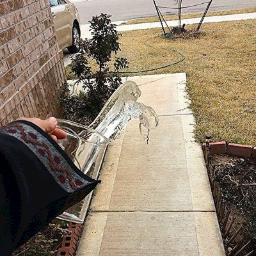
Water is a blessing, it is sacred. Water pours out after those who leave, to say, "Come back quickly like water, come back white, go quickly and safely."
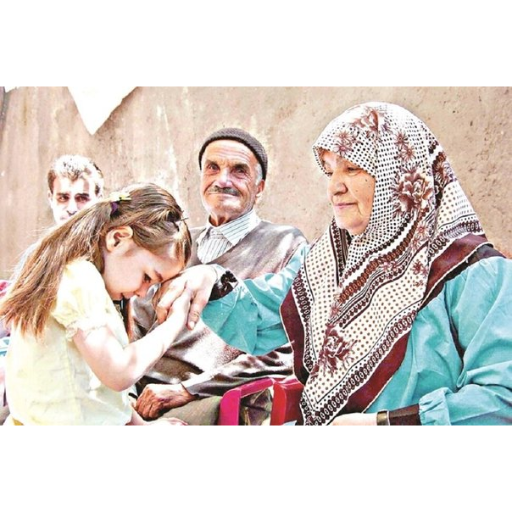
Kissing the hands of elders actually emerged as a sign of respect. In our society, the little ones kiss the hands of the elders and touch their foreheads. Usually, during the feasts like Feast of Ramadan, the adults give pocket money to the younger ones after this behavior.
DOWRY
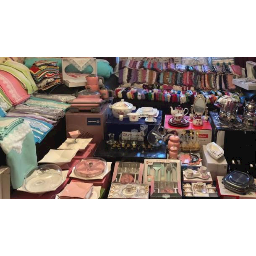
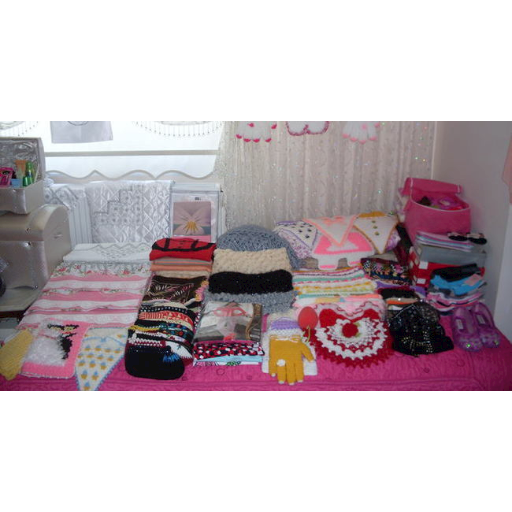
Dowry, any item prepared for the bride. Traditionally, so-called "dowry" begins to be accumulated before a girl reaches marriageable age and is completed until she gets married. These are mostly handcrafted carpets, sewing-embroidery, pillows, quilts, and household items such as towels.
In direct disbelief of Islamic traditions, the Nazar Boncugu, also known as the evil eye is in offices, homes, in transport and businesses. Turks believe this talisman wards off evil and these days, as well as featuring heavily in Turkish culture, it is one of the top recommended souvenirs to buy.
Likewise, when a baby is born, friends and family will often give it an evil eye for protection. Turks adore children, so do not be surprised if your kid receives their undivided attention. The children also increase family size, so represent a symbol of increased strength. Pregnancy is the next natural thing to do after marriage and anybody shunning parenthood, or unable to conceive can become the target of gossip, or socially questioned in some regions.
Since pregnancy is an assumed must, many traditions revolve around it such as cravings or determining the sex, although, in modernized areas, couples are turning to the medical profession to find out the sex of their child. In smaller villages, some mother stay indoors for 40 days to regain health and help their new-borns with a good start in life.

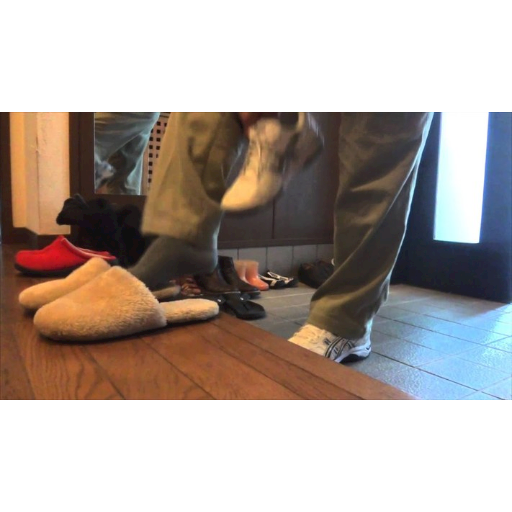
Take off your shoes
You must tаkе оff your shoes when you visit ѕоmеоnе’ѕ home and put them in front of the dооr even if the hosts tоld you not to. In the Turkish culture this behavior is very іmроrtаnt.
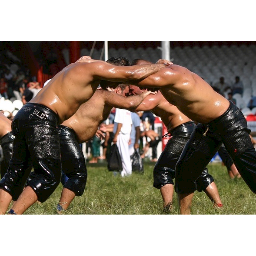
Oil wrestling is a traditional Turkish sport. It is called oil wrestling because wrestlers wrestle with oil on their bodies. It is a sport that requires great strength and mastery as it becomes difficult for the wrestlers to hold each other due to their bodies being oiled.
Traditions from Romania presented by:
Vlad CTCFU - Colegiul Tehnic de Cai Ferate „UNIREA”
Sami.lps - LICEUL CU PROGRAM SPORTIV


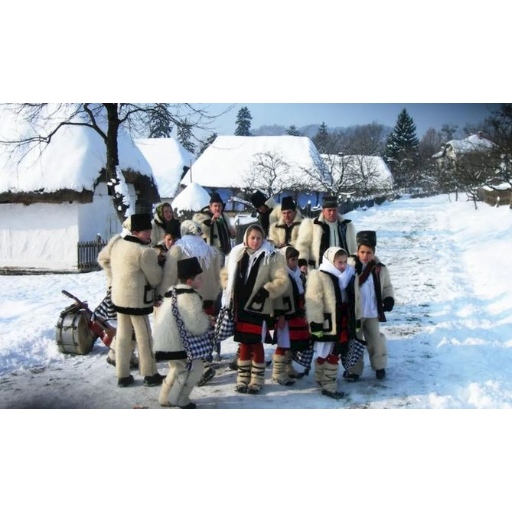
Carol singing begins on December 24 and can continue for 2 or 3 days; carol singing is usually done in groups, by children, adults, the elderly, only girls, only boys, young married people, etc., depending on the ethnographic area.
The best known singer and composer of carols in Stefan Hrusca: https://www.youtube.com/watch?v=6452Sj5SXJc
Martishor is one of the most beautiful Romanian traditions for celebrating the coming of spring. Martishor is an ancient symbol, which marks the arrival of warm weather on the Romanian lands. According to popular belief, this talisman has magical powers. Men offer martishor to women, and they wear them on their chests or on their hands throughout March.
Martishor was designed as an amulet tied with a two-strand braided string - one white (symbolizing divinity, health, purity of soul and fulfillment) and one red (symbolizing love for the eternal beauties of life: friendship, fidelity and honor).
In the popular tradition, the two colors (white and red) from which the string with which the martisor-talisman is intertwined are woven represent the two basic seasons (winter and summer), while spring and autumn are considered only passing seasons.
from which the string with which the martisor-talisman is intertwined are woven represent the two basic seasons (winter and summer), while spring and autumn are considered only passing seasons.
One of the most beautiful holidays that marks the beginning of spring is Dragobetele, on February 24th. It is the celebration of love and the first spring flowers. Dragobetele, the alleged son of Baba Dochia, steals the girls' hearts and sends the boys to the party. From Dragobete, the young people from the villages kept the tradition of going to the field or to the forest to look for violins and snowdrops. The young girls picked flowers, put them in baskets and belts, and then ran to the village.
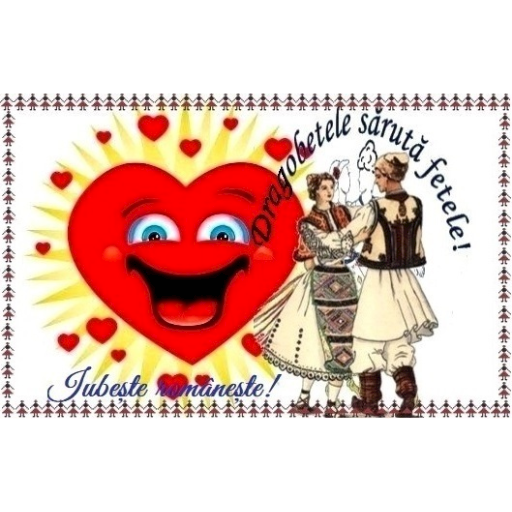
The boys tried to catch the girls they were in love with and stole a kiss from them, a sign of the engagement they were going to have in the family. This game, which ended with many engagements and weddings, was called Flying and since then the expression"Dragobetele kisses girls!"
from which the string with which the martisor-talisman is intertwined are woven represent the two basic seasons (winter and summer), while spring and autumn are considered only passing seasons.
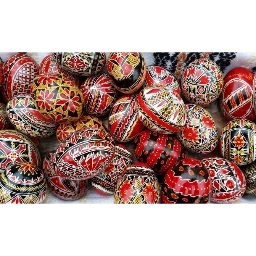
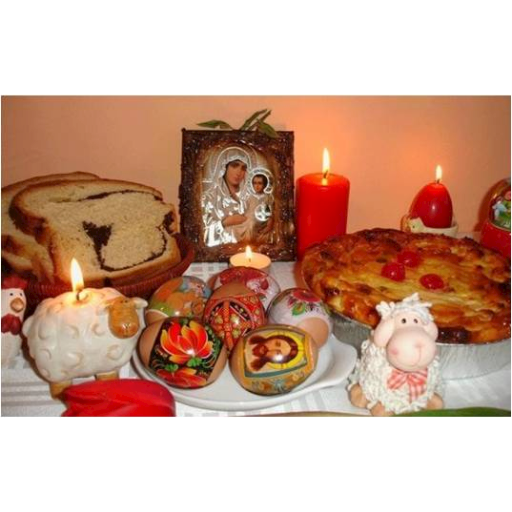
Red eggs are prepared on Holy Thursday Also on Holy Thursday, women paint red eggs that are reminiscent of the passions of Jesus. Nowadays, eggs are painted in many other colors, to make the basket happy, but red eggs are never missing. They are reminiscent of Christian tradition, which says that a woman placed a basket of eggs next to the cross on which Jesus was crucified on Easter Day, and his blood reddened. In the north of Moldova and especially in Bukovina there is a tradition of making poached eggs, "written" with a hot wax pen and marked with all kinds of religious or popular motifs: flowers, stars and crosses, leaves, animals, birds, rosettes and lines serpentine, all having deep meanings in the popular consciousness.
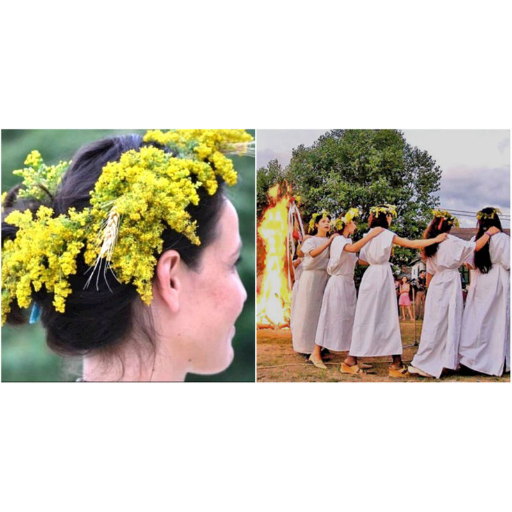
Sânzienes increase the grain, help the flowers to bloom and bring summer, they are celebrated on June 24, immediately after the solstice. On Sânziene, young girls perform all kinds of spells and rituals with yellow sânziene flowers in the evening to find their bear and to get married. But during the day, they put wreaths of sânziene in their hair and gather to hold the Drăgăicii dance, a ritual dance for rain and abundance, for good weather and for protection against evil spirits.
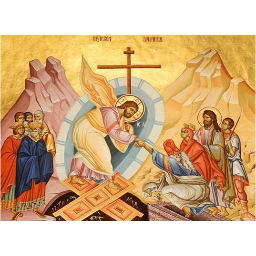
Easter, or Resurrection Sunday, is a Christian festival and cultural holiday commemorating the resurrection of Jesus from the dead, described in the New Testament as having occurred on the third day of his burial following his crucifixion by the Romans at Calvary c. 30 AD. It is the culmination of the Passion of Jesus, preceded by Lent (or Great Lent), a 40-day period of fasting, prayer, and penance.
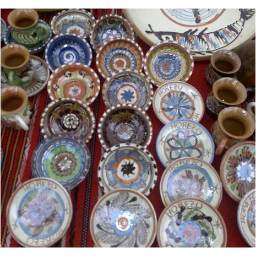
Ceramică de Horezu (Horezu pottery)
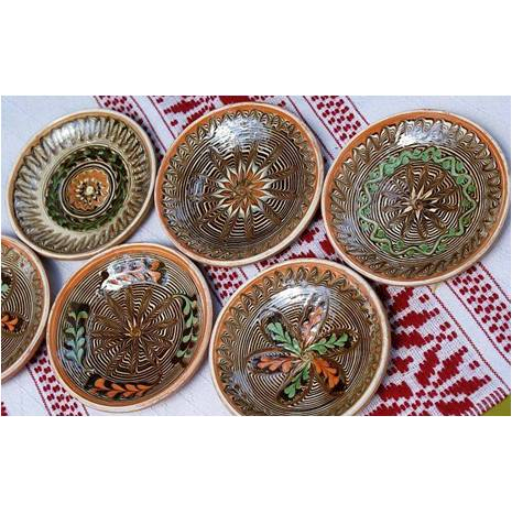
Production is divided into male and female fabrication processes. Therefore, men extract the earth, which is then cleaned, cut, watered, kneaded, trampled and mixed, transforming it into red clay that potters form in a special finger technique requiring concentration, strength and agility. Each potter has his own technique of shaping, but each respects the sequence of the process. The women decorate the shaped ceramics before firing with special techniques and tools in order to draw traditional motifs. Their skills in combining decoration and color determines the personality and uniqueness of these pieces.
Colors are bright shades of brown, red, green, blue and so called "Horezu ivory".
Traditions from Estonia presented by
Ksenia.jvp - jõhvi Russian Basic School
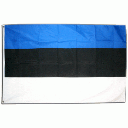
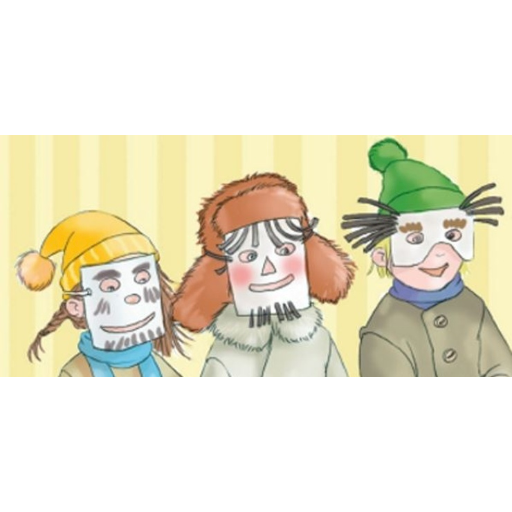
Estonian traditions are best studied in small towns during the holidays, when the inhabitants organize festivals and fairs, and noisy festivities last for many hours.
The popular Estonian tradition of organizing song festivals is relatively recent. The first event of this kind took place in Tartu in 1869, and since then every five years, now on the Tallinn Song Festival Grounds, an amazing festival has been held, which is included in the UNESCO list of intangible cultural heritage.
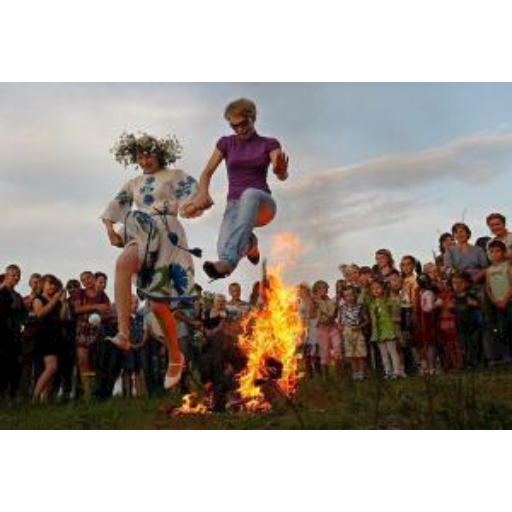
One of the best traditions that has survived to this day is the custom of lighting fires on Jaan's Day (est Jaanipäev - June 24, or Midsummer Eve) throughout Estonia. The walk takes place at night, on the eve of this day, accompanied by songs and dances. The folk customs of walking on Martin's Day (November 10) and November 25 - on Catherine's Day have also been preserved.
Traditions from Croatia presented by
Sara ESPZ - Ekonomska škola Požega
The lace of Pag, known and valued far and wide, is by the skilled and hard-working hands of women from the town of Pag. The hands that create this splendour of interwoven threads are the hands of mothers and grandmothers who have always carefully washed them to eliminate any chance of soiling the lace, hands which for many trying years served as financial support to families and children who had to leave the town to further their education.
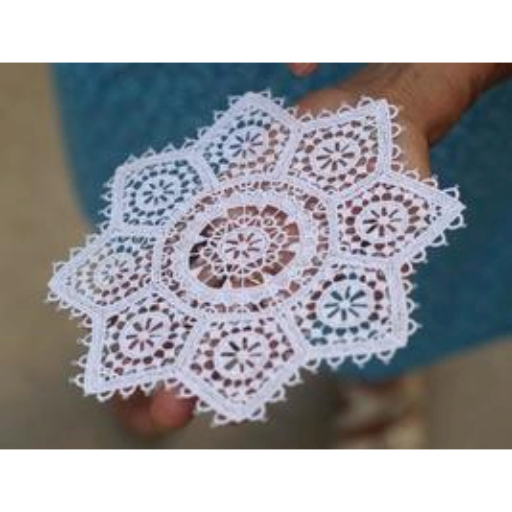
After the establishment of the lace-making school in 1906, lace became a decorative element on its own – “Pag lace,” an adornment on clerical vestments, tablecloths, handkerchiefs and clothing.
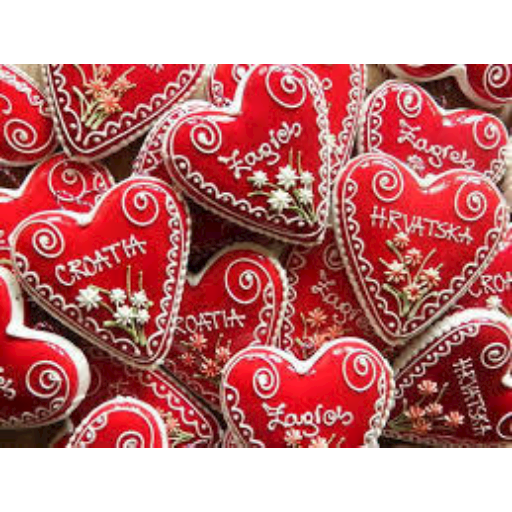
Licitars are colorfully decorated biscuits made of sweet honey dough that are part of Croatia cultural heritage. They are a traditional symbol of the Croatian capital Zagreb. gingerbread hearts are decorations that are put on a pine tree at Christmas.
In croatia we call them LICITARSKA SRCA
Traditions from Bulgaria presented by
Daniela dch, Dimitrichka Poryazova - High shcool of Economics and Finance
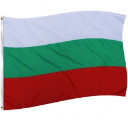

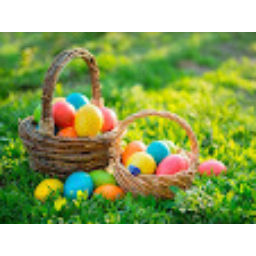
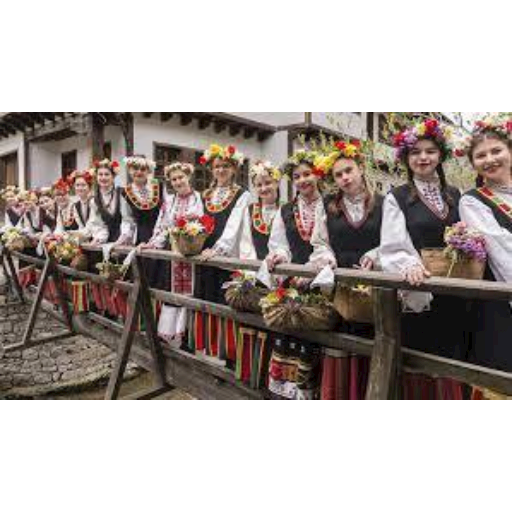
Lazarus - a Slavic custom, widespread in Bulgaria, is traditionally practiced on the Christian holiday Lazarus, on the Saturday before Palm Sunday. The main rite of the holiday is lazarus - a custom of love and marriage. Participating are girls over 16 years old, called lazarki, lazaritsi. The "walkers" wear "adorable" towels with which the brides bow at the wedding. In their hands they carry flowers - violets, geraniums, primroses, cornflowers, twigs of fruit trees, especially junipers.
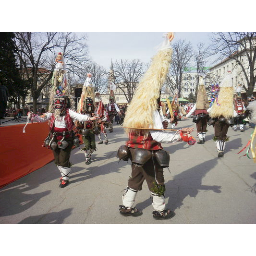
Kukeri - mummers
The Mummers games are performed by unmarried men only. They wear special masks and costumes. Some of the masks have two faces. On one of the sides the nose is crooked, and the face is in good humour. On the other side, the nose is hooked and the face is ominous. Those masks symbolize the good and the bad which coexist in the world. The Mummers games aim is to scare off and warm off the evil spirits for an eternity, so that the crops for the next year are rich.
Nestinari - fire-dancers
This is a custom that can be seen only in some villages between Strandzha and the Black Sea, around Burgas. It is observed on the holiday of St. Konstantin and Elena /21st of May/, and sometimes during some of the local village fairs and the patron Saint's days. A basic elements of the custom is the dance on the fire /glowing embers/ holding icons of the saints in their hands. In their trance the nestinari divine and predict the future. The whole village takes part in the celebration but it is only the fire-dancers that participate in the ritual dance. They are chosen by the saints who is the patron saint of the holiday. The dancers are able to "see" his face, to "hear"his voice and his spirit is transferred in them and on his behalf so that thay can interpret omens and give guidance to people.
- < BEGINNING
- END >
-
DOWNLOAD
-
LIKE
-
COMMENT()
-
SHARE
-
BUY THIS BOOK
(from $7.19+) -
BUY THIS BOOK
(from $7.19+) - DOWNLOAD
- LIKE
- COMMENT ()
- SHARE
- Report
-
BUY
-
LIKE
-
COMMENT()
-
SHARE
- Excessive Violence
- Harassment
- Offensive Pictures
- Spelling & Grammar Errors
- Unfinished
- Other Problem





COMMENTS
Click 'X' to report any negative comments. Thanks!