
A- atom
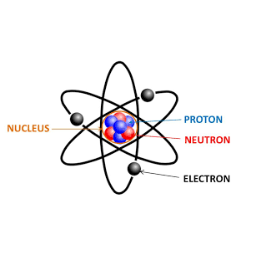
Atoms are the basic unit of chemistry. It is the smallest unit of matter, including protons, neutrons, and electrons. Protons and neutrons are in the nucleus, and electrons rotate around the nucleus.
B- boron
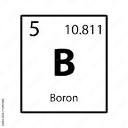
Boron is an element of the periodic table that contains five protons. Its atomic number is 10.81. Boron is a non-metal, meaning it is on the right side of the stairs or group 13-16.
C- chemical energy
Chemical energy is the energy stored in the bonds of compounds such as atoms and molecules. This energy is released when a chemical reaction takes place. Chemical reactions often release chemical energy in the form of heat. Chemical energy is a form of potential energy.
E- energy
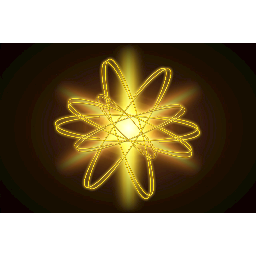
Energy, in physics, the ability to do work. It can exist in different potential forms, kinetic, thermal, electrical, chemical, nuclear or other forms. Energy cannot be created or destroyed, only changed from one form to another. This principle is called the conservation of energy or the first law of thermodynamics.
G- genetics
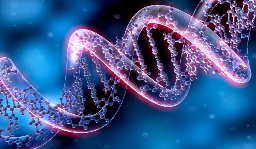
Genetics is the scientific study of genes and heredity. In other words, how changes in the DNA sequence pass on certain properties and properties from the parent to the offspring. A gene is a segment of DNA that contains instructions for building one or more molecules that help the body do its job. DNA is shaped like a bottle opener ladder called a double helix.
H- hypothesis
Hypotheses are accurate and valid statements about what researchers expect as a result of their research. Given at the beginning of the course. This usually involves proposing possible relationships between two variables, the independent variable (what the researcher changes) and the dependent variable (what the researcher measures).
I- ionic bond
An ionic bond, also known as an electrovalent bond, is a type of bond created by electrostatic attraction between oppositely charged ions in compound. Such bonds form when valence electrons form. (the outermost) of atom is constantly moving to another atom. The atom that has lost an electron becomes a positively charged ion (cation) and the atom that has lost an electron becomes a negatively charged ion (anion).
J- jet stream
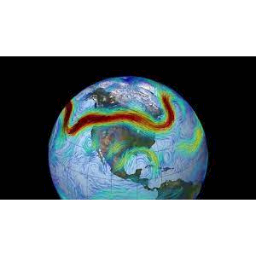
The jet stream is a relatively narrow band of strong winds in the upper layers of the atmosphere. Winds blow from west to east in jet streams, but the currents usually shift north and south. The jet streams follow the boundary between warm air and cold air. The jet stream exists because of the temperature difference between the two masses of gas.
K- kinetic energy
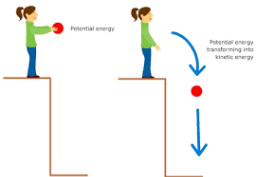
Kinetic energy, a form of energy possessed by an object or particle due to its motion. If work, transferring energy, is done to an object by applying a net force, the object will accelerate and thus gain kinetic energy. Kinetic energy is a property of a moving object or particle and depends not only on its motion but also on its mass.
M- magnetism
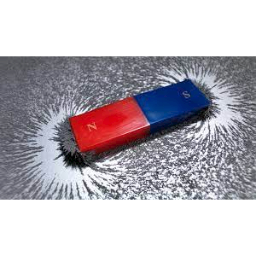
Magnetism is a force with properties that are generated by the movement of electric charges. Sometimes these movements are microscopic and are present in a material called a magnet. The magnet generated by the movement of the charge or the magnetic field of the moving charges can attract or repel other magnets and change the movement of other charge carriers. The magnetic field source is a dipole. That is, there are the North Pole and the South Pole. The opposite poles (N and S) attract each other and repel each other, much like the poles (N and N or S and S).
N- nitrogen
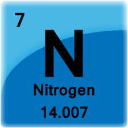
Nitrogen is a non-metallic element in group 15 of the periodic table. It is a colorless, odorless and tasteless gas that is the most abundant element in the Earth's atmosphere and a constituent of all living matter. About four-fifths of Earth's atmosphere is made up of nitrogen, which was isolated and recognized as a specific substance during early atmospheric surveys.
O- oxygen
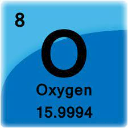
Oxygen (O), a non-metallic chemical element in group 16 of the periodic table. Oxygen is a colorless, odorless, tasteless gas, necessary for living organisms, absorbed by animals and converted into carbon dioxide; In turn, plants use carbon dioxide as a carbon source and release oxygen back into the atmosphere. Oxygen can form compounds with most other elements.
- Full access to our public library
- Save favorite books
- Interact with authors
https://www.britannica.com/
Kaycie Smith
- < BEGINNING
- END >
-
DOWNLOAD
-
LIKE
-
COMMENT()
-
SHARE
-
SAVE
-
BUY THIS BOOK
(from $4.19+) -
BUY THIS BOOK
(from $4.19+) - DOWNLOAD
- LIKE
- COMMENT ()
- SHARE
- SAVE
- Report
-
BUY
-
LIKE
-
COMMENT()
-
SHARE
- Excessive Violence
- Harassment
- Offensive Pictures
- Spelling & Grammar Errors
- Unfinished
- Other Problem






COMMENTS
Click 'X' to report any negative comments. Thanks!