
This book was prepared by Bahattin Özyazıcı Primary School to introduce the traditional food recipes of countries within the scope of the "Let's Go Cultural" erasmus project.

ROSCÓN DE REYES
(Traditional Three Kings cake)


Ingredients:
-400 g flour
-100g butter
-100g sugar
-1 spoonful of yeast
-¼ litre of milk
-3 eggs
-1 spoonful of orange flower-water
-Grated lemon rind
-Sugar
-Coated fruit (cherries, orange, lemon)
-Salt
Instructions:
1.Dissolve the yeast into 4 spoonfuls of warm milk. Add 100 g of flour and mix well until achieving a ball of soft dough. Cover with a dish towel and leave in a warm place so that the dough doubles its volume.
2.In another bowl, put the rest of the flour (300g). Make a hole in the centre and add 3 eggs, the sugar, the rest of the milk, the orange flower-water and the grated lemon. Knead until creating a fine dough. Add the butter and continue kneading. Add the mixture of yeast and knead until it is all mixed together well.
Sprinkle with flour and leave to rest with the dish towel in a warm place for a minimum of 2 hours.
3.After 2 hours, start kneading again, make it into a donut shape and put on an oven tray.
4.Decorate with strips of sugared fruits and brush with a beaten egg. Sprinkle with sugar.
5.Put into a pre-heated oven at 160 º and leave to bake for 15-20 minutes.
FABADA ASTURIANA
(Bean Stew)

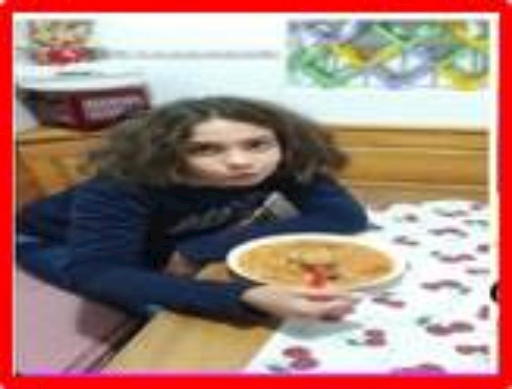
Ingredients:
-400g of fabes or large white beans drained and rinsed
-2 chorizos
-2 blood sausages
-100 g of bacon
-1 head garlic
-1 onion
-2 bay leaves
-1 teaspoon of paprika
-1 pinch saffron threads
-½ cup of olive oil
Instructions:
The night before you make the stew, place the beans in a large pot and cover with cold water to soak overnight.
The next day, drain and rinse the beans.
Return the beans to the pot and add the water, chorizo, blood sausage, bacon, garlic and onion.
Bring it all to a slow boil, skimming any foam that comes to the surface. When the liquid comes to the boil, reduce the heat and add the paprika, saffron, and olive oil.
Let the beans cook for 2 to 2½ hours, adding a little cold water every 10 to 15 minutes
to slow the cooking process and make sure the beans stay covered in liquid.
When the beans are tender, remove the pot from the heat and let it rest for about an hour.
Remove and discard the onion and garlic.
Slice the chorizo, blood sausage, and bacon and set them aside.
The beans should be thick and creamy.
When you’re ready to serve, spoon the beans into four bowls, then top each one with slices of the meat.
Serve hot.
SPANISH OMELETTE

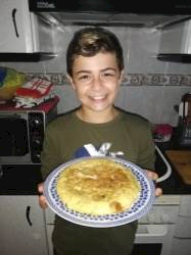
Ingredients:
-1kg of potatoes
-1 onion
-6 medium sized eggs
-olive oil
-salt
Instructions:
Peel the onion and the potatoes and cut into medium sized squares. Sprinkle with salt and fry in hot olive oil until they begin to go golden. It’s better if they are not well cooked and are almost boiled in the oil, so that the omelette is moister.
Beat the eggs with a little salt. Mix with the potatoes an onion. Place a small amount of oil in the frying pan and heat. Pour the mixture into the pan and cook on a low heat.
When it is ready on one side, with the help of a plate turn it around and cook the other side. When cooked place on a serving dish. Serve immediately, cut into triangles.
CALDERO CARTAGENERO

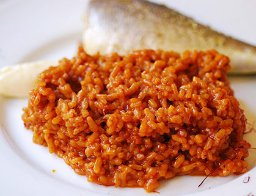
Ingredients:
-Rice
-Olive oil
-Prawns
-Tomatoes
-Garlic
-Ñoras (dried red, round peppers, popular in Murcian cookery)
-Fish
-Salt, saffron, pepper and paprika.
Instructions:
1.Clean the fish
2.Fry the ñoras and cloves of garlic. Remove and put them in a mixture to make a paste with them.
3.Fry the tomatoes.
4.Fry the fish with salt, saffron and pepper.
5.Pour the garlic and ñoras mixture over the fish, add the fried tomatoes and a spoonful of paprika,
add some boiling water and season with salt and cook until the fish is flaking (about 10 minutes).
6.Remove the fish and reserve, keeping warm.
7.Add the rice to the broth and cook for 20 minutes. Put the prawns on top. The rice should look like
a risotto when done.
8.The caldero is served in a dish on its own and the fish is served on a platter with alioli sauce.
GAZPACHO ANDALUZ


Ingredients:
-2 cloves of garlic
-150 grams of red pepper
-150 grams of green pepper
-150 grams of red onion
-350 grams of cucumber
-2500 grams of tomatoes
-12 grams of salt
-2 tablespoon of oregano
-140 grams of olive oil
-15 grams of vinegar
-Pepper
Instructions:
1. Cut and clean all the vegetables. 2. Put all the vegetables in a big bowl.
3. Everything is crushed with a mixer until it is well crushed and liquid.
4. Add the rest of the ingredients and beat a little more to mix well.
5. Chill in the refrigerator for a few hours.
6. Serve in glasses or in soup bowls. You can serve it with chopped vegetables and small pieces of fried bread.
ETON MESS

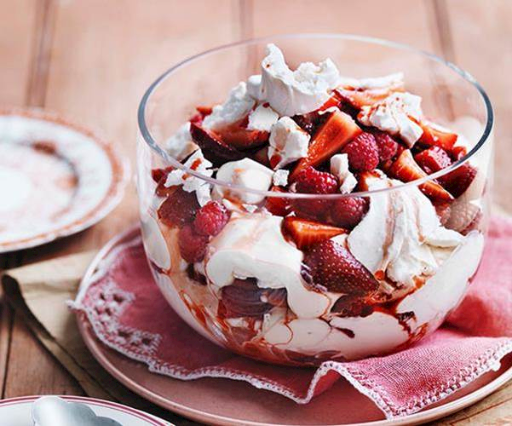
Ingredients
-Meringues
-Strawberries
-Cream
-Sugar
Method:
1. Wash the strawberries, carefully hull them and cut them into thick slices.
2. Place the meringues in the bowl and crush them. (Have a mixture of small pieces and large chunky ones if possible.)
3. Put the strawberries in the bowl and add some sugar if needed.
4. Add the cream and mix together.
TOAD IN THE HOLE

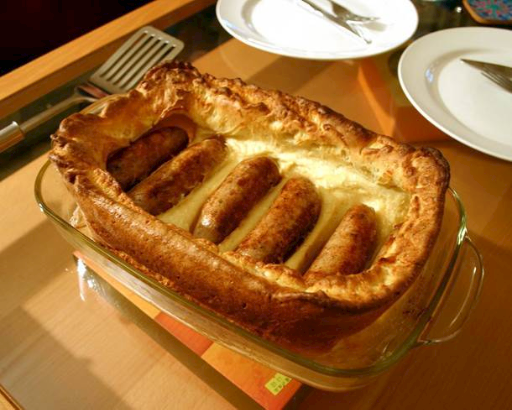
Ingredients:
- 115g/4oz plain flour
- large pinch of salt
- freshly ground black pepper
- 4 large free-range eggs
- 300ml/½ pint milk
- 2 tbsp/30g fresh thyme leaves
- 8 good quality pork, beef or vegetable sausages
- 2 tbsp/30g Dijon mustard
- 2 tbsp/30g of beef dripping or white vegetable fat for vegetarians
- knob of butter, to serve
Method:
-To make the batter, sift the flour into a large bowl. Add the salt and pepper.
-Make a well in the centre of the flour and crack in the eggs. Using a wooden spoon, gradually beat the eggs into the flour then slowly beat in the milk until the batter is the consistency of double cream.
-Strain and push any remaining lumps through a sieve. Stir in the thyme. Cover and leave to stand for 30 minutes, or ideally 3-4 hours.
-Preheat the oven to 200C/400F/Gas 6.
-Heat a large non-stick pan and cook the sausages over a medium heat until golden-brown all over. (If you do not
have a non-stick pan add a little oil.) Turn off the heat and brush the sausages with the mustard. Set aside.
-Place the dripping or white vegetable fat into an ovenproof dish and heat in the oven for five minutes or until the dripping is hot and hazy.
-Add the sausages to the hot dish and pour in the batter. Immediately return the dish to the oven and cook for 35-40 minutes until well-risen and golden-brown.
-Serve seasoned with black pepper and a large knob of butter.
SCOTCH EGGS


Ingredients:
- 4 large free-range eggs
- 275g/10oz sausage meat
- 1 tsp fresh thyme leaves
- 1 tbsp chopped fresh parsley
- 1 spring onions very finely chopped
- salt and freshly ground black pepper
- 125g/4oz plain flour, seasoned with salt and freshly ground black pepper
- 1 free-range egg, beaten
- 125g/4oz breadcrumbs
- vegetable oil, for deep frying
Method:
-Place the eggs, still in their shells, in a pan of cold salted water.
-Place over a high heat and bring to the boil, then reduce the heat to simmer for exactly nine minutes.
-Drain and cool the eggs under cold running water, then peel.
-Mix the sausage meat with the thyme, parsley and spring onion in a bowl and season well with salt and freshly ground black pepper (Simon recommends being generous with the freshly ground black pepper).
-Divide the sausage meat mixture into four and flatten each out on a clean surface into ovals about 12.5cm/5in
long and 7.5cm/3in at its widest point.
-Place the seasoned flour onto a plate, then dredge each boiled egg in the flour.
-Place each onto a sausage meat oval, then wrap the sausage meat around each egg. Make sure the coating is smooth and completely covers each egg.
-Dip each sausage meat-coated egg in the beaten egg, rolling to coat completely, then dip and roll into the breadcrumbs to completely cover.
-Heat the oil in a deep heavy-bottomed pan, until a breadcrumb sizzles and turns brown when dropped into it. (CAUTION: hot oil can be dangerous. Do not leave unattended.)
-Carefully place each scotch egg into the hot oil and deep-fry for 8-10 minutes, until golden and crisp and the sausage meat is completely cooked.
-Carefully remove from the oil with a slotted spoon and drain on kitchen paper.
-Serve cool.
SCONES

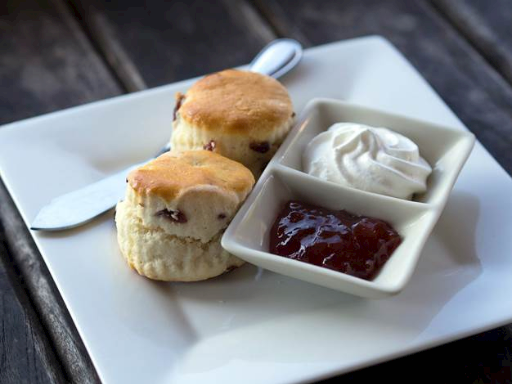
Ingredients:
- 350g self-raising flour, plus more for dusting
- 1 tsp baking powder
- 85g butter, cut into cubes
- 3 tbsp caster sugar
- 175ml milk
- 1 tsp vanilla extract
- squeeze lemon juice (see tips below)
- beaten egg, to glaze
- jam and clotted cream, to serve
Method:
-Heat the oven to 220C/200C fan/gas 7. Tip the self-raising flour into a large bowl with ¼ tsp salt and the baking powder, then mix.
-Add the butter, then rub in with your fingers until the mix looks like fine crumbs. Stir in the caster sugar.
-Put the milk into a jug and heat in the microwave for about 30 secs until warm, but not hot. Add the vanilla extract and a squeeze of lemon juice, then set aside for a moment.
-Put a baking tray in the oven. Make a well in the dry mix, then add the liquid and combine it quickly with a cutlery knife – it will seem pretty wet at first.
-Scatter some flour onto the work surface and tip the dough out. Dredge the dough and your hands with a little more flour, then fold the dough over 2-3 times until it’s a little smoother. Pat into a round about 4cm deep. Take a 5cm cutter (smooth-edged cutters tend to cut more cleanly, giving a better rise) and dip it into some flour. Plunge into the dough, then repeat until you have four scones. You may need to press what’s left of the dough back into a round to cut out another four.
-Brush the tops with a beaten egg, then carefully arrange on the hot baking tray. Bake for 10 mins until risen and golden on the top. Eat just warm or cold on the day of baking, generously topped with jam and clotted
cream. If freezing, freeze once cool. Defrost, then put in a low oven (about 160C/140C fan/gas 3) for a few minutes to refresh.
CORNISH PASTY

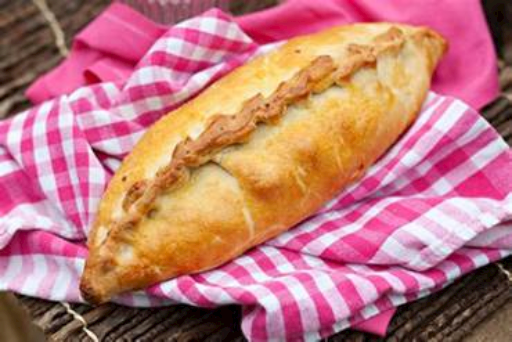
Ingredients:
For the pastry
- 500g/1lb 1oz strong bread flour
- 120g/4oz vegetable shortening or suet
- 1 tsp salt
- 25g/1oz margarine or butter
- 175ml/6fl oz cold water
- 1 free-range egg, beaten with a little salt (for glazing)
For the filling
- 350g/12oz good-quality beef skirt, rump steak or braising steak
- 350g/12oz waxy potatoes
- 200g/7oz swede
- 175g/6oz onions
- salt and freshly ground black pepper
- knob of butter or margarine
Method:
-Tip the flour into the bowl and add the shortening, a pinch of salt, the margarine or butter and all of the water.
-Use a spoon to gently combine the ingredients. Then use your hands to crush everything together, bringing the ingredients together as a fairly dry dough.
-Turn out the dough onto a clean work surface (there’s no need to put flour or oil onto the surface because it’s a tight rather than sticky dough).
-Knead the dough to combine the ingredients properly. Use the heel of your hand to stretch the dough. Roll it back up into a ball, then turn it, stretch and roll it up:
again. Repeat this process for about 5-6 minutes. The dough will start to become smooth as the shortening breaks down. If the dough feels grainy, keep working it until it’s smooth and glossy. Don’t be afraid to be rough – you’ll need to use lots of pressure and work the dough vigorously to get the best results.
-When the dough is smooth, wrap it in cling film and put it in the fridge to rest for 30–60 minutes.
-While the dough is resting, peel and cut the potato, swede and onion into cubes about 1cm/½in square. Cut the beef into similar sized chunks. Put all four ingredients into a bowl and mix. Season well with salt and some freshly ground black pepper, then put the
filling to one side until the dough is ready.
-Lightly grease a baking tray with margarine (or butter) and line with baking or silicone paper (not greaseproof).
-Preheat the oven to 170C (150C fan assisted)/325F/Gas3.
-Once the dough has had time to relax, take it out of the fridge. The margarine or butter will have chilled, giving you a tight dough. Divide the dough into four equal-sized pieces. Shape each piece into a ball and use a rolling pin to roll each ball into a disc roughly 25cm/10in wide (roughly the same size as a dinner plate).
-Spoon a quarter of the filling onto each disc. Spread the filling on one half of the disc, leaving the other half clear.
Put a knob of butter or margarine on top of the filling.
-Carefully fold the pastry over,join the edges and push with your fingers to seal.Crimp the edge to make sure the filling is held inside–either by using a fork,or by making small twists along the sealed edge.Traditionally Cornish pasties have around 20 crimps.When you’ve crimped along the edge,fold the end corners underneath.
-Put the pasties onto the baking tray and brush the top of each pasty with the egg and salt mixture. Bake on the middle shelf of the oven for about 45 minutes or until the pasties are golden-brown. If your pasties aren't browning, increase the oven temperature by 10C/25F foR the last 10 minutes of cooking time.
APFELSTRUDEL
APPLE STRUDEL
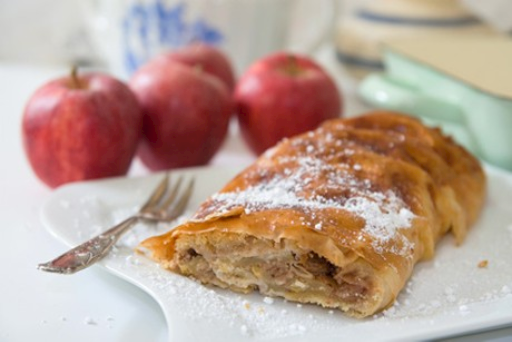

For the Strudel:
Peel the apples, cut into slices, and quickly sprinkle with lemon juice. Then, depending on the acidity of the apples, add a suitable amount of sugar and powdered cloves, and mix in a generous pinch of cinnamon.
Pre-heat the oven to 180°C and grease a baking tin with butter.
Ideally, prepare the strudel dough in such a way that the strudel ends up laid onto a sheet of baking paper. Distribute the nutty breadcrumbs over around half of the dough. Scatter the apples and raisins over it. Coat the remaining surface of the dough generously with melted butter, fold in the edges at the sides, and roll up the strudel. Seal the ends well and lift the strudel into
the baking tin using the baking paper (if using puff pastry, apply the apple filling in the centre, fold up the sides and edges towards the middle, and press the edges together firmly).
Depending on the dough, coat with melted butter (for strudel dough) or egg (puff pastry) and bake for 40 – 50 minutes until golden brown (bake puff pastry slightly shorter). Remove the finished strudel, leave to cool down, and sprinkle with icing sugar.
Baking time: 40–50 minutes (slightly less for puff pastry)
WIENER SCHNITZEL

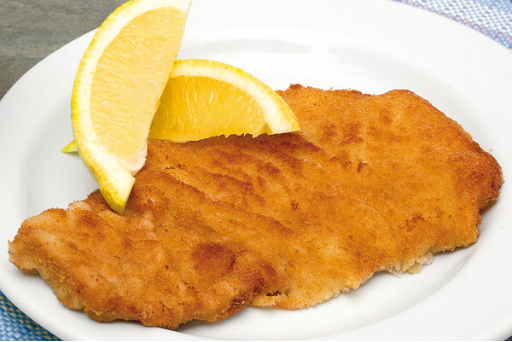
Ingredients:
Lay out the cutlets, remove any skin and beat until thin. Season on both sides with salt and pepper. Place flour and breadcrumbs into separate flat plates,beat the eggs together on a further plate using a fork.
Coat each Schnitzel on both sides in flour, then draw through the beaten eggs, ensuring that no part of the Schnitzel remains dry. Lastly, coat in the breadcrumbs and carefully press down the crumbs using the reverse side of the fork (this causes the crumb coating to “fluff up” better during cooking).
In a large pan, melt sufficient clarified butter for the Schnitzel to be able to swim freely in the oil (or heat up the plant oil with 1 – 2 tbsp of butter).
Only place the Schnitzel in the pan when the fat is so hot that it hisses and bubbles up if some breadcrumbs or a small piece of butter is introduced to it.
Depending on the thickness and the type of meat, fry for between 2 minutes and 4 minutes until golden brown. Turn using a spatula (do not pierce the coating) and fry on the other side until similarly golden brown.
Remove the crispy schnitzel and place on kitchen paper to dry off. Dab carefully to dry the schnitzel. Arrange on the plate and garnish with slices of lemon before serving.
KÜRBISKERNAUFSTRICH
SPREAD WITH PUMPKIN
SEEDS AND OIL

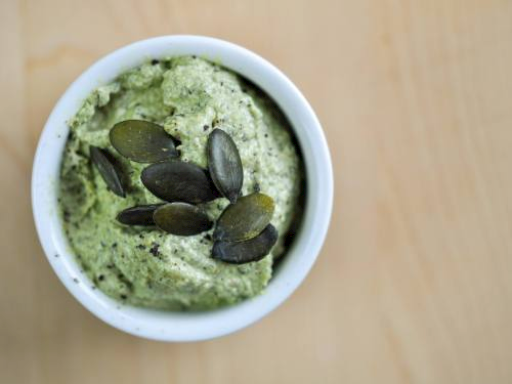
Instructions:
Heat the pan and dry roast the chopped pumpkin seeds.
Make sure the cheese is at room temperature.
Then combine all ingredients in a bowl and stir with a wooden spoon until thoroughly mixed.
Let the spread rest for one hour before serving.
Serve on rye or pumpernickel bread and garnish with fresh cut chives and pumpkin seeds.
Osterkranz
Easter Wreath

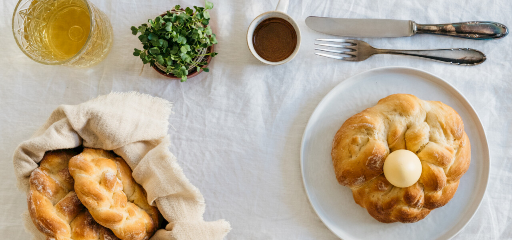
Instructions:
Mix the honey and yeast with the milk until the yeast is completely dissolved.
Let rest until small bubbles form.
In the meantime, put the flour with 1 pinch of salt in a large bowl and mix. Add the yeast mixture, butter and eggs and knead everything with the dough hooks of the hand mixer until a smooth dough is formed. Alternatively, dust a work surface with a little flour and work the dough by hand. Then place the dough in a bowl dusted with a little flour, cover with a tea towel and leave to rise at room temperature for 1 hour. After the resting period, preheat the oven to 180°C.
Dust a work surface with flour. Divide the dough into six. Form the dough pieces into rolls about 25cm long. Then cut 2x lengthwise with a sharp knife. Braid the three dough strands into a plait. Close the ends to form a circle.
Before baking, brush the wreaths with a little milk. Bake at the same temperature for about 25-30 minutes until golden brown.
Let cool after baking. Before serving, place an Easter egg in the center and enjoy with butter and jam.
Steirischer Bauernsalat – Käferbohnensalat
Styrian Farmer’s Salad

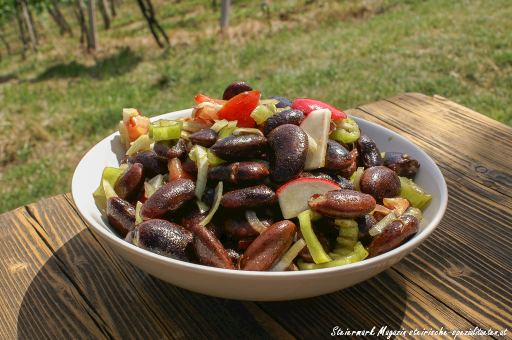
Şehriyeli Tavuk Çorbasi
Chicken Soup with Vermicelli

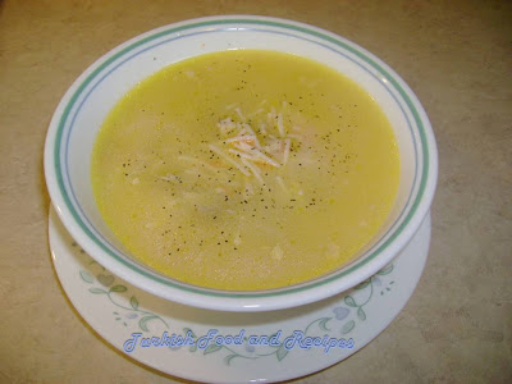
-1 whole chicken leg or ½ lb chicken breast
-1/2 cup vermicelli
-1 medium carrot, grated
-3 gloves of garlic, sliced
-1 tbsp salt
-½ tsp black pepper
Sauce:
-1 egg, beaten
-2 tbsp lemon juice
Instructions:
Place the chicken in a pot and add 6-8 cups of water. Add 1 tsp salt and boil until the chicken is cooked. Then, cool the chicken and cut into small bite sizes.
Add carrot, garlic, 1 tsp salt to the chicken broth you got before and cook over medium heat. When it boils, add vermicelli and chicken pieces. Simmer for 8-10 minutes. Let it cool for a while. Mix the beaten egg and lemon juice in a bowl and slowly stir in to the Chicken Soup with Vermicelli. Finally sprinkle black pepper on top and serve warm.
Forest Kebab

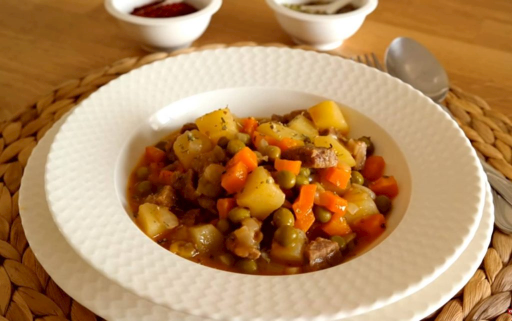
Instructions:
1. Pour the Diced Lamb meat with white flour and put into the boiled vegetable oiled saucepan. Saute it 10 minutes until it changes its pink color to brown color.
2. Slice the onion and put it to the saucepan and add butter and saute all.
3. Once the onions start to changes it color; sliced garlic into the saucepan and saute it. And then add the tomato paste, red pepper paste and sliced tomatoes to the saucepan.
4. After the tomatoes starts to soften add the diced carrot, diced potato and peas into the saucepan and saute all couple of minutes.
5. Add the 3 cups of water, bay leaf, salt,and black pepper and wait until the saucepan until it boils. Once it starts to boils (see the bubbles) lower the heat as much as you can and close the saucepan lid.
6. Time to time (in every 15 minutes) saute it bu opening the lid and then don’t forget to close the lid. It will be ready after 50 minutes of cooking time at low heat.
HUMUS ( HUMMUS )

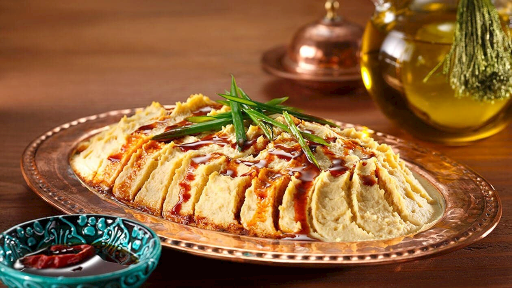
1. Put everything except the parsley in a food processor and begin to process; add the chickpea liquid or water as needed to allow the machine to produce a smooth puree.
2. Taste and adjust the seasoning (I often find I like to add much more lemon juice). Serve, drizzled with the olive oil and sprinkled with a bit more cumin or paprika and some parsley.
Gavurdagi Salad

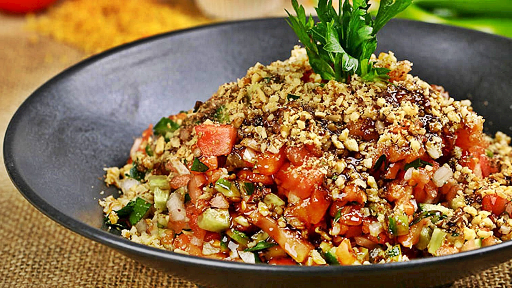
Instructions:
Chop all the vegetables finely. Take olive oil, pomegranate molasses, lemon juice and salt into a small bowl.
Mix them well. Then, add the sauce to chopped vegetables and toss gently. Let the sauce to be absorbed for 5-10 minutes.
Add walnuts, toss gently and serve.


Instructions:
1-Start with preparing the syrup. Pour water, sugar and a slice of lemon in a pot. Bring it to boil.
2-Reduce the heat to medium low and simmer for 15 minutes until it gets a little thicker. Let it cool.
3-Melt butter, bring it to room temperature and coat kadayif noodles with butter very well.
4-Brush the bottom of two 9-inch pans with melted butter.
5-Share the buttered kadayif noodles in the pans evenly.
6-Toss over shredded unsalted cheese evenly.
7-Cover the cheese with the remaining kadayif noodles and press on them with your hand.
8-Over the lowest heat on the stove, cook it until the
bottom is golden. Carefully place one of the extra pans on it and flip the dessert into that extra pan. Now golden side is on the top. Cook the other side until golden as well.
9-Repeat this for the second portion.
10-Pour cooled syrup over them as soon as you remove them from the stove..
11-Let them absorb the syrup and serve immediately while it’s still hot with ground pistachios on the top.
12- Serve hot.
MOUSAKKA

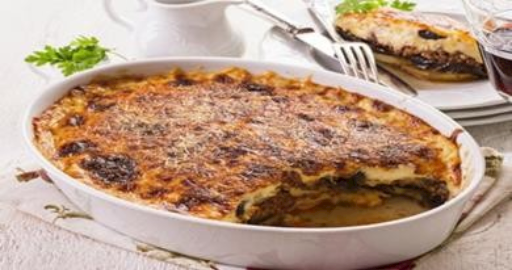
- 6 tbsp olive oil
- 3 medium aubergines, cut into 5mm rounds
- 800g lamb mince
- 2 bay leaves 200ml red wine
- 400g can chopped tomatoes 2 tbsp tomato purée
- ½ tbsp light brown soft sugar
- 550g potatoes, peeled and sliced into 5mm rounds For the béchamel sauce
- 40g unsalted butter 40g plain flour
- 450ml whole milk, 40g parmesan, finely grated
- whole nutmeg, forgrating
- 1 large egg plus 1 yolk, lightly beaten
STEP 1
Heat a frying pan over a high heat. Drizzle 4 tbsp of the oil over the slices of aubergine and fry them in several batches for 5-7 mins or until golden brown and beginning to soften. If they look a little dry during cooking, add a dash more olive oil. Set aside on a plate lined with kitchen paper.
STEP 2
Heat 1 tbsp of the oil in a large flameproof casserole dish or saucepan over a medium-high heat. Add the mince and fry for 8-10 mins until a deep golden brown,
regularly stirring and breaking up with a wooden spoon. Tip into a bowl and set aside. Add the remaining oil to the casserole. Tip in the onion along with a pinch of salt and fry gently for 10-12 mins or until softened and turning translucent. Add the garlic, oregano, cinnamon, chilli and bay cooking for a further min. Return the lamb to the pan and pour in the red wine, bring to a bubble and reduce the wine by half. Stir through the tomatoes, tomato purée and brown sugar, along with 200ml water. Season. Lower the heat and simmer gently, uncovered, for 20 mins, stirring occasionally until the sauce has thickened
STEP 3
Heat oven to 200C/180 fan/gas 4. Bring a large pan of lightly salted water to the boil. Add the potato slices and cook for 6 mins, drain in a colander and leave to steam dry for 10 mins.
STEP 4
Melt the butter in a small saucepan, stir in the flour and cook over a medium heat for 1 min. Remove from the heat and whisk in the milk, pouring in a bit at a time, until smooth. Return to the heat and bring to a simmer, cooking for 3 mins. Remove from the heat and whisk through the parmesan, a little grated nutmeg and some seasoning, and finally the whole egg as well as the yolk.
STEP 5
Take a large rectangular ovenproof dish. Spoon a third of the meat into the dish and spread out evenly, followed by half the aubergine and half the potato, then the rest of the meat and another layer of aubergines, followed by potatoes. Finish with the béchamel, smoothing the top over with a palette knife. Put in the centre of the oven and cook for 50 mins or until deep golden brown. If it browns too much during cooking, cover the dish. Set aside for 10 mins to cool before serving.
Tzatziki

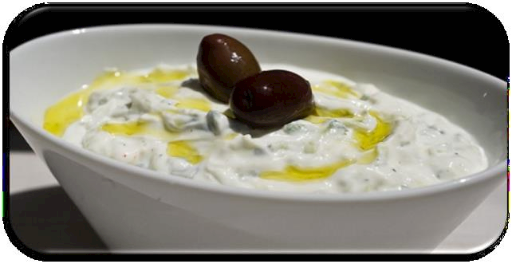
- 300g strained yogurt 1 cucumber
- 1/3 clove(s) of garlic
- 3 tablespoons of vinegar
- 1/4 bunch of dill, finely chopped
- 2 tablespoons of olive oil
- 1 pinch of salt some pepper
Procedure:
Peel the cucumber and grate it. Put it in a strainer, add the salt for a while and squeeze with your hands until the liquid is released. Put the yoghurt in a bowl, add the rest of the ingredients and mix until it becomes creamy.
Finally, add the cucumber and mix again.
Greek Salad

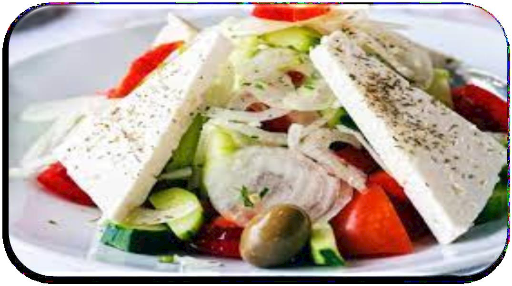
Ingredients:
- 2 tomatoes
- 1 cucumber
- half an onion
- some oils
- a piece of feta cheese
- a pinch of salt
- a pinch of oregano
- 2 tabespoons of oliveoil
Procedure:
Wash the vegetables and let them dry. Cut the tomatoes into pieces. Peel the cucumber and chop it. Put the vegetables into a bowl. Add the onion in rings on top of the vegetables. Add the olives and the cheese. Sprinkle with some salt, oregano and olive oil.
Pasticchio

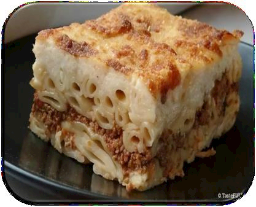
Ingredients:
- For the ground meat
- 4 tablespoon(s) olive oil
- 1 tablespoon(s) granulated sugar
- 2 onions, finely chopped, thyme, fresh
- 1 clove(s) of garlic, finely chopped
- 2 tablespoon(s) tomato paste
- 750 g ground beef 100 ml red wine
- 400 g canned tomatoes
- 1 teaspoon(s) cinnamon 2 beef bouillon cubes 2 bay leaves, 1/2 bunch parsley
- For the béchamel sauce, 100 g butter
Ingredients:
- 100 g all-purpose flour 1 liter milk
salt pepper
- 1/2 teaspoon(s) nutmeg
- 100 g gruyere cheese, grated 3 egg yolks
- For the pasta
- 300 g bucatini pasta 2 eggs
- 200 g feta cheese
- 1/2 bunch parsley, finely chopped 30 ml olive oil
thyble
- 50 g gruyere cheese, grated, finely
chopped
Place a pan over high heat.
Add 2 tablespoons of olive oil, the finely chopped onions, 1 tablespoon granulated sugar and finely chopped thyme.
Sauté for 3-4 minutes, until the onions caramelize nicely.
Add the garlic and continue to sauté.
Add the tomato paste and sauté for at least 2 minutes. It is important to sauté the tomato paste to give it a more intense flavor.
Add the ground meat. Break it up with a wooden spoon and brown for 4-5 minutes. At this point you may need
to add another 2 tablespoons of olive oil.
Add the wine and let the alcohol evaporate.
Add the canned tomatoes, cinnamon, sugar, bouillon cubes and bay leaves.
Turn the heat down to low and simmer for 10-20 minutes, until the sauce reduces and the ground meat is cooked.
When ready, remove from heat. Discard the bay leaves and set aside until needed.
Heat the butter in a pot over medium heat. As soon as it melts (do not let it burn), add the flour. Beat with a hand whisk and sauté the flour for a few minutes.
Scrape down the sides of the pot to release any flour, so it doesn’t burn. Add the milk, in small batches, whisking continuously so that no lumps form in the mixture.
The mixture will be quite thick at first. You need to be persistent and patient. As you add more and more of the milk, you will see how the béchamel
sauce will start to become nice and creamy.
When the béchamel sauce starts to thicken, you have to be very careful not to let it burn on the bottom. Whisk continuously to avoid this.
When ready, remove from heat and add salt, pepper, nutmeg and all of the grated gruyere, apart from 1 tablespoon which will be added at the end of the recipe.
To complete, add the 3 egg yolks and whisk to incorporate. Set aside until needed.
Add the pasta to a pot full of salted water. Boil 1-2 minutes less than the instructions on the box. They need to be al dente because they will cook further in the oven, so do not overcook.
Brush a baking pan with olive oil.
When the pasta is ready, drain and spread in the baking pan.
Add the 2 eggs, lightly beaten, a generous amount of thyme, parsley and crumbled feta cheese.
Season to taste and set aside until needed.
Preheat oven to 180* C (350* F) Fan.
Bring back the baking pan containing the pasta mixture. To the ground meat, add a ladleful of the béchamel sauce. Mix until completely incorporated.
The béchamel sauce will make the ground meat mixture hold together better when serving.
Spread the ground meat mixture over the pasta in the baking pan. Pour the remaining béchamel sauce over the ground meat. Last, sprinkle the reserved grated gruyere over the top. You can also add some small cubes of butter. Bake for 40 minutes or until the béchamel turns golden brown.
Cretan Dacos

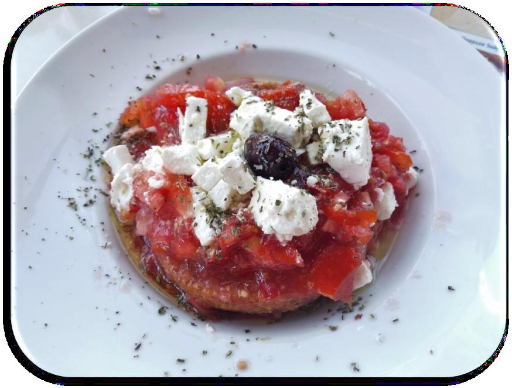
- 4 large round barley rusks
- 3 large mature tomatoes (pilled and mashed)
- 8 tbsps extra virgin olive oil
- 150 g feta cheese (5.5 ounces)
- 50g myzithra or feta cheese
- 10–15 black olives
- 1–2 tbsps capers or olives oregano
- salt and freshly ground pepper
Moisten the barley rusks , with 4 tbsps of water each, and drizzle with the olive oil.
Use a grater to grate the tomatoes, into a colander and leave for 5 minutes to drain.
Crumble the feta cheese and myzithra (soft cheese) with a fork, or grate it with a grater.
Finally, spread the grated tomato on the rusks and add the crumbled cheese. Top with the olive oil and capers or olives. Sprinkle with the oregano and drizzle with some extra olive oil.

- < BEGINNING
- END >
-
DOWNLOAD
-
LIKE
-
COMMENT()
-
SHARE
-
BUY THIS BOOK
(from $20.39+) -
BUY THIS BOOK
(from $20.39+) - DOWNLOAD
- LIKE
- COMMENT ()
- SHARE
- Report
-
BUY
-
LIKE
-
COMMENT()
-
SHARE
- Excessive Violence
- Harassment
- Offensive Pictures
- Spelling & Grammar Errors
- Unfinished
- Other Problem






COMMENTS
Click 'X' to report any negative comments. Thanks!