 We dedicate this to our wonderful honors biology class,
Mr. Cook, and our other friends and family
This book was created and published on StoryJumper™
©2010 StoryJumper, Inc. All rights reserved.
Publish your own children's book:
www.storyjumper.com

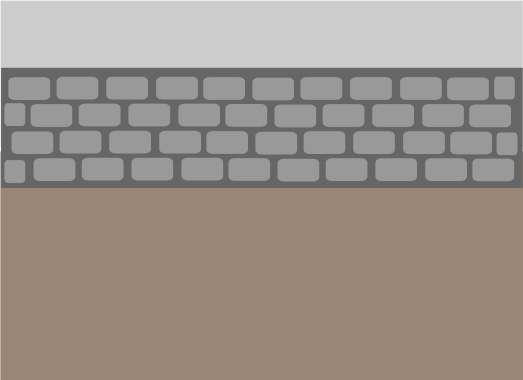




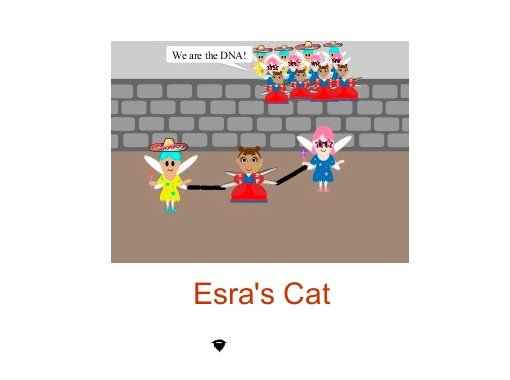
 We are the DNA!



The DNA fairies liked to be in groups of three called
nucleotides. The fairies in the yellow dresses are
Nitrogenous base fairies, the fairies in the red
dresses are Deoxyribose Sugar fairies, and the
fairies in the blue dresses are phosphate fairies.
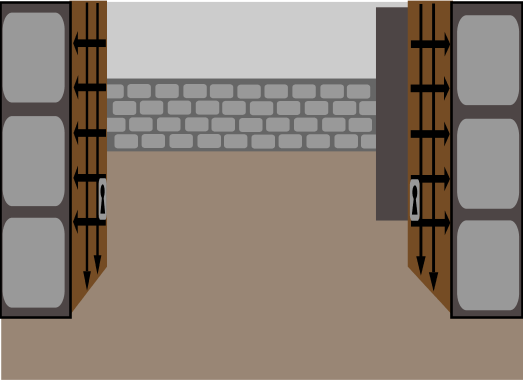








 We want your clothes!


One day some RNA fairies broke into the nucleus where
the fairies lived. They were jealous that the DNA fairies
could have two clothing racks while they could only have
one. The Helicase fairy broke into the closets of the
Nitrogenous base fairies and split the two halves of their
closets. Then the DNA Polymerase paired the old halves
of the clothing rack with new complementary halves.
This process is called DNA replication.
We want your clothes!
 Yeah!
Yeah!
 I am the transcriber!
Then RNA polymerase, the master of transcription,
made a copy of one half of the DNA's clothing. He
had the right materials to copy their adenine,
guanine, and cytosine dresses, but not their
thymine dress, so a similar uracil dress instead.
Then they sneakily returned the DNA fairies'
dresses, and they had no idea what would happen
next.
Checkpoint
1. How are the structures of DNA and RNA
similar and different?
Answer: There are two strands of DNA that
make a double helix and only one strand of
RNA. They also both have cytosine, guanine,
and adenine nitrogenous bases but DNA has a
thymine base while RNA has a uracil base.
2. How does DNA replication occur and what
enzymes are involved? Why is DNA replication
necessary?
Answer: The enzymes involved are DNA
polymerase and helicase. The helicase breaks
the bonds between strands of DNA and the
DNA Polymerase pairs the old strands with
new ones. It is necessary because it is needed
to make new cells.
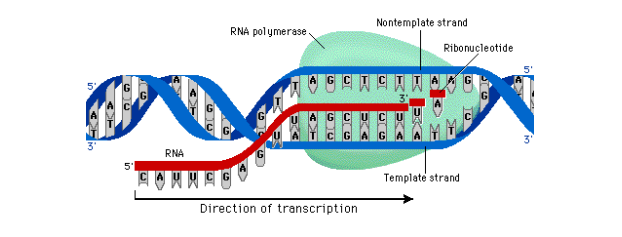
Checkpoint continued
3. Describe process of transcription. Where
does it occur?
Answer: This process occurs in the
nucleus. RNA polymerase bonds bases
from one DNA strand to their
complementary one, therefore making a
strand on mRNA. The only difference is
that thymine is replaced with uracil.


 Ribosome
 rRNA
rRNA tRNA
tRNA Codons
 mRNA
mRNA


 Amino AcidsAnti-Codons


Polypeptide Chains
The RNA fairies then put their copied dresses into groups of
three called codons and put them on a rack called mRNA.
The rack of clothing was sent out to the cytoplasm to a
ribosome that is in Endoplasmic Reticulum. Ribosome called
up his friend tRNA to make shoes in groups of three called
Anti-codons. Each group of shoes matched a specific group
of dresses. Ribosome's brother rRNA lived with him and
helped to figure out which ones went together. The three
pairs of shoes and their matching dresses made mini
clothing lines called Amino acids. Then the Amino Acids
were put together to make large clothing lines called
Polypeptide chains. The clothing lines were then sent to the
Golgi Apparatus where it was packaged into a protein and
then sent to the cell membrane to perform its function.
Checkpoint:
4. Why isn't DNA used directly for the
translation of protein instead of RNA? How are
the DNA and RNA functions different?
DNA isn't used for the translation of protein so
that everything is in place and the DNA does not
belong in the cytoplasm or outside the nucleus.
DNA stores the genetic information and the RNA
transfers the information to create proteins from
the nucleus to the ribosomes.
Checkpoint:
5. Describe the role of mRNA, tRNA, and rRNA
in translation.
The mRNA carries the message of what is to
be created (dictated by the DNA) into the
cytoplasm. tRNA then creates the
complementary pairs of this RNA called anti-
codons. After that, rRNA takes the information
and uses it to create a protein.


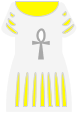
Sometimes, people can forget to put in parts of
the dresses, put in something extra, put the
wrong type of thing (color, etc.), or change
something small in design (deletion, insertion,
substitution, and point mutation).
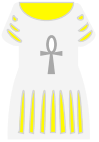
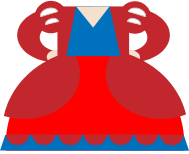
Changing this can majorly mess up the
dresses. Sometimes, everything can be off,
changing a small white dress to a large fancy
dress (frameshift).
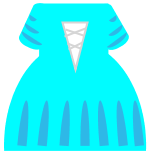
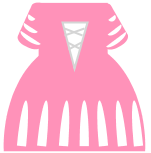
Sometimes, there can be a slight change in
one aspect of the dress such as color
(missense mutation).

You've previewed 22 of 34 pages.
To read more:
Click Sign Up (Free)- Full access to our public library
- Save favorite books
- Interact with authors

- < BEGINNING
- END >
-
DOWNLOAD
-
LIKE(3)
-
COMMENT()
-
SHARE
-
SAVE
-
BUY THIS BOOK
(from $6.79+) -
BUY THIS BOOK
(from $6.79+) - DOWNLOAD
- LIKE (3)
- COMMENT ()
- SHARE
- SAVE
- Report
-
BUY
-
LIKE(3)
-
COMMENT()
-
SHARE
- Excessive Violence
- Harassment
- Offensive Pictures
- Spelling & Grammar Errors
- Unfinished
- Other Problem





COMMENTS
Click 'X' to report any negative comments. Thanks!