 We dedicate this book to Deoxyribose sugar. Although we do not
 know exactly what you taste like, it's probably pretty sweet. Maybe.
I'm actually banking on savory, myself, but this was the consensus.
This book was created and published on StoryJumper™
©2010 StoryJumper, Inc. All rights reserved.
Publish your own children's book:
www.storyjumper.com

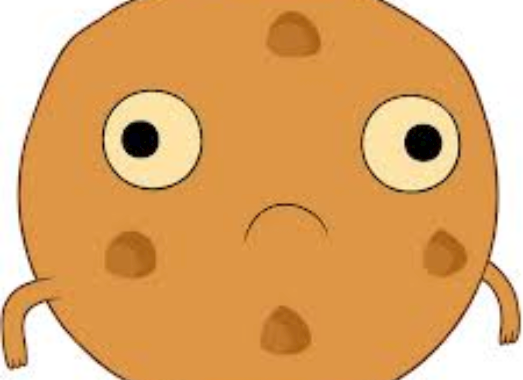

 What the heck's
 going on here?
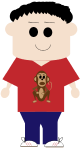


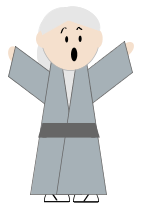
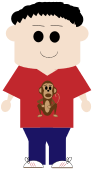
Once upon a time, there was a young boy
named Chordagoth. He had just gotten into
his science class and sat down. However,
his science teacher began to teach some
pretty confusing stuff to him. It was all
about something called DNA and RNA, and
Chordagoth had no idea what she was
talking about.

So Chordagoth decided to talk to his
teacher after class to see if she could help
him.
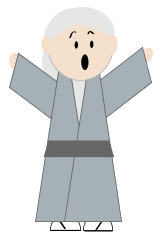
"Well," she said. "Why don't I use some
metaphors to help you?"
Chordagoth smiled and nodded.
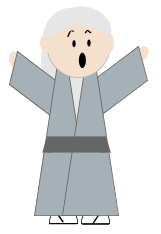


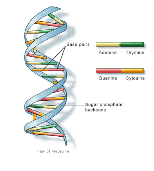
"Think that you are in a kitchen, and that
kitchen is our cell. In that kitchen, you have a
recipe book, which is our nucleus. Inside that
book, you have many pages, which are the
nucleotides of our DNA. These pages have
borders, which are made out of deoxyribose
sugar and phosphates. There are four
different ingredients in our recipes. They are
Adenine, Thymine, Cytosine, and Guanine.
Adenine and Thymine are together and
Cytosine and Guanine are together."




 Want
WantSome
Cookies?
"Our DNA is very important, so important that
we need to make copies of it for all the
kitchens we have. This process of copying is
called replication. To do this, we cut our pages
in half using special scissors called Helicase
and connect our complementary ingredients
together using glue called DNA Polymerase to
form exact copies of our pages!"

 Wunt
WuntSum
Cukas?


"This is necessary to get DNA into all of our
cells and kitchens," his teacher said.
"Cool," Chordagoth said excitedly. "What
next?"
"Well..."
 (Recap) Checkpoint ONE -A-
 1.What is DNA made up of?
2.Why is replicating our DNA
so important?
3.What are the enzymes used
in this process?
"The next step is RNA, which is one-stranded
instead of DNA's two strands. You see,
Chordagoth, our recipe book is written in a
different language, so the chefs in our kitchen
are unable to read it."
"Uh oh!" Chordagoth said.
"No, no, do not worry. A process called
transcription rewrites the recipes in a way that
the chefs can read them."


 I can nota
underastand
theesa!
 QUE?
QUE?
"They go in and rip the pages apart. Then what's
called RNA Polymerase goes into the DNA and
rewrites the recipe using part of the information
that is already there. It also adds a new
ingredient, Uracil, and takes away Thymine, in
the list. Now when the chefs read the recipes,
they read mRNA, or messenger RNA, and know
what food they need to make. It is important to
know that DNA contains the information, and
RNA sends the message out to the kitchen and
cell."





 (Recap) Checkpoint TWO
 1. What nucleotide ingredient
 is added to the recipes during
transcription?
2. Where does transcription
occur?
3. What does mRNA do?
 (Recap) Checkpoint THREE
 1. Quickly compare and contrast
 DNA and RNA.
(Think about shape/makeup/
purpose/etc.)
"So what happens with the mRNA thing?"
Asked Chordagoth.
"Our new strand of mRNA, made up of a list of
ingredients, goes out into the cytoplasm
kitchen, and the chefs prepare to make a
delicious batch of amino acid cookies from it."
"But...how to they do that?" Chordagoth said.
"They need a little help from tRNA and rRNA,"
said the teacher.
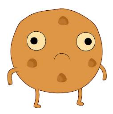
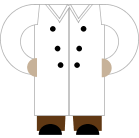


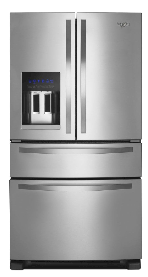
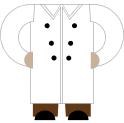
"Let me explain," the teacher said. "The chefs
go into their rRNA ribosomal refrigerator to
begin the process of the translation of their
recipes into cookies. Their ribosome
refrigerator came from the special Endoplasmic
Reticulum Factory. The chefs use their mRNA
list and look through the fridge for the right
ingredients. Then their transfer--tRNA comes
in to bake the cookies by using the ingredients
on the mRNA recipe sheet."


 tRNAmRNArRNA
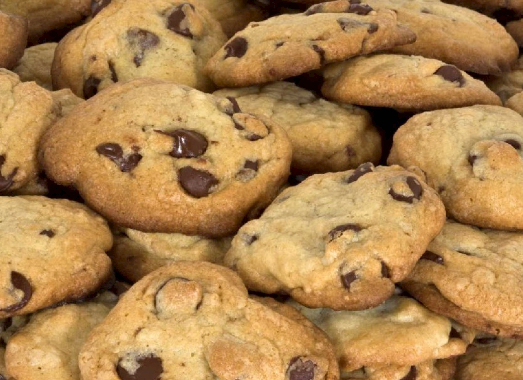
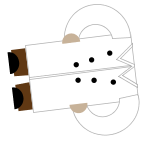
"The tRNA reads the mRNA, Chordagoth, and
for every three ingredients, known to the chefs
as a codon, the tRNA brings in a
complementary anti-codon that has a delicious
amino acid cookie attached to it. The tRNA
leaves the amino acid behind, leaving the
cookie. There are several combinations of
three ingredients, and many of the unique
sequences make different cookies. The chefs
call the entire batch of amino acids a
polypeptide chain."


"But...why can't the DNA in the recipe book
itself be used for this translation stuff?" Said
Chordagoth, who was really craving a protein
cookie at this time.
"Well, that's easy Chordagoth! Don't forget
that the DNA is in a different language, and
does not have all the right ingredients to make
the cookies. We need the Uracil that came
from transcription."
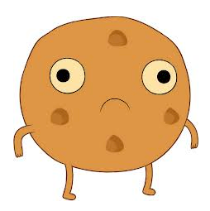
 (Recap) Checkpoint FOUR
 1. What does mRNA do?
2. What does rRNA do?
3. What does tRNA do?
4. Why isn't DNA itself
used in translation?
You've previewed 25 of 39 pages.
To read more:
Click Sign Up (Free)- Full access to our public library
- Save favorite books
- Interact with authors


- < BEGINNING
- END >
-
DOWNLOAD
-
LIKE(2)
-
COMMENT()
-
SHARE
-
SAVE
-
BUY THIS BOOK
(from $7.79+) -
BUY THIS BOOK
(from $7.79+) - DOWNLOAD
- LIKE (2)
- COMMENT ()
- SHARE
- SAVE
- Report
-
BUY
-
LIKE(2)
-
COMMENT()
-
SHARE
- Excessive Violence
- Harassment
- Offensive Pictures
- Spelling & Grammar Errors
- Unfinished
- Other Problem





COMMENTS
Click 'X' to report any negative comments. Thanks!