














This book is dedicated to all of the young scientists in elementary school classrooms around the world.
Al Magura
EDUC E- 328
Dr. Hayes
2023

When electrons, the negatively charged particles in an atom, move from one place to another... ELECTRICITY is created!
Have you ever seen electricity?
Electricity can be seen as lightning in the sky during a storm.
A shock from someone or rubbing your hair on a balloon creates static electricity!
An Electrical Charge is a physical property of how much electricity an electron, proton, or other subatomic particle has.
Electrons have a negative electrical charge and protons have a positive electrical charge.
Negative (-) and positive (+) attract!


The flow of electrical charges from positive (+)
to negative (-) is called an Electrical Current.
Electrical charges flow best through materials, such as wires.
The electric current flows through a wire, kind of how water flows through a river!
An electrical current can be useful to power things like a phone charger, TV, microwave, or washing machine.
Can you name something that uses wires to create a steady flow of electrical current?


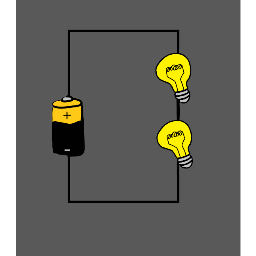
The path the electrical current can flow along is called an Electrical Circuit.
There are some rules, though...
The path must be a complete circular path so that the electricity can flow!
Like a circle, there must not be any spaces or gaps in the circuit or electricity will stop.
The circuit needs a power source, like an outlet in the wall, or a battery.
Can you find the power source in the picture of the electrical circuit?


The arrows show the direction the current is flowing!

We have learned that the electrical current flows best through wires.
But what are wires made of?
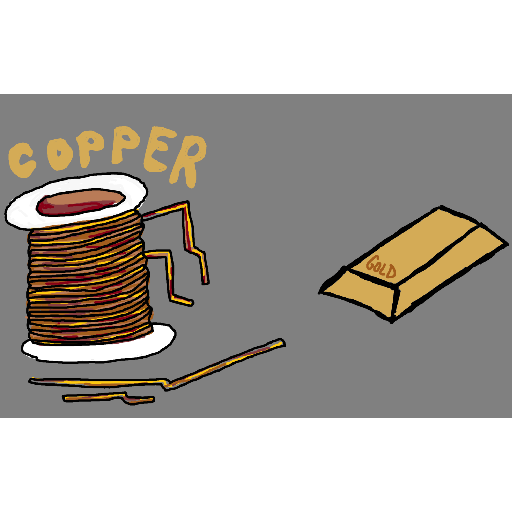
We use wires made out of metal for circuits because they are good Conductors of Electricity. They help guide the electrical charge on its path, or electrical current.
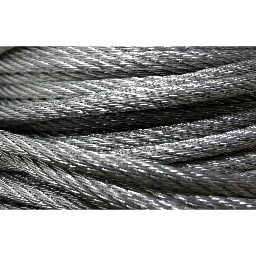
Some examples of conductors are metals such as, steel, iron, copper, gold, and silver.
A Conductor of Electricity can be any material or substance that allows electrons to freely flow.
Did you know that even water, animals, trees, and people can be Conductors of Electricity?


Unlike conductors, Insulators block or slow down the flow of electricity.
Insulators do not let electrons flow freely. Instead they hold on to them tightly, limiting their flow.
Some examples of insulators are glass, plastic, porcelain, rubber, and ceramic.
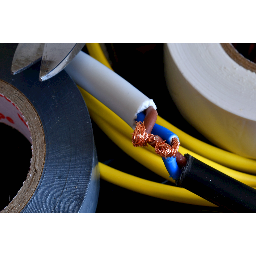
Question: Why are electrical wires wrapped in plastic or rubber coating?


Answer: To prevent electricity from travelling to other objects, or people, like yourself!
Luckily, Electrical Insulators protect us from the electricity conducted by metal wires.
You could get shocked by the exposed wire if it were not covered by an insulator!

Oh no! There is a problem with this circuit. It seems that the electrons have stopped moving and there is no electrical current.
Why could this be?
...Well, it seems that there is a break or space in the circuit, making it an Incomplete Circuit!
In an Incomplete Circuit, the electric current cannot flow because the path has been interrupted.

?
- Full access to our public library
- Save favorite books
- Interact with authors


- < BEGINNING
- END >
-
DOWNLOAD
-
LIKE
-
COMMENT()
-
SHARE
-
SAVE
-
BUY THIS BOOK
(from $4.19+) -
BUY THIS BOOK
(from $4.19+) - DOWNLOAD
- LIKE
- COMMENT ()
- SHARE
- SAVE
- Report
-
BUY
-
LIKE
-
COMMENT()
-
SHARE
- Excessive Violence
- Harassment
- Offensive Pictures
- Spelling & Grammar Errors
- Unfinished
- Other Problem

COMMENTS
Click 'X' to report any negative comments. Thanks!