
Our Magazine - March 2023
Eduard CULAREA,Giulia CARABINEANU, Sarah DONOSE, Roberta GAGEANU,Rebeca GRIGORE, Denis LINTE, Carina POPA, Alexia STANCA, Alexia UDREASCU
Andreea CONSTANTINESCU
Letitia MURARUS
Teodora GROVU
Spring-The Season of Renaissance!
Romanian Spring Rites-A Tradition of Empathetic Gestures
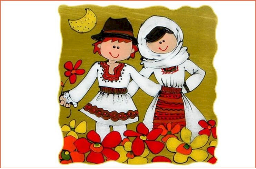
The “DRAGOBETE” Holiday
(The Romanian “Saint Valentine’s Day)
The legend says that „Dragobete” was the son of „Baba Dochia.”
His day is celebrated on February 24th and is the equivalent of Valentine’s Day.
It is also a holiday of love and romance that takes place at the beginning of spring, when nature comes back to life and the birds start to find their pair.

Unlike Saint Valentine who is a calm and reasonable man, Dragobete is much similar to Cupid and Eros since he is represented as a very handsome guy, naughty and impulsive. He is considered to be the protector of love and a matchmaker.
The legend says that those who meet on this day, Dragobete’s Day, will cherish a love that is to last all year long and the “engagement” of this day

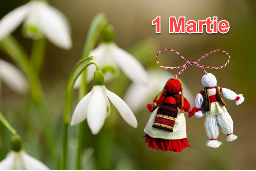
March as the Month of “Martisor” (“A Symbol of Spring”)
SPRING –The Season of Happiness
The Legend of “Mărţişor”The “Mărţişor”-as the first sign of spring- is a Romanian tradition. On this day, people offer spring trinkets as gifts, usually objects tied up with a beautiful red and white thread. It is usually the girls and the ladies who receive these presents, which they wear for another 9 or 12 days. Afterwards, the threads are hung in trees so that these become healthy, vigorous and as beautiful as the girls.


The origins of this traditionThe tradition of this offering habit is inherited from the Dacians and Romans, having its origin in ancient and heathen beliefs as well as agricultural practices. In Dacian times spring symbols were made during winter time. Dacian women wore coins or pebbles tied with red and white wool yarn, for good luck and a better year.
Mărţişor is the nickname of the third month, March. On these days, people used to celebrate Mars, the god of agriculture and warrior, protector of the fields, who personified the periodic rebirth of nature.
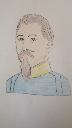
Alexandru Ioan Cuza politician, ruler of the
United Principalities
"To estimate fairly the character of a famous man, he must be judged by the standards of those times, not of today." Mark Twain
According to this quote, Alexandru Ioan Cuza
was and remains a remarkable personality for modern Romania.
Alexandru Ioan Cuza born in Bârlad.
received an urbane European education, being educated at Jassy, Pavia, Bologna and Athens. After a brief period of military service, visiting Paris from 1837 to 1840 for a further course of study.
He was an extroverted, impulsive nature, who felt good among people, he behaved very gallantly with women.
By his election as lord of Moldova, on January 5, 1859, and of Romanian country, on January 24, 1859, the Union of the two principalities was accomplished.

This was achieved in January 1862, when Moldova and the Romanian country formed the modern unitary Romanian state, officially adopting the name Romania. The personal regime instituted by Cuza after May 2, 1864 caused the dissatisfaction of the radical liberals, who later made a cartel with the conservatives who decided to remove him. The pressure exerted forced the ruler to abdicate on the night of February 10/22–11/23, 1866.The rest of his life was spent in exile, living most of the time in Paris, Vienna, Wiesbaden.Alexandru Ioan Cuza died on May 3/15, 1873, at the Europa Hotel in Heidelberg, aged 53, as a result of a severe cold, but also suffering from an older disease (asthma)
as well as some disorders of the liver and heart.
He was initially buried at the Royal Church near the
Royal Palace in Ruginoasa, according to his wish.
At least 30,000 peasants attended the funeral in Ruginoasa,as a sign of respect for his activity!.
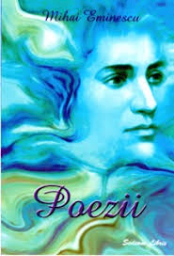
A MIHAI EMINESCU’S POEM
Ce te legeni, codrule, Fără ploaie, fără vânt, Cu crengile la pământ?
De ce nu m-aş legăna,Dacă trece vremea mea!
Ziua scade, noaptea creşte Şi frunzişul mi-l răreşte.
Bate vântul frunza-n dungă –Cântăreţii mi-i alungă;
Bate vântul dintr-o parte – Iarna-i ici, vara-i departe.
Şi de ce să nu mă plec, Dacă păsările trec!
Peste vârf de rămureleTrec în stoluri rândurele,
Ducând gândurile mele Şi norocul meu cu ele
Şi se duc pe rând, pe rând, Zarea lumii-ntunecând,
Şi se duc ca clipele, Scuturând aripele,
Şi mă lasă pustiit Vestejit şi amorţit. Şi cu doru-mi singurel,
De mă-ngân numai cu el!
What are you swinging?
What are you swinging?
What are you swinging,
O forest, without rain, without wind,
With branches on the ground?
Why would I not rock if my time passed?
The day falls,
The night grows,
And the foliage grows.
The wind blows the leaf in the stripe –
The singers drive them away;
The wind blows from the side

- Full access to our public library
- Save favorite books
- Interact with authors
- < BEGINNING
- END >
-
DOWNLOAD
-
LIKE
-
COMMENT()
-
SHARE
-
SAVE
-
BUY THIS BOOK
(from $3.59+) -
BUY THIS BOOK
(from $3.59+) - DOWNLOAD
- LIKE
- COMMENT ()
- SHARE
- SAVE
- Report
-
BUY
-
LIKE
-
COMMENT()
-
SHARE
- Excessive Violence
- Harassment
- Offensive Pictures
- Spelling & Grammar Errors
- Unfinished
- Other Problem






COMMENTS
Click 'X' to report any negative comments. Thanks!