
Renaissance is the period in European history marking the transition from the Middle Ages to modernity and covering the 15th and 16th centuries. During that time people started taking more interest in various fields, such as art, stem, and architecture.
*stem: science, technology, engineering, mathematics
One of the major scientific discoveries of the Renaissance came from Polish mathematician and astronomer Nicolaus Copernicus. In the 1530s, he published his theory of a heliocentric solar system. This places the sun, not the Earth, at the center of the solar system. It was a major breakthrough in the history of science, though the Catholic Church banned the printing of Copernicus' book.
Galileo Galilei was a major Renaissance scientist persecuted for his scientific experiments. Galileo improved the telescope, discovered new celestial bodies and found support for a heliocentric solar system. He also paved the way for Isaac Newton, one of the greatest scientists to ever exist.
Issac Newton's main descoveries had to do with gravity but he also invented Classical mechanics, a physical theory describing the motion of macroscopic objects, from projectiles to parts of machinery and astronomical objects, such as spacecrafts, planets, stars, and galaxies
Some of the leading figures in the field of mathematics are: Regiomontanus, who made a copy of the Latin Archimedes and had a program for printing mathematical works, Commandino, who likewise produced an edition of Archimedes, as well as editions of works by Euclid, Hero, and Pappus; and Maurolyco, who not only translated the work of ancient mathematicians but added much of his own work to these. Their translations ensured that the next generation of mathematicians would be in possession of techniques far in advance of what it was generally available during the Middle Ages.
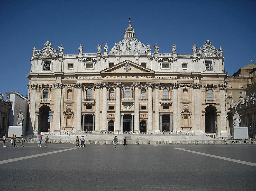
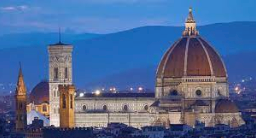
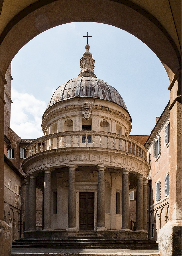
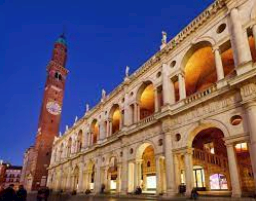
When it comes to architecture,features of Renaissance buildings include the use of the classical orders and mathematically precise ratios of height and width combined with a desire for symmetry, proportion, and harmony. A few great examples of buildings with glorious designs and decorations are: St. Peter's Basilica in Rome, the Tempietto of Rome, the dome of Florence's cathedral, Rome's Pantheon, as well as Basilica Palladiana in Vicenza.
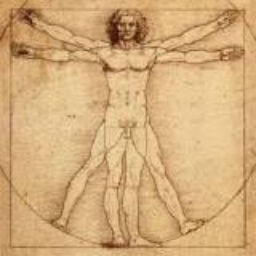
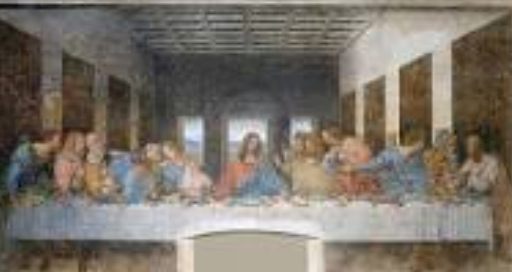
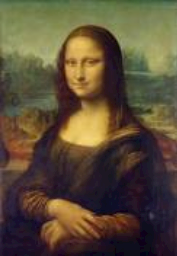
Last but not least I will talk about some of the masterpieces artists created back then. There are numerous examples to choose from, but even a few can proove how beautiful yet extremely complicated they all were. For starters I have to mention the pieces created by the famous Leonardo DaVinci. These are the well-known Mona Lisa, the Last Supper that depicts Jesus and his students, and the Vetruvian Man.
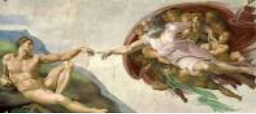
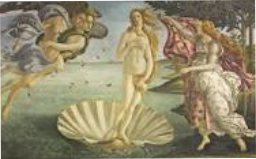
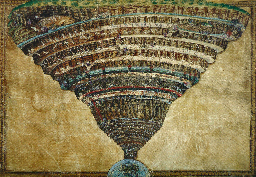
Other worth mentioned creations are the Birth of Venus and La Mappa dell'Inferno by Sandro Botticelli, the statue of David and the Creation of Adam by Michael Angelo, as well as Venus of Urbino by Titian, Three Graces by Raffaello and Dante and his Poem by Domenico di Michelino.
- < BEGINNING
- END >
-
DOWNLOAD
-
LIKE
-
COMMENT()
-
SHARE
-
BUY THIS BOOK
(from $2.99+) -
BUY THIS BOOK
(from $2.99+) - DOWNLOAD
- LIKE
- COMMENT ()
- SHARE
- Report
-
BUY
-
LIKE
-
COMMENT()
-
SHARE
- Excessive Violence
- Harassment
- Offensive Pictures
- Spelling & Grammar Errors
- Unfinished
- Other Problem





COMMENTS
Click 'X' to report any negative comments. Thanks!