
This book was created and published on StoryJumper™
©2014 StoryJumper, Inc. All rights reserved.
Publish your own children's book:
www.storyjumper.com

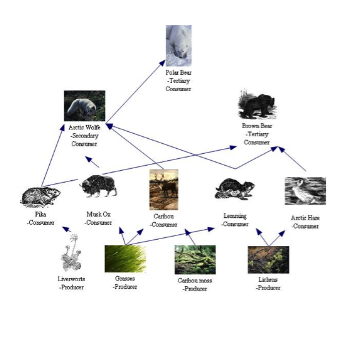
The Tundra Biome
Biotic Factors- Animals that live in the Tundra include Lichen, Marmots, and Elk.
Plants that grow in the Tundra include Reindeer Mosses, Cotton grasses, and
Liverworts
Abiotic Factors- The type of soil found in the Tundra is called Permafrost which is
frozen soil that can be up to 6 feet thick. Some of the Landforms found in the
tundra are Pingos, Strips, and Frost Boils. The Climate of the Tundra is very cold
and dry. Temperatures in the Tundra are very cool getting as low as -30ºC. Also
the Tundra receives only about 6-10 inches of precipitation a year on average.
Human Impacts- In the tundra the biggest human impacts are oil drilling, over
hunting, and air pollution. There are many natural resources in the tundra so
people mine them and it damages the fragile ecosystem. Over hunting is also a
major problem. Sailors hunt some of the few tundra animals like oxen for food
and clothing. Lastly air pollution depletes the ozone layer, which harms the
tundra animals and plants.
Location- The Tundra is an area that includes Greenland, parts of Alaska,
northern Canada and northern Russia. The latitude of this range is 75 to 60
degrees north. The Longitude of the Tundra is 156 degrees west, in Barrow,
Alaska.
The Deciduous Forest Biome
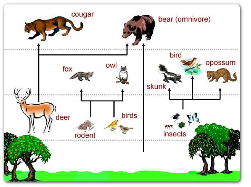
Biotic Factors- Some animals found in the deciduous forest are the American
Bald Eagle, Black Bear, and White-tail Deer. Also some plants
that are found in the deciduous forest are the White Oak tree, White Birch,
and the Lady Fern.
Abiotic Factors- The soil in the Deciduous Forest is very rich due to
decomposing leaves. The specific soil types are Alfisols and Ultisols.
Landforms found in deciduous forests are hills and mountains. The climate
in the Deciduous Forest is warm and moist. Average summer temperatures
are 70ºF and the deciduous forest receives about 32 inches of precipitation
a year.
Humans impact deciduous forests by deforestation and over hunting.
Deforestation occurs because of logging of clearing trees for farmland.
Cutting down trees impacts the environment negatively by destroying
habitat and destroying food sources for animals in the ecosystem. Over
hunting is a problem mainly in the White-tailed deer population. Over
hunting causes the fragile food web to be unbalanced and eventually can
destroy the entire ecosystem.
Location- The forest reaches from about longitude 95°W to the Atlantic
coast and from 30 to 45°N
The Taiga Biome
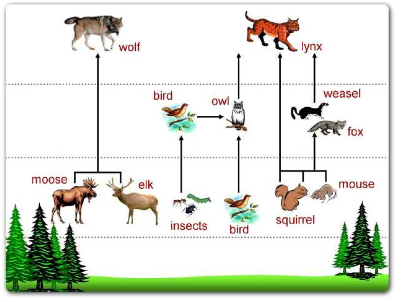
Biotic Factors- Some of the animals found in the Taiga Biome are moose,
bear, and deer. Also some common types of trees found in the Taiga are
Spruce, Pine, and Fir.
Abiotic Factors- Mountains, glaciers, and forests are landforms that are
commonly found in the Taiga. The soil type found commonly in the Taiga
is Spodosol. The climate in the Taiga is described as cool and humid. The
Taiga maintains a temperature of below 50ºF in all months and a large
amount of precipitation year round.
Human Impacts- Two of the most serious human impacts on the Taiga is
oil drilling and poaching. Oil drilling in the Taiga leads to deforestation and
the formation of oilsands, huge ponds used to store toxic tailings from oil
drilling. These oilsands can kill thousands of waterfowl native to the Taiga.
Also Poaching accounts for the endangerment of many species native to
the Taiga such as the Siberian Taiga. Poaching weakens the food web of
the Taiga and the entire ecosystem.
Location- 50º North latitude to the Arctic Circle
The Tropical Rain Forest
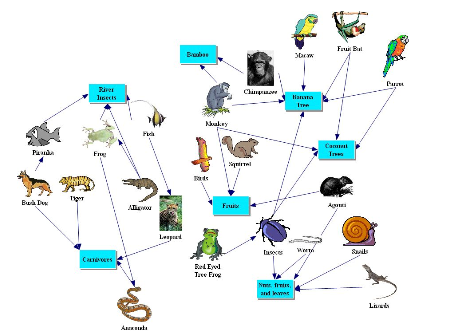
Biotic Factors- Animals that can be found in the Tropical Rain Forest are
Jaguars, Ocelots, and Anacondas. Some plants that are native to the
Tropical Rain Forest are Lianas, Bengal Bamboo, and Mangrove Trees.
Abiotic Factors- Landforms that make up the Tropical Rain forest are
Wetlands, Rivers, and Waterfalls. The types of soil in the Rain Forests are
ultisols and oxisols. The climate of the Rain Forest is very warm and humid.
It receives over 80 inches of rainfall every year on average and has an
average temperature of 77ºF.
Human Impacts- Deforestation and habitat destruction are the two major
impacts that humans have on the Rain Forest environment. About 80,000
acres of rain forest is cut down every day. This mean that many animals
habitat are being destroyed. Habitat destruction leads to the extinction and
endangerment of many species that are only found in the Rain Forest.
Location- The tropical rain forest is found between 15º to 25º North and
South of the Equator.
The Savanna Biome
Biotic Factors- Animals that live in the Savanna include Giraffes, Lions, and
Cheetahs. Also plants that live in this biome include Senegal gum Acacia, elephant
grass, and Bermuda grass.
Abiotic Factors- Landforms found in the Savanna are woodlands, rivers, and
prairies. The soil in the Savanna is very infertile. In the Savanna the summer
climate is humid and very hot while in the in the winter the weather is hot and dry.
The average temperature is 72ºF and the average rainfall is 10-30 inches annually.
Human Impact- Poaching and tourism have impacted the Savanna environment
largely. Poaching leads to the endangerment of many animals, which hurts the
Savanna food chain causing there to be less predators to control prey populations.
Tourism affects the Savanna by destroying an animal's natural habitat and often
exhausting much of an areas water supplies also.
Location- The African Savanna biome is a tropical grassland in Africa between
latitude 15° North and 30 degrees S and longitude 15 degrees W and 40° West.
You've previewed 10 of 16 pages.
To read more:
Click Sign Up (Free)- Full access to our public library
- Save favorite books
- Interact with authors

- < BEGINNING
- END >
-
DOWNLOAD
-
LIKE(5)
-
COMMENT()
-
SHARE
-
SAVE
-
BUY THIS BOOK
(from $3.19+) -
BUY THIS BOOK
(from $3.19+) - DOWNLOAD
- LIKE (5)
- COMMENT ()
- SHARE
- SAVE
- Report
-
BUY
-
LIKE(5)
-
COMMENT()
-
SHARE
- Excessive Violence
- Harassment
- Offensive Pictures
- Spelling & Grammar Errors
- Unfinished
- Other Problem





COMMENTS
Click 'X' to report any negative comments. Thanks!