 Julius Ceaser
Logos, Ethos, & Pathos
This book was created and published on StoryJumper™
©2014 StoryJumper, Inc. All rights reserved.
Publish your own children's book:
www.storyjumper.com

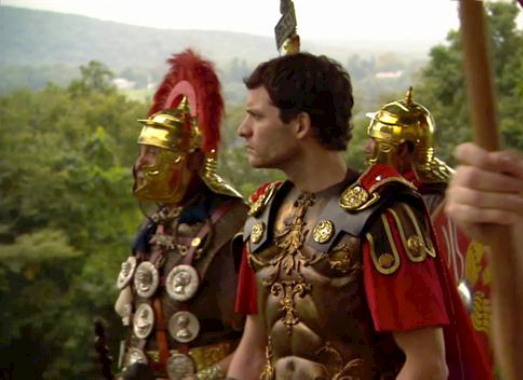
Pathos 1: "Being mechanical, you ought not
walk" (1.13)
Pathos 2: "I hear a tongue, shriller than all
the music" (1.2.16)
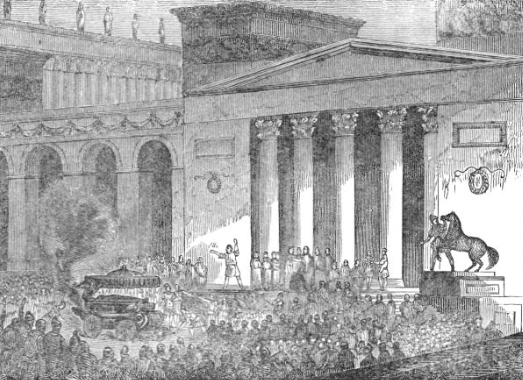
Ethos:
Examples: In Brutus's speech, he begins by addressing
the crowd as "Romans, countrymen, and lovers,"
demonstrating that he is one of them and that he values
their role in Roman society. This helps establish
credibility, and as Brutus continues by arguing that he
killed Caesar to protect all citizens from Caesar's
ambition, he appeals to their sense of Roman values.
Similarly, Antony employs a multitude of ethical
appeals. Like Brutus, he groups himself with the crowd
and addresses them as "Friends, Romans, and
Countrymen." He also asks their permission to leave the
platform and go down among them--this helps establish
his credibility as "one of them," not as someone who is
above them. While much of his speech appeals to the
crowd's emotions (pathos), Antony does discuss the
people's duty to Caesar by showing what a "people's"
leader Caesar was.
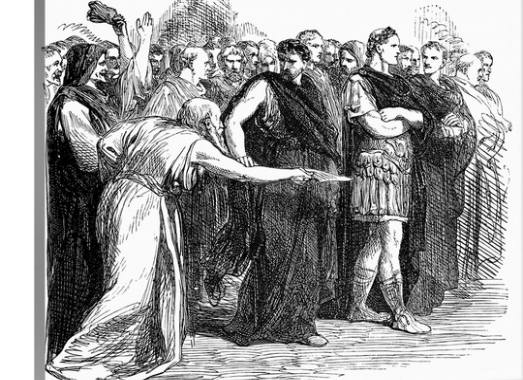
Logos:
Examples: Brutus uses logos when he cites examples of
Caesar being too ambitious and seeking a crown when
the Romans had already suffered under the reign of a
tyrant king. By bringing up elements of Roman history
and true events involving Caesar, Brutus seeks to
demonstrate that the assassination was a planned action
based on thought and facts. Antony, too, employs logos
when he lists examples of Caesar's actions on behalf of
all Roman citizens--his willingness to share the spoils of
war with the people and his establishing a reputation for
Rome throughout the known world; even Brutus could
not the truth in Antony's words. The will itself is another
example of logos. While Antony uses the literal will to
stir up the crowd's emotions, the contents of the will
represent logical support for Antony's defense of Caesar.
The will leaves the each citizen a stipend and land to
use for public parks.
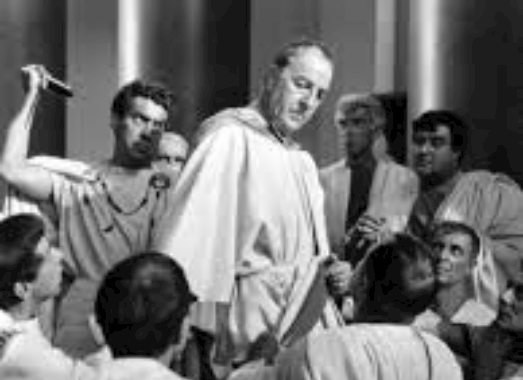
Julius Caesar Fate and Free Will
Men at some time are masters of their fates:
The fault, dear Brutus, is not in our stars,
But in ourselves, that we are underlings. (1.2.9)
That's what Cassius says to Brutus as the two
contemplate removing Caesar from power. Although
Cassius claims that men are "masters of their fates" as a
way to motivate the conspirators to action against
Caesar, there's a lot of evidence to suggest he's wrong.
The play is full of omens and prophesies that come true,
which undermines the sense that characters can
exercise free will and shape the outcomes of their lives.
We should also keep in mind that Julius Caesar
dramatizes historical events that have, by definition,
already happened. As characters struggle with questions
of fate vs. free will, the audience already knows what
their futures hold. This tends to create a lot of dramatic
irony
You've previewed 10 of 16 pages.
To read more:
Click Sign Up (Free)- Full access to our public library
- Save favorite books
- Interact with authors


- < BEGINNING
- END >
-
DOWNLOAD
-
LIKE(3)
-
COMMENT()
-
SHARE
-
SAVE
-
BUY THIS BOOK
(from $3.19+) -
BUY THIS BOOK
(from $3.19+) - DOWNLOAD
- LIKE (3)
- COMMENT ()
- SHARE
- SAVE
- Report
-
BUY
-
LIKE(3)
-
COMMENT()
-
SHARE
- Excessive Violence
- Harassment
- Offensive Pictures
- Spelling & Grammar Errors
- Unfinished
- Other Problem





COMMENTS
Click 'X' to report any negative comments. Thanks!