Thanks to
English teacher Fatma YÜCESOY TOKGÖZ
Akif Emre ATLI Asya COŞKUN
Deniz YALÇIN Ecrin Asel USTA Elül Sena KUTLU Eray ŞENOL
Gökçe OTUR Kuzey BEKDEMİR
Yavuzhan KIRAN Zeynep Naz ÇİÇEK Zümra YILMAZ

CONTENTS
1.Introduction of school
2.Introduction of ORDU
3.Meetings
4.Logo and poster studies
5.Presentations
-Mustafa Kemal ATATÜRK
-Imam's Hüsnü -Süleyman Felek
-Fatma Çavuş - Kahraman Sağra
-Topal Osman - Gürbüz Doğan Ekşioğlu - Hazelnut -İpsiz Recep Emice
-Rüsumat:4
-Rüsumat No:4
ALTINORDU SECONDARY SCHOOL
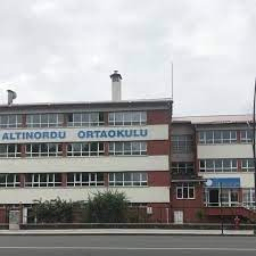
ALTINORDU SECONDARY SCHOOL
It is located at the seaside of ORDU.It is cute and lovely school.It is clean and has a wonderful school canteen , school garden and view.
History
With the transition to single education, our school started education in the 2019 - 2020 academic year with 21 branches in its own building.
Vision: To make every point of the school a learning area, to realize education and training in line with contemporary, democratic, universal values and principles and to be a leading school. Altınordu Secondary School, which opened its doors to its students in the 2019-2020 academic year, has adopted the principle of raising individuals who are based on universal values, who are committed to national values, who have character, and who have a career plan. and technologically based education approach, which attaches importance to academic performance measurement and process follow-up, is aware of the necessity of cultural, artistic and sportive development for all individuals, It has the team spirit and vision developed in accordance with the 21st century skills.
Mission: Setting an example to its environment with its behaviors, keeping up with the developing technology of the day and constantly improving itself, to raise individuals who can consciously turn to the professional and academic field in proportion to their abilities and abilities and who will raise our country above the level of modern civilization.
Achievements: Individual and team achievements have been achieved in many sports.
ORDU
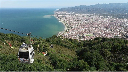
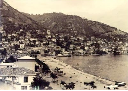
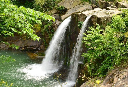

Ordu province is located at the foot of a verdant hill, and is one of the calmest and greenest areas along the Black Sea coast of Turkey. Ordu has a mild climate with cool summers and moderate winters with lots of rain. Due to its rainy weather, the land is fertile, with vegetable and fruit gardens and wide forests covering the whole area, combining the green with the blue. Caka beach is a popular beach for locals to swim in the Black Sea.
A distinct characteristic of Ordu is its being the center of hazelnut production. The Golden Hazelnut Festival held in September is hosted by this city, and the local chocolate-nut confection is a tasty specialty. Other major sources of income in Ordu are fishing and agriculture. Ordu's cuisine is mostly based on anchovy and vegetables.
The history of the city dates back to the 7th century BC. Then Romans and Trebizond Kingdom in Pontus ruled the area until a branch of Turkic Oghuz tribe came to Ordu in the 14th century AD, forming the Haci Emir Principality. During the Ottoman Empire Ordu remained as a district of Trabzon province, then after the Republic it became a province itself.
Previously named "Cotoyora", the ancient city of Ordu carries more recent signs; the Pasaoglu Mansion, serving as an Ethnography museum today, belonged to a wealthy and influential Ottoman family of the 19th century, and holds signs of the life style once maintained. There is a remarkable church dating back to the 18th century, today named as Tasbasi culture center. Laleli mosque in Ikizce district is 100 years old and is a fine example of timber mosques in Anatolia, it was built without a single nail. Atik Ibrahim Pasha mosque was built around 1170's. Osman Pasha fountain in the city center was built in 1842 and has very high columns.
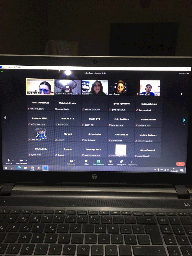
our project meetings
We did our meetings via zoom.


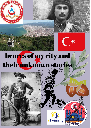
OUR LOGO AND POSTER STUDIES




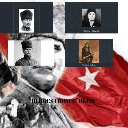
MUSTAFA KEMAL ATATÜRK AT ORDU
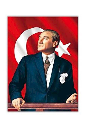
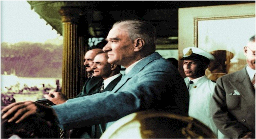
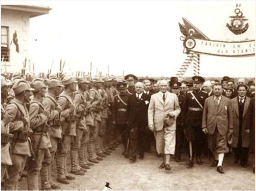
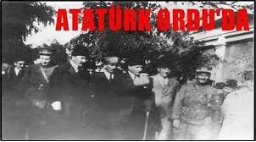
MUSTAFA KEMAL ATATÜRK AT ORDU
Immediately after the Republic, Mustafa Kemal Atatürk had begun travelling around the country in
order to identify the needs of the nation, which exhausted by long years of war, and to get their hopes for the future.
In the autumn of 1924, President Mustafa Kemal Atatürk got on a trip to the Black Sea cities.
The visits were shorter than planned. Because there was an earthquake in Erzurum on 13 September and it was necessary to go there first. The Hamidiye cruiser carrying Atatürk departed from Giresun to come to Ordu at around 13.00 on Friday, 19 September.
The people of Ordu, on the other hand, decorated every part of the city. The people came on the beach were waiting for the ship. Finally, around 15.00, the cruiser Hamidiye came Ordu pier. When the welcoming delegation reached the ship, a 22-gun salute was fired from the
Mustafa Kemal passed the welcoming cortege consisting of soldiers and students, he responded to their greetings by saying "Hello, how are you friends?".
Mustafa Kemal was wearing a heart on his head and a striped navy blue dress. He wore a navy blue tie over his white shirt, and black patent leather boots on his feet
Atatürk first visited the municipality. The mayor was Yusuf Furtun. In his office, he informed him about the local problems of the city The young people of Ordu had prepared a plan to bring Atatürk to the Training Center.
Ali Rıza Gürsoy, the mayor of Ordu. appeared in front of Atatürk and invited him to the İdman Yurdu Club, and Atatürk did not refuse their offer. Although he had very little time, he stopped by the İdman Yurdu. The young people of Ordu were happy. However, the fact that the ink on the pen they handed to Atatürk to write a souvenir in the club's notebook had dried up, but the fact that Atatürk wrote with his own pen was enough to make them extremely happy.
Atatürk wrote the following in the notebook of the Training Club: "I saw that the young people who make up the Ordu Training Club are made up of young people who immediately show and express their presence, and I am pleased. I draw attention to the fact that sports should be intellectual as well as physical.
After leaving the İdmanyurdu Club building, President Mustafa Kemal was invited this time by the executives of the Youth Promotion Union Club. Mustafa Kemal Atatürk, who did not refuse this invitation, visited this club for a short time and then the Reserve Officers' Club.
While the principal of Keçiköy Primary School was introduced to him at the Youth Promotion Union Club, he said that he had seen from the ship that the area was very green and asked that the name of the school be changed to "Yeşilyurt".
After these visits, Mustafa Kemal reached the pier and made the following speech to the crowd filling the pier before leaving the city:
"Dear People of Ordu,
Your sincere cheering for me has left a deep impression on me. Unfortunately, a serious reason prevents me from staying among you for long. I am sorry for this. But I promise that at the first opportunity I will overcome this sorrow by staying among you longer. My heart would have liked to stay here for days and enjoy the sight of your lovely villages.
Friends!
This state, which has such a conscious nation like you, has the right to be proud against the whole world. I am leaving you with great regrets, but these regrets will disappear when I fulfil my promise. Goodbye."
The people of Ordu were shouting after the ship with all their might.
"We can't get enough, come again Pasha..."
Ordu had experienced one of the most important days of its history on Friday, 19 September 1924. 19 September has been celebrated with ceremonies as the anniversary of Atatürk's arrival in Ordu for 93 years,
IMAM’S HUSNU
ONE OF THE UNKNOWN HEROES
OF THE NATIONAL STRUGGLE IMAM’S HUSNU FROM ORDU
Abstract: The War of Independence was a life and death struggle for the Turkish nation. Despite all the deprivations and impossibilities, this war was
won with a national spirit and the Republic of Turkey was established.
The War of Independence is the national struggle of the Turkish nation. In this national struggle, everyone, regardless of whether they are men, women, young or old, has a contribution. Thousands of martyrs were given in the national struggle. Most of those who went to the front did not return, they did not receive any news. Those who waited behind have waited for years for the day they would return. What those who returned in this expectation
about those who did not come has always been hope. One of our martyrs who did not return is Imam’s Hüsnü from Ordu.
For years, no news has been heard from Imam’s Husnu, and what a friend of the Imam’s friend, who went to the army with him, has told. Imam’s Hüsnü was born in the village of Yukarıkızilen in the Ulubey district of Ordu. According to what is told about him, he fell to the ground in the prime of his life in the Battle of Sakarya in 1921, during the struggle with the Greeks around Haymana.
His grave is unknown. His daughter, whom he left in the cradle while going to war, died at the age of eighty-three. His grandchildren live in Düzce. Information about Imam's Husni is limited to what those who went to the army with him and returned. The life stories of our national struggle and all our martyrs are very important for our national unity and solidarity. In this study, Imam's Hüsnü, whose life and his actions in the war became legendary, was researched and the stories about him were compiled and tried to be matched with historical records.
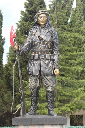
National Struggle Hero Fatma Çavuş
“She travelled on the back of her horse with a pistol until her death”
Fatma Çavuş (Fatma Yalçın), who lived in Samsun between 1897-1963 in Dağköy, fought against the Greek and Armenian gangs during the War of Independence. Fatma Çavuş's great struggle and heroic story against the gangs later spread from language to language in the region.
The defence of the village, whose men went to various fronts for military service and mobilisation, was given to women, children and the elderly.
The woman showed great merits and wrote an epic on behalf of Turkish women. The villagers came around Fatma Çavuş and struggled with gangs with the tactics she taught them. Fatma Çavuş, whose husband went on mobilisation and did not return
After that, she never married again and lived in Dağköy until her death. Because of Fatma Yalçın's heroic struggle, Gazi M. Kemal Atatürk invited her to Ankara to be given the title of sergeant by the TURKISH GRAND NATIONAL ASSEBLY., but she could not go to Ankara under the conditions of the day. She carried the title of sergeant with honour until her death (1963) and was honoured until her last breath.
the stories about Fatma Çavuş are as follows:
"A Greek bandit attacks a Turkish girl named Zeynep who comes to Kocakulak fountain to get water. Fatma Çavuş, who was in the area at the time, intervenes when she sees the incident. She hits the Greek bandit with the butt of her gun. The bandit, who was surprised, ran away. Fatma Çavuş takes the young girl to the village."
"Fatma Çavuş and the villagers with her trap the Greek bandits who come to loot the village. The villagers dig a ditch around the village. Fatma Çavuş speaks Greek to the leader of the gang. Fatma Çavuş pulls the gang leader towards her and he is shot and killed by the villagers. "
- Full access to our public library
- Save favorite books
- Interact with authors
- < BEGINNING
- END >
-
DOWNLOAD
-
LIKE
-
COMMENT()
-
SHARE
-
SAVE
-
BUY THIS BOOK
(from $3.99+) -
BUY THIS BOOK
(from $3.99+) - DOWNLOAD
- LIKE
- COMMENT ()
- SHARE
- SAVE
- Report
-
BUY
-
LIKE
-
COMMENT()
-
SHARE
- Excessive Violence
- Harassment
- Offensive Pictures
- Spelling & Grammar Errors
- Unfinished
- Other Problem





COMMENTS
Click 'X' to report any negative comments. Thanks!