
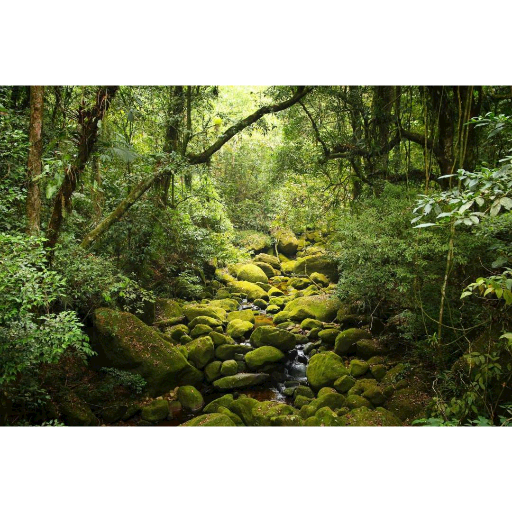
What is the origin of the word environment?
The word medium comes from the Latin medium (neutral gender); as an adjective, from the Latin medius (masculine gender). The word environment comes from the Latin ambiens, ambientis, from the verb ambere, "to surround", "to be on both sides". The expression environment could be considered as a pleonasm because the meanings of the two elements of such spellings coincide with the inherent meaning when they go together. However, some meanings of both words separately are different. What allows its understanding is the context. For example, other metaphorical meanings of the term environment allude to social sectors, such as popular environment or aristocratic environment; or attitudes, such as having a good atmosphere with friends.
Environment is a set of physical, chemical, biological and social components capable of, in a short or long term, causing direct or indirect adverse effects on living beings and human activities. The environment is the environment that affects living beings and conditions their vital circumstances.
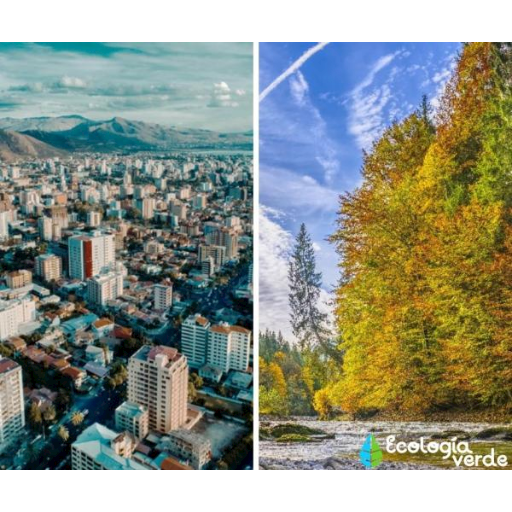
What are the types of Environment?
We can distinguish between two types of environment; the natural environment and the Artificial environment. The difference is that the first occurs naturally, while the second is that environment that human beings have modified.
• Natural environment
This was created naturally, without the intervention of man. The air environment is part of the natural type and as its name says, it develops in the air.
There is also the aquatic and terrestrial environment, which are located within bodies of water and on the ground, respectively.
Also the desert, temperate forests, xerophytic undergrowth, tropical rain forests, boreal, grasslands and tundras are part of the terrestrial.
• Artificial Environment
Another of the types of environment that make up the environment is the artificial environment. And within this are the dikes, which are formed by the intervention of man, these are created by accumulating at the edge of the sea to prevent water from escaping.
Greenhouses are also part of this type of environment and are places of cultivation. These places are designed to condition factors such as humidity and temperature in spaces closed with glass or plastic.
Finally, there are aquariums, places built by man to breed various aquatic species.
Both the natural and artificial environment must be cared for and maintained. It is best to opt for a sustainable system so that in the days to come we will have the elements that the environment offers us.
What are the characteristics of the Environment?
The environment is a system made up of natural and artificial elements that are interrelated and that are modified by human action. It is about the environment that conditions the way of life of society and that includes natural, social and cultural values that exist in a certain place and moment.
1.-Climate: Climate is understood as natural phenomena, such as rain, heat, waves, wind, etc. We can all clearly observe it for each of the seasonal changes that we can experience each year.
2.-Definition: The environment is the set of biological, physical and natural phenomena that form the process and existence of life. These can be natural or artificial, which are interrelated and which are modified by the human being.
3.-Geography: Geography or geology is in charge of terrestrial movements and the phenomena that may occur in it. These phenomena are some that can make great changes on earth such as eruptions, tsunamis or tremors.
4.-Deforestation: This can be due to two main causes, natural causes such as pests, droughts or fires. And the second is by man, either by cutting down trees, fires created by us, etc.
5.-Overforestation: This is a phenomenon that consists of the excess of certain types of plants that can cause damage to the ecosystem. This is also known as overpopulation causing death and destruction of the environment.
6.-Pollution: Pollution is an artificial element produced consciously or perhaps unconsciously by ourselves. Despite being the main pollutants, natural phenomena can cause pollution such as volcanic eruptions and chemical exhalation.
7.-Species: It is defined as the set of natural organisms capable of interbreeding and of reproducing fertilely. Many of these species are of great importance since they stand out for the maintenance of diversity.
8.-Ecology: It is that discipline that studies the environment and human actions on it. Helping living beings and their environment to be respected and protected by their natural resources.
9.-Living organisms: These are a fundamental part of the environment, since they form the direct action in the alterations or maintenance of environmental processes. We can find many living beings such as: bacteria, viruses, mammals and vertebrates, amphibians, birds, plants, fungi, fish, crustaceans, etc.
10.-Man: As we said in the definition, the environment can be natural or artificial, as is the tradition. Anything that can be created by man and thereby interact with the environment.
- Full access to our public library
- Save favorite books
- Interact with authors
- < BEGINNING
- END >
-
DOWNLOAD
-
LIKE(1)
-
COMMENT()
-
SHARE
-
SAVE
-
BUY THIS BOOK
(from $2.99+) -
BUY THIS BOOK
(from $2.99+) - DOWNLOAD
- LIKE (1)
- COMMENT ()
- SHARE
- SAVE
- Report
-
BUY
-
LIKE(1)
-
COMMENT()
-
SHARE
- Excessive Violence
- Harassment
- Offensive Pictures
- Spelling & Grammar Errors
- Unfinished
- Other Problem





COMMENTS
Click 'X' to report any negative comments. Thanks!