 To The Sciences Class
This book was created and published on StoryJumper™
©2014 StoryJumper, Inc. All rights reserved.
Publish your own children's book:
www.storyjumper.com


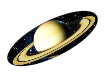



One night before David went to bed, he was playing in his
cardboard spaceship and modeling his astronaut suit for his
parents.
As David fell asleep that night he wondered what it would be
like to travel in a real rocket ship.


Next thing he knew, David found himself
flying through space in what appeared to be a
real rocket ship!





While David was exploring space, he saw two
men, each on different planets arguing about
whether the Sun or Earth was located in the
center of the Solar System.
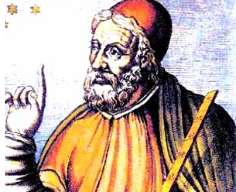
Claudius Ptolemy was on Mercury while
Nicolaus Copernicus was on Venus.


Claudius Ptolemy was a Greek astronomer as well as a geographer.
He was born in Alexandria, Egypt in AD 90 and his nationality was
Roman and Greek.
He is remembered for his works such as 'Almagest', 'Tetrabiblos' and
'Geographia'.
He proposed the first widely accepted explanation for complex celestial
motions.
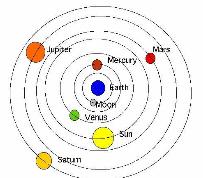
He proposed that the Earth is in the middle and around it was a
concentric series of rotating spheres.
This model was called geocentric.
He recorded over 1000 stars, of which 300 were newly found.
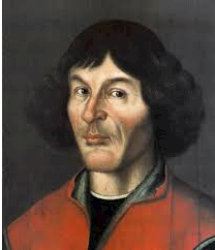
Nicolaus Copernicus was a mathematician and an astronomer.
He was born in 1473 in Torn, Poland. He was the fourth and
youngest child in his family.
In 1510, Copernicus moved to a residence in the Frombork
Cathedral Chapter in hopes of clearing additional time to study
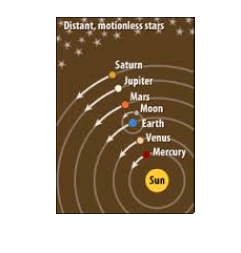
astronomy. Copernicus believed that the Sun was in the center
of the Solar System. This model was called Heliocentric.
He included his model in his book called Commentariolus in
1514.


Then as David was traveling, he saw
Johannes Kepler and Tycho Brahe on Earth
and Mars. They were backing up Copernicus
theory that the Sun was in the center of the
Solar System.




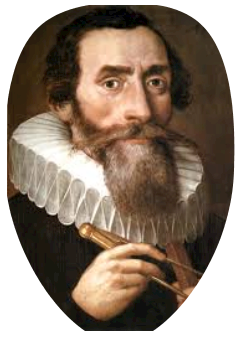
Johannes Kepler was born in 1571 in Germany.
He was an astronomer and was the first one to explain the
motion of the planets of our solar system.
He agreed with Brahe's statement that Copernicus was right,
the sun is in the center and that the solar system is orbited in
an oval not a circle.
He was also a mathematician. He witnessed both a comet in
1577 as well as a lunar eclipse in 1580.One of his famous
quotes was “Nature uses as little as possible of anything.”

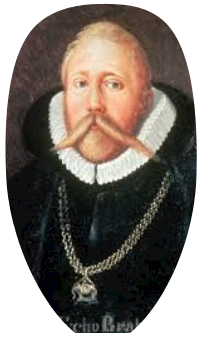
Tycho Brahe was born in 1546 in Sweden.
He was a astronomer and scientist.
He had a twin but the twin died after he was born.
He entered the University of Copenhagen when he was only
12. He was the first one to agree with Copernicus' theory of the
heliocentric model. But he made some corrections on the
theory with precise and comprehensive astronomical and
planetary observations.
At the age of 25, he discovered a new star and he determined
the position of each star or planet with a "quadrant".

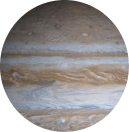
Then as David was passing through Jupiter, he saw
Galileo throw the trophy of triumph to Copernicus, as
Galileo proved that the Sun was in the center of the Solar
System.This is when David stared in awed that the Solar
System was heliocentric.

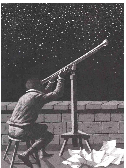



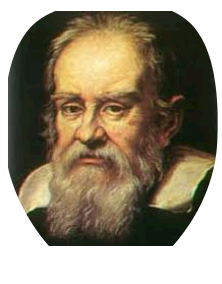
Galileo Galilei was born in 1564 in an Italian city,Pisa.
Galileo’s first job was as an art teacher however, he was
known for being a physicist and philosopher.
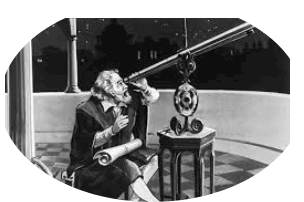
He was the first person to record observations of the
heavens with a telescope. With this he was the final person to
prove the sun was in the center of the solar system.
Using the telescope he discovered many things about the
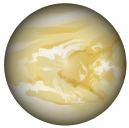
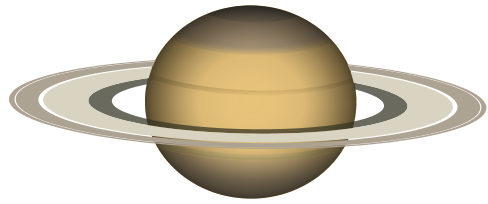
planets, such as rings around Saturn, moons have mountains,
Venus has phases, and much more.
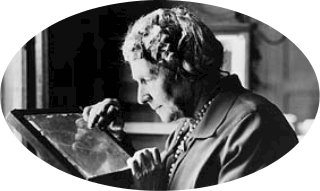
Then David saw someone on Saturn looking at the stars.
He recognized her and realized it was Annie Jump
Cannon. Annie saw David passing by and threw him a
star!





Annie Jump Cannon was born in 1863 in Delaware.
Her mother taught her about the constellations and sparked her
interest in outer space at a young age.
Annie attended Wellesley College where she studied physics and
astronomy.
She joined a group of female astronomers nicknamed "Pickering's
Women", where she studied bright southern hemisphere stars.
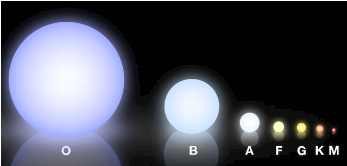
She classified more than 225,000 stars and in the 1920's she
discovered 300 variable stars. She also was able to discover 5 novae,
a class of exploding stars!
She could classify up to three stars a minute.
After admiring the star David was given, he saw
Edwin Hubble on Uranus. He watched the
astronomer looking around the fascinating aspects
of the Milky Way. Then he saw David and threw
him a Milky Way Bar!






You've previewed 25 of 38 pages.
To read more:
Click Sign Up (Free)- Full access to our public library
- Save favorite books
- Interact with authors


- < BEGINNING
- END >
-
DOWNLOAD
-
LIKE(1)
-
COMMENT()
-
SHARE
-
SAVE
-
BUY THIS BOOK
(from $7.59+) -
BUY THIS BOOK
(from $7.59+) - DOWNLOAD
- LIKE (1)
- COMMENT ()
- SHARE
- SAVE
- Report
-
BUY
-
LIKE(1)
-
COMMENT()
-
SHARE
- Excessive Violence
- Harassment
- Offensive Pictures
- Spelling & Grammar Errors
- Unfinished
- Other Problem





COMMENTS
Click 'X' to report any negative comments. Thanks!