,
We dedicate this project to our teacher Jesus Chicas, for giving us the knowledge that helped us complete this subject.
We also thank each of our colleagues with whom we will share different ideas to be able to complete this project.

BLOCK 1
- 1.0 Meeting and greeting people.
1.1 Formal and Informal Greetings
1.2 Verb” to be” simple present
- 2.0 Asking for and giving personal information.
2.1 Asking For Personal Information
- 3.0 Talking about jobs and activities.
Meeting and greeting people
Greeting is: “something friendly or polite that you say or do when you meet or welcome someone.
Maybe it was a stranger you saw on the street in your community. Or a person you've seen a few times at work, but you don't truly know.
Formal and Informal Greetings
There are many formal and informal greetings in English
- Hello - Long time, no see you
- Hi -Hey there!
- Good morning
-How do you do?


Have a good evening
You too
See you next week
Have a nice day
See you later
Nice to meet you

Verb TO BE Simple Present
This verb is frequently used in English, thus it's essential to understand its different forms. It will enable you to speak and communicate, using easy and simple sentences.
I am student - It is a dog
- You are teacher - We are sisters
- You are friends
- She is a police
- They are students
- He is a doctor


Asking for and giving personal information
People may occasionally ask you for personal information like your name, address, and birthdate.
According to Woodward personal information questions are: “the basis for any conversation in English and so are important for when you meet somebody for the first time.
Asking For Personal Information
What`s your name? How old are you?
My name is Claudia. I am 35 years old.
What do you work as? Where are you from?
I am a nurse. I am from El salvador.
Are you married? What do you do in your free time?
I am married. In my free time I like to read.

What do you want?
I want a candy.
Who is that boy?
He is Jael.
When will you came?
I will come at 7:00 AM
Where do you live?
I live at Paris.
Why are you late?
Because it`s raining.


Talking about jobs and activities
A job is: “the regular work that a person does to earn money”
Undoubtedly, jobs and professions are important to society because they boost the economy, give people a sense of purpose and income, and provide specialized knowledge and abilities to address a range of social demands.
It is important to know and understand the difference between a job and a profession.
There is an interesting saying about jobs and professions “Every job is not a profession, but every profession is a job.
- Job: A job is a specific task or activity that someone does or performs in order to earn money.
No education needed.
- Profession: A profession is a kind of job which normally requires some sort of specialized knowledge, skills, and expertise.
Education needed.







Different Professions and an explanation of what each person does in that profession.
- Actor /Actress - a person that acts in a play or a movie
- Architect - a person that designs building and houses.
-Astronomer - a person who studies the stars and the universe
- Dentist - a person that can fix problems you have with your teeth.



Doctor - a person you go to see when you are ill or have some type of health
problem.
- Engineer - a person who develops solutions to technical problems. They sometimes,design,build, or maintain engines, machines, structures or public works.
- Judge - a qualified person that decides cases in a law court.
-Pilot - a person who flies a plane.




BLOCK 2
- 1.0 Accepting or declining an invitation.
1.1 Accept an Invitation.
1.2 Decline Invitations.
- 2.0 Talking about holidays.
2.1 Types of Holidays.
- 3.0 Using expressions about the weather.
3.1 Commom Idioms
Accepting or declining an invitation
Imagine that your friends invite you to a party, it is very important for communication to know how to accept or decline an invitation.
When suggesting a plan
"How about...?" "I was thinking we could..."
"Would you like to...?" "Let's..."
-I’m very happy you invited me, I’ll be there!
-What a great idea! I’ll be available for that date.
-It’s an honor! You can count on me for the occasion.
-I can’t wait! I’m excited to attend.
-Yes, I’ll be there!
-Sorry, I already have plans
-I would love to go, but I have a prior commitment on that date.
-I can’t attend this time, but thank you for thinking of me
-I wish I could join you, but I have other plans
-I am grateful for the invitation, but I can’t accept at this time
Talking about holidays
An extended period of leisure and recreation, especially one spent away from home or in travelling, (North American term
vacation).
Examples:
-Thanksgiving
-New Year's Day
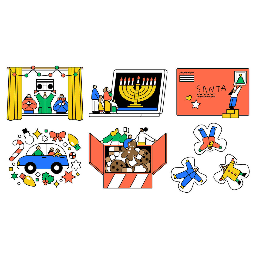
National Holiday
In El Salvador a national holiday is Independence Day, celebrated on September 15.
On this day, all over the country, local educational and government institutions have events and parades to commemorate this day. The most popular event includes marching bands and school cheerleaders.
Religious Holidays
The catholic celebrations of Easter week in Salvador begin on Palm Sunday and conclude on Easter Sunday. Easter week displays some of the most meaningful Salvadoran traditions.
Cultural Holidays
El Salvador has a national pupusa day, which is celebrated on the second Sunday in November. This day is dedicated to enjoying one of the most representative typical dishes of El Salvador, the pupusas.
Using expressions about weather
The weather is one of the most common topics of conversation in which we can use some of the following examples.
Questions Possible answers
What's the weather like? It’s sunny/windy/rainy/cold.
What's the temperature? It’s really hot/cold.
How's the weather? It’s cool/ sunny/windy/rainy right now.
Here are some of the most commom idioms about the weather:
2. Be a breeze: to be very easy to do.
3. Under the weather: you are not feeling well.
4. Break the ice: to say or do something to make someone feel relaxed or at ease in a social setting
BLOCK 3
- 1.0 Identifying items at the shopping mall.
1.1 Simple present vs Present continuous.
- 2.0 Offering help.
2.1 The modal auxiliary "CAN"
- 3.0 Describing places in a city.
3.1 There is / There are.
BLOCK 3
Identifying items at the shopping mall.


A fundamental skill that helps people find and buy the goods they need or want is the capacity to identify items at the mall. Being able to quickly recognize things can make your shopping experience more effective and pleasurable, regardless of whether you're just running errands or taking your time.
Simple present vs Present continuous
The present simple and present continuous (also known as present progressive) are two different tenses in English that are used to describe actions or states at present, but they have different purposes and usage.
Present Simple Examples:
- I play tennis every weekend.
- She never plays PS4.
- We fly to Colombia next week.
Present Continuous Examples:
- What are you doing next week?
- I am not doing that.
- He is always crying for his girlfriend.
- Black Friday: This is the Friday after Thanksgiving when tons of people begin their Christmas shopping. Almost every store has a huge sale and opens at midnight.
Many malls in El Salvador offer Black Friday as well, but we know that they do not offer good deals.
- Outlet Mall: An outlet mall is bigger than a regular mall and offers reduced prices in every single store.
When you go to an outlet mall you can spend the whole day there trying to find a gold mine.
- What a Bargain! you could use this expression when you buy something for much less than normal.
you found a new tablet on sale on Black Friday. It normally costs $150, but you paid $70. Again—what a bargain!
- A steal: That means that you did not pay too much for something.
I remember when I bought a suit for only $50.00 it was a steal.
- Overpriced: It is when a store wants you to pay much for something.
I went to La Curacao for a fan, but it was overpriced. I saw the same fan at Walmart and it was 50% off.
- Stingy: This is a funny one, it is when you are unwilling to spend money on yourself or other people.
I have a friend who only buys his clothes on final clearance (I think that is a smart idea).
- Full access to our public library
- Save favorite books
- Interact with authors
THANKS FOR READING THIS FINAL PROJECT
- < BEGINNING
- END >
-
DOWNLOAD
-
LIKE
-
COMMENT()
-
SHARE
-
SAVE
-
BUY THIS BOOK
(from $8.59+) -
BUY THIS BOOK
(from $8.59+) - DOWNLOAD
- LIKE
- COMMENT ()
- SHARE
- SAVE
- Report
-
BUY
-
LIKE
-
COMMENT()
-
SHARE
- Excessive Violence
- Harassment
- Offensive Pictures
- Spelling & Grammar Errors
- Unfinished
- Other Problem





COMMENTS
Click 'X' to report any negative comments. Thanks!